Cardboard Wings: An Unlikely Military Asset Enters Service
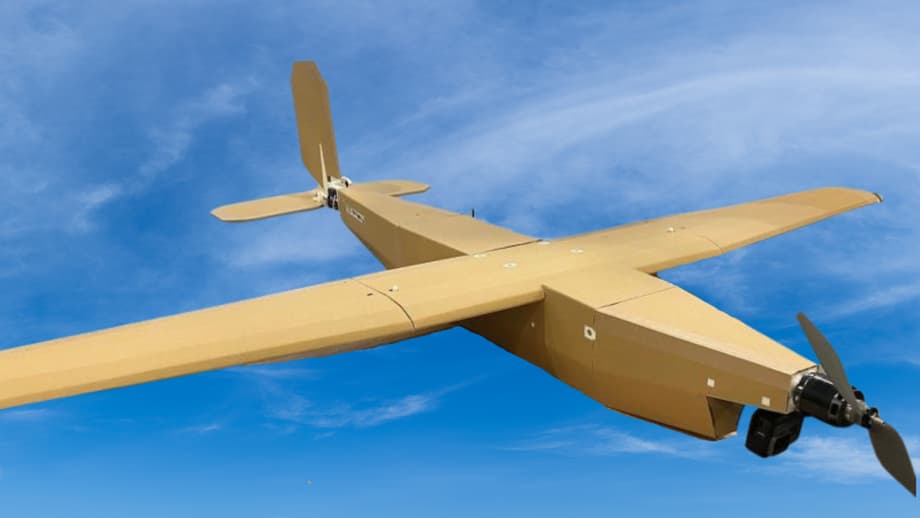
Japan has initiated operational deployment of aerial vehicles that cost less than consumer gaming computers and are constructed from materials more commonly associated with shipping boxes than military hardware. Defense Minister Shinjiro Koizumi confirmed this week that the Japan Maritime Self Defense Force is actively utilizing the AirKamuy 150, a fixed wing unmanned aerial vehicle built primarily from corrugated cardboard treated with specialized water resistant coatings. The minister’s announcement on social media platform X followed a direct meeting with representatives from AirKamuy, the Nagoya based startup that developed the unconventional aircraft. This deployment represents one of the first instances of a major military force fielding drones designed around extreme affordability and mass production capabilities rather than incremental technological sophistication.
The AirKamuy 150 challenges conventional assumptions about military durability and aerospace materials. By utilizing ordinary cardboard manufacturing infrastructure rather than specialized aerospace facilities, Japan aims to create a production model capable of scaling rapidly during periods of heightened tension or open conflict. The initiative reflects a fundamental rethinking of military aviation economics, where individual platform survivability becomes less critical than the ability to field overwhelming numbers of capable but expendable systems. Flat packed shipping configurations allow approximately 500 units to occupy a single standard container, enabling rapid global deployment without specialized military logistics chains. Assembly requires no aerospace technicians or advanced tooling, allowing frontline personnel to construct flight ready aircraft in minutes rather than hours. This logistical innovation addresses one of the most persistent challenges in modern warfare: maintaining operational tempo when sophisticated equipment requires complex supply chains and specialized maintenance personnel.
Engineering Ingenuity and Operational Specifications
The AirKamuy 150 embodies a radical departure from traditional aerospace manufacturing philosophies. Where conventional military drones utilize expensive carbon fiber composites, titanium alloys, and precision machining, this aircraft relies on industrial grade corrugated cardboard engineered to withstand maritime humidity and temperature variations. The material selection serves dual purposes. Beyond dramatic cost reduction, cardboard possesses inherently lower radar reflectivity compared to metal or dense synthetic composites, potentially complicating detection by conventional air defense radar systems.
Performance specifications for the baseline model reveal capabilities that contradict its humble construction. The drone achieves maximum speeds of approximately 74 miles per hour, notably exceeding the 63 mph top speed of the American Lucas drone, a platform developed through reverse engineering of Iranian designs. While the AirKamuy 150 lacks the extended range of gas powered alternatives, providing roughly 80 minutes of flight endurance and operational radius of approximately 50 miles through electric propulsion, its rapid deployment characteristics offer tactical advantages. The aircraft accommodates payloads between 1.5 and 3 pounds, sufficient weight capacity for reconnaissance sensors, electronic warfare modules, or precision strike munitions.
AirKamuy has also developed advanced variants including the Sigma 1, a vertical takeoff and landing platform featuring foldable wings and hybrid power systems. This larger variant can transport 10 kilogram payloads for durations extending to six hours, though it utilizes carbon based construction rather than cardboard. The Sigma 1 requires only a two person team for deployment and operation, significantly reducing personnel requirements compared to traditional helicopter based missions.
Economic Warfare and Cost Asymmetry
The strategic calculus underlying the AirKamuy 150 centers on economic asymmetry rather than individual combat power. Each cardboard unit costs approximately 300,000 yen, equivalent to $2,000 to $2,500. This price point stands in dramatic contrast to the $10,000 acquisition cost of the American Lucas drone and the estimated $20,000 to $50,000 price tag associated with Iran’s Shahed series. This cost differential creates an unsustainable tactical dilemma for opposing forces. Modern surface to air missile systems typically expend munitions costing between $500,000 and several million dollars per interception. When attacking forces can deploy coordinated swarms of $2,000 aircraft, defending nations face fiscal ruin attempting to maintain air defense integrity through traditional interception methods.
Naoki Morita, chief engineer at AirKamuy, articulated this philosophy during presentations at the Singapore Airshow earlier this year. He described the platform as a counter drone system specifically designed for large scale operations capable of overwhelming detection networks and absorbing defensive fire intended for more valuable assets. The company envisions multiple operational roles extending beyond the current aerial target configuration, including reconnaissance missions where reduced radar signatures provide tactical advantages, electronic warfare operations designed to jam or spoof enemy sensors, and saturation attacks intended to exhaust enemy missile inventories prior to conventional strikes.
The production model further amplifies these economic advantages. Each drone ships in flat packed configuration, with approximately 500 units fitting within a single standard shipping container. Assembly requires no specialized aerospace tools or technician training; military personnel can construct flight ready aircraft in five to ten minutes using only basic hand tools. This manufacturing approach enables rapid surge production utilizing existing civilian cardboard manufacturing infrastructure rather than dedicated defense facilities, theoretically allowing conversion of commercial packaging plants into military production lines during periods of national emergency.
Swarm Tactics and Strategic Integration
Japan’s adoption of cardboard drones integrates into a comprehensive strategic framework designated SHIELD, an acronym representing Synchronized, Hybrid, Integrated and Enhanced Littoral Defense. This initiative envisions layered coastal defense networks utilizing thousands of unmanned systems to monitor and protect the Nansei Islands, the strategic chain stretching southwest from Kyushu toward Taiwan. The Japan Ground Self Defense Force has established specialized drone offices to develop operational doctrine for these systems, signaling institutional commitment beyond experimental testing.
The cardboard construction offers specific tactical advantages for swarm warfare doctrine. Beyond the obvious cost benefits, the material’s natural radar absorption characteristics complicate detection algorithms, particularly when multiple aircraft approach simultaneously from diverse vectors. Electric propulsion systems generate significantly reduced acoustic signatures compared to gasoline engines, further complicating identification and tracking by ground based observers. When deployed in coordinated formations numbering hundreds of units, these drones can force premature enemy radar activation, precisely map air defense network geometries through penetration attempts, or provide real time targeting data for precision strikes by conventional manned aircraft or missile batteries.
Japan’s defense budget for fiscal year 2026 reached approximately 9 trillion yen, roughly $60 billion, with about 277.3 billion yen ($1.9 billion) specifically earmarked for drone procurement and development. This substantial funding supports not merely hardware acquisition but the establishment of production and deployment bases in strategically sensitive island regions. Planners view low cost deterrence as more practical for remote territorial defense than risking expensive conventional assets in vulnerable forward positions.
Global Conflict Lessons and Manufacturing Quality
Japan’s pivot toward mass produced expendable systems reflects direct analysis of battlefield developments in Ukraine, where both Russian and Ukrainian forces have utilized low cost drones for reconnaissance and direct attack missions. However, the AirKamuy approach contrasts sharply with recent reports regarding Russian manufactured Shahed drones. Video documentation captured by Ukrainian interception teams shows Russian produced variants literally disintegrating mid flight due to substandard manufacturing practices, minimal quality control protocols, and the use of inferior components sourced under international sanction constraints. Commentators have described these failing aircraft as “flying garbage,” noting visible defects including missing body panels, exposed wiring, and detached nose fairings.
AirKamuy appears to avoid these quality control pitfalls through deliberate engineering simplicity. The cardboard airframe, while unconventional, provides consistent structural properties without requiring complex international supply chains for aerospace grade composites. The specialized water resistant coating prevents environmental degradation in maritime operational environments, addressing durability concerns without adding prohibitive weight or cost penalties. Additionally, Japan’s parallel “Shiraha” project, revealed by startup JISDA in April 2026, demonstrates the national scope of this low cost initiative. The ACM 01 Shiraha utilizes wooden fuselage construction and costs merely $450 per unit, designed with entirely domestically sourced components to eliminate foreign supply chain vulnerabilities.
International Expansion and Civilian Applications
While currently deployed primarily for training and aerial target practice by the Maritime Self Defense Force, AirKamuy harbors international ambitions. The company participated prominently in DSEI UK 2025, one of Europe’s largest defense exhibitions, under the auspices of Japan’s Acquisition, Technology and Logistics Agency. The event showcased capabilities to potential allied partners including the United Kingdom and Australia. Australian company SYPAQ has already demonstrated similar cardboard drone effectiveness in Ukraine, providing precedent for Japanese export opportunities.
Beyond military applications, the company is actively exploring civilian disaster response markets. The same characteristics that make these drones suitable for expendable military roles prove advantageous for delivering medical supplies to remote islands, assessing infrastructure damage following earthquakes or typhoons, and establishing temporary communication relays in areas with destroyed cellular infrastructure. The flat packed shipping format allows rapid airlift deployment to disaster zones without requiring specialized logistics chains or recovery operations. Biodegradable construction materials reduce environmental impact in civilian applications where aircraft retrieval proves impractical.
Defense Minister Koizumi has stressed ambitions to position Japan as a global leader in drone utilization, moving beyond simple procurement toward comprehensive integration of unmanned systems across all military branches. This strategy encompasses not merely hardware acquisition but the development of operational doctrine, training frameworks, and logistics networks capable of sustaining large scale deployments. The cardboard drone represents merely the first visible manifestation of a fundamental transformation in military aviation philosophy, one that prioritizes mass, expendability, and economic asymmetry over the traditional metrics of speed, armor, and individual survivability.
Key Points
- Japan Maritime Self Defense Force has operationalized the AirKamuy 150 cardboard drone for aerial target training and potential combat roles
- Each unit costs approximately $2,000 to $2,500, roughly one tenth the cost of Iran’s Shahed drones and one quarter the cost of American Lucas drones
- Corrugated cardboard construction with water resistant coating reduces radar reflectivity while enabling production in civilian manufacturing facilities
- Flat packed design allows 500 drones per standard shipping container with assembly completed in five to ten minutes without specialized tools
- Maximum speed of 74 miles per hour exceeds comparable platforms, with electric propulsion providing 80 minutes flight endurance
- Deployment supports Japan’s SHIELD defense strategy for protecting southwestern islands through layered unmanned defenses
- Strategy exploits cost asymmetry, forcing defenders to expend expensive surface to air missiles against cheap, replaceable aircraft
- Part of $1.9 billion drone allocation within Japan’s $60 billion defense budget for fiscal year 2026