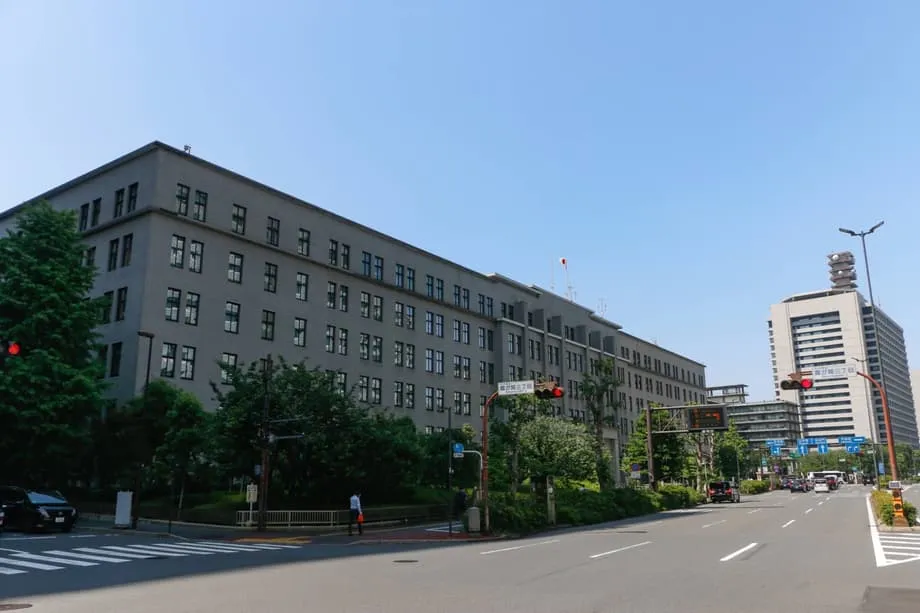
9,000 Medical Seats Face a New Calculation
Japan's Finance Ministry proposed sharp reductions in medical school enrollment on April 30, 2026, warning that a shrinking population and more efficient health care could leave the country with more doctors than it needs. With annual enrollment capacity currently around 9,000 students, the ministry projects that keeping admissions unchanged would raise the number of doctors per 100,000 people from 274 in 2022 to 340 by 2040.
Contents
- 9,000 Medical Seats Face a New Calculation
- Why the Ministry Wants Fewer Students
- How the Doctor Ratio Could Rise
- Why the Workforce Keeps Growing
- A Long Delay Between Admissions and Practice
- South Korea Plans the Opposite Move
- Universities Face Costs That Cannot Shrink Quickly
- International Talent Faces a Different Set of Rules
- Health Spending Enters a Wider Budget Debate
- Key Points
The recommendation was presented on Thursday to the Fiscal System Council, an advisory panel to the finance minister. It marks a reversal in workforce planning for the world's fastest aging society: a country facing heavy demand for care from older residents is now considering training fewer physicians.
The ministry expects the supply of doctors and demand for their services to reach a balance between 2029 and 2032. After that, it expects supply to exceed demand. Its calculation rests on two changes happening together: Japan will have fewer people, while improvements in technology and the delivery of medical services are expected to make care more efficient.
Medical training makes the decision urgent. A medical degree takes six years, and students entering school this April will not become practicing physicians until fiscal 2032 at the earliest. Admissions decisions therefore shape the workforce years into the future, while students already studying remain in the training pipeline.
No numerical target for the proposed reduction has been given. The immediate issue is whether Japan should continue admitting roughly 9,000 medical students each year when the Finance Ministry expects the national need for doctors to stop keeping pace with their numbers.
Why the Ministry Wants Fewer Students
The Finance Ministry frames the proposal as a question of both public spending and the use of a shrinking workforce. Training more doctors than the country needs would direct students, teaching resources and public money toward a profession where demand may no longer support continued growth.
A Fiscal System Council member, speaking during the meeting about the allocation of workers across society, described reducing medical school quotas as:
an urgent issue from the viewpoint of the optimal allocation of scarce human resources in society.
The same member said reductions would be key to optimizing medical costs. The concern is that a surplus of physicians could encourage greater use of services, including unnecessary procedures, or increase competition for clinical positions. Urban areas, where most medical schools are concentrated, are already showing signs of saturation.
For patients, an abundance of doctors may sound helpful. The ministry's concern is about how a larger workforce interacts with the system that pays for treatment. More appointments and procedures can mean higher expenditure, even as the number of people needing care falls. Japan already faces substantial costs from an aging society, including pensions and elder care.
How the Doctor Ratio Could Rise
Japan's projected increase from 274 to 340 doctors per 100,000 people amounts to 66 additional doctors for every 100,000 residents, or about 24 percent above the 2022 level. The ratio measures the size of the medical workforce relative to the population, rather than the number of doctors alone.
A ratio can rise through either side of that calculation. More doctors increase it, while fewer residents also increase it. Japan faces both movements: medical graduates continue entering the workforce while the population contracts.
Japan's population peaked at roughly 128 million in 2010 and has been declining steadily. Projections point to a population below 100 million by the middle of the century. Falling birth rates and an accelerating population decline are reshaping demand across the economy, including health care.
Older people generally need more medical attention, so aging adds pressure to the health system. The Finance Ministry nevertheless expects the reduction in the total population, together with technological advances and more efficient services, to lower the need for physicians per person. Its proposal follows that forecast of future demand.
Why the Workforce Keeps Growing
Japan's medical workforce accumulates as new graduates join doctors who are already practicing. Retirement rates among existing physicians remain relatively low, and few Japanese doctors leave to work abroad. Annual additions of roughly 9,000 new doctors therefore enter a workforce that is not shrinking at the same pace as the population.
The resulting increase in doctors relative to patients could leave some physicians with too little work. Health economists warn of underemployment, higher spending through unnecessary procedures, and an uneven distribution of doctors as competition draws them toward urban centers.
Geographic distribution is a separate part of the planning problem. A national surplus can exist alongside difficulties getting care in particular places. The concern about urban concentration means that counting doctors across Japan provides only part of the picture of whether patients can reach the services they need.
The ministry also expects the projected ratio of 340 doctors per 100,000 people in 2040 to be considerably higher than that in most developed nations. Its argument is that maintaining today's intake could produce a workforce larger than future demand requires, placing further pressure on public finances.
A Long Delay Between Admissions and Practice
Students already enrolled in medical school will continue moving toward graduation even if the government reduces future admissions. The six years needed for medical education create a fixed pipeline that cannot be changed quickly.
The Finance Ministry says the supply of doctors is unlikely to decrease substantially before fiscal 2032. Even immediate quota reductions would leave Japan producing physicians at current rates until at least that point, and their effect on the workforce would take nearly a decade to emerge.
The key dates show why officials are raising the issue before the projected surplus arrives:
- 2010: Japan's population peaked at roughly 128 million.
- 2022: Japan had 274 doctors per 100,000 people.
- April 30, 2026: The Finance Ministry presented its enrollment reduction proposal to the Fiscal System Council.
- 2029 to 2032: The ministry expects physician supply and demand to reach a balance.
- Fiscal 2032: Students entering medical school in April 2026 can become practicing physicians at the earliest.
- 2040: The projected ratio reaches 340 doctors per 100,000 people if enrollment stays unchanged.
Japan could therefore experience a period when the surplus grows before admission cuts begin to affect physician supply. Universities and workforce planners must make decisions now about conditions that students will encounter several years later.
South Korea Plans the Opposite Move
South Korea is expanding medical education while Japan considers contraction. The Korean government has finalized plans to add 3,342 medical school seats through 2031, with an average increase of 668 students annually. The increases are restricted to 32 medical schools outside Seoul.
The expansion starts with 490 additional seats in the 2027 academic year. That will bring total intake to 3,548, compared with the 2024 baseline of 3,058. By 2030, annual admissions are set to reach 3,871, which is 813 more than the baseline, an increase of about 27 percent.
South Korea's policy targets shortages in particular regions and specialties. Doctors cluster in urban areas despite a national shortage, leaving gaps in access between the capital region and rural communities. Increasing places outside Seoul is intended to direct more medical training toward those underserved areas.
Students recruited through the regional program receive government financial support during their education. In return, they must commit to 10 years of service at public health institutions or regional facilities after graduation. The requirement connects additional training places to a period of work in the communities the expansion is meant to serve.
Health and Welfare Minister Jeong Eun kyeong said the government would prioritize smaller national universities so they could function as regional medical hubs. Japan's proposed broad reductions and South Korea's targeted expansion reflect different assessments of national supply and local access: Japan anticipates a surplus relative to its shrinking population, while South Korea is seeking more doctors and a better distribution of them.
Universities Face Costs That Cannot Shrink Quickly
Japanese universities have invested in medical school buildings, faculty and teaching hospitals on the basis of current enrollment levels. A large reduction in student numbers could leave those institutions carrying much of the same expense with fewer students.
Buildings and teaching hospitals still need maintenance, and medical education still requires staff. Spreading those fixed costs across a smaller intake could require universities to absorb additional financial pressure. Sharp cuts could also force consolidation among medical schools.
Japan's wider higher education sector is already adapting to population decline. Domestic enrollment in doctoral and specialized programs has fallen across multiple disciplines, increasing reliance on international students to help maintain institutions.
The medical school proposal specifically concerns Japanese domestic enrollment. It fits within a broader reassessment of how universities prepare workers as the population contracts and institutions compete for a smaller pool of qualified applicants.
International Talent Faces a Different Set of Rules
Japan's Ministry of Education, Culture, Sports, Science and Technology, known as MEXT, has faced criticism over proposals to limit living expense support for international doctoral students. Chinese scholars would be particularly affected because they account for roughly one third of recipients in programs such as SPRING, or Support for Pioneering Research Initiated by the Next Generation.
Chinese students make up approximately 37 percent of Japan's international student population. They have helped fill gaps in doctoral programs, particularly in humanities and sciences. Restrictions on scholarship support come as Japan also promotes migration by highly skilled workers to address labor shortages.
The combination shows tension between attracting talent and limiting educational investment. Universities seeking students from abroad face a different policy environment when financial assistance becomes more restricted.
Medicine has its own constraints. Practicing in Japan requires domestic licensure and proficiency in Japanese, limiting the scope for recruiting physicians from overseas to fill shortages. Nursing and elder care have recruited foreign workers through economic partnership agreements, while medical practice remains largely closed to international practitioners.
Graduates of domestic medical schools therefore remain the main source of new physicians. That makes enrollment planning especially consequential: Japan has limited room to adjust its physician workforce quickly through international recruitment if its forecasts leave too few doctors in the places that need them.
Health Spending Enters a Wider Budget Debate
The Fiscal System Council meeting also addressed strengthening Japan's defense capabilities. Revisions to the country's three key security related documents are expected later in 2026, adding to competition for government spending.
The medical school recommendation places physician training within that wider fiscal debate. Finance officials see controlling medical expenditure as part of managing a budget under pressure, with health care, pensions and elder care competing for resources alongside priorities such as military modernization.
Japan's shrinking tax base makes those choices harder. An aging population needs substantial support, while a smaller population means fewer people contributing to the public finances that fund it. The ministry's concern is that continued growth in physician numbers could add medical spending to an already strained social security system.
The proposed cuts also leave universities confronting immediate planning choices for a benefit that would arrive years later. Facilities, faculty and students already in training will remain part of the system during the transition, even as officials seek to bring future supply closer to expected demand.
As of April 30, the central policy direction is a recommendation to reduce intake, with the scale of the cuts still unspecified. The ministry's forecast makes the coming years decisive: it expects supply and demand to balance between 2029 and 2032, just as the students entering medical school now approach practice.
Key Points
- Japan's Finance Ministry proposed sharp reductions in medical school enrollment on April 30, 2026. Current annual capacity is around 9,000 students.
- Keeping intake unchanged would raise the projected ratio from 274 doctors per 100,000 people in 2022 to 340 in 2040, an increase of about 24 percent.
- The ministry expects physician supply and demand to balance between 2029 and 2032, followed by a surplus.
- Medical education takes six years. Students entering in April 2026 cannot become practicing physicians before fiscal 2032.
- South Korea plans to add 3,342 medical school seats through 2031, targeting schools outside Seoul and requiring regional program participants to serve for 10 years.
- Japanese universities could face higher costs per student or consolidation if enrollment falls sharply.
- The proposal comes amid pressure on health and social security spending, a shrinking tax base and plans to strengthen defense capabilities.