A tiny stent gave a premature baby time to grow
A girl weighing just 356 grams underwent successful treatment to widen her aorta at Shizuoka Children's Hospital in Japan, allowing her to grow strong enough for later surgery. Doctors inserted a catheter through an artery in her neck and placed a small metal mesh tube inside the narrowed blood vessel when she was 19 days old.
Contents
- A tiny stent gave a premature baby time to grow
- What was wrong with her aorta?
- Why doctors delayed the main operation
- A procedure through an artery in the neck
- How treatment unfolded over 11 months
- What the later surgery changed
- How the hospital describes the record
- Her parents describe fear, relief and birthdays ahead
- Key Points
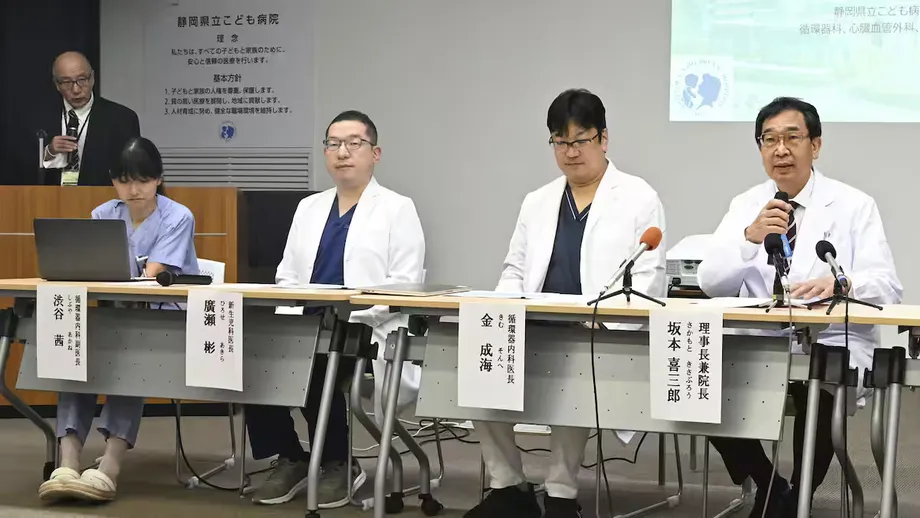
The hospital, in Shizuoka City, announced the success on the 19th and described it as the lowest patient weight recorded in medical literature for this treatment. The previous reported minimum was 590 grams. At 356 grams, the girl weighed 234 grams less, or about 40 percent below that earlier figure.
By 11 months, she had grown to 4.9 kilograms and undergone surgery to remove the stent and reconstruct the affected artery. Her condition was reported as stable, and the hospital will continue monitoring her.
The achievement involved more than placing a device in an exceptionally small patient. Doctors used the stent to keep blood moving through a dangerously narrow artery while the baby grew. That created time for an operation that her fragile body could not initially tolerate.
Akane Shibuya, deputy chief of the hospital's cardiology department, said the experience could bring reassurance to other families. Speaking about what the girl's survival meant, she said:
Knowing that babies at such a small weight can survive could also offer hope to the families of babies with other illnesses.
Her parents described both their fear before treatment and their relief afterward. Their daughter had been born at 25 weeks and three days of pregnancy, small enough to fit in one hand.
What was wrong with her aorta?
The girl had coarctation of the aorta, a condition present from birth in which part of the body's main artery is too narrow. The aorta carries blood from the heart to the rest of the body. A severe narrowing restricts that flow and makes the heart work harder to push blood through.
Doctors found that the narrowest part of her aorta measured about 1.2 millimeters across. The artery in her neck used to introduce the catheter was about 1 millimeter in diameter. These were two separate parts of the treatment route: the neck artery provided access, while the narrowed aorta was the site that needed widening.
A catheter is a thin tube that doctors guide through a blood vessel to reach an area requiring treatment. In this case, it carried a stent, a small cylinder of metal mesh. Once expanded inside the aorta, the stent supported the vessel from within and held open a passage for blood.
Why doctors delayed the main operation
Surgeons usually treat this narrowing by removing the affected section of the aorta and joining the remaining ends. For this girl, operating immediately presented major difficulties. Her blood vessels were fragile and difficult to stitch, and opening her chest would have placed a heavy burden on her very small body.
The hospital therefore chose treatment in stages. First, doctors would widen the artery with a stent. They would then allow her body to grow before performing surgery to remove the narrowed section and reconnect the vessel.
The girl's birth weight was 357 grams, while her weight when catheter treatment began was 356 grams. She had been delivered by emergency cesarean section in October, at 25 weeks and three days, roughly 15 weeks before the 40 weeks used as a reference for a full pregnancy. She also needed a tube to support her breathing.
A procedure through an artery in the neck
Doctors placed the stent on the girl's 19th day of life, using the common carotid artery in her neck to guide the catheter toward the aorta. Working through such small vessels required them to reach the narrowed section and expand it without tearing the artery.
The treatment carried a risk of aortic rupture, which could have been fatal. Her parents said they had been told before the procedure that the chance of success was not high because she was so small.
Shibuya explained that the device was a standard coronary stent, the kind used in vessels supplying blood to the heart, including in adults receiving treatment for a heart attack. She said there was no stent specifically designed for children.
The hospital had previously performed 10 similar procedures on infants with low birth weights. It credited that experience with contributing to this successful treatment. The team was applying a method it had used before, but in a patient substantially smaller than the previous minimum weight reported for this procedure.
How treatment unfolded over 11 months
The girl's recovery involved several interventions, rather than a single operation. The first stent placement opened the artery, a later procedure widened the stent again, and surgery ultimately allowed doctors to remove it.
- Birth: She was delivered by emergency cesarean section at 25 weeks and three days, weighing 357 grams.
- Day 19: At 356 grams, she underwent catheter treatment through the common carotid artery, with a stent placed in the narrowed aorta.
- Five months: At 2.3 kilograms, she underwent another procedure to expand the stent.
- Seven months: She was discharged from hospital.
- Eleven months: At 4.9 kilograms, she underwent surgery to remove the stent and narrowed section and reconstruct the aorta.
By 11 months, her weight was almost 14 times the 356 grams recorded at the start of treatment. The increase from 2.3 kilograms at five months to 4.9 kilograms at 11 months meant she had more than doubled her weight during that part of her recovery.
The hospital reported a stable course after the later operation. Continued monitoring will follow her growth and the condition of the reconstructed artery.
What the later surgery changed
Surgeons eventually removed the stent together with the narrowed portion of the aorta and reconnected the vessel. The operation was also described as reconstruction of the aortic arch, the curved section of the main artery near the heart.
The stent had served as temporary support while the girl gained weight. After surgery, the hospital expected her to be able to grow with her own blood vessel, rather than keeping that metal support in place.
Her course shows why the first catheter procedure and the later operation were parts of one treatment plan. Opening the artery at 356 grams addressed the immediate restriction in blood flow. Surgery after substantial growth addressed the narrowed vessel itself.
How the hospital describes the record
Shizuoka Children's Hospital described the girl's treatment as the successful case at the lowest body weight in medical literature for this type of aortic stent procedure. Its comparison was with a previously reported minimum of 590 grams.
The hospital's claim concerns a specific treatment: using a catheter to place a stent in an infant's narrowed aorta. The announcement did not identify the earlier 590 gram case or the publication containing it, so the hospital's assessment is the basis for the possible world record.
For the girl and her family, the practical achievement was the opportunity to reach the next stage of care. The stent kept the artery open long enough for her to gain weight, leave hospital and undergo reconstruction at 11 months.
Her parents describe fear, relief and birthdays ahead
The girl's parents shared their experience in a letter to the medical team that was read at the announcement. They recalled being warned that their daughter's size made success uncertain, then feeling relief when doctors told them the procedure had ended in the best possible way.
In their letter, the parents described what being able to look ahead meant to the family:
We are happy as a family that we can grow older together, saying happy birthday every year.
They also expressed hope that their daughter's treatment could help other children and families facing similar circumstances:
If our daughter's successful case becomes a first precedent and helps children in the same situation, their families and medical care, nothing could make us prouder.
Hospital director Kisaburo Sakamoto presented the announcement as a message of support from the children's hospital. Shibuya's comments carried a similar message: the experience offered hope that even an exceptionally small infant with a serious illness could survive treatment.
Key Points
- Doctors at Shizuoka Children's Hospital placed an aortic stent in a girl weighing 356 grams when she was 19 days old.
- She was born at 25 weeks and three days of pregnancy, weighing 357 grams.
- The hospital described the procedure as the successful case at the lowest patient weight in medical literature, compared with a previous reported minimum of 590 grams.
- The stent was expanded again at five months, and she left hospital at seven months.
- At 11 months and 4.9 kilograms, she underwent surgery to remove the stent and reconstruct the aorta.
- Her condition was reported as stable, with continued hospital monitoring planned.