Gaming checks under review after warning about children
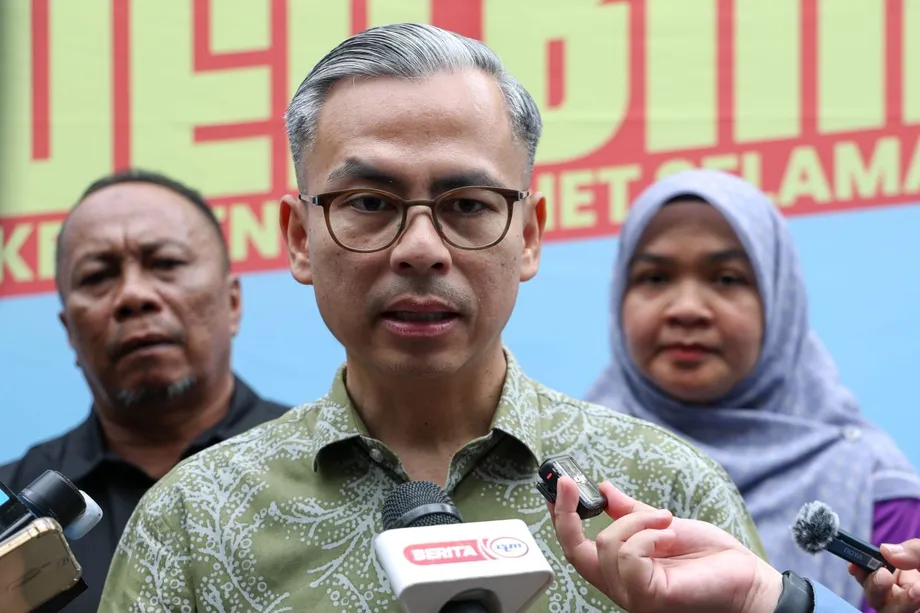
Malaysia will study whether to extend electronic identity checks and age verification to online gaming platforms such as Roblox, Communications Minister Fahmi Fadzil said in Kuala Lumpur on October 19, 2026. The review follows allegations by former Deputy Inspector-General of Police Tan Sri Ayob Khan Mydin Pitchay that extremists recruited children aged 12, 14 and 15 through the platform.
Contents
- Gaming checks under review after warning about children
- What identity and age verification would check
- Ayob Khan describes recruitment through private groups
- Police and communications regulator could act
- A warning raised before October
- Thailand and the Philippines consider national ID links
- A separate Johor case involved very young children
- Indonesia talks will cover age limits and creative work
- Key Points
Fahmi said the government would consider both issues involving underage users and the possibility that extremist, radical and terrorist groups could misuse gaming services. Roblox had shown a willingness to cooperate during discussions dating back to the previous year, he said.
The minister spoke after a document exchange ceremony for a RM5.2 billion financing facility for Digital Nasional Bhd. His announcement concerned a feasibility review: whether identity and age checks would be suitable for gaming platforms and how they might work. No implementation date, minimum gaming age or required verification method was announced.
For children and parents, the practical issue is whether access to games could eventually require proof of identity or age. For authorities, the concern extends beyond what happens inside a game to the private conversations that can follow contact there.
What identity and age verification would check
Electronic Know Your Customer, usually shortened to eKYC, means checking a person's identity online rather than meeting them in person. Depending on the system, this can involve an identity document or a national digital identity service.
Age verification answers a narrower question: how old is the user? A service might need to establish whether someone is above or below an age threshold, while an identity check seeks to establish who that person is. Fahmi identified both as subjects for discussion with Roblox.
Fahmi, describing the company's response to those discussions, said:
In my discussions with Roblox, for example, since last year, it has shown that they are ready to cooperate. The issue might only be in terms of user verification and user age verification.
Any eventual requirement would make verification part of the process of using a gaming account. The design would determine what information players must provide and how a platform checks it. Those choices are central to the feasibility study Fahmi described.
Ayob Khan describes recruitment through private groups
Ayob Khan's warning on October 18 described a sequence in which recruiters first approach children inside Roblox, then move them into private chat groups. He alleged that children are groomed there and taught to carry out attacks. Grooming means gradually building trust so that a person becomes easier to influence or exploit.
Ayob Khan, the former deputy police chief whose comments prompted Fahmi's response, identified the ages involved:
We have detected children aged 12, 14 and 15 being recruited through Roblox,
He said police had recently arrested children recruited in this way. He also described a shift from recruitment through closed meetings in person to contact online, where a game can become the first point of approach.
His account makes the movement between services a central concern. The initial conversation may take place in a gaming environment, while the alleged instruction and pressure occur later in a private group. The government's review addresses identity and age checks at the gaming stage; Ayob Khan's warning also concerns what happens after a child leaves that setting.
Police and communications regulator could act
Fahmi said the government continuously monitors platforms that could be misused by extremist groups, including through the National Security Council. He identified the Royal Malaysia Police and the Malaysian Communications and Multimedia Commission, known as MCMC, as authorities that could take action when needed.
The minister said urgent intervention could accompany the broader policy review. Explaining the government's position, he said:
We will consider various aspects, but if prompt action needs to be taken, that will certainly be carried out by the authorities.
Ayob Khan also called for effective preventive laws, arguing that authorities should be able to intervene before extremist threats become violent. He referred to powers previously available under the Internal Security Act and urged the public to strengthen their understanding of Islam.
He warned about Salafi Jihadi ideology being used to justify violence in the name of religion and cited the 2024 attack on the Ulu Tiram police station in Johor as an example of extremist violence. His appeal for preventive powers and Fahmi's review of platform verification address different stages of the same concern: identifying risks early and deciding when authorities should intervene.
A warning raised before October
Ayob Khan had already discussed recruitment through Roblox in July, while serving as deputy inspector-general of police. At the July 23 launch of his biography, Dari Pendang ke Bukit Aman: Jejak Integriti, he said extremists were using the platform to identify and recruit people.
He said many people arrested in a recent special operation were teenagers. He also argued that anger and personal grievances, alongside ideology, were pushing some people towards attacks. His October remarks returned to the subject with specific ages and an account of how children were moved into private groups.
The main events described by the officials form this timeline:
- 2024: The Ulu Tiram police station attack occurred in Johor, later cited by Ayob Khan in his warning about extremist violence.
- 2025: Discussions with Roblox began, according to Fahmi's October 2026 reference to talks since the previous year.
- July 23, 2026: Ayob Khan raised extremist recruitment through Roblox at the launch of his biography.
- October 18, 2026: Ayob Khan said children aged 12, 14 and 15 had been recruited through the platform.
- October 19, 2026: Fahmi announced that Malaysia would examine identity and age checks for online gaming.
- October 19 and 20, 2026: Fahmi was scheduled to travel to Bali and then Jakarta for a visit involving the World Conference on Creative Economy 2026 and ministerial meetings.
Thailand and the Philippines consider national ID links
Malaysia's review comes as neighbouring governments consider connecting Roblox accounts or verification processes with national identity systems. Thailand's digital economy ministry has proposed linking the country's National Digital ID to Roblox accounts during discussions about child safety.
The Philippines wants Roblox's age verification integrated with its national ID system. Roblox itself raised that idea, which the Philippine government wants to serve as a model for Meta and other platforms.
The three approaches share an interest in checking who is using an online service, but their stated scope varies. Thailand's proposal concerns a link to Roblox accounts; the Philippine proposal concerns age verification and a possible model for other companies. Malaysia is examining whether eKYC and age verification are suitable for gaming platforms.
A national identity link would use an existing identity system to help verify an account holder. Malaysia's review leaves the choice of technology open while placing both identity and age on the agenda.
A separate Johor case involved very young children
Roblox also featured in a separate police investigation in Kampung Parit Nipah Laut, Batu Pahat, Johor, where a boy aged six was seriously injured. Johor police chief Datuk Ab Rahaman Arsad said investigators believed the child's brother, aged nine, may have acted out of rage.
Police said the older boy had lost more than a million Roblox points after his younger brother accidentally damaged his phone. Investigators also considered possible psychological influence from excessive gaming.
The Johor investigation concerned violence within a family, while Ayob Khan's allegations concerned deliberate recruitment by extremists. Together, the cases explain the range of concerns surrounding children and gaming in the public discussion, from emotional reactions to losses inside a game to manipulation by people encountered online.
Indonesia talks will cover age limits and creative work
Fahmi said he would discuss restrictions on social media use by age with Indonesian counterparts during his visit. He was scheduled to leave for Bali on the afternoon of October 19 before travelling to Jakarta the next day, with plans involving the World Conference on Creative Economy 2026 and meetings with ministers responsible for communications, digital affairs and culture.
Fahmi said Indonesia had its own regulatory framework, with both similarities to and differences from Malaysia. He intended to discuss the challenges governments face when dealing with social media platform providers. Malaysia's communications regulator already applies age restrictions to social media users, while the gaming proposal would examine extending verification mechanisms to services such as Roblox.
The visit also had a commercial and cultural agenda. Fahmi said Malaysia wanted more of its local intellectual property, meaning creative works and the rights attached to them, to reach Indonesian audiences. Malaysian productions available through Viu already attract viewers in the neighbouring country, he said.
Discussions with Indonesia's culture minister would examine closer ties between the countries' cinema networks, productions distributed online and cooperation among film and creative content companies. The meetings therefore bring together two concrete priorities: setting rules for access to digital platforms and widening audiences for Malaysian work.
Key Points
- Malaysia is studying identity and age checks for online gaming platforms such as Roblox.
- Fahmi said Roblox had shown readiness to cooperate in discussions dating back to 2025.
- Ayob Khan alleged that children aged 12, 14 and 15 were recruited through Roblox and moved into private groups.
- The National Security Council monitors possible platform misuse, while police and MCMC could act when needed.
- Thailand and the Philippines are considering links between Roblox verification and national identity systems.
- Fahmi's Indonesia visit includes discussions on social media age restrictions, Malaysian creative works and cinema cooperation.