A promised salary, a missing passport and no way home
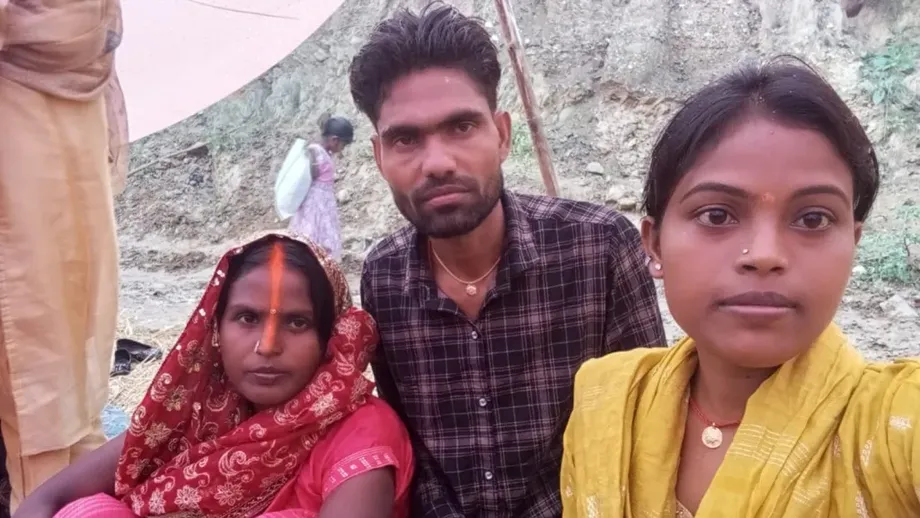
Three men from Muzaffarnagar in India's Uttar Pradesh say they were recruited for jobs in Malaysia paying RM2,127.33 a month, then moved between companies, denied wages and stripped of control over their passports. Their accounts describe heavy lifting, shifts lasting up to 17 hours and forged identity documents used to place Indian workers in jobs under another nationality.
Contents
- A promised salary, a missing passport and no way home
- Workers describe heavy loads and repeated transfers
- Forged passports and recordings presented as consent
- A timeline of warnings and alleged exploitation
- How exploitation can lead to undocumented status
- Passports, debt and barriers to asking for help
- What the official trafficking assessment records
- UN experts identify similar practices affecting Bangladeshis
- A new plan, but immediate remedies remain unresolved
- Key Points
Ramjaan, 37, says an Indian recruiter named Isha confiscated his passport on January 23, 2026, the night he arrived in Malaysia. After escaping alleged exploitation at a logistics company in Johor, he went into hiding. He speaks neither English nor Malay and fears that approaching authorities without documents could lead to arrest rather than protection.
Ramjaan described how his inability to explain his circumstances leaves him afraid to seek help:
I am scared what if I am arrested as an illegal migrant. How will I explain my situation in Hindi?
Danis, 29, and Babbar, 37, describe similar experiences involving the same recruiter. The promised work was packing nuts, with work permits, Malaysian residency and a monthly salary equivalent to about 50,000 Indian rupees. They say the reality was unpaid labour across logistics, agriculture and other businesses.
These allegations have not been established by a court judgment identified in the reporting. One company denied wrongdoing. Nevertheless, the accounts describe several risks documented separately by official bodies: passport confiscation, deceptive recruitment, transfers without consent, recruitment debt and fear of immigration enforcement.
The central problem is larger than whether workers can leave an abusive workplace. It is whether leaving allows them to reach safety, recover wages and return home without being treated first as immigration offenders.
Workers describe heavy loads and repeated transfers
Danis says the men carried boxes weighing between 30 and 50 kilograms without protective equipment. Their accounts describe chronic back pain, inadequate food and transfers between employers after they demanded wages or asked for their passports.
Danis, who says he arrived in Kuala Lumpur on January 23, 2026, described the working conditions:
We endured chronic back pain and survived on one meal a day while working up to 17-hour shifts. We never received any wages despite demanding them, and instead were transferred between employers without our consent,
He says this was his second experience of bonded labour, after being exploited at a brick kiln in India during the COVID pandemic. Bonded labour occurs when debt is used to keep someone working under conditions they cannot freely leave. Recruitment loans can create that pressure even before a worker reaches the destination country.
Babbar says he was transferred three times during five months in Malaysia, working at an express delivery business used by major online shopping platforms, a fruit wholesale company and a business assembling and maintaining commercial vehicles. Across the three men's accounts, they describe being moved between three and five companies.
The alleged transfers matter because responsibility can become difficult to trace when the recruiter, workplace operator and supposed employer are different parties. Establishing who controlled the workers, retained their documents and owed their wages would be central to any investigation.
Forged passports and recordings presented as consent
Babbar says a recruiter at the fruit warehouse gave him a forged Nepali passport before placing him at the commercial vehicle facility. Danis says he also received a forged Nepali passport before being assigned to the same workplace.
Babbar described the explanation he was given by the recruiter:
He told me Indians are barred from working there, that's why a fake passport is needed,
That statement is the recruiter's alleged explanation, not confirmation of a legal restriction. The workers' accounts do not establish who produced the documents or whether anyone at the receiving business knew they were forged.
Babbar also alleges that middlemen forced workers to record scripted videos declaring that their workplaces and accommodation were safe after they contacted relatives or authorities for help. Such recordings could give officials an appearance of consent while concealing threats or abuse.
Nirmal Gorana, convener of India's National Campaign Committee for the Eradication of Bonded Labour, says these recordings can undermine investigations:
because authorities may believe workers are safe when they are not
One company contacted about the allegations said it had no record of employing foreign nationals and had cooperated with the High Commission of India and the Labour Office. It rejected allegations of illegal employment, wage theft, passport confiscation and trafficking practices directed at it.
The company also said government agencies were satisfied with its explanation and documents. That remains the company's account of the official response, rather than an independently documented finding clearing every allegation. The workers' claims and the denial leave employment records, recruitment arrangements and document handling as unresolved issues.
A timeline of warnings and alleged exploitation
The workers' accounts follow several years of institutional research and official warnings about recruitment and protection failures in Malaysia. The dates also show that the proposed government response was being developed before the reported arrivals of Ramjaan and Danis.
- March to August 2022: Researchers interviewed 40 undocumented migrant workers for an International Organization for Migration study of how workers lose legal status in Malaysia.
- October 17, 2024: ODI published research by Pilar Domingo and Andika Wahab drawing on fieldwork in Kuala Lumpur, Selangor and Sabah.
- November 20 and 21, 2025: Malaysia's Ministry of Human Resources held a workshop to review its draft National Action Plan on Forced Labour for 2026 to 2030.
- November 21, 2025: Independent UN human rights experts warned about continuing exploitation of Bangladeshi migrant workers.
- January 23, 2026: Ramjaan and Danis say they arrived in Malaysia. Ramjaan says his passport was taken that night.
- March 2026: Babbar says he was brought to Malaysia.
- September 1: Babbar reportedly returned to India after about five months in Malaysia. The account places the return after his March 2026 arrival but does not separately specify the year of that date.
Babbar returned with debt reported at RM6,124, equivalent in the account to 150,000 Indian rupees, and a forged Nepali passport. Only one of the three men was reported to have returned home. No hearing date, rescue deadline or confirmed return arrangement for the other two is identified.
How exploitation can lead to undocumented status
An IOM study of Malaysia examined 40 undocumented workers, including eight women, through interviews conducted from March to August 2022. Participants included 14 people from Bangladesh, seven from Indonesia and 19 from Nepal. Researchers also conducted 10 stakeholder interviews and two focus group discussions.
All 40 participants had entered Malaysia through regular channels before becoming undocumented. Regular entry did not necessarily mean they had permission to work: the entry routes included work related visas, tourist visas and student visas. The finding nevertheless challenges the assumption that undocumented status always begins with an irregular border crossing.
The study's detailed breakdown attributes 24 cases to workers leaving because of exploitation, unethical recruitment or other rights violations. That represents 60% of the full sample and 24 of the 26 people who became undocumented after leaving an employer. Two of those 26 cited another job as the main reason for leaving.
One passage gives a broader figure of 26 workers fleeing exploitation, while the table and more specific explanation distinguish 24 exploitation related departures from two departures for another job. The detailed breakdown is the more precise basis for comparison.
The report describes work permits and visas tied to a particular employer and sector, with changing jobs generally invalidating immigration permission outside approved exceptions. That creates a trap: staying can mean continued abuse, while leaving can mean losing legal status.
It also describes penalties under Section 15(4) of the Immigration Act for overstaying, including a maximum RM10,000 fine, imprisonment of up to five years, or both. Those penalties concern immigration offences, not an automatic finding that someone seeking help has committed one.
Passports, debt and barriers to asking for help
Every worker in the IOM sample reported that an employer or recruitment agency retained their passport. Thirty six of the 40 said they lacked a route to report problems or obtain help, fearing job loss, arrest or detention. Language difficulties and immigration status made approaching outsiders harder.
Half the sample, 20 workers, reported being unable to maintain monthly debt repayments because of inadequate wages, deductions or disruption during the pandemic. Recruitment and migration costs reached US$5,000. The study connects that debt with pressure to remain in Malaysia despite exploitation.
These findings cannot be treated as national prevalence estimates because the study examined a small group of undocumented workers. They do, however, explain mechanisms that closely resemble the Indian workers' allegations: withheld passports reduce freedom to leave, unpaid wages prevent debt repayment, and fear of arrest discourages complaints.
A separate ODI study of Malaysia, published on October 17, 2024, reached related conclusions through interviews and discussions with 78 stakeholders. Authors Pilar Domingo and Andika Wahab conducted fieldwork in Kuala Lumpur, Selangor and Sabah.
They found that protection laws were weakened in practice by economic and political interests benefiting powerful groups. Migrants often avoided formal protection because they distrusted institutions or feared repercussions. The study recommended coordinated policy, stronger agency capacity and cooperation with NGOs and businesses, with workers having a greater voice in decisions affecting them.
What the official trafficking assessment records
The US Department of State's 2025 trafficking assessment kept Malaysia in Tier 2. That designation means the government does not fully meet minimum standards for eliminating trafficking but is making substantial efforts to do so. It is not a finding that every employer or recruitment agency is involved in trafficking.
The assessment records 160 confirmed trafficking victims among 635 potential victims identified. Of the confirmed victims, 126 were exploited in forced labour, about 79% of the total. Authorities initiated 122 labour trafficking investigations and prosecutions against 64 alleged labour traffickers.
The comparison with the previous reporting period is mixed. Total trafficking investigations rose from 157 to 188, while prosecutions fell from 117 to 72 and convictions fell from 40 to 26. Labour trafficking prosecutions declined from 77 to 64, although forced labour convictions rose from 13 to 16. Those counts concern different groups of cases, so they are not a conviction rate.
The assessment identifies corruption, uneven victim screening, interpretation shortages and inadequate coordination as continuing weaknesses. It says some victims were penalized for unlawful acts resulting directly from trafficking because officials failed to identify them properly.
A separate account states that no employment agencies were prosecuted under the Private Employment Agencies Act 1981 during an assessment period it dates from April 1, 2025, to March 31, 2026. That period extends beyond the year named in the linked 2025 assessment and cannot be reconciled with the official text presented here. The agency prosecution claim should therefore be treated as a separately reported finding, not folded into the 2025 statistics.
UN experts identify similar practices affecting Bangladeshis
In a November 2025 statement, independent experts appointed by the UN Human Rights Council said thousands of workers recruited through Bangladesh Overseas Employment and Services remained stranded in Bangladesh or faced exploitation risks in Malaysia.
The experts included Tomoya Obokata, Special Rapporteur on contemporary forms of slavery, Gehad Madi, Special Rapporteur on the human rights of migrants, and members of the Working Group on business and human rights. They cited information about recruitment fees exceeding official charges by more than five times, passport confiscation, false job promises and reassignment without consent.
They also described reports that workers were pressured to sign or record false declarations saying they had paid only official recruitment fees. Those declarations concerned fees rather than workplace safety, but the mechanism resembles Babbar's allegation: a statement presented as voluntary may have been obtained through pressure.
The experts called for independent investigations, restitution, debt relief and stronger inspections. They also proposed separating labour rights services from immigration enforcement so workers could report abuse without exposing themselves to arbitrary arrest, detention or deportation.
A separate reported case illustrates the potential human cost. Bangladeshi farmer Shofiqul Islam borrowed US$4,400 for a Malaysian construction job but was allegedly abandoned by Petrazehra Bhd after arrival. The company was reportedly approved to recruit 1,500 Bangladeshis despite having no revenue for two years. Jobless and burdened by debt, Islam fell ill and died in early 2024.
A new plan, but immediate remedies remain unresolved
The International Labour Organization's forced labour plan update describes Malaysia's development of a National Action Plan on Forced Labour for 2026 to 2030. It follows the first plan, which covered 2021 to 2025, and targets the elimination of forced labour by 2030.
The Ministry of Human Resources workshop on November 20 and 21, 2025, reviewed proposals for better recruitment governance, enforcement, victim protection and access to remedies, with coordination across Peninsular Malaysia, Sabah and Sarawak.
Rafea'ah Binti Nahar, undersecretary of the ministry's Policy Division, set out the intended standard for the plan:
The action plan that will be developed for 2026–2030 must be proactive, effective and commit to the nation's aspiration of eliminating forced labour by 2030,
The ILO connected those efforts to Malaysia's obligations under the Forced Labour Convention, 1930, and its 2014 Protocol. At the stage described, the revised draft still had to be circulated to ministries and agencies before submission to Cabinet. The update does not establish a final approval date.
For the Indian workers, the immediate needs are more specific: safe contact with authorities, interpretation, identity documents, wages and return arrangements. Gorana and Babbar's family say assistance for a return ticket was denied despite assurances after they sought help through India's MADAD consular support portal.
Police complaints, including a First Information Report, were reportedly lodged in Meerut and Muzaffarnagar against Isha and associates named Nadeem, Talib, Tayyab and Dilshad. An FIR formally records information about an alleged offence; it is not proof of guilt. The men named in the complaints were reported to remain at large.
Gorana says his organization is in contact with more than 20 Indian workers allegedly trafficked into bonded labour in Malaysia by Isha and other recruiters. No confirmed timetable for their rescue, compensation or the resolution of the complaints is identified. The policy proposals address many of the risks the workers describe, but their accounts do not establish that those protections have reached them.
Key Points
- Three Indian workers allege unpaid labour, passport confiscation and transfers between Malaysian companies without consent.
- Babbar and Danis say they were given forged Nepali passports. One company denied wrongdoing.
- An IOM study found that all 40 participants entered through regular channels before becoming undocumented; 24 left employers because of exploitation or rights violations.
- The US 2025 assessment kept Malaysia in Tier 2 and recorded 126 confirmed forced labour victims.
- Independent UN experts called for investigations, debt relief and protection against immigration penalties when workers report abuse.
- Malaysia's proposed 2026 to 2030 forced labour plan targets stronger recruitment controls and victim remedies, while return arrangements and legal outcomes for the workers remain unresolved.