
Deadly attacks spread across three districts
Nine people were reported killed across Manipur's Kamjong, Kangpokpi and Ukhrul districts during violence on October 9 and 10, 2026, as gunfights and arson struck villages and a civilian travelling by car. The dead included six Nagas, two Kukis and a Gorkha farmer. Additional security forces were deployed to Kamjong and Kangpokpi, while separate shutdowns disrupted National Highways 2 and 202.
Contents
- Deadly attacks spread across three districts
- Chassad killing triggered the escalation
- How the violence unfolded
- Four Naga deaths reported in Kangpokpi
- Border village attacked and driver killed
- Restrictions and shutdowns affect movement
- Community groups demand protection and accountability
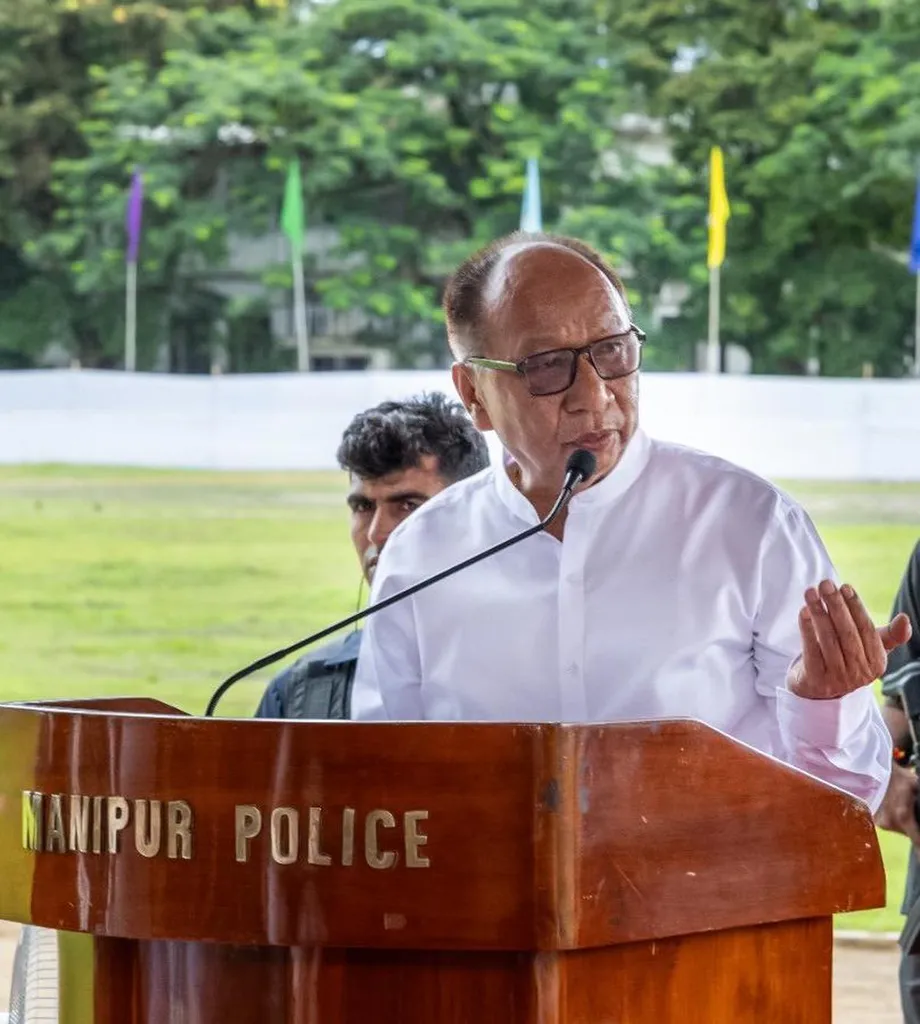
- Chief minister calls for restraint after meeting Modi
- Earlier killings show a widening conflict
- At a Glance
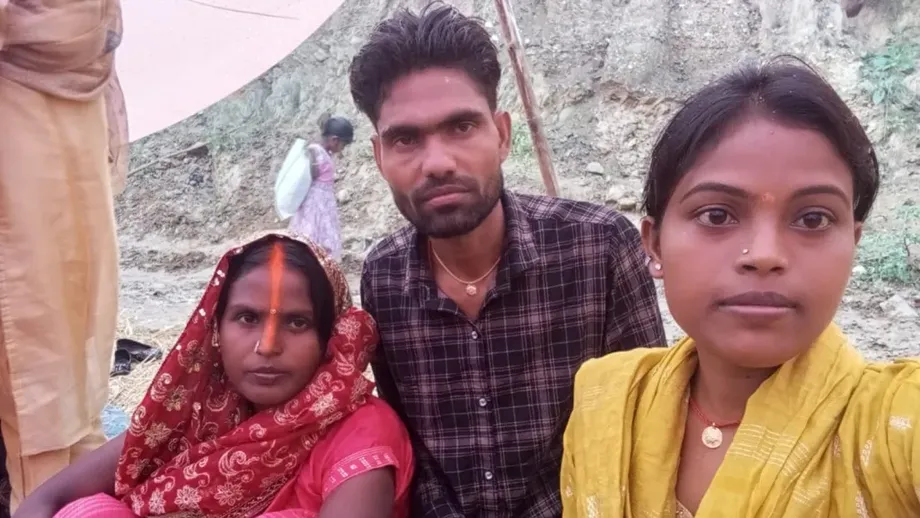
The reported district breakdown was four deaths in Kamjong, four in Kangpokpi and one in Ukhrul. Among the victims were Domkhonei Touthang, a Kuki mother of five killed at Chassad village, and Sandeep Rai, who was shot while driving in Ukhrul. At least 14 houses belonging to members of both communities were reportedly burnt, although earlier accounts counted 10 houses in the Kamjong clashes.
The nine deaths became the most widely reported count by Sunday, October 11. An unofficial toll of 11 included two alleged members of the Myanmar based Kuki National Army-Burma reportedly killed in a gunfight near the international border in Kamjong. Those additional deaths were not part of the confirmed nine. Earlier accounts counted five deaths, while former chief minister N Biren Singh initially claimed seven, a figure not then confirmed by police or the state government.
Reports describe the outbreak as unfolding over either 12 or 24 hours. Both descriptions cover violence beginning on Friday night and continuing into Saturday. No fresh fatality was reported on Sunday in a subsequent account, but the deployments and transport shutdowns reflected continuing concern for residents' safety.
Chassad killing triggered the escalation
Touthang's death at Chassad, a Kuki majority village in Naga majority Kamjong, preceded the wider attacks. Officials placed the shooting at about 9:35 p.m. on October 9. Accounts put her death between approximately 9:40 p.m. and 10 p.m.
Several reports identify her as 42. Two other accounts describe the woman as 22, an unresolved discrepancy. Reports also differ over her injuries: one describes bullets striking her leg and chest, while another says she was shot in the neck and died within minutes.
The circumstances of the confrontation are disputed. According to police and officials, personnel from the state police, Indian Reserve Battalion and Border Security Force were dismantling illegal bunkers near Chassad police station. Women attempted to stop the operation, unidentified assailants fired at security personnel, and the personnel returned fire. That account places Touthang in crossfire.
Other accounts say the women were protesting the detention of Kuki village volunteers or youths. One alleges that Indian Reserve Battalion personnel shot Touthang; another describes a scuffle in which she was fatally injured. Kuki organisations have accused security personnel and Naga armed groups of responsibility. These allegations do not establish who fired the fatal shot, and no conclusive investigative finding has been reported.
Michael Ngamminlen Haokip was subsequently killed at Chassad. Reports generally identify him as 22 or 23, although one account describes the male victim as 42. The attack in which he died reportedly began around 4:30 a.m. on Saturday. Kuki organisations accused NSCN-IM of involvement, while houses were set alight amid exchanges of gunfire.
How the violence unfolded
The attacks occurred at several locations within hours of one another. Exact timings differ, particularly for the Kangpokpi incidents, but the principal sequence is:
- October 9, about 9:35 p.m.: Touthang was fatally injured during the confrontation at Chassad in Kamjong.
- October 10, early morning: Haokip was killed as gunfire and arson continued at Chassad.
- October 10, around 5 a.m. in one account: An attack on Makui Ashang in Kangpokpi killed Naga village guards. A separate ambush near Tapon reportedly followed about an hour later.
- October 10, about 5:30 a.m. to 6 a.m.: Rai was killed while travelling by car in Ukhrul.
- October 10, around 9:30 a.m.: Two Nagas were killed at Ningchou, near the Myanmar border in Kamjong.
- October 10 evening to October 11 evening: The Committee on Tribal Unity called a 24 hour shutdown in Kangpokpi. Kuki organisations separately announced an indefinite shutdown on National Highway 202.
The concentration of attacks across three districts made this more than a single village confrontation. However, official accounts have not established whether all the incidents were coordinated or whether each involved the same armed organisations.
Four Naga deaths reported in Kangpokpi
Accounts agree that four Nagas died in Kangpokpi, but differ on where and how those deaths occurred. One describes four village defenders killed during an attack on Makui Asang at approximately 9:30 a.m. The defenders reportedly responded with licensed firearms and single barrel guns after armed men surrounded the Liangmai Naga village.
Other accounts describe three village guards killed at Makui at around 5 a.m., followed by a separate ambush on volunteers travelling from Tapon to assist the village. In that version, Machungwangbou, 35, of Thalon village, was killed about two kilometres from Tapon. Two other volunteers suffered bullet injuries and were taken to Senapati district headquarters for treatment.
Names also differ between reports. The Makui victims are variously identified as Machungammamg or Daimai Machungammamg, Ajinpou Ringkangmai, and Robert or Robart. Another account lists M Daimai, R Gangmei and Ringkangmai. These variations should not be treated as evidence of additional deaths beyond the reported district total.
A Naga civil organisation, Working Committee JTC Manipur, alleged that a 52 year old villager identified as Ajinbou R had been beheaded and demanded the return of his head for burial. Another account identifies the victim as Ajinpou Ringkangmai. Reports describing mutilation said there was no official confirmation, and circulating videos were not independently verified. The allegation therefore remains distinct from the confirmed fatality count.
Border village attacked and driver killed
At Ningchou, also described as Ningchou Chingdong, two Nagas were killed at about 9:30 a.m. on Saturday. Several accounts identify them as Ngachanso Ningshen and Leishishan Leishadang. Ningshen's age is reported as either 30 or 35; Leishadang's as 45 or 48. Another police account gives the second victim's name as Leishishan Hungyo, 50.
The victims are described in different reports as civilians or village guards. Security forces reportedly reached the village after the shooting, and bodies were sent to Kamjong district hospital for postmortem examinations. Tangkhul Naga Long also reported two people seriously injured.
Villagers alleged that the attackers fled towards Myanmar. Tangkhul Naga Long blamed the Kuki National Army-Burma and Eastern Zone village volunteers. A police account said armed groups from across the border might have been involved, but explicitly said there was no official confirmation and that an investigation was under way.
In Ukhrul, Rai was killed inside the vehicle he was driving. Reports identify him as a Gorkha farmer or a man of Nepalese origin, but differ on his age, giving either 30 or 40. One calls him a Nepali citizen; his nationality has not been consistently established.
The location is variously described as Konjang village on National Highway 202, near Chepu Yaolen, or along the Mahadev-Toloi-Pfutsero road. Police placed one account of the ambush about 12 kilometres northwest of Litan police station. Litan police reportedly recovered his body and registered a case. The attackers' identities and motive remained unestablished.
Restrictions and shutdowns affect movement
Kamjong authorities imposed prohibitory orders around Chassad police gate junction. Reports describe restrictions under Section 162 of the Bharatiya Nagarik Suraksha Sanhita, or BNSS, India's criminal procedure law. Within a 400 metre radius of the junction, assemblies of five or more people were prohibited. The full order was not reproduced, so other conditions or exemptions cannot be specified.
The Committee on Tribal Unity, a Kuki organisation, announced a 24 hour shutdown across Kangpokpi from Saturday evening. Reports also describe the action as affecting National Highway 2, which connects Imphal and Dimapur. The scheduled period ran until Sunday evening.
The Working Committee of Kuki Civil Society Organisations in Ukhrul separately announced an indefinite shutdown along National Highway 202 from Saturday morning. That highway connects Imphal and Ukhrul and continues towards Nagaland. No end date for that shutdown was reported.
These were shutdown calls by community organisations, separate from the government's prohibitory orders. Together, they disrupted movement on two major routes while reinforcements were sent to the districts most affected by the attacks.
Community groups demand protection and accountability
Kuki Inpi Manipur accused NSCN-IM and NSCN-Eastern Flank elements of coordinating attacks with state security personnel, including Tangkhul police and Indian Reserve Battalion members. The Kuki Chiefs' Association, Manipur, additionally named ZUF-K cadres in its allegations about the October 9 and 10 violence at Chassad.
The chiefs' association demanded police complaints for murder, arson and criminal conspiracy, followed by arrests. It sought payments of Rs 30 lakh for each bereaved family, government jobs for the deceased's next of kin, compensation for property losses and reconstruction of burnt homes. It also called for more central forces in Kuki villages in Kamjong, Ukhrul, Tamenglong and Noney.
The association repeated its demand for a separate union territory with a legislature for Kuki-Zo people. That is a demand for a different administrative arrangement, not a measure announced by the government in response to these killings.
Tangkhul Naga Long, the apex traditional body of the Tangkhul Naga community, alleged repeated attacks on border settlements and urged authorities to protect Kamjong residents. Its accusations of aggression from Myanmar, like Kuki organisations' allegations of security force collusion, remain claims requiring investigation rather than established explanations of the entire outbreak.
Chief minister calls for restraint after meeting Modi
Chief Minister Yumnam Khemchand Singh was in New Delhi meeting Prime Minister Narendra Modi as the violence unfolded. Singh said Modi had assured the state government of all possible help in restoring peace and normalcy. His office said the prime minister acknowledged the government's efforts and felt that the situation had improved.
Singh condemned the latest killings and described his instructions to authorities in a social media post:
I condemn the killing of innocent civilians and the violence... I have instructed the authorities concerned to take immediate and effective steps to control the situation, restore peace and order and ensure the safety and security of all citizens.
He appealed to communities to exercise restraint and prioritise peace, dialogue and harmony. The renewed deaths, however, demonstrated the immediate protection challenge confronting the government alongside its stated progress towards normalcy.
Former chief minister N Biren Singh expressed alarm, specifically mentioning Rai's killing. He questioned the state's ability to prevent armed attacks:
What is going on? How weak have we become that armed militants can kill people, burn down police stations and challenge the authority of the Indian state with such impunity?
His reference to attacks on police stations was a claim, not an independently established detail of these incidents. Biren Singh called for recovery of illegally held weapons, operations against armed militant groups and stronger border security. Union Home Minister Amit Shah was reportedly scheduled to visit Manipur that month, but no exact visit date was given.
Earlier killings show a widening conflict
The latest outbreak followed a deadly period from August 27 to September 26. A reported count for that interval lists 21 people killed, comprising 11 Nagas and 10 Kukis, with an unborn child bringing the count to 22. Four Nagas were killed in Kangpokpi on August 27, and another four were killed at Pilong village in Kamjong on September 24.
After the Pilong attack, the Working Committee of Tangkhul Naga Long blamed the Kuki National Army-Burma and Kuki elements backed by Myanmar's People's Defence Force. It described the attack as the third such incident along Kamjong's international border. Those allegations provide context for current border security demands but do not prove responsibility for the October attacks.
Reports differ on when the Naga-Kuki conflict began. Several place its start in February; another dates the wider outbreak to May. The reported sequence includes twin ambushes on May 13 that killed four civilians, including three church leaders, and the taking of 48 hostages from both communities. Fourteen people from each community were released two days later. The remaining 14 Kuki civilians were released on June 9, while the bodies of six Naga hostages were recovered on June 10.
Cumulative death counts also use different periods and categories. One account gives at least 22 Naga and 31 Kuki deaths since February, a combined 53. Other reports cite more than 40 or nearly 50 deaths. The Kuki Chiefs' Association separately claimed 30 Kuki civilian deaths since March 11 in attacks it attributed to particular Naga armed groups. Those figures cannot be treated as interchangeable.
The Naga-Kuki fighting is distinct from, though occurring amid, the Meitei-Kuki violence that began in May 2023. Reports give varying totals for that broader crisis, from more than 260 deaths to nearly 320, and displacement figures exceeding 60,000, with one estimate of 66,000. For the latest attacks, the central unresolved matters are responsibility, disputed victim details and whether the unofficial additional deaths will be confirmed. No investigation deadline or announced compensation decision was reported.
At a Glance
- Nine deaths were reported across Kamjong, Kangpokpi and Ukhrul following violence on October 9 and 10.
- The reported victims included six Nagas, two Kukis and a Gorkha farmer.
- An unofficial count of 11 included two alleged armed group members whose deaths were not confirmed in the main toll.
- At least 14 houses reportedly burnt, while earlier accounts counted 10 in Kamjong.
- Additional forces were deployed to Kamjong and Kangpokpi, and gatherings were restricted around Chassad police gate junction.
- Community organisations called a 24 hour shutdown affecting National Highway 2 and an indefinite shutdown on National Highway 202.
- Responsibility for the attacks and several details of the victims and circumstances remain disputed.