
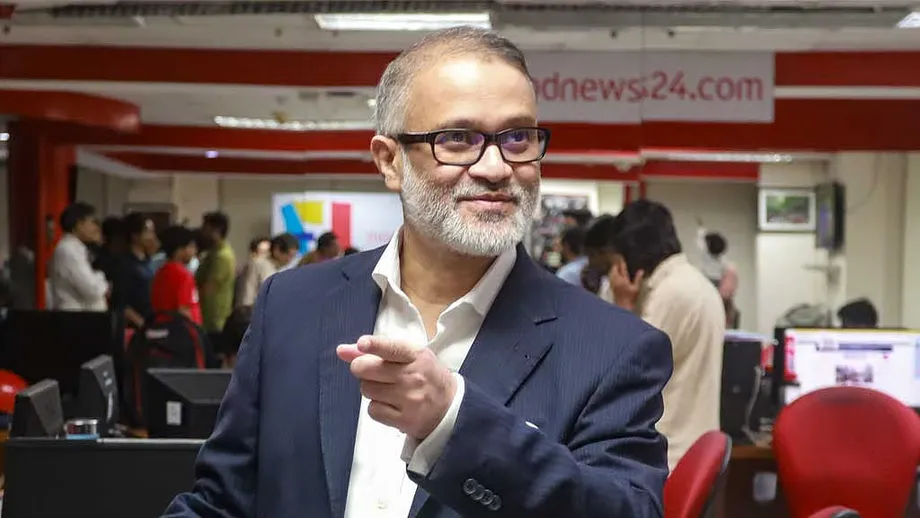
A final farewell, and a commitment to continue his work
Toufique Imrose Khalidi, the editor in chief and managing director of bdnews24.com, was buried at the Martyred Intellectuals Graveyard in Mirpur around 5:00pm on Saturday, October 10, 2026. He was 59. His farewell brought together family members, journalists, politicians, academics and cultural figures, with tributes focused on the independent newsroom he built and the standards colleagues said they must now preserve.
Contents
- A final farewell, and a commitment to continue his work
- From London to his newsroom and home
- Tributes from public life and the family
- Remembering an editor who built an institution
- A career that moved from print to digital news
- Verification before speed, fairness alongside scrutiny
- Pressure to remove reports and the boundaries of independence
- Investing in colleagues and younger journalists
- Cultural plans and tributes after the burial
- Key Points
The burial followed funeral prayers at the Old DOHS playground in Banani at 3:30pm. Khalidi had died at St Bartholomew's Hospital in London on October 2 after suffering a brain haemorrhage, a condition in which bleeding occurs in or around the brain. His body returned to Dhaka aboard a Biman Bangladesh Airlines flight around 11:00am on the day of his burial.
Before the prayers, Chief News Editor Zahidul Kabir read a tribute from acting editor in chief Biswadip Das. The message connected the loss of the editor to the responsibility facing those continuing his work.
Khalidi taught us to ask difficult questions, not to bow our heads under pressure, and to bring the truth before the public, however uncomfortable it may be.
Das also set out the commitment expected of the organisation:
It is our collective responsibility to carry forward the ideals he left behind and the work he began.
Mourners voiced a similar wish: that bdnews24.com should continue along the path Khalidi had established. Their accounts gave that appeal a practical meaning, recalling verification rules, resistance to demands to remove accurate reporting, investment in journalists and an early belief that news delivered through the internet would change Bangladesh's media.
From London to his newsroom and home
Khalidi was visiting London privately when he suddenly became ill on the night of October 1. He was taken to St Bartholomew's Hospital, where doctors identified bleeding in his brain. He was declared dead the next day at 2:23pm local time.
Funeral prayers were held at Brick Lane Mosque in east London on October 8, after the midday prayer. Former colleagues and representatives of the local Bangladeshi community attended before his body was returned home.
In Dhaka, the coffin was taken from Shahjalal International Airport to the bdnews24.com office, where it remained from noon until 12:20pm. It then went to his residence, allowing family members and relatives to see him for the last time. His body reached the Banani playground around 2:30pm, an hour before the funeral prayers.
The sequence of events extended across two countries:
- October 1: Khalidi fell ill at night while visiting London.
- October 2: He died at St Bartholomew's Hospital at 2:23pm local time.
- October 8: Funeral prayers were held at Brick Lane Mosque in east London.
- October 10: His body arrived in Dhaka, went to his office and home, and was buried in Mirpur after prayers in Banani.
- October 11: Representatives of progressive teachers' organisations visited his grave to pay tribute and pray.
Tributes from public life and the family
Brig Gen Mohammad Raisul Islam, assistant military secretary, laid a wreath on behalf of President Mirza Fakhrul Islam Alamgir. Gokul Bimal Kala, first secretary for political, press and information affairs at the Indian High Commission, paid tribute on behalf of the mission.
Local Government, Rural Development and Cooperatives Minister Abdul Moyeen Khan remembered Khalidi's contribution beyond reporting daily events. He said the editor's analysis of Bangladesh's social, political and economic conditions had also made a substantial contribution.
A statement by Raad Sharar Khalidi, a director of Bangladesh News 24 Hours Limited, was read before the prayers by his cousin Taraf Khalidi. The family message formed part of the farewell alongside the acting editor's tribute.
Those paying their respects also included former Bangladesh Garment Manufacturers and Exporters Association president Anwar ul Alam Chowdhury Parvez, Dhaka University Treasurer Professor Jahangir Alam Chowdhury, and Shayrul Kabir Khan, a member of the BNP media cell and advisory editor of Shomoyer Alo. Their attendance placed business, education and political representatives alongside the journalists who had worked with Khalidi.
Remembering an editor who built an institution
Mahfuz Anam, editor and publisher of The Daily Star, distinguished between Khalidi's work as a journalist and his achievement in creating and managing a media organisation. Speaking at the funeral, he said:
"Many of us have devoted our lives to journalism. But he built an institution like bdnews24.com and ran it as well," Anam said.
Anam described the organisation's commitment to professional ethics and editorial independence as one of Khalidi's outstanding contributions to Bangladesh's media. He also remembered him as a brave and creative person.
Senior journalist Kamal Ahmed, consulting editor of The Daily Star, recalled Khalidi's willingness to take on new challenges while building bdnews24.com. Justice Abu Taher Mohammad Saifur Rahman, a friend of Khalidi, remembered an intelligent, talented and courageous voice.
Former Jatiya Press Club president Shawkat Mahmud said the journalists Khalidi had nurtured would carry forward his ideals. Liberation War researcher and columnist Salek Khokon described his death as a loss for the state and remembered an editor willing to show courage at a difficult time.
Together, these tributes identified two parts of his legacy: the decisions he made himself and the journalists equipped to make similar decisions after him. The pledge to continue his work therefore concerned both editorial leadership and everyday newsroom practice.
A career that moved from print to digital news
Khalidi began his journalism career at the Sunday Express in 1989. He subsequently worked at The Daily Star and The Financial Express before joining the BBC World Service, where he worked from 2000 to 2005. In July 2006, he became editor in chief and managing director of bdnews24.com.
His 37 years in journalism included roughly two decades leading the digital organisation. That tenure followed experience in newspaper reporting, editing and international broadcasting, bringing several forms of journalism into the newsroom he directed.
Former colleague Ashish Chakraborty recalled meeting Khalidi in 2006 during discussions about joining the organisation's sports team. Khalidi believed online news would gradually take the place occupied by daily newspapers. Chakraborty's recollection shows how that belief translated into work: cricket updates were published while matches were under way, rather than held for the next morning's paper.
The change was not simply a different place to publish the same finished story. It required reporters and editors to work through an unfolding event, repeatedly checking and updating information. Chakraborty remembered that some reporters still had to explain what an online news organisation was, at a time when internet access was far less widespread.
Former Bangladesh Television deputy director general K M Haroon similarly recalled Khalidi bringing leading journalists together when internet access was limited. His tribute focused on the lasting foundation that this early effort created for digital journalism in Bangladesh.
Verification before speed, fairness alongside scrutiny
Khalidi's own accounts of his editorial approach placed accuracy at the centre of the newsroom's work. At the organisation's 15th anniversary event in 2021, he described a practice of confirming sensitive information through at least two sources and naming sources rather than relying on anonymous attribution.
Those requirements address two separate problems. Confirmation from another source helps test whether a claim is reliable. Naming the person providing information allows readers to assess that person's knowledge, responsibility and possible interests. Khalidi presented these practices as standards his organisation had sought to establish in Bangladesh's journalism.
At the 17th anniversary event in 2023, he renewed his commitment to avoiding false reports. He said there had been occasions when the newsroom could not tell the truth and remained silent, but maintained that it had not chosen to publish falsehoods instead. These were his assessments of the organisation's record, rather than an independent audit of its coverage.
Mostafa Mamun, a former colleague who now edits Agamir Shomoy, remembered another part of that discipline: treating the subject of a report fairly. Allegations had to be properly supported, he said, while praise should not become excessive. Even someone harmed by a report should be able to recognise that the treatment was fair.
That recollection adds substance to the funeral tributes about independence. For Mamun, resisting outside pressure did not remove the newsroom's obligation to establish a claim carefully or to exercise restraint in how it described a person.
Pressure to remove reports and the boundaries of independence
Former senior news editor Munirul Islam recalled an incident on June 6, 2018, when repeated pressure was applied to remove a published report. In his account, Khalidi first asked whether the report contained an error. After being told it did not, he instructed the newsroom not to remove it.
The distinction matters: his remembered decision rested on whether the journalism was accurate, rather than on the strength of the demand against it. The recollection does not establish a rule against correcting mistakes. It describes a refusal to withdraw reporting that the editor was told was sound.
On February 18, 2021, Khalidi said editors had received more than three dozen legal notices demanding the removal of reports. Retrospective accounts also state that the Anti Corruption Commission withdrew a case alleging assets beyond his known income on September 5, 2024. That reported withdrawal is distinct from a court acquittal; no judicial finding is described here.
Khalidi also argued that a media organisation should not become involved in political efforts to change state power. His discussions addressed ownership, editorial independence and the difference between regulating media and controlling it. He referred to the National Broadcast Policy of 2014 and the National Online Mass Media Policy of 2017, placing those concerns within Bangladesh's policy debates.
These positions show the scope of the independence he advocated: freedom to scrutinise powerful people, coupled with a boundary against turning the newsroom into an instrument of political activity.
Investing in colleagues and younger journalists
Chakraborty's memories of joining bdnews24.com included a specific recruitment proposal. He recalled Khalidi offering incoming journalists their existing salaries plus an amount equal to 40 percent of their basic pay. That is not necessarily a 40 percent rise in total salary, since basic pay can be only one component of compensation.
He also remembered Khalidi trusting colleagues to carry out their responsibilities and asking him to take charge of new media work. During coverage of political arrests under the military backed government, reporters were positioned at different locations and phoned information to the central desk. Updates then reached the website and mobile audiences.
The recollections describe an organisation built around coordinated reporting as much as technology. Live publication depended on journalists gathering information in the field and editors making it usable quickly.
Khalidi's interest in younger journalists also took a concrete form through Hello, the children's journalism website launched on March 31, 2013. A new version of the website was unveiled on May 31, 2022. He referred to the initiative when discussing the training of future journalists.
Theatre director Mohammad Ali Haider remembered Khalidi as someone who anticipated where journalism was heading and enjoyed working with young people. That assessment echoed Shawkat Mahmud's funeral tribute about the generation of journalists who would carry his ideals forward.
Cultural plans and tributes after the burial
Actor Tariq Anam Khan remembered Khalidi's directness and candour, along with his role in online journalism. He said they had become close over the previous two or three months and had visited each other's homes. Khalidi had discussed cultural and media projects, including work with actress Nima Rahman and ideas involving a YouTube channel.
Rahman recalled working with him over his final eight months. Her memories combined his hospitality with his attention to programme production: he pointed out small faults and suggested ways to make programmes more engaging for viewers. The accounts do not establish whether the projects Tariq Anam mentioned will now proceed.
Others attending the farewell included BRAC Executive Director Asif Saleh, Agamir Shomoy Executive Editor Ehsanul Haque Babu, former Bangladesh Federal Union of Journalists president Omar Faruque, columnist Chiranranjan Sarker, BBC journalist Kadir Kallol, Professor Sadeka Halim and human rights activist Dipayan Khisa.
Tributes continued on Sunday afternoon, October 11, when leaders of the Bangladesh Public University Progressive Teachers' Society visited the grave. Those present included President Professor Ahiduzzaman, General Secretary Professor Mahabubur Rahman, and joint general secretaries Professor Purba Islam and Professor Moniruzzaman Shahin. Sharif Ahmed Sadi and Mohammad Ali Chowdhury Manik, president and senior vice president of the Bangladesh Progressive Teachers' Society, also paid respects.
For the newsroom, the clearest commitment remains the one read before the funeral prayers: to continue the work Khalidi began. The accounts identify the standards attached to that pledge, including verification, fairness, editorial independence and investment in the next generation. No timetable for a permanent leadership appointment or decisions on his unfinished cultural projects has been announced in these accounts.
Key Points
- Khalidi, 59, was buried in Mirpur on October 10 after funeral prayers in Banani.
- He died in London on October 2 following a brain haemorrhage.
- His journalism career began in 1989, and he led bdnews24.com from July 2006.
- Colleagues recalled his insistence on verification, fair treatment and resistance to pressure against accurate reports.
- Acting editor in chief Biswadip Das pledged to carry forward his ideals and work.
- Teachers' organisations paid tribute at his grave on October 11.