
Two blocked routes deepen Afghanistan's hunger crisis
Afghanistan's supply crisis has moved from stranded containers to empty nutrition clinics. On June 4, 2026, World Food Programme Acting Executive Director Carl Skau said an additional 2.3 million people in Afghanistan had been pushed into acute hunger as rising prices, disrupted deliveries and funding cuts reduced access to food.
Contents
- Two blocked routes deepen Afghanistan's hunger crisis
- How Pakistan's closures led to dependence on Iran
- The dates behind the supply breakdown
- Empty clinics amid record nutrition needs
- A biscuit shipment's journey across multiple countries
- Traders face freight bills many times higher
- Central Asia keeps trade moving, but unevenly
- Funding cuts and returning families increase pressure
- A ceasefire has not restored dependable deliveries
- The Essentials
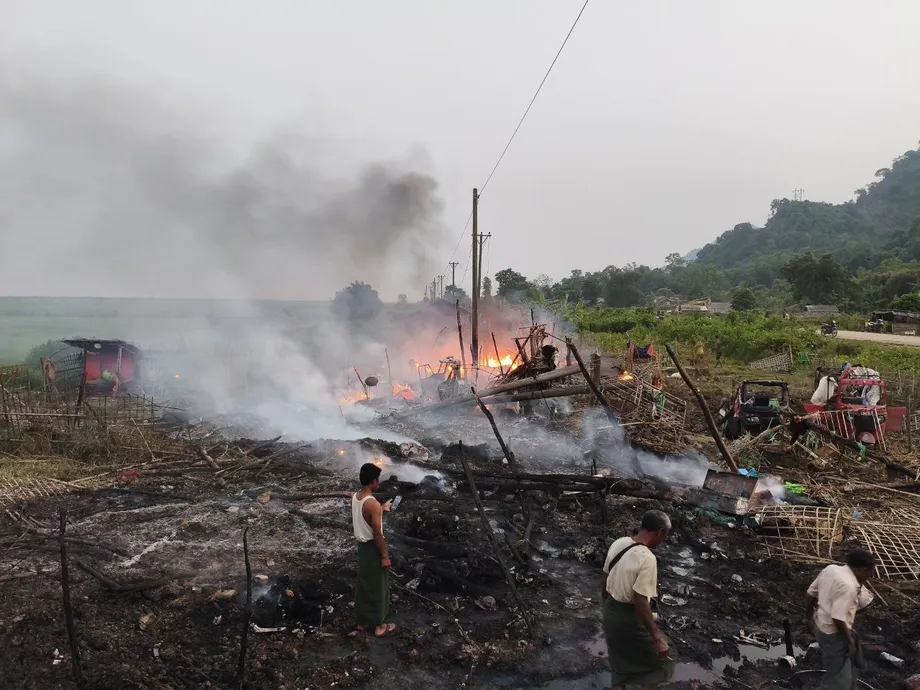
The landlocked country has lost reliable access to two major commercial corridors in succession. Border fighting with Pakistan closed crossings in October 2025, leaving thousands of containers destined for Afghanistan stuck in Pakistan and restricting access to Karachi port. Traders and aid agencies shifted shipments toward Iran's Bandar Abbas port, only for war and restrictions in the Strait of Hormuz to disrupt that alternative.
The United Nations' June 4 briefing described hundreds of vessels and tens of thousands of seafarers stranded amid continuing uncertainty. A fragile ceasefire between the United States and Iran has eased fears of immediate military escalation, but sporadic hostilities and transport disruption continue to affect deliveries far beyond the Gulf.
For Afghanistan, the consequences are especially severe because the interruption has struck an aid operation already short of money. WFP says it can currently assist 2 million people each month, compared with 4 million last winter. More expensive transport means the same budget buys less assistance, while delayed cargo leaves clinics without the nutritious food needed by vulnerable mothers and children.
The crisis is therefore more than a shortage of shipping capacity. Commercial goods, food aid and specialized nutrition supplies face overlapping obstacles, and reopening one route would not by itself resolve the funding gap that was restricting assistance before the latest war began.
How Pakistan's closures led to dependence on Iran
Pakistan previously supplied most of WFP's shipments into Afghanistan. Its ports also gave Afghan businesses access to goods arriving by sea. When fighting shut key crossings in October 2025, both humanitarian agencies and traders had to find alternatives to that established route.
The October border closures affected Torkham and Chaman, along with smaller crossings at Kharlachi, Angoor Adda and Ghulam Khan. The disruption followed deadly exchanges along the frontier and competing claims from the Pakistani military and Taliban authorities about casualties and responsibility.
Relations deteriorated further with the airstrikes on Kabul described in coverage published on March 1, 2026. Pakistan also struck targets in Kandahar and Paktia, while Taliban authorities claimed retaliatory drone attacks inside Pakistan. That escalation made restoring the commercial corridor a political and security issue as well as a transport problem.
Iran initially provided a substitute. Shipments could pass through Dubai and Bandar Abbas before continuing toward Afghanistan. However, Bandar Abbas lies on the Strait of Hormuz, exposing the replacement route to the regional conflict that escalated on February 28.
The sequence left goods trapped at different stages of their journeys: containers awaiting passage from Pakistan, cargo aboard vessels unable to cross Hormuz, and aid consignments repeatedly redirected through other countries. Northern routes through Central Asia remain in use, but they have not restored the speed or cost of the disrupted corridors.
The dates behind the supply breakdown
The shortages did not begin with the latest shipping crisis. Funding cuts had already reduced nutrition assistance, and the subsequent border and maritime disruptions compounded that loss of capacity.
- May 2025: WFP completely halted distribution of specialized food used to prevent malnutrition because of insufficient funding.
- October 2025: Border closures with Pakistan interrupted established trade and humanitarian supply routes.
- February 28, 2026: The regional escalation began, followed by severe disruption around the Strait of Hormuz.
- Mid April 2026: Critical nutrition supplies for WFP's Afghanistan operations had been depleted.
- May 15, 2026: WFP estimated that transport delays and higher costs had prevented it from assisting about one million additional children at risk of malnutrition.
- June 4, 2026: Skau said another 2.3 million people in Afghanistan had been pushed into acute hunger.
These figures measure different problems. Children whom WFP could otherwise have reached are not the same category as people newly facing acute hunger. Neither figure should simply be added to an earlier national food insecurity projection without knowing the assessment period and whether the groups overlap.
Empty clinics amid record nutrition needs
WFP's Afghanistan emergency assessment projects that 13.8 million people, nearly one third of the population, will experience acute food insecurity. This means their access to adequate food is threatened severely enough to require urgent action.
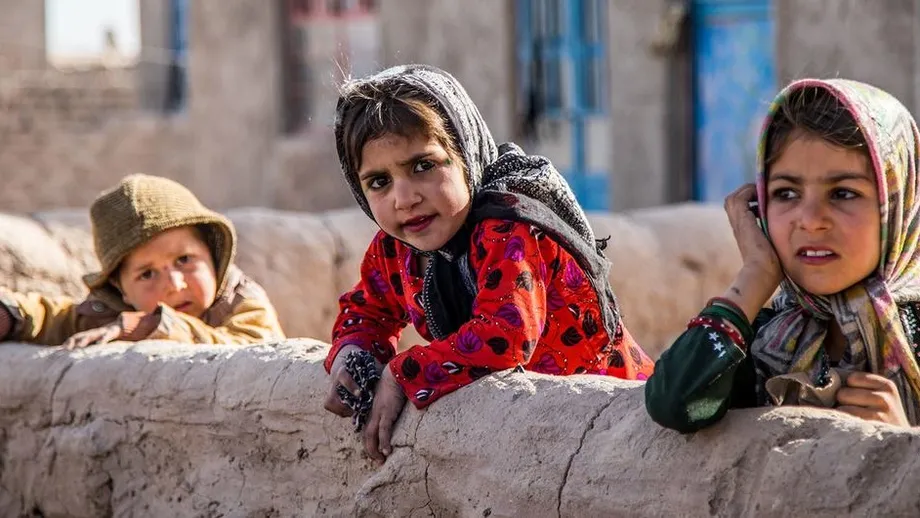
The agency expects 4.9 million women and children to need treatment for malnutrition in 2026, comprising 3.7 million children and 1.2 million pregnant or breastfeeding women. Twelve provinces have critical levels of acute child malnutrition, the highest number WFP has recorded.
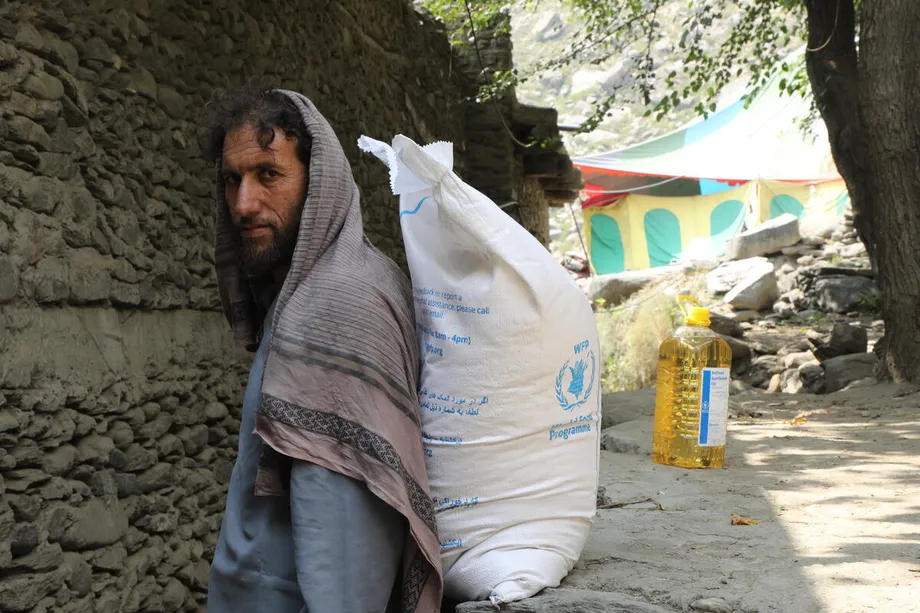
WFP treats malnourished children under five and pregnant and breastfeeding mothers at clinics in partnership with UNICEF. Its preventive food distributions serve a separate purpose: helping vulnerable families avoid malnutrition and stunting before treatment becomes necessary. The May 2025 suspension of preventive distributions should therefore be distinguished from the depletion of critical nutrition supplies reported in April 2026.
John Aylieff, WFP's country director in Afghanistan, described what the shortage meant for people arriving at clinics:
At a time when malnutrition is already at near-record levels, weakened and desperate mothers and children are being turned away from health clinics, as we have no food to give them,
After visiting a rural clinic near Jalalabad, Skau described hundreds of mothers carrying visibly malnourished children away because nutrition supplies had run out. Speaking as WFP's acting executive director at the June briefing, he said:
I've never seen anything like it. The desperation in that clinic is hard to describe.
WFP has warned that thousands of mothers and children are being turned away from treatment and nutrition centers. The risk comes from both insufficient resources and the inability to get supplies to the places where they are needed.
A biscuit shipment's journey across multiple countries
One consignment of fortified biscuits illustrates how repeated diversions can turn a delivery into months of transit. The shipment originated in Indonesia and first reached Pakistan. After the border closure, it was redirected through Dubai, with Iran intended as the next route into Afghanistan.
Conflict then forced another change. The extended journey described for the consignment ran through Saudi Arabia, Jordan, Syria, Turkey, Georgia and Azerbaijan, before crossing the Caspian Sea into Turkmenistan. It had been in transit for three months.
The shorter description of the same shipment focuses on its later passage through Turkey and the Caspian Sea; the fuller account also identifies its Indonesian origin and earlier arrival in Pakistan. Together, those details show that the delay resulted from successive route changes rather than one isolated hold at a port.
WFP has said transport costs for food going to Afghanistan rose as much as threefold. Aylieff has also said some deliveries now take up to three extra weeks. That additional time for some consignments is distinct from the total three month journey of the biscuit shipment.
Thousands of tonnes of food aid, including food packages for schoolchildren, have faced delays lasting several months since the war involving the United States, Israel and Iran began. Skau's estimate that WFP could have helped about one million additional children without the transport delays and cost increases measures the lost reach of the operation, not just the amount of cargo held up.
Traders face freight bills many times higher
Afghan businesses describe a parallel crisis in commercial imports. Kabul importer Lutfullah Akbari said goods purchased from China were stuck on ships unable to pass through the Strait of Hormuz. With transport costs rising, he said he might abandon his cargo if the disruption continued.
Gul Meer Amini, a freight company director, said container rental prices had increased from approximately $3,000 to $3,600 to more than $7,000. Some prices exceeded $11,000. Using the upper end of the earlier range, $7,000 is almost twice $3,600, while $11,000 is more than three times that amount.
Kabul electronics trader Mohammad Murtaza Ishaqzai described an even steeper increase for delivery of goods from China through Iran: from about $1,100 to $1,500 previously to more than $15,000. The new figure is more than ten times the upper end of his earlier range.
Those examples concern different charges and shipments. Container rental prices cannot be treated as equivalent to the full delivery costs cited by an electronics importer, nor do individual bills establish an average increase across Afghan trade. They do show how sharply expenses can rise when an established route becomes unavailable.
Ishaqzai, speaking about his import and export business, urged Taliban authorities to resolve tensions with Pakistan so border commerce could resume:
We can't export and we can't import,
His appeal points to a practical constraint: alternative routes may keep some goods moving, but that does not mean every trader can afford them or recover cargo already stranded elsewhere.
Central Asia keeps trade moving, but unevenly
Business leaders estimate that more than 60% of Afghanistan's trade is now conducted through Central Asia. Taliban officials attribute inflation of around 3% to continued commerce through Central Asia, Russia and China, saying those connections have helped limit the wider economic shock.
Abdul Salam Jawad, spokesperson for the Taliban Commerce Ministry, identified restrictions on goods transiting through Iran as the main remaining challenge. His account suggests the northern alternatives are cushioning trade without replacing all the functions of the Iranian corridor.
The inflation figure and the freight bills describe different things. Inflation tracks changes in a broader set of prices, while traders' examples concern particular transport charges. A reported national rate of around 3% can therefore coexist with large increases in the cost of moving certain consignments.
The estimate that Central Asia handles more than 60% of trade also does not establish how much humanitarian cargo can pass through those routes, at what price, or within what delivery time. WFP's repeated diversions show that having an alternative corridor is not the same as having an affordable and timely replacement.
Funding cuts and returning families increase pressure
WFP has reported receiving only 8% of the funding it required for the year. Its current capacity to reach 2 million people monthly is half the 4 million it assisted last winter, even as nutrition needs rise.
The agency's emergency page requests $540 million to sustain operations through January 2027. A separate appeal described in May called for $350 million for the following six months. These requests cover different stated periods and should not be added together or treated as contradictory estimates of one identical budget.
Reduced funding affects more than food purchases. WFP says financial shortages have forced the United Nations Humanitarian Air Service to reduce regular destinations in Afghanistan and end contracts for two aircraft and the only helicopter operated by the UN in the country. Insecurity, difficult terrain and poor infrastructure already limit road travel.
Demand for assistance has also grown with the return of large numbers of people from neighboring countries. Figures reported in May put returns from Pakistan and Iran at about 2.8 million in 2025 and another 500,000 so far in 2026. The June UN account described approximately 2.8 million people deported or repatriated over the previous year, using a different reporting period.
These return figures should not be combined into a new total without reconciling their dates. They nevertheless describe a large population entering a country where many families already struggle to secure shelter and daily food. Climate events and earthquakes have added to those pressures, alongside conflict and reduced aid.
A ceasefire has not restored dependable deliveries
The wider humanitarian transport network is also under strain. UNICEF says diversions around the Cape of Good Hope add two to four weeks to sea journeys, and critical humanitarian cargo could face delays of four to six months. Those are global estimates, not delivery forecasts specifically for Afghanistan.
UNICEF reports that air freight costs for some vaccine shipments from India to Ethiopia, Nigeria and the Democratic Republic of the Congo have risen by up to 70%. Trucking costs for therapeutic food destined for Somalia, South Sudan and the Democratic Republic of the Congo have increased by one third. These examples show why aid agencies can lose purchasing power even when their own destination is far from Hormuz.
Jean-Cédric Meeus, UNICEF's chief of global transport and logistics, described the connection between transport costs and assistance:
Increased transport costs mean less money for the lifesaving supplies children need,
Before the February 28 escalation, roughly one fifth of global oil shipments passed through Hormuz. UNCTAD has examined 75 vulnerable economies, of which 65 are net oil importers. It estimates that a sustained 50% increase in refined oil prices would add more than $20 billion annually to their collective import bill. That is a conditional estimate, not a recorded loss for Afghanistan.
WFP has also warned that oil remaining above $100 a barrel through July could push as many as 45 million additional people into hunger globally. July is the stated horizon for that warning, not a deadline for restoring Afghan deliveries.
No confirmed reopening date for the disrupted Afghan trade corridors has been announced in these accounts. The immediate needs remain specific: dependable passage for stranded cargo, affordable replacement routes, nutrition supplies for clinics and funding to sustain assistance through the periods covered by WFP's appeals.
The Essentials
- Pakistan's October 2025 border closures disrupted Afghanistan's established supply corridor; the Hormuz crisis then interrupted the Iranian alternative.
- WFP projects 13.8 million people facing acute food insecurity and 4.9 million women and children needing malnutrition treatment in 2026.
- On June 4, WFP said another 2.3 million people had been pushed into acute hunger.
- WFP's monthly reach has fallen from 4 million people last winter to 2 million, while food transport costs have risen as much as threefold.
- Business leaders estimate more than 60% of Afghan trade now passes through Central Asia, but traders still report steep costs and stranded cargo.
- WFP is seeking $540 million for operations through January 2027; no firm restoration date for the disrupted corridors has been given.