
Nearly 29 million people unable to meet basic needs
About 28.9 million Afghans could not meet their basic needs in 2025, up from 27.5 million in 2024, according to the United Nations Development Programme. The increase of 1.4 million people came as Afghanistan absorbed millions of returning citizens while humanitarian funding fell by nearly 44 percent and drought exposure almost doubled.
Contents
- Nearly 29 million people unable to meet basic needs
- Economic growth did not translate into recovery for households
- Returnees face the sharpest deprivation
- Rising incomes still leave families borrowing
- Aid cuts reached clinics and household support
- Drought is eroding water access and livelihoods
- Kabul's water crisis adds a costly urban burden
- Restrictions on women compound economic insecurity
- Recovery needs to extend beyond arrival assistance
- Key Points
UNDP's May 2026 Afghanistan Socioeconomic Review documents a country where modest economic growth did little to ease household hardship. Its assessment covers 2024 through the end of 2025 and draws on economic data, UN findings and a household survey conducted in July and August 2025.
The headline is not simply that poverty became more widespread as a share of the population. The report's detailed figures put subsistence insecurity at 74 percent in 2025, against 75 percent in 2024, a change UNDP describes as effectively unchanged. Population growth meant that a similarly high rate of deprivation affected many more people.
Subsistence insecurity measures whether people can meet essential needs, including food, water, healthcare, housing, heating and clothing. It is broader than a poverty threshold based only on income. Among households classified as insecure, the measured intensity of deprivation remained at 53 percent, showing little improvement in the depth of hardship.
The crisis also continued beyond the report's assessment period. A separate UN update dated October 8, 2026, put cumulative returns from Iran and Pakistan at nearly 6.5 million since 2023, while documenting further restrictions and arrests affecting women. Those later findings should not be confused with the review's figures for 2025, but they show that the pressures it identified persisted.
Economic growth did not translate into recovery for households
Afghanistan recorded a second consecutive year of economic growth, but the fiscal dates matter. The review puts real gross domestic product growth at 1.9 percent in FY2024/25, down from 2.3 percent in FY2023/24. Its estimate of a 2.1 percent decline in real GDP per person applies to FY2025/26, when population growth was estimated at 6.5 percent.
GDP measures the value of goods and services produced. GDP per person divides that output by the population, so total production can rise while the amount per resident falls. The growth and population figures here cover different fiscal periods and should not be treated as a single calculation.
UNDP says incomes remained well below 2020 levels and Afghanistan ranked among the poorest countries by real GDP per person. Household evidence also shows why positive growth figures offered little reassurance: rural subsistence insecurity stood at 78 percent, compared with 62 percent in urban areas.
The trade balance added another source of pressure. Imports rose from $8.3 billion in 2023 to $13.1 billion in 2025, while exports slipped from $1.9 billion to $1.8 billion. The resulting deficit reached a record $11.3 billion, about 60 percent of nominal GDP, compared with $6.4 billion in 2023.
The widening gap reflects much faster growth in purchases from abroad than in export earnings. Border tensions with Pakistan beginning in October 2025 also produced a near complete halt in bilateral trade flows, according to the review, disrupting commerce as households needed more reliable sources of income.
Returnees face the sharpest deprivation
The scale of returns differs between UNDP's documents. The socioeconomic review records 2.7 million returns from Iran and Pakistan in 2025 and 4.9 million between 2023 and 2025. UNDP's May 13, 2026, release on the findings gives 2.9 million for 2025 and nearly 5 million across the three years. The documents do not explain the difference.
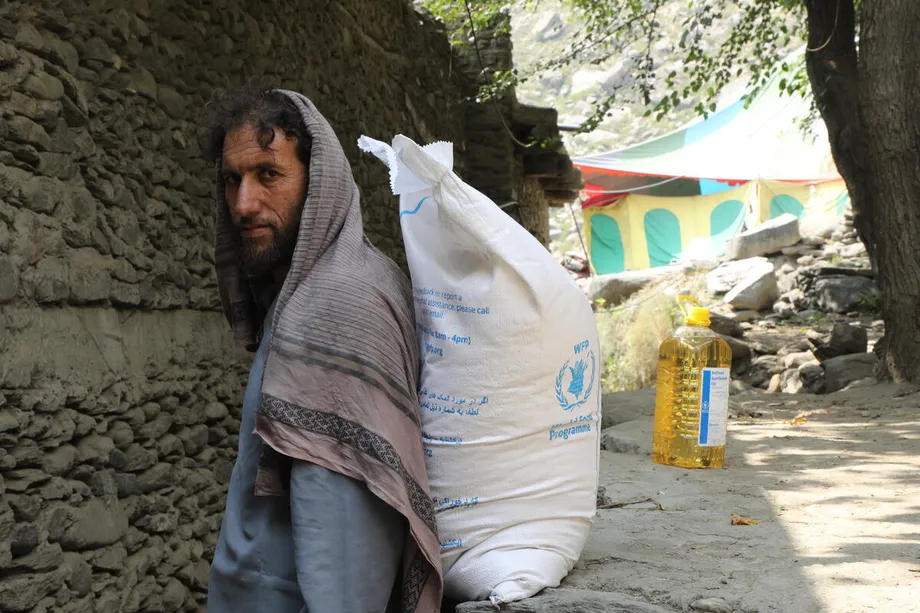
Recent returnees, defined in the review as people who arrived in the preceding six months, faced subsistence insecurity of 92 percent, compared with 74 percent nationally. That is an 18 percentage point gap. Only 3 percent of recent returnee households held formal jobs, against 15 percent of local community households, while 78 percent relied on casual labour.
These detailed household figures are more specific than the release's description of employment in provinces receiving large numbers of returnees. They show a population heavily dependent on daily work, with limited access to regular wages. UNDP says the influx increased competition for jobs and put downward pressure on pay.
Access to services was also weaker. Thirty two percent of recent returnee households reported a member unable to obtain healthcare. School attendance stood at 41 percent for boys and 25 percent for girls, below the national figures of 73 percent and 42 percent.
The figures developed across several reporting periods:
- November 2025: reports described more than 4.5 million returns since 2023 and population growth of about 10 percent linked to those returns.
- End of 2025: the socioeconomic review recorded 4.9 million cumulative returns, including 2.7 million during that year.
- May 13, 2026: UNDP's release used a higher annual estimate of 2.9 million returns for 2025.
- October 8, 2026: a UN update cited IOM findings covering nearly 6.5 million returns since 2023.
A November account also cited about 1.5 million forced returns during that year. That figure describes a different category and reporting point from the later annual return totals, so it cannot be used interchangeably with them.
Rising incomes still leave families borrowing
Average monthly household income rose from 8,980 afghanis in 2024 to 10,185 in 2025. UNDP estimates that as a 13 percent nominal increase, or 10 percent after adjusting for prices. Yet average monthly spending remained higher, at 10,752 afghanis, leaving families unable to cover their expenses from income alone.
Debt affected 81 percent of households in 2025. Average debt rose from 38,234 to 42,505 afghanis, while the report's debt to income ratio increased from 45 percent to 49 percent. Among recent returnees, 87 percent were indebted.
The composition of household budgets also shifted. Food absorbed 53 percent of spending, up from 43 percent in 2024. Health spending fell from 12 percent to 8 percent. With unmet medical needs rising, that decline should not be interpreted as evidence that families needed less care.
Earlier findings reported in November 2025 described nine in 10 households skipping meals, selling belongings or borrowing. The later review recorded negative coping strategies among 72 percent of households. These are different descriptions and measurements, not a reliable basis for claiming that distress fell between the two reports.
The November findings, based on a survey of more than 48,000 households, also put returnee debt above 90 percent, with debts of $373 to $900 against average monthly income of $100. More than half of returnee households were foregoing medical care to afford food. Together with the later review, the figures show how borrowing and reduced consumption were filling the gap left by insecure earnings.
Aid cuts reached clinics and household support
The decline in assistance was uneven. Humanitarian funding fell from $1.62 billion in 2024 to $0.91 billion in 2025, a 43.8 percent reduction. Funding for basic human needs increased by 11.3 percent, from $1.59 billion to $1.77 billion. Combined funding nevertheless dropped from $3.21 billion to $2.68 billion, a loss of $530 million, or 16.5 percent.
The increase in support for recovery and basic services therefore did not offset the much larger reduction in emergency assistance. Only 24 percent of households in need received humanitarian aid during the 12 months before the survey, compared with 34 percent in 2024.
Citing World Health Organization estimates, the review says 445 health facilities suspended operations or closed because of funding shortages, affecting nearly 3.8 million people across 33 provinces. Ninety one facilities resumed operations after funding was reassigned internally. The closure total should therefore not be read as the number that remained shut permanently.
Households reporting unmet medical care needs increased from 16 percent to 23 percent. Ninety four percent reported at least one member needing care, and more than half of households requiring treatment said the necessary services were unavailable.
The report separately records healthcare availability deprivation rising from 15 percent to 27 percent. That indicator is distinct from the unmet care measure. Both point to worsening access, but they should not be combined into a single percentage.
Problems extended beyond the cost of treatment. Households cited unavailable medicines or services, incorrect medication, long waits and shortages of trained staff. Fourteen percent identified a lack of female staff as a major barrier, connecting the health crisis with restrictions on women's employment.
Drought is eroding water access and livelihoods
Drought exposure rose from 34 percent in 2024 to 64 percent in 2025, an increase of 30 percentage points. The Central Highlands were especially affected, with 92 percent of households reporting drought impacts. Nationally, 68 percent of households experienced at least one adverse event, up from 47 percent.
Only 44 percent of households reported sufficient drinking water, compared with 59 percent in 2024. This is a measure of water sufficiency, not proof that 44 percent had water meeting every safety standard. Reports of dried or nonfunctional water points rose from 10 percent to 31 percent, while 26 percent of households expressed concerns about water quality.
The economic damage extended to household production. Participation in agriculture, livestock and other own production activities fell from 57 percent to 45 percent. The share of households with poor food consumption increased from 17 percent to 20 percent, while those with borderline consumption rose from 53 percent to 58 percent.
Food insecurity improved temporarily earlier in 2025 before worsening later. Projections cited by UNDP put the share facing crisis levels or worse at 36 percent for November 2025 through March 2026, compared with 32 percent in the corresponding previous period. That was a projection, not a confirmed outcome for the full period.
Earlier November reporting also described earthquakes, floods and drought destroying 8,000 homes. These losses compounded the shortage of affordable housing and services in communities already receiving returnees.
Kabul's water crisis adds a costly urban burden
A separate assessment by Prosper Global, formerly Mercy Corps, describes groundwater levels in Kabul falling by 25 to 30 metres over a decade. Extraction exceeded natural replenishment by about 44 million cubic metres annually, leaving aquifers under pressure from population growth, extensive drilling and drought.
The assessment warns that the aquifers could run dry by 2030 if current trends continue. It cites UNICEF projections that such a collapse could displace about 3 million residents, roughly half of Kabul's estimated population of 6 million. These are conditional warnings, not a fixed date or a confirmed displacement forecast.
Only about 20 percent of households had connections to a central piped water source, with supply available for limited hours on two or three days a week. The assessment put average daily access at about 20 litres per resident, compared with its cited recommended minimum of 80 litres.
Water costs were consuming 15 percent to 30 percent of household income, against about 5 percent before 2021. About 68 percent of households had debt related to water, and the assessment estimated that up to 80 percent of groundwater was contaminated. These city findings add a concrete explanation for how water scarcity becomes both a health threat and a poverty trap.
OCHA estimated that 16 million Afghans needed water and sanitation assistance in 2026. Funding figures cited for early 2025 showed only $8.4 million received against $264 million needed for planned projects, about 3.2 percent. That earlier funding snapshot should not be mistaken for a full assessment of 2026 financing.
Large supply projects remained uncertain. The Shahtoot dam was intended to provide drinking water to more than 2 million people, but construction had not begun as of March 2025. A projected 2027 completion date was therefore not a confirmed delivery schedule. A proposed pipeline from the Panjshir River had completed survey and design work but still required final approval and investors.
Restrictions on women compound economic insecurity
UNDP says nearly 100 edicts issued since 2021 remained in effect in 2025, restricting women's employment, education and movement. Girls' school attendance stood at 42 percent, compared with 73 percent for boys, while education beyond primary school remained banned for girls.
Earlier findings put women's participation in the labour force at 6 percent. That measure is not directly comparable with the review's 85 percent employment figure for adult men, because labour force participation includes both people working and those seeking work. Both findings nevertheless point to households losing potential earnings as women are excluded.
Documentation created another barrier. Only 38 percent of households reported that all female members had valid identification, while 18 percent reported that none did. Consultations cited by UNDP found that 56 percent of women left home less than once a day and 21 percent less than once a week.
The UN's October 8, 2026, update on women's rights described further enforcement. UNAMA verified the arrest or detention of at least 52 women and one girl in Herat and Kabul between July and September 2026 over alleged dress code violations or being in public without a mahram, a male guardian.
The mission said the women were released after several hours, but also cited verbal abuse, beatings and threats. It warned that fear and stigma probably prevented other cases from being reported. Such restrictions affect more than freedom of movement: they constrain access to employment, shops, healthcare and essential services.
Recovery needs to extend beyond arrival assistance
The later IOM findings described 77 percent of surveyed returnees living in transitional shelters and 51 percent lacking sufficient living space. Forty three percent lacked documentation needed for relevant services. Among respondents aged 14 and above, 69 percent had not worked in the preceding 30 days.
Earlier reporting found that rents had tripled in affected areas and 18 percent of returnees had experienced another displacement within the past year. In Injil and Guzara districts, many were living in tents or deteriorated structures. These findings show why assistance at the border alone cannot resolve the problems facing returning families.
Mihyung Park, IOM's chief of mission in Afghanistan, explained the need for continued support in the October 2026 update:
The findings show that many returnees intend to stay and rebuild their lives, but their ability to do so depends on access to livelihoods, safe shelter, documentation and essential services alongside support for the communities receiving them.
Households' stated priorities reinforce that approach. In the 2025 review, 69 percent identified food as a priority, 57 percent identified employment and livelihood support, and 46 percent identified drinking water. The increase in demand for livelihood support was 17 percentage points from 2024, larger than the increase for food.
Stephen Rodriques, UNDP's resident representative in Afghanistan, said in the May 2026 release:
Investing in jobs, services and local markets will help boost household economies and will be essential to give people a real chance to rebuild their lives and regain control over their future.
Kanni Wignaraja, UN assistant secretary general and UNDP regional director for Asia and the Pacific, also linked basic human development to stability in Afghanistan and across its borders. The unresolved issues are concrete: funding for essential services, employment that pays enough to support households, reliable water supplies and women's ability to participate in economic life. The cited assessments do not establish firm dates for resolving them.
Key Points
- About 28.9 million Afghans faced subsistence insecurity in 2025, up by 1.4 million from 2024.
- Recent returnees faced a 92 percent insecurity rate, compared with 74 percent nationally.
- UNDP documents give differing 2025 return totals of 2.7 million and 2.9 million.
- Humanitarian funding fell 43.8 percent, while combined humanitarian and basic needs funding declined 16.5 percent.
- Drought exposure rose to 64 percent, and sufficient drinking water access fell to 44 percent.
- Debt affected 81 percent of households, while unmet healthcare needs increased to 23 percent.
- Later UN findings documented nearly 6.5 million cumulative returns and further arrests of women in 2026.