
Six Months to Apply, With State and Companies Sharing Responsibility
South Korea opened applications on October 8, 2026, for a compensation system that allows victims of humidifier disinfectants to seek damages without filing a separate civil lawsuit. The application window closes on April 7, 2027. The government has included 244.7 billion won for its contribution in the proposed 2027 budget, but individual compensation standards and the amounts each company must pay were not settled when applications began.
Contents
- Six Months to Apply, With State and Companies Sharing Responsibility
- What Changes When Relief Becomes Compensation?
- Which Losses Can Be Covered?
- How Victims and Families Can Apply
- Applications Start Before the Rules Are Complete
- The Funding Promise and the Risk of Company Disputes
- Victims Want a Voice in the Decisions
- From Household Products to a National Disaster
- Why Compensation Must Account for Later Illness
- Key Points
The change comes 15 years after health authorities identified the disaster in 2011. Under revisions to the Special Act on Remedy and Support for Victims of Humidifier Disinfectants, an administrative relief program is becoming a damages system based on shared responsibility between the state and businesses. A committee under the prime minister will assess claims and decide eligibility and payment amounts.
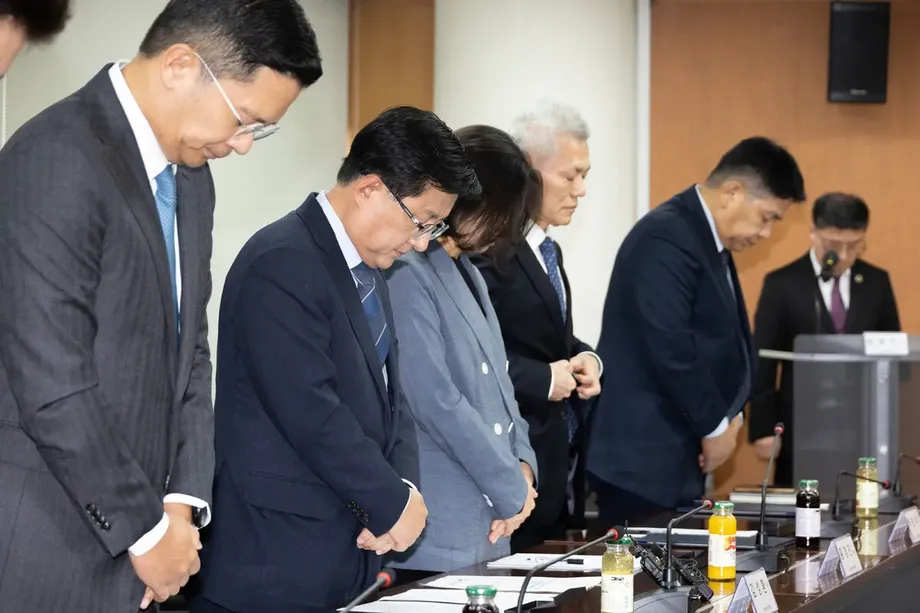
The Office for Government Policy Coordination announced the launch on October 7 in its compensation system announcement. The next day, the Ministry of Climate, Energy and Environment signed an implementation agreement with 15 manufacturers, sellers and raw material suppliers at the Coal Association building in Jongno-gu, Seoul.
The agreement brings together companies including Oxy Reckitt Benckiser, SK Chemicals, SK Innovation, Aekyung Industrial and E-mart. They pledged to pay their shares of compensation, while the ministry committed to seeking government funding through the budget process. For victims, the practical promise is a route to damages without having to pursue a separate court case. The immediate uncertainty is how those damages will be calculated and when payments will arrive.
What Changes When Relief Becomes Compensation?
The previous system provided relief benefits to recognized victims, but obtaining damages beyond that support could require a separate civil lawsuit. The revised framework places the state alongside businesses as a party responsible for compensation and moves the assessment of claims into a government administered process.
That distinction matters because damages can address several kinds of loss, including treatment costs, lost earnings and compensation for suffering, rather than simply providing ongoing relief. It does not mean every application will receive the same amount or that filing alone establishes entitlement. Investigators will examine health damage and the degree to which an applicant has lost the capacity to work before the committee reaches a decision.
An academic public health review by Sue K Park and colleagues describes another important legal consequence: a compensation decision accepted by the applicant has the effect of a judicial settlement. Acceptance therefore carries legal weight beyond receiving an administrative benefit.
The review also says the amended act extends the limitation period to 10 years from awareness, compared with three years under civil law, and suspends that period during application and reconsideration procedures. This longer period is separate from the initial six month application window. Applicants who disagree with a committee decision may request reconsideration, although the launch announcements do not give a complete timetable for that process.
Which Losses Can Be Covered?
The government says compensation will address losses arising from health damage caused by humidifier disinfectants. The categories are medical expenses, nursing care, disability compensation, compensation for bereaved families, funeral expenses, consolation payments and interest for delayed payment.
Disability and bereaved family compensation include lost earnings. In practical terms, the assessment considers income a person could no longer earn because of injury or death. That makes income records relevant alongside medical evidence, even for people whose health damage has already been recognized.
Recipients will have a choice over payment arrangements. They may receive compensation, including future treatment costs, as a lump sum, or receive the amount excluding future treatment costs first and continue receiving the medical portion afterward. The official announcement describes the medical expense choice as a single payment or an initial amount followed by continuing payments.
People already receiving relief benefits will continue receiving them until their new compensation is paid. This protection is intended to prevent a financial gap while claims are investigated. It should not be read as a promise that new applicants will receive interim payments, or that every claim will be resolved by a particular date.
How Victims and Families Can Apply
Applications require a form and supporting documents submitted to the Humidifier Disinfectant Compensation Deliberation Committee. Online submissions can be made through the Comprehensive Support Portal for Humidifier Disinfectant Victims at www.healthrelief.or.kr.
Applications can also be submitted in person at the committee support office in Eojin-dong, Sejong, or at the Korea Environmental Industry & Technology Institute reception desk in Bulgwang-dong, Eunpyeong-gu, Seoul. The Sejong support office call center number is 1833-9085. A victim communication space near Seoul Station provides application counseling.
People recognized under the previous special act have a simpler route. If they complete the online consent procedure allowing reuse of documents already submitted, they are considered to have applied for compensation. Recognition under the old system does not remove the need for that consent step under the procedure described by the government.
Existing victims may also submit additional income information and medical records. These documents can help establish losses or developments that were not covered in an earlier filing. The distinction is important: permission to reuse an old file reduces repeated paperwork, but it does not mean the old file necessarily contains everything needed to calculate damages.
Applications Start Before the Rules Are Complete
The application opening is not the same as the start of individual compensation decisions. At launch, neither the committee membership nor detailed compensation standards had been finalized. The government planned to form the committee during October 2026 and publish detailed criteria and guidance before the end of the year.
The October 7 announcement said reviews would begin as soon as possible after the committee was formed. Later accounts gave a more specific schedule: individual reviews would start in 2027. Hong Kyung-jin, the ministry official responsible for environmental health policy, said the government expected deliberations to begin in the first quarter of 2027.
These statements differ in precision. The initial announcement set an intention to move quickly, while the later timetable placed individual reviews between January and March 2027. Neither gives a guaranteed payment date for a particular applicant.
The ministry plans to estimate total compensation using the detailed standards and impose contributions on individual companies in the first half of 2027. That sequence explains why applications are being collected before the complete funding allocation is known. It also leaves applicants facing a decision to submit documents before they can assess the likely value of an award.
The Funding Promise and the Risk of Company Disputes
The proposed government contribution of 244.7 billion won is a budget provision, not a published estimate of the total cost of compensation. Minister Kim Sung-hwan said the government would work to secure the money during National Assembly budget deliberations and seek additional funding if the scope of responsibility changed.
Company contributions remain undecided. Under the October 8 agreement, disagreements over those contributions should first be addressed through a consultative body. The arrangement does not prohibit companies from suing one another. Its purpose is to keep arguments over how costs are divided from delaying compensation to victims.
Kim, the minister responsible for climate, energy and environment, described the government's intended role in carrying out the new system:
As a party bearing responsibility for compensation, the government will do its utmost to ensure the process proceeds swiftly and transparently.
The funding agreement also commits the ministry and companies to stronger chemical safety management from raw materials through product disposal. This connects the payment arrangement to prevention, but the agreement itself does not establish that all funding has been secured or that future corporate disputes have been eliminated.
Victims Want a Voice in the Decisions
Victim representatives have questioned the order in which the system is being introduced. Their concern is not simply whether applications can be filed, but whether the eventual standards and committee composition will fairly reflect the harm suffered.
Kim Mi-ran, a bereaved family and victim group representative for people affected by interstitial lung disease, argued that submitting a budget before completing compensation standards made the process appear to fit victims into a predetermined framework. She also questioned whether shared state and corporate responsibility would serve victims or allow the two responsible parties to reduce their respective burdens.
Kim Hyun-soo, secretary general of a national alliance of humidifier disinfectant disaster victims, expressed concern about a committee led by the government when the government itself bears responsibility. He requested participation by civil society representatives recommended by victim groups.
A ministry official said victim organizations had recommended committee candidates in September and that their names had been forwarded to the Office for Government Policy Coordination. Officials also said victims would be consulted on draft compensation standards. The information announced at launch does not establish which recommended candidates will be appointed or how victim participation will affect final decisions.
From Household Products to a National Disaster
Humidifier disinfectants were added to water tanks in homes, allowing harmful chemicals to disperse into indoor air and be inhaled. Products developed and sold by SK entered the market in 1994. The health crisis became publicly recognized in 2011 after investigations into unexplained severe lung injury, including cases involving infants and pregnant women.
The Citizens' Center for Environmental Health estimates that about 8.94 million people used the products, 950,000 experienced health effects and approximately 20,000 died. Those are the organization's estimates, not an official count of accepted compensation claims. Its estimated number of people with health effects is about 10.6% of its estimated user population, calculated from 950,000 divided by 8.94 million.
The major steps toward the new system span more than three decades:
- 1994: Humidifier disinfectant products entered the market, beginning years of household exposure.
- 2011: Health investigations identified the link with severe lung injury; authorities ordered the recall of six products in November.
- 2017: A special act established the statutory victim relief system.
- December 2023: The government's relief committee recognized six deceased people with lung cancer as victims.
- June 2024: The Supreme Court recognized governmental responsibility in humidifier disinfectant cases, according to the academic review.
- March 12, 2026: The special act was fully amended.
- October 8, 2026: The amended system took effect, applications opened and the government signed the agreement with 15 companies.
- April 7, 2027: The initial application window closes.
Some reporting describes October 8 as the revised act's enactment date. The government announcement identifies it as the date of implementation, while the academic review dates the full amendment to March 12, 2026. The distinction separates the legal revision from the start of the new compensation procedure.
Why Compensation Must Account for Later Illness
The academic review describes how the recognized scope of harm has expanded beyond the severe lung injury that first exposed the disaster. It summarizes evidence linking exposure with asthma and other respiratory illnesses, lung cancer, tuberculosis, skin and eye conditions, and fetal loss.
Evidence of an association across a population does not automatically settle whether exposure caused a particular person's illness. Households used different products in different amounts, and disease can appear long after exposure. The review explains that earlier legal revisions introduced a presumption of causation where exposure occurred, disease followed and an epidemiological association existed, unless the business rebutted that presumption by showing another cause.
The authors identify unresolved research needs involving delayed disease, effects on other organs, fetal toxicity, cancer risks and the adult health of people exposed during development. Their assessment should not be treated as a list of conditions automatically eligible for compensation. Disease recognition and individual claims still require the relevant statutory assessment.
The review says additional applications may be allowed where causation is identified later or related illness develops after the initial window. It also describes provisions for health monitoring, treatment support, rehabilitation, education and medical leave. The details governing later claims remain important for people whose illness has not yet been recognized.
The central test is therefore broader than processing the first applications. The new system must fund awards, give applicants understandable decisions and continue supporting people whose health needs change. At launch, the deadlines for applications, standards and company contributions were clearer than the timing or value of individual payments.
Key Points
- Applications run from October 8, 2026, through April 7, 2027.
- Victims can seek compensation through a government committee without a separate damages lawsuit.
- The state and businesses share responsibility, with 15 companies signing an implementation agreement.
- The proposed 2027 budget includes a government contribution of 244.7 billion won, subject to budget deliberations.
- Detailed compensation standards were pending at launch; individual reviews are expected to begin in the first quarter of 2027.
- Existing relief recipients will continue receiving benefits until compensation is paid.
- Previously recognized victims can apply by consenting online to reuse their documents.
- Company contributions are planned for the first half of 2027; individual payment dates have not been announced.