
Four gas fields supply power and fertiliser production
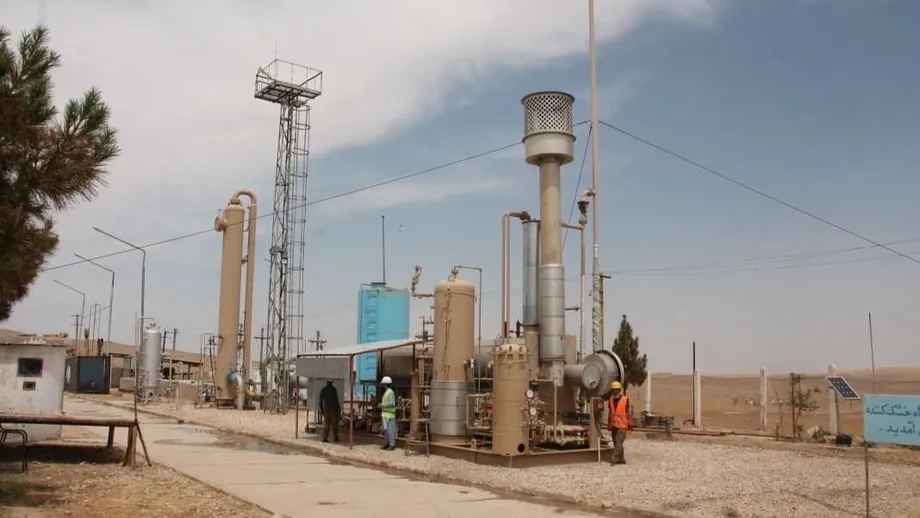
Four natural gas fields in Afghanistan's northern Jawzjan province are producing about 650,000 cubic metres a day, according to Afghan Gas Enterprise head Akhtar Mohammad Mansour. Two major customers receive about 600,000 cubic metres between them: the state owned Mazar-i-Sharif Fertiliser and Power Company takes 400,000 for fertiliser production, while Bayat Power receives 200,000 for electricity generation.
Contents
- Four gas fields supply power and fertiliser production
- Where the daily gas supply goes
- Environmental risks extend beyond the wells
- What the safeguards actually promise
- Sulfur treatment is a central technical issue
- Production figures need their dates and scope
- Decades of infrastructure and unfinished plans
- Monitoring matters more than risk labels
- Water pressures, wages and local experience
- Key Points
The figures show how closely gas extraction is tied to industrial activity and electricity supply. They also leave a gap of roughly 50,000 cubic metres between stated production and deliveries to those two customers. Mansour did not specify how that balance is allocated. Because the figures are approximate, the difference cannot be treated as evidence of waste, leakage or spare supply.
Mansour says extraction at Khwaja Gogerdak, Yatimtaq, Jarqduq and Shakarak continues regularly, with gas processed before being transported through pipelines. Seven wells are active at Yatimtaq, where about 850 engineers and workers are employed.
Gas mining expert Maiwand Arya warns that the benefits require sustained attention to water, soil, air and other environmental risks throughout exploration, drilling, extraction and transportation. Official project documents provide a more detailed picture of the safeguards expected at the electricity generation end of that chain. Those documents anticipate manageable risks, but also call for monitoring, waste controls and corrective action. They do not establish that all four extraction fields are currently meeting every environmental requirement.
Where the daily gas supply goes
The fertiliser company receives twice the volume supplied to Bayat Power. Using Mansour's figures, its allocation represents about 61.5% of daily field production, while Bayat's represents about 30.8%. Together, the two named customers account for approximately 92.3% of the reported 650,000 cubic metres.
These shares describe gas volumes, not the relative economic value of fertiliser and electricity production. Gas delivered to a fertiliser plant serves a different industrial process from gas burned to generate electricity. The reported deliveries also do not establish how much fertiliser or electricity the companies actually produce.
Bayat receives its gas under contract, Mansour says. Its project assessment envisaged electricity sales to Da Afghanistan Breshna Sherkat, the national utility, under a power purchase agreement lasting 20 years. That arrangement connects Jawzjan's extraction infrastructure to the wider electricity system rather than simply to households near the wells.
Environmental risks extend beyond the wells
Arya identifies potential water and air pollution, noise and light pollution, land subsidence, climate change and loss of biodiversity. Land subsidence means the ground sinking or settling. His warning covers the entire gas production chain, not just the moment gas is drawn from a well.
He also distinguishes between pollution and resource consumption. Groundwater and surface water can be contaminated, while water use can place a separate demand on local supplies. Soil may be polluted or degraded by related activities. These are potential effects he says need attention, not findings that each has already occurred in Jawzjan.
The Bayat environmental assessment, published through the World Bank, identifies several concrete pollution pathways at the proposed power project. During construction, liquid waste could include contaminated stormwater, sanitary wastewater, chemical byproducts and fluids from machinery. It warns that these could pollute soil, surface water and groundwater if not properly contained, cleaned up and disposed of.
The assessment also identifies vehicle exhaust, construction machinery and dust as air quality concerns. Lighting, traffic, vegetation clearance, noise and accidental spills could affect habitats and species. Its findings concern the Bayat power project, so they should not be read as a completed environmental investigation of the four producing gas fields.
What the safeguards actually promise
Mansour says technical staff monitor extraction and respond to equipment problems. He also says assessments were conducted before extraction began and that distances from residential areas were determined according to environmental standards. Khwaja Gogerdak and Yatimtaq are about 15 kilometres from residential areas, he says, while Jarqduq and Shakarak are about 20 kilometres away.
The Bayat assessment places the power project in Yatimtaq, approximately 20 kilometres east of Sheberghan, near the Yatimtaq and Jarquduk gas fields. One passage says the nearest residential developments are more than 15 kilometres away. Another describes the closest residential and agricultural areas as more than 12 kilometres away to the west and north. The document therefore uses different distance descriptions, and neither should be substituted for a verified current map of the extraction sites.
The assessment ranked the power project's environmental and social impacts as low or medium and expected cumulative effects involving wastewater, solid and hazardous waste, and water resources to be very minimal. These were predictions made during project assessment, not measurements proving an absence of pollution during operation.
Its recommendations are broader than keeping homes at a distance. It calls for mitigation measures for every identified potential impact, including those rated low, and for monitoring that can detect unexpected problems.
Sulfur treatment is a central technical issue
Mansour says harmful substances are separated from the gas and burned before it reaches consumers. He does not identify the substances, describe the treatment equipment or provide emissions measurements from that burning process.
The Asian Development Bank's Mazar project sector overview provides an important technical detail: gas from the Sheberghan fields is described as sour, containing high sulfur levels and requiring treatment in an amine plant. Sour gas is gas containing sulfur compounds that must be removed to meet safety and fuel quality requirements. An amine plant uses a chemical solution to separate unwanted gases from the usable fuel.
The ADB document describes a treatment plant funded by the United States government in 2014 with capacity of one million cubic metres a day. At the time of that assessment, it was operating at 20% capacity and required optimisation. Calibration work was expected to finish in the second quarter of 2020. Those historical figures do not establish its present throughput or treatment performance.
Separating contaminants protects the gas supply, but burning separated substances creates another process that needs environmental control. Neither Mansour's account nor the project information establishes the current quantity or composition of emissions from that activity. The distinction matters: treatment before delivery and control of emissions during treatment are separate responsibilities.
Production figures need their dates and scope
The ADB overview described the Sheberghan fields as having potential to provide 500,000 cubic metres daily. Mansour's reported production of 650,000 cubic metres is 150,000 higher, a difference of 30% against that earlier figure. This is a comparison between an earlier potential estimate and a later reported output, not a verified measurement of production growth.
The same ADB document listed Afghan Gas Enterprise's production capacity as more than 1.6 million cubic metres daily. Capacity is the amount an operation may be able to produce under stated conditions; actual output is what it produces. That enterprise figure cannot be treated as interchangeable with daily production from the four named Jawzjan fields.
ADB also cited 75 billion cubic metres of identified Afghan gas reserves and an assessment of 444 billion cubic metres of undiscovered, technically recoverable resources in northern Afghanistan. Undiscovered resources are estimates of gas that might be found and extracted with available technology, not confirmed supplies ready for sale.
An earlier Bayat project description put the northern region's estimated gas resources at 15.7 trillion cubic feet, approximately 445 billion cubic metres. That is close in scale to the ADB resource estimate, but does not demonstrate that the documents used exactly the same geographical boundaries or resource definitions.
Decades of infrastructure and unfinished plans
Jawzjan's present supply rests on infrastructure developed over decades. The ADB overview dates the start of natural gas exploitation at Khwaja Gogerdak to 1967 and describes an 89 kilometre pipeline, built in 1974, supplying the Northern Fertilizer Power Plant and other customers.
The document said that pipeline could not support the gas pressure required for the proposed Mazar electricity project. A new 94.5 kilometre pipeline from Sheberghan to Mazar was under construction, with 45 kilometres completed and completion expected by the end of 2020. That was a deadline in an earlier plan, not confirmation that the pipeline was finished.
Key milestones show how extraction, regulation and power investment developed together:
- 1967: Natural gas exploitation began at Khwaja Gogerdak.
- 1974: The existing 89 kilometre gas pipeline was built.
- 2009: Afghanistan adopted its first hydrocarbon law.
- 2013: ADB supported rehabilitation of Sheberghan wells, including Yatimtaq, and work on a Gas Development Master Plan.
- October 2016: Bayat Energy signed a memorandum of understanding with the Afghan government.
- April 2018: Bayat received approval for its first project phase and signed a power purchase agreement covering 40 megawatts.
- September 2018: The hydrocarbon law was amended.
- March 2019: An independent oil and gas authority officially began operating under the amended law.
Bayat's original development plan proposed three phases, investment estimated at $250 million and eventual capacity above 200 megawatts. The first phase was expected to begin operating in 2019. Its proposed turbine capacity of 41 megawatts and contracted electricity purchase of 40 megawatts were different measures. The plan does not establish that all three phases were built or that the full proposed capacity is operating today.
Monitoring matters more than risk labels
The Bayat assessment sets out specific checks behind its low and medium risk ratings. It envisages environmental, social, health and safety audits every quarter during construction and annually during operation. Wastewater inspections were proposed weekly during construction, changing to monthly during operation, with soil and water testing where needed.
For operating air emissions, the assessment calls for modelling how pollutants disperse near the plant and expects stack emissions to meet International Finance Corporation standards for nitrogen oxides, carbon monoxide and particulate matter. These pollutants can affect air quality, making actual operating measurements important alongside equipment design expectations.
The document also addresses worker exposure. It estimated construction noise at 83 to 87 decibels at a distance of 10 metres and called for hearing protection for nearby construction workers. Separately, it cites residential noise guidelines of 55 decibels during the day and 45 at night, measured as an average over one hour. Construction noise estimates close to machinery are not equivalent to measured noise at a village.
A grievance mechanism was also established in the assessment's account, with local committees including village representatives within a 15 kilometre radius and unresolved complaints referred to a provincial committee. No current audit results, emissions readings or complaint outcomes are established by these accounts.
Water pressures, wages and local experience
The environmental assessment places the project in a region facing wider water pressures. It cites an increase of 0.6 degrees Celsius in Afghanistan's mean annual temperature since 1960 and projects a further increase of 1.4 to 4 degrees by 2060. For northern Afghanistan, it describes declining average rainfall over the longer term alongside more frequent drought and flooding.
Those projections are not proof that gas extraction has caused a local water shortage. They explain why Arya's concerns about water consumption deserve attention alongside contamination. The assessment also describes alternating deposits of gravel, sand, silt and clay in the project area, underlining the need for site specific soil and water checks rather than assumptions based only on distance from homes.
Workers describe another side of the industry: income and employment. Mohammad, 45, who has worked in the gas sector for more than a year, says staff check equipment before shifts and must remain attentive while machinery, vehicles and wells operate continuously. He describes the wells as central to family livelihoods:
Every well is not just a well for us; it is the hope of a family.
Aziz, 50, says drilling, inspection, extraction, transportation and processing involve many workers, technicians and engineers. He calls for greater investment and more jobs for local residents. The reported 850 workers and engineers at Yatimtaq should not be combined with the Bayat assessment's estimate of roughly 70 construction jobs, because those figures concern different activities and periods.
Nearby resident Qurban Murad says gas has helped meet daily energy needs and that he has not observed a specific health problem attributable to extraction. Yatimtaq resident Rozi also describes benefits for household needs and livelihoods. Their experiences are relevant, but personal observations do not substitute for medical surveillance or environmental testing.
The immediate balance is therefore between a documented industrial supply and safeguards whose current results are not established. Mansour reports regular production and technical oversight; Arya identifies risks requiring continuing attention; the Bayat assessment specifies monitoring and corrective measures. No new hearing, inspection deadline or release date for current environmental results has been announced in these accounts.
Key Points
- Four Jawzjan gas fields reportedly produce about 650,000 cubic metres daily.
- The Mazar fertiliser company receives about 400,000 cubic metres and Bayat Power about 200,000 cubic metres a day.
- Yatimtaq has seven active wells and about 850 engineers and workers, according to Afghan Gas Enterprise.
- Potential risks include water and soil pollution, air emissions, noise, subsidence and biodiversity loss.
- The Bayat assessment predicts low or medium project impacts but requires mitigation, monitoring and audits.
- Earlier ADB documents identify sulfur treatment and pipeline capacity as important technical constraints.
- Workers and residents describe economic benefits, while current environmental measurements and audit findings are not established.