
Longer Tests Turn AI Demand Into Higher Prices
Taiwan's semiconductor packaging and testing companies are raising prices as increasingly complex AI chips occupy testing equipment for longer and cloud companies introduce more custom processors. Industry accounts describe increases of 10% to 30%, with some urgent orders from smaller customers costing twice as much. Separately, ASE Technology Holding has reportedly raised certain advanced packaging quotations by more than 20%, although the company declined to comment on that market speculation.
Contents
- Longer Tests Turn AI Demand Into Higher Prices
- Price Estimates Describe Different Parts of the Market
- Why More Complex Chips Need More Testing
- Sigurd Customers Pay to Secure Equipment Time
- Expansion Plans Reveal Both Demand and Delivery Risks
- Storage and Optical Links Broaden the Order Surge
- KYEC and Interface Suppliers Pursue Different Opportunities
- ASE Builds for Demand Beyond 2026
- The Milestones That Will Test the Pricing Story
- Key Points
The pressure reaches beyond graphics processors. Enterprise storage, optical communications and application specific integrated circuits, known as ASICs, are bringing orders to smaller companies as major providers allocate more capacity to demanding AI products. ASE, King Yuan Electronics (KYEC), Powertech Technology and Ardentec are among the companies identified as beneficiaries, alongside Siliconware Precision Industries and smaller Taiwanese packaging and testing businesses.
Siliconware Precision Industries, known as SPIL, is an ASE subsidiary. Silicon testing specialist Sigurd Microelectronics is a separate company whose figures offer a detailed view of the demand surge. Its third quarter revenue reached NT$6.172 billion, up 27% from a year earlier, while revenue for the first nine months reached NT$17.346 billion, up 21.2%. Most Sigurd customers have signed capacity protection agreements lasting at least a year.
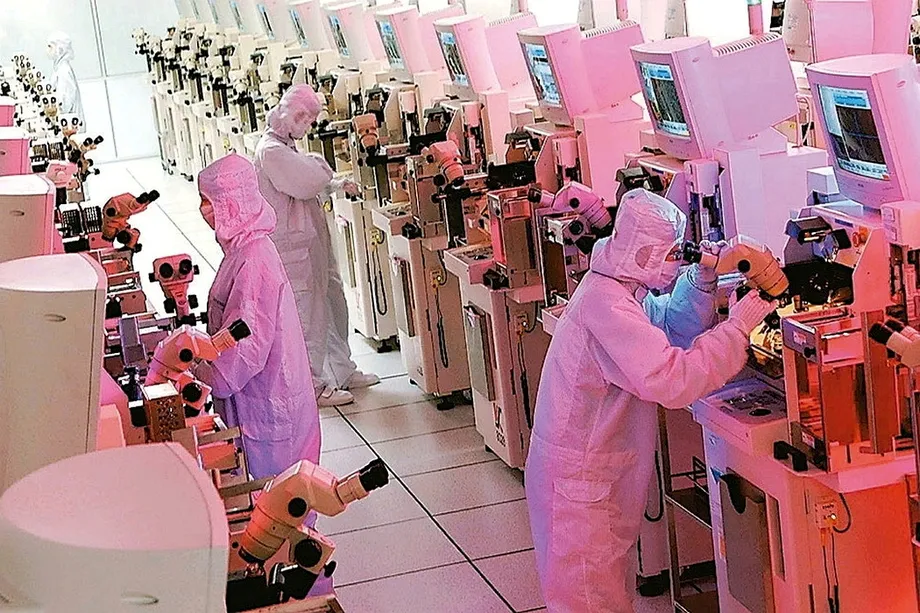
The central constraint is time rather than chip volumes alone. If each processor requires a longer test, the same equipment can handle fewer chips in a given period. Customers must then reserve more equipment hours to maintain shipments. Higher demand for those hours, together with more expensive materials and substantial factory investment, is strengthening the negotiating position of packaging and testing suppliers.
Price Estimates Describe Different Parts of the Market
The reported increases should not be treated as one uniform industry tariff. They cover different services, customers and periods. The 10% to 30% range concerns broader packaging and testing negotiations, while doubled prices apply to some urgent smaller orders. The reported increase exceeding 20% at ASE concerns advanced packaging quotations, including Chip on Wafer on Substrate (CoWoS) and Fan Out Chip on Substrate (FoCoS).
Morgan Stanley's forecast, reported on October 29, 2025, anticipated advanced packaging price increases of 5% to 10% in 2026. It described the prospective rise as the first pricing upcycle since the semiconductor shortage during the pandemic, supported by AI demand, constrained capacity and higher gold, copper and BT substrate costs. BT substrates are insulating materials used to support and connect chips inside packages.
Axtek's ASE pricing assessment, also citing Morgan Stanley, gives a wider range of 5% to 20% for packaging increases prepared for early 2026. It places ASE's utilization at around 90% in 2025 and identifies NVIDIA, AMD and Broadcom as major customers driving advanced packaging demand. This is Axtek's assessment, not an ASE pricing announcement.
The different figures may reflect changing negotiations or different product mixes, but there is no published contract breakdown that reconciles them. ASE's refusal to comment on the latest speculation also means the reported increase exceeding 20% cannot be presented as a confirmed price change applying to every customer.
Why More Complex Chips Need More Testing
A chip's selling price does not automatically determine how long it takes to test. AI processors commonly have more computing cores, more electrical connections, greater power requirements and more demanding data interfaces. Those features increase the checks needed to establish whether a chip operates correctly under its intended conditions.
Testing also protects other expensive components. A defective processor that enters advanced packaging can cause losses beyond the processor itself, potentially wasting the package and accompanying high bandwidth memory (HBM). That gives customers a reason to spend more on testing before packaging, on stress testing and on checks of the finished product.
Two distinct businesses benefit. Service providers such as Sigurd and KYEC sell testing capacity. Suppliers such as Chunghwa Precision Test Tech, known as CHT, supply probe cards, load boards and other interfaces connecting chips to testing machines. More demanding chips can require both additional machine time and redesigned interfaces. Rising revenue in these businesses therefore reflects different activities, rather than a single interchangeable AI opportunity.
Sigurd Customers Pay to Secure Equipment Time
Sigurd has confirmed that its testing prices are increasing. Memory customers have also offered to pay more to reserve capacity, showing that the shortage is spreading beyond AI processors themselves. Memory accounts for about 10% of Sigurd revenue. Reports put growth in that business at roughly 30%, with a separate third quarter figure of 32%.
AI, central processing units, graphics processors, ASICs and silicon photonics together represented 24% of Sigurd revenue in the first half, compared with 20% in the preceding year. That is an increase of four percentage points. The company's target is to exceed 30% in the following year. This grouping is broader than AI chips alone, so it should not be described as a pure AI revenue share.
Sigurd's third quarter revenue from AI, high performance computing and fast interconnection chips grew about 40% from a year earlier. Alongside agreements lasting at least a year, some customers are securing capacity through dedicated equipment. These arrangements turn immediate shortages into longer commitments, although their prices and detailed contractual conditions have not been disclosed.
Demand also includes advanced smartphone processors, satellite chips, fast networking products and silicon capacitors. That spread gives Sigurd several sources of orders, but it means expansion decisions must accommodate competing requirements rather than simply add identical machines for one class of AI processor.
Expansion Plans Reveal Both Demand and Delivery Risks
Sigurd bought its second Hukou plant in February and began mass production in July. Reports differ on when about 40% of its capacity had become available: one places that milestone in August, while another describes approximately 40% as operating by October. The company expects the plant to reach full capacity in the following year, with customer arrangements already covering the planned output.
Sigurd increased its annual capital expenditure plan by NT$2.822 billion in May, bringing the total to NT$8.8 billion, about 48% above its original plan. Its subsidiary Sigurd UTC separately added NT$2 billion to expand testing capacity for American CPU and GPU customers. Further increases remain possible if negotiations with additional major customers produce urgent requirements.
Group company Taiwan Star, or STAr Technologies, illustrates a different constraint. Its third quarter revenue fell because customer wafers made using 2 nanometer and 3 nanometer processes arrived late. Shipments originally expected in the third quarter were deferred to the fourth quarter. Even a testing company with equipment ready cannot process wafers that have not arrived.
Reports differ on Taiwan Star's investment amount. One summary describes its capital expenditure as rising from NT$5.6 billion to NT$7.7 billion. The detailed account instead says the company added NT$7.7 billion in September to a previously approved NT$5.6 billion, which would produce NT$13.3 billion. Those are materially different totals, and the investment figure cannot be resolved from the reported accounts.
High performance computing accounts for about half of Taiwan Star revenue. The company has completed qualification for N2 products and begun production of a 55 by 55 fan out ball grid array package and silicon photonics bump processes. Qualification means a process has passed the checks required for a customer's product; it does not by itself establish the volume or timing of future shipments.
Storage and Optical Links Broaden the Order Surge
Orient Semiconductor Electronics, known as OSE, Greatek Electronics and Sigurd are receiving orders across enterprise solid state drives, optical communications and ASICs. OSE's semiconductor business centers on NAND flash packaging and testing. As AI inference applications expand, enterprise storage demand is becoming another source of work, alongside opportunities created when larger providers redirect capacity toward advanced AI products.
OSE's pricing adjustments are reportedly beginning to contribute from the third quarter. It is also developing hybrid packaging that combines wire bonding with flip chip connections, and system in package technology, which brings multiple components together in one package. These approaches expand the range of products the company can accept.
Optical communications provides another measurable opportunity. Sigurd general manager Yeh Tsan lien says the company has invested in fast transmission technologies for more than 20 years and expects optical communications revenue to grow by multiples in 2027. Its services cover electronic integrated circuits, photonic integrated circuits, optical engines and laser sources, with more than 100 machines supporting electronic and photonic chip testing.
Silicon photonics uses optical signals to move data through connections that also involve electronic components. Within the group, Taiwan Star handles bumps and packaging, while Sigurd undertakes wafer optical and electrical testing, optical engine testing and module testing. That division shows how the AI expansion is generating work in data transmission as well as computation.
KYEC and Interface Suppliers Pursue Different Opportunities
KYEC reported August revenue of NT$4.08 billion, up 31.6% from a year earlier, and revenue of NT$29.404 billion for the first eight months, up 35.5%. Its annual investment budget increased from NT$39.372 billion to NT$50 billion, a rise of about 27%, principally for testing equipment and factory capacity.
Market expectations cited in an October 6, 2026 account suggest AI related business could exceed 70% of KYEC revenue in 2026. That is an expectation, not a confirmed revenue result. KYEC's exposure includes GPUs, AI ASICs and high performance computing chips, making equipment availability and test duration central to its ability to accept more orders.
CHT serves a different part of the testing chain. Its September revenue reached NT$247 million, up 33.6% from a year earlier, while third quarter revenue reached NT$711 million, up 27.9%. It plans to increase total capacity by at least 50%, with new ASIC projects expected to enter volume production in 2027. Silicon photonics probe cards have already been shipped to American customers.
For CHT, customer project schedules and interface specifications are major variables. For KYEC and Sigurd, machine utilization and the cost of newly installed equipment are more direct concerns. Higher revenue across all three does not establish that their profit margins will move together.
ASE Builds for Demand Beyond 2026
ASE's spending plans point to a shortage that companies do not expect to solve immediately. Its capital expenditure was US$5.3 billion in 2025 and is budgeted at US$8.5 billion in 2026, an increase of about 60%. ASE and SPIL have approximately 15 factory projects underway to prepare for demand expected from 2029 to 2030 and beyond.
ASE chief operating officer Tien Wu has described AI as the driver of capacity expansion, including demand extending from data centers into automotive electronics and humanoid robots. Describing the group's expansion effort, he said:
going all out
Market estimates still place the CoWoS supply shortfall at 15% to 20%, despite expansion by Taiwan Semiconductor Manufacturing Company. ASE is receiving additional substrate packaging and chip probing work and building FoCoS capacity. These services occupy different stages of production, so a rise in outsourced work does not mean every supplier provides the same complete packaging process.
Reported projections put ASE's relevant monthly capacity at about 20,000 wafers by the end of 2026 and 40,000 to 60,000 by the end of 2027. The upper and lower estimates imply two to three times the 2026 level. Revenue from its Leading Advanced Packaging platform, known as LEAP, is projected to double to more than US$7 billion in 2027. These remain projections, not completed expansion results.
The Milestones That Will Test the Pricing Story
The chronology separates earlier forecasts from later operating reports and investment targets. It also shows why expectations of higher prices should be assessed alongside equipment delivery, customer shipments and factory opening schedules.
- Third quarter 2025: ASE utilization reached about 90%, according to the account of Morgan Stanley's analysis.
- October 29, 2025: Morgan Stanley's reported forecast anticipated advanced packaging price increases of 5% to 10% in 2026.
- Early 2026: Axtek described prospective ASE packaging increases of 5% to 20%, citing Morgan Stanley.
- October 6, 2026: A testing sector account detailed revenue growth, KYEC investment and expectations for ASIC projects.
- End of 2026: ASE's relevant monthly capacity is projected to reach about 20,000 wafers.
- 2027: Sigurd expects substantial optical communications growth, CHT expects new ASIC projects to reach volume production, and ASE's LEAP revenue is projected to exceed US$7 billion.
- 2029 to 2030 and beyond: ASE and SPIL's factory projects are intended to serve anticipated demand.
The unresolved issue is how much of the price increase becomes additional profit. Materials, electricity, new facilities and equipment depreciation also cost more. Delayed wafer arrivals can postpone revenue even when customers want capacity. No complete customer pricing schedule or independently reconciled industry capacity measure has been disclosed, so claims of the strongest price surge in history remain industry descriptions rather than a demonstrated statistical record.
Key Points
- Reported packaging and testing increases range from 10% to 30%, with some urgent smaller orders costing twice as much.
- ASE reportedly raised certain advanced packaging quotations by more than 20%, but declined to comment on the speculation.
- Longer AI chip tests reduce the number of chips existing equipment can process.
- Sigurd customers are reserving capacity through agreements lasting at least a year and, in some cases, dedicated equipment.
- Storage, optical communications and custom processors are spreading demand beyond major AI accelerator suppliers.
- ASE's 2026 investment budget is US$8.5 billion, compared with US$5.3 billion in 2025.
- Future profit depends on equipment deployment, customer delivery schedules and whether higher prices cover rising costs.