
A peace prize dispute reaches the Taiwan Strait
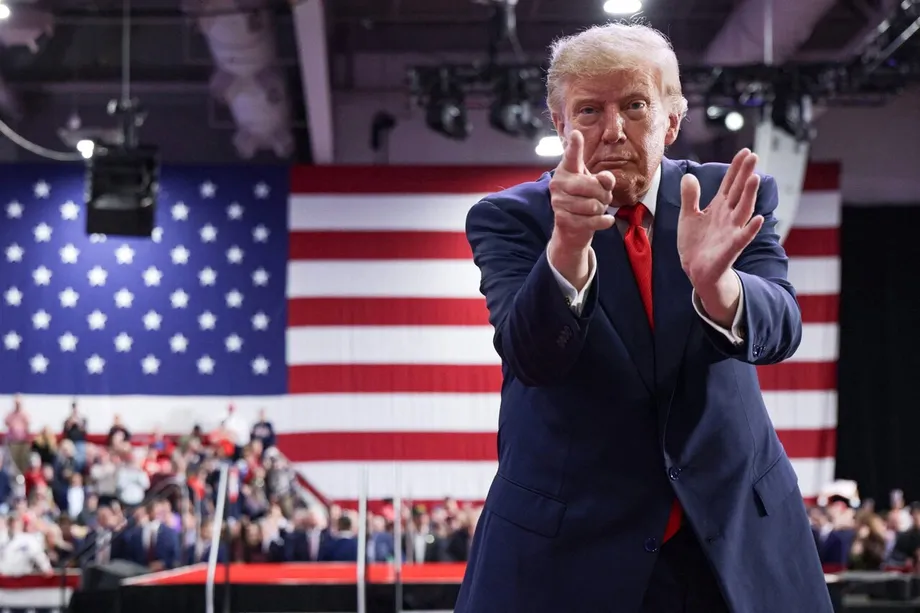
US President Donald Trump claimed that China and Taiwan had avoided war entirely because of him and the United States as he attacked the decision to award the 2026 Nobel Peace Prize to South African jurist Navi Pillay. The Norwegian Nobel Committee announced its choice on October 9, recognizing the 85 year old former United Nations human rights chief for her work promoting peace and international law.
Contents
- A peace prize dispute reaches the Taiwan Strait
- What the Nobel Committee recognized
- The eight conflicts Trump says he settled
- Taiwan and a wider claim of American deterrence
- Why Pillay's legal record matters
- Gaza findings fuel the political backlash
- Sanctions sharpen the dispute over international courts
- Norway, Machado and the limits of sharing a prize
- The sequence and what is still unresolved
- Key Points
Trump responded with a lengthy Truth Social post shortly before midnight that Friday and criticism at a rally in Syracuse, New York. He said he had settled eight wars, deserved eight peace prizes rather than one, and was preparing to settle or win two further conflicts involving Iran and Russia and Ukraine.
His remarks turned the award into a dispute over two different measures of peacemaking. Trump presented diplomatic deals, military deterrence and American power as grounds for recognition. The committee rewarded decades of work making governments and individuals answerable under international law, including legal advances concerning genocide and sexual violence.
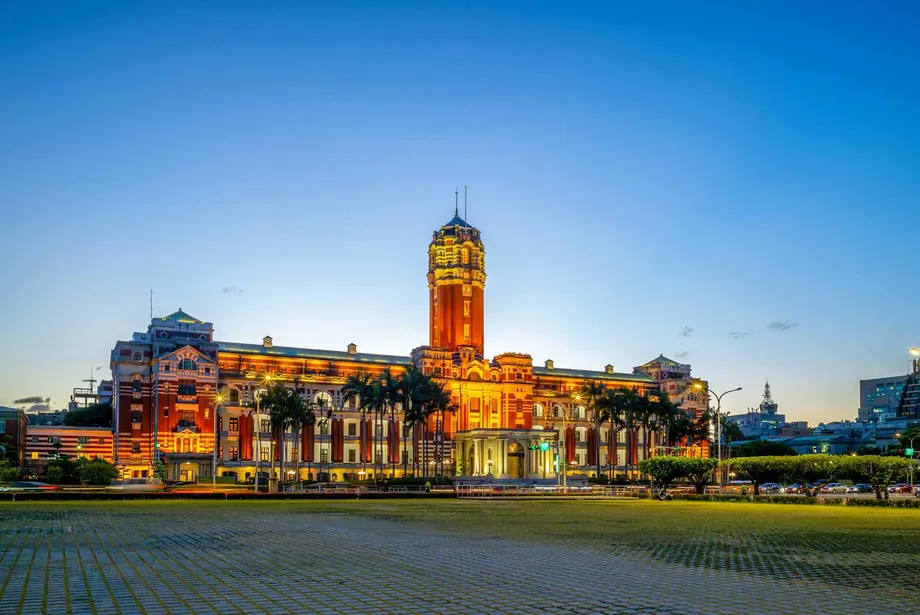
The Taiwan claim was among the broadest assertions in his response. Trump did not identify a particular agreement, intervention or incident that demonstrated his assertion of exclusive responsibility for preventing war across the strait. The absence of fighting alone does not establish why a conflict has not occurred, and his remarks did not provide evidence that separated the effects of American policy from other factors.
The award announcement, meanwhile, did not assess Trump's record or rank his claimed settlements against Pillay's work. It explained why the committee regarded legal accountability as a contribution to peace.
What the Nobel Committee recognized
In its 2026 prize announcement, the Norwegian Nobel Committee awarded Navanethem "Navi" Pillay the honor for efforts to promote peace and international law. It credited her with helping ensure that war crimes, crimes against humanity and genocide are prosecuted.
The committee traced her career from legal work under apartheid in South Africa to service on the country's High Court, the International Criminal Tribunal for Rwanda and the International Criminal Court. She also served as UN High Commissioner for Human Rights and, until recently, chaired the UN Independent International Commission of Inquiry on the Occupied Palestinian Territory.
The announcement identifies Pillay as a judge at the International Court of Justice in the case accusing Myanmar of genocide. It presents her contribution as both practical and institutional: helping develop legal standards, strengthening courts and holding states and national leaders accountable.
The Norwegian Nobel Committee explained the principle behind its choice in the announcement:
The key insight was that lasting peace must be built on legal principles, not on the will of the strong or a fragile balance of power.
The committee also acknowledged that international justice has been uneven. Powerful countries have often escaped responsibility, it said, and outcomes have differed according to the identity of perpetrators and victims. Its argument was therefore not that the legal order works perfectly, but that weakening it would make peaceful conflict resolution harder.
The eight conflicts Trump says he settled
Trump listed Cambodia and Thailand, Kosovo and Serbia, the Democratic Republic of the Congo and Rwanda, Pakistan and India, Israel and Iran, Egypt and Ethiopia, Armenia and Azerbaijan, and Israel and Hamas as the eight conflicts he said he had resolved.
He said presidents and prime ministers from the countries concerned had written to the Norwegian Nobel Committee on his behalf. His response did not reproduce those letters or explain the terms, durability or implementation of each claimed settlement.
Trump argued that any one of the eight, especially Pakistan and India, should have been sufficient to win. He also claimed to have prevented Iran from obtaining nuclear weapons and to have saved more lives than anyone in history. Those are assertions by the president, not findings made by the Nobel Committee.
His list combines disputes between states with the conflict between Israel and Hamas. Calling all eight settled does not distinguish between a ceasefire, a diplomatic agreement and a lasting resolution of the underlying dispute. That distinction matters because stopping immediate violence and ending a conflict are different achievements.
Trump's reference to two further wars also separates his claimed completed record from his stated ambitions. He described the conflicts involving the United States and Iran, and Russia and Ukraine, as matters he would settle or win. His remarks supplied no deadline or agreed terms for either outcome.
Taiwan and a wider claim of American deterrence
Trump placed China and Taiwan within a broader account of crises he said American leadership had prevented. He also claimed credit for avoiding war between North and South Korea and between Japan and North Korea.
Deterrence means discouraging an attack by convincing a potential aggressor that its costs would outweigh its gains. Unlike a signed ceasefire, a claim of successful deterrence is difficult to prove from the absence of war alone. Trump's statement did not specify which actions had prevented which threatened attacks.
He also cited the release of Israeli hostages, the return of other people held captive, the release of political prisoners in Eastern Europe, higher military spending by NATO countries and prosperity in the Arctic. He claimed to have advanced democracy in Venezuela and prevented Iran from destroying Israel and the Middle East.
These assertions widened his case beyond the eight conflicts he named. They did not, however, turn his Taiwan claim into a documented finding. No specific Taiwan agreement, crisis date or corroborating statement accompanied that claim in his response.
The distinction is central to the dispute: Trump sought recognition for outcomes he attributed to his leadership, while the committee identified particular institutions, court cases and legal advances associated with Pillay.
Why Pillay's legal record matters
Pillay was born into a family of Indian Tamil origin in Durban under apartheid. The committee described her early work defending Nelson Mandela and others opposing that system as the beginning of a career confronting discrimination and exclusion.
Her work at the International Criminal Tribunal for Rwanda helped establish that rape and sexual violence can constitute crimes against humanity and genocide. The 1998 judgment against Jean-Paul Akayesu, a former mayor of Taba, found him guilty of genocide and crimes against humanity.
That legal advance meant sexual violence could be treated as part of an effort to destroy a protected group, rather than merely as an incidental consequence of fighting. The committee also credited Pillay with work establishing accountability for incitement to genocide through propaganda.
Yasmin Sooka, a human rights lawyer who served on the truth and reconciliation commissions of South Africa and Sierra Leone, described the importance of the Akayesu judgment:
That judgment helped establish rape and sexual violence as weapons of war – a historic breakthrough that placed survivors' experiences at the heart of international justice.
The courts mentioned in Pillay's career have different jobs. The International Court of Justice is a UN court that resolves legal disputes between states. The International Criminal Court investigates and prosecutes individuals accused of grave international crimes. Pillay's current role in the Myanmar case is at the former; her previous judicial service included the latter.
Gaza findings fuel the political backlash
Pillay's work on Gaza became a major focus of opposition to her award. The UN commission she chaired concluded in September 2025 that Israel had committed genocidal acts against Palestinians in Gaza with the specific intent to destroy them. It also accused Prime Minister Benjamin Netanyahu, President Isaac Herzog and former defense minister Yoav Gallant of inciting genocide.
Israel rejected the findings, refused to cooperate with the commission and argued that it was biased. A commission's conclusion is not the same as a final court judgment, a distinction that matters when describing the legal status of its allegations.
Trump said he knew little about Pillay and accused her of hating Israel. He also reposted criticism from the law firm of David Schoen, the attorney who represented him during his second impeachment trial in 2021.
Israel's foreign ministry condemned the award, accusing the committee of legitimizing hatred and prejudice against Israel. Its response disputed the substance and fairness of Pillay's work, rather than accepting the committee's account of her contribution to international justice.
Pillay defended the legal basis of the Gaza inquiry when discussing the prize in Nuremberg. She said the work involved interpreting law and examining facts to reach an impartial decision. Her comments presented the findings as a legal assessment, while Israel continued to reject them.
Sanctions sharpen the dispute over international courts
Hours after the prize announcement, the Trump administration announced broader sanctions against the International Criminal Court. The measures targeted the institution itself, blocking any ICC assets in the United States and giving American companies and individuals six months to end business with the court.
Secretary of State Marco Rubio said the measures were intended to ensure that the court would never prosecute Americans. The ICC had not charged any US nationals. It has described itself as a court of last resort, acting when national justice systems do not genuinely address crimes within its jurisdiction.
The institutional sanctions followed personal sanctions Trump imposed in 2025 on ICC officials considered involved in investigations of Americans or Israelis. Pillay previously served on the ICC, but her current Myanmar case is at the separate International Court of Justice.
The International Criminal Court condemned the new measures in a statement:
It is an assault on the rule of law and on the very foundations of the international legal order which strikes at the simple principle that no one stands above the law.
The timing placed the administration's action alongside a Nobel announcement calling for stronger support for international legal institutions. There is no established basis here for saying the sanctions were caused by the award. The two developments nevertheless reveal opposing approaches to the authority of international courts.
Norway, Machado and the limits of sharing a prize
At his Syracuse rally, Trump called the decision disgraceful and embarrassing and described it as an "indelible stain" on Norway. Norway's Prime Minister Jonas Gahr Støre had previously explained that an independent committee, not the Norwegian government, chooses the laureate.
Trump had also objected when Venezuelan opposition leader María Corina Machado won the 2025 prize. At that time, the White House accused the committee of placing politics over peace.
Machado handed Trump her medal during a White House meeting in January 2026, after a US operation captured Nicolás Maduro. She described the gesture as recognition of Trump's commitment to freedom in Venezuela. Giving someone the physical medal does not transfer the Nobel honor.
The Nobel Committee clarified that distinction:
Once a Nobel Prize is announced, it cannot be revoked, shared or transferred to others.
Pillay responded to her own award with surprise while attending a gathering of lawyers and jurists at Nuremberg's Palace of Justice. She learned the news from colleagues after the committee had been unable to reach her before the announcement.
Addressing the applauding audience, Pillay, the new laureate, joked about Trump's desire for the prize:
If you clap a little bit more, I may share this prize with Trump.
Amnesty International Secretary General Agnes Callamard shared footage of the remark. Reports differ slightly on the wording of the joke, but its meaning was the same. The committee's rule means it could not become a literal transfer or division of the award.
The sequence and what is still unresolved
The controversy connects the previous year's award, the Gaza inquiry, the transfer of Machado's medal and the new sanctions. The main dates are:
- 1998: The Rwanda tribunal convicted Jean-Paul Akayesu of genocide and crimes against humanity in a case central to Pillay's legal legacy.
- September 2025: The UN commission chaired by Pillay published its genocide findings concerning Gaza, which Israel rejected.
- 2025: Machado received the Nobel Peace Prize, and Trump imposed personal sanctions on ICC officials.
- January 2026: Machado presented her Nobel medal to Trump at the White House.
- October 9, 2026: The Nobel Committee announced Pillay's award. Trump criticized the decision, and his administration announced sanctions against the ICC as an institution.
The six month period for American businesses and individuals to end dealings with the ICC is the clearest upcoming deadline identified in the sanctions account. No exact calendar date for that deadline was given.
The status and durability of each of Trump's eight claimed settlements are not established by his Nobel response. Nor did his remarks identify evidence supporting exclusive credit for peace across the Taiwan Strait. Pillay's Myanmar case remains distinct from the Gaza commission's findings, and no next hearing date was identified.
South African President Cyril Ramaphosa welcomed the award as recognition of Pillay's contributions to peace and human dignity. Retired Constitutional Court justice Edwin Cameron and Sooka also placed her recognition within South Africa's tradition of connecting peace with justice. The prize decision is final, even as the political and legal disputes surrounding it continue.
Key Points
- Navi Pillay received the 2026 Nobel Peace Prize for promoting peace and international law.
- Trump claimed he settled eight wars and deserved credit for preventing conflict involving China and Taiwan, without documenting exclusive responsibility.
- The independent Norwegian Nobel Committee chooses the winner, not Norway's government.
- Pillay's record includes legal advances on sexual violence and genocide, and service at several international courts.
- Israel rejected the genocide findings of the UN commission Pillay chaired and condemned her award.
- The Trump administration announced institutional sanctions against the ICC on the day of the prize announcement.
- Machado's gift of her medal to Trump did not transfer her Nobel honor. Pillay's suggestion of sharing her prize was a joke.