
Taipei says its 23 million people must decide their future
Taiwan's foreign ministry has reaffirmed that Taiwan and China are not subordinate to one another after Beijing accused President Lai Ching-te of promoting independence and undermining peace with his October 10 National Day address. The ministry said Taiwan's future belongs to its 23 million people to decide collectively, and that China has no right to interfere.
Contents
- Taipei says its 23 million people must decide their future
- What Lai said about peace and freedom
- Two incompatible definitions of the status quo
- Defense spending becomes a central point of dispute
- China's military defends exercises around Taiwan
- Political motives and wartime history draw criticism
- Washington supports peace as an arms decision waits
- The sequence of speeches and military responses
- What has not yet been decided
- Key Points
The response sharpened a dispute over what preserving peace in the Taiwan Strait means. Speaking outside the Presidential Office in Taipei, Lai said stronger defenses were intended to deter war and support dialogue. China's Taiwan Affairs Office rejected that explanation, describing Taiwan as part of China and calling that position the true status quo.
Taiwan's ministry urged Beijing to recognize the differences between the democratic and authoritarian political systems on the two sides of the strait. It also called on China to stop attacks that could increase tensions and abandon the use of force to change the status quo.
The exchange extended beyond the two civilian administrations. Chinese defense ministry spokesperson Chen Xi defended People's Liberation Army exercises around Taiwan as deterrence against separatism and external interference. The United States welcomed Lai's commitment to peace, while a senior American official warned against using a routine speech to justify coercion.
What Lai said about peace and freedom
Lai, Taiwan's president, presented freedom and peace as commitments that Taiwan would pursue together. His address paired an invitation to exchanges with a rejection of political subordination.
"Taiwan cherishes peace, but we will not give up our freedom. We are open to exchanges, but will not accept subordination," he declared.
He argued that peace could not depend on wishes alone, citing growing military and political pressure from China. Stronger defense capabilities, he said, would allow Taiwan to pursue talks on the basis of "parity and dignity" rather than close off opportunities for dialogue.
Lai also said the right of Taiwan's people to exist must be respected. He connected Taiwan's security to a broader concern about whether international rules could withstand the use of force and whether powerful countries could deny people the right to determine their future.
His wording differed from a formulation he has commonly used: neither side of the Taiwan Strait is subordinate to the other. He did not repeat that full phrase in this address, although he said Taiwan would not accept subordination. The foreign ministry subsequently stated the mutual non-subordination position explicitly.
Two incompatible definitions of the status quo
The foreign ministry described the absence of subordination between Taiwan and China as an objective reality recognized by the international community and a consensus among Taiwanese. That was Taiwan's official position, rather than evidence that every government recognizes Taiwan as a sovereign state.
Beijing's Taiwan Affairs Office offered a different definition. It maintained that there is only one China, that Taiwan is part of it, and that this constitutes the true status quo in the strait. It accused Lai of disregarding facts, misleading the public and exaggerating the military threat from China.
The disagreement also concerns who has authority to determine Taiwan's future. Taipei assigns that decision to Taiwan's 23 million people. Beijing says the decision belongs jointly to all Chinese people, including those in Taiwan. These are competing claims about political authority, not simply different descriptions of military activity.
Taiwan's foreign ministry pledged to continue working with democratic partners to protect national sovereignty and sustainable development. Beijing, meanwhile, treats outside support for Taiwan as interference in a matter it considers domestic. That divide helps explain why the same diplomatic or defense initiative can be presented by one side as protection and by the other as a threat.
Defense spending becomes a central point of dispute
Lai pledged continued military reforms, stronger asymmetric warfare capabilities and increased defense spending. Asymmetric warfare means using capabilities suited to resisting a more powerful opponent rather than trying to match its forces weapon for weapon. Taiwan faces a much larger Chinese military with advanced fighter aircraft, aircraft carriers and extensive missile forces.
Beijing's criticism also targeted Taiwan's Whole-of-Society Defense Resilience Committee, military exercises, drills involving civilian and military organizations, civilian facilities designated as wartime response centers, and purchases of weapons from abroad. The dispute therefore reaches beyond the armed forces into preparations involving civilian institutions.
Liu Xiangping, an expert on Taiwan studies at Nanjing University, argued that Lai's resilience policy served as a justification for higher military spending at the expense of public welfare. He described that spending as harmful to residents rather than protective.
"Lavishing the people's hard-earned money on military expansion at the expense of their livelihoods will ultimately backfire," Liu said.
Liu also accused Lai of seeking favor with the United States and Western countries. His comments expressed an interpretation of Lai's motives; they did not establish the budgetary effect of the defense measures. No detailed spending breakdown was given alongside that criticism.
China's military defends exercises around Taiwan
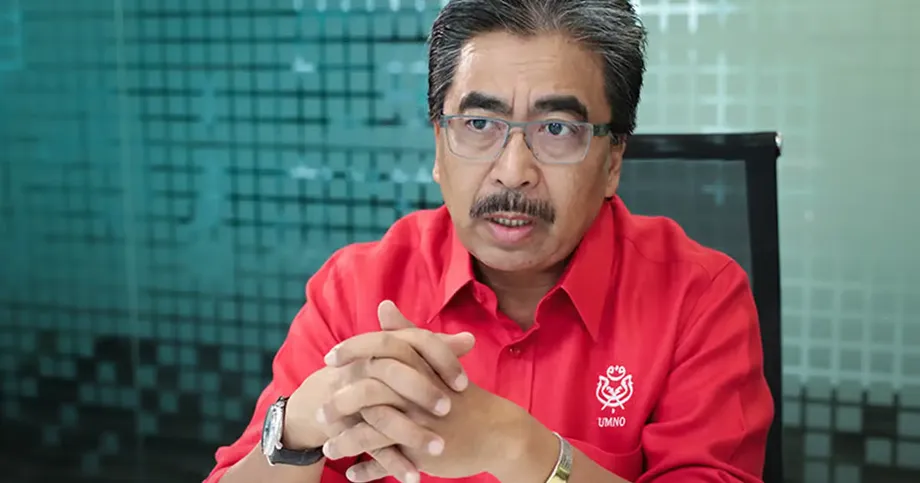
Chen Xi, spokesperson for China's Ministry of National Defense, criticized Lai's speech on Sunday. He accused the president of seeking Taiwan independence through military expansion and outside support, and portrayed the governing Democratic Progressive Party as pursuing partisan interests at the expense of stability.
Chen said regular People's Liberation Army exercises and training around Taiwan were intended to deter independence activities and external interference, and to safeguard Taiwan residents. His comments framed Chinese military operations as a response to separatism, directly opposing Taipei's account of those activities as pressure.
Calling on people in Taiwan to support Beijing's position, Chen said:
"We hope Taiwan compatriots will join the mainland in combating separatist forces, opposing external interference, safeguarding peace and sharing the fruits of national rejuvenation," Chen added.
The response described the purpose of military exercises but did not announce a new operation, deployment schedule or exercise area. China has not ruled out using force to bring Taiwan under its control, which gives the disagreement over military intentions practical weight beyond the exchange of statements.
Political motives and wartime history draw criticism
Chen Guiqing, a research fellow at the Institute of Taiwan Studies at the Chinese Academy of Social Sciences, accused Lai of encouraging confrontation while professing support for peace and exchanges. He also argued that the speech avoided Taiwan's economic and social challenges and served the Democratic Progressive Party's electoral interests.
Chen linked that allegation to upcoming local elections, although no election date was specified in his remarks.
Lai's speech skirted the economic and social challenges facing Taiwan," Chen said. "The remarks were apparently designed to serve the DPP's interests in the upcoming local elections.
A separate criticism concerned Lai's treatment of World War II. Wang Yingjin, director of the cross-Strait relations research center at Renmin University of China, objected to Lai's use of the phrase "end of the war" and argued that he should have referred to victory over Japan and Taiwan's restoration to China.
Lai said he would "never allow the distortion of World War II history." Wang accused him of doing precisely that. The dispute tied the speech's historical language to competing claims about Taiwan's status, rather than treating the wording as a purely commemorative matter.
There is a dating inconsistency in the reporting: Wang's criticism refers to the 80th anniversary of Taiwan's restoration to China, pointing to 2025, while another report explicitly dates Chen Xi's response to October 11, 2026. Those references should not be treated as a single confirmed chronology.
Washington supports peace as an arms decision waits
The United States welcomed Lai's commitment to maintaining peace and stability across the Taiwan Strait. A senior US administration official, who was not named, cautioned against treating the address as grounds for an aggressive response.
"A routine speech is no justification for aggressive or coercive actions".
Washington remains Taiwan's most important international supporter despite the absence of formal diplomatic relations. Its role combines political backing with weapons sales, both of which Beijing objects to as outside involvement.
A proposed US$14 billion American arms package for Taiwan was reported to be awaiting approval from President Donald Trump. A previous package worth US$11 billion had been announced as a record deal. The proposed package is US$3 billion larger, approximately 27% above the earlier figure, but it is not an approved sale.
Lai also welcomed efforts by Washington and Beijing to manage their rivalry through dialogue and reduce the risk of military confrontation. A Taiwanese official said those remarks addressed a US-China summit held in Washington the previous month. Lai's support for such talks sat alongside his appeal for democratic countries in the Indo-Pacific to work together to preserve regional peace.
The sequence of speeches and military responses
The latest dispute followed earlier National Day addresses that drew different Chinese military responses. The reported sequence matters because Beijing's condemnation of a speech does not, by itself, establish that a new round of exercises has begun.
- In 2024, China conducted military exercises around Taiwan shortly after Lai's first National Day speech as president.
- Around his 2025 National Day address, China did not mount a comparable round of exercises.
- In late December 2025, Chinese exercises near Taiwan followed news of the US$11 billion American arms deal.
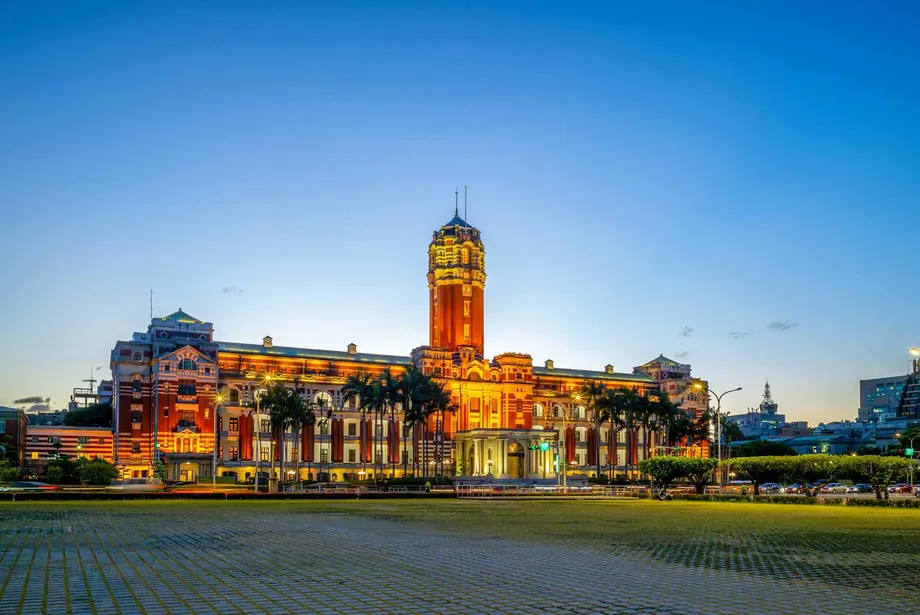
- On Saturday, October 10, Lai delivered the address at the center of the latest dispute outside the Presidential Office in Taipei.
- A report dated October 11, 2026, identifies Sunday as the day of Chen Xi's defense ministry response.
The Saturday and Sunday references fit October 10 and 11, 2026. However, the separate reference to an 80th anniversary points to the previous year. The main sequence is therefore described with that discrepancy intact, rather than assigning every quoted criticism to an undisputed date.
The late December 2025 exercises are described as the most recent in the reporting on this exchange. No new exercise announcement or subsequent operational details accompany the latest defense ministry remarks.
What has not yet been decided
The statements leave several concrete matters unresolved. The proposed US$14 billion arms package awaits approval, with no decision deadline identified. Beijing's latest criticism contains no timetable for new military action, while Taipei's call for dialogue does not come with an announced meeting or negotiating process.
The central disagreement remains the scope of Taiwan's political choice. Taipei says its people alone must decide their future and argues that stronger defenses protect that choice. Beijing says Taiwan belongs to China and presents resistance to unification, together with foreign support, as the threat to peace.
Both governments invoke stability, but their stated objectives differ. Taiwan's ministry is seeking to preserve sovereignty and reject forced change. Beijing is asserting a claim to Taiwan and defending military pressure as deterrence against separatism. The US response supports peaceful conduct without resolving that underlying conflict.
Key Points
- Taiwan's foreign ministry said Taiwan and China are not subordinate to one another and that Taiwan's 23 million people must decide its future.
- Lai said Taiwan would protect its freedom while remaining open to exchanges and dialogue.
- Beijing rejected the speech and described Taiwan's place within one China as the true status quo.
- Chinese defense spokesperson Chen Xi defended military exercises as deterrence against separatism and outside interference.
- The United States welcomed Lai's commitment to peace; a proposed US$14 billion arms package remains unapproved.
- Reports contain a dating inconsistency between an October 2026 response and an anniversary reference pointing to 2025.
- No new military exercise timetable, dialogue meeting or arms approval deadline was identified.