
Signed certificates change how flagged voters are cleared
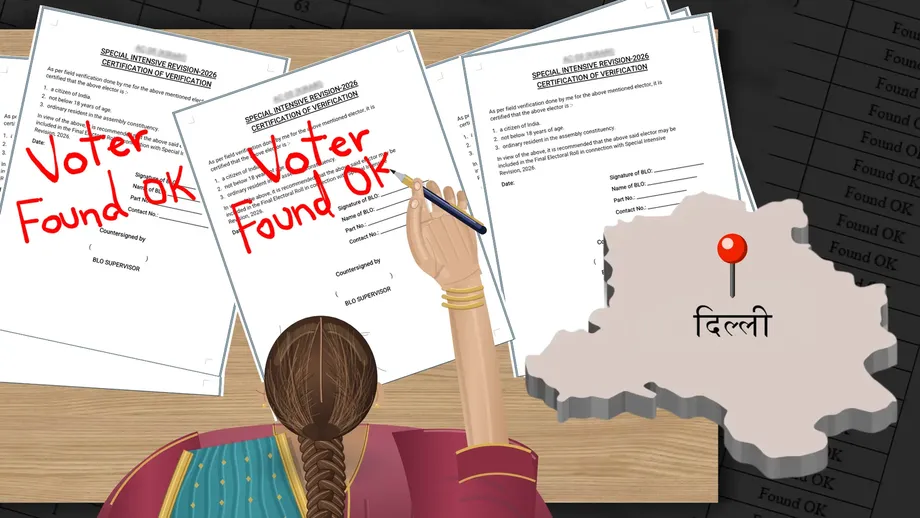
Election officials in at least five assembly constituencies in north and west Delhi are using certificates signed by booth level officers to clear voter roll discrepancies without requiring supporting documents or further hearings, according to reporting published on October 11, 2026. Some officers say they were handed printed lists already marked "Found Ok" and instructed to sign them rather than conduct fresh verification.
Contents
- Signed certificates change how flagged voters are cleared
- What the certificates allow
- Discrepancies are not proof of ineligibility
- New Delhi shows how document exemptions work
- Rules shifted from hearings to home visits
- Daily targets meet uneven workloads
- Faster disposal does not reveal the basis of clearance
- Voters face different problems depending on their status
- Accountability and deadlines remain central
- Key Points
The procedure changes the practical requirements of the Election Commission of India's Special Intensive Revision (SIR). Voters who received notices were previously expected to submit documents for examination by electoral registration officers. Under the newly circulated instructions, a certificate from a booth level officer, or BLO, can instead support forwarding their names for inclusion in the final roll.
The scale is substantial. Around 47 lakh names were omitted from Delhi's draft roll, with more detailed accounts putting the number at 47.56 lakh. Another 33.11 lakh people who remained on the draft received notices about discrepancies or problems linking their details to the 2002 electoral roll. These are separate groups: receiving a notice does not itself mean a voter has been deleted.
The certificates could spare eligible voters repeated demands for paperwork over spelling errors and other inconsistencies. The central concern is whether they record a genuine assessment or simply close pending cases. BLO accounts of signatures obtained without document checks differ sharply from official descriptions of verification through visits to voters' homes.
What the certificates allow
The new forms were circulated through WhatsApp directives. They ask BLOs to certify that voters with pending notices have been verified, are Indian citizens and are genuine voters in the constituency. The certificates are filed under the officer's name and can cover multiple voters at once.
In one constituency, the attached lists contain voter names, Electoral Photo Identity Card (EPIC) numbers, booth numbers and mapping categories. A remarks column allows the officer to record "Found OK." Instructions accompanying the certificate say no hearing needs to be scheduled and no additional documents may be demanded after certification.
One BLO said the lists handed out at a voting centre already contained favourable remarks against every voter. Another said officers had not checked documents and had simply signed certificates. These officers spoke anonymously, so their accounts establish allegations about the process, not findings against identified officials.
The practice was identified in five constituencies, each apparently using its own version of the certificate. That does not establish a uniform procedure across Delhi. One BLO also said cases involving voters who could not be mapped to the older roll were being cleared this way, but that claim was not independently verified.
Three different documents have appeared during the revision: a BLO undertaking for an individual voter, a voter undertaking confirming information given during a hearing, and the latest certificate covering lists of pending cases. Their different purposes matter. A declaration by a voter is not the same as an officer certifying that verification has already taken place.
Discrepancies are not proof of ineligibility
The notices cover two broad problems. "No Mapping" concerns an unsuccessful link to the earlier electoral roll. "Logical Discrepancies" can arise even when a voter has successfully identified an entry in the 2002 roll, because software flags differences in names, ages, parentage or other details.
Reports differ on the size of the second category. One notice analysis identified at least 20 lakh logical discrepancy cases. Another account put the figure at 19.1 lakh. Figures attributed to Delhi's Chief Electoral Officer put it above 19.3 lakh, with one account specifying 19.33 lakh. These figures should not be treated as interchangeable without knowing their dates and classification methods.
The same caution applies to mapping totals. Figures attributed to the CEO include nearly 13.8 lakh cases, or more precisely 13.79 lakh. One account says the CEO report did not establish whether mapping and logical discrepancy categories overlap. Adding them without that clarification could count some people twice.
This distinction explains why some electoral registration officers support clearance without fresh documents. A mismatch generated by software is a reason to examine a record, not necessarily evidence that the person is ineligible. The dispute is over what evidence is sufficient to resolve that mismatch and whether the recorded assessment actually occurred.
New Delhi shows how document exemptions work
The clearest constituency example comes from New Delhi, where all 20,777 notice cases had been cleared by the October 10 account. The constituency had 52,368 electors on its draft roll, meaning about 39.7% had received notices.
Documents were collected in 17,392 cases, including some during the earlier enumeration stage. The remaining 3,385 were cleared without documents using new options in ECINET, the ECI's digital system for processing electoral work. Those exemptions represented about 16.3% of New Delhi's notice cases.
Piyush Mohanty, the electoral registration officer for New Delhi, said his decisions relied on BLO field reports from earlier visits. He explained how he used the portal options:
For the remaining 3,385 electors, we used the new options and cleared the notices without documents. I uploaded the hearing order based on the field reports of the BLOs. They had already gone door to door during the enumeration phase. The new options helped in disposing of cases much faster,
Mohanty's explanation describes a decision based on previous fieldwork. It is different from the anonymous BLO accounts of being required to sign lists without conducting verification. Clearing a case without newly collected documents does not, by itself, establish that no evidence was considered.
Other electoral registration officers remained reluctant to use the exemptions. They said written instructions still required documentary proof and that an order uploaded to ECINET needed an evidential basis. Officers supporting the change argued that their statutory authority allowed them to decide eligibility using BLO field reports, particularly for genuine voters with limited paperwork.
Rules shifted from hearings to home visits
The latest certificates follow several changes in how Delhi's notices were to be resolved. Initially, voters were expected to attend hearings and provide documents, which would be uploaded to ECINET for assessment by electoral registration officers, or EROs. EROs retain responsibility for decisions on the roll.
Earlier reporting described special arrangements for prominent voters, including Chief Minister Rekha Gupta, who reportedly did not attend a hearing despite receiving a notice. BLOs said informal WhatsApp instructions told them to collect documents from VIP voters at home. Other reported beneficiaries included former chief minister Arvind Kejriwal, Manish Sisodia and Election Commissioner Sukhbir Singh Sandhu.
An ECI release dated September 26 said BLOs would collect documents at homes, with hearings reserved for special cases decided by EROs. A separate September 29 order is described as formalising home collection for Delhi voters. These are distinct dated actions; neither should be confused with the latest WhatsApp instructions dispensing with supporting documents.
The sequence shows a change in both location and evidence requirements:
- June 30: Delhi's SIR began.
- August 31: The draft roll was published and discrepancy notices were generated.
- September 26: An ECI release described home collection of documents rather than routine hearings.
- September 29: An order formalised BLO visits to collect supporting documents.
- By early October: ECINET options allowed some cases to be cleared without documents or hearings.
- October 11: Reporting described bulk certificates circulating in five constituencies.
Moving document collection to homes could reduce inconvenience without changing the basis of scrutiny. Substituting a signed certificate changes what is recorded as sufficient proof. The office of Delhi's Chief Electoral Officer was asked to comment on the latest procedure, but no response was recorded in the October 11 account.
Daily targets meet uneven workloads
Authorities directed 14,947 BLOs to verify at least 10 electors a day, a combined target of 149,470 cases daily. One separate report gives the number of BLOs as 14,946. That small difference does not alter the much larger problem of uneven workloads.
An analysis of 2.5 lakh pages of notices found that around half the booths had workloads of at least 215 cases. More than 2,000 booths had over 300. The largest identified burden was 741 cases for a BLO in Hari Nagar.
BLOs said locating a voter and resolving a case typically took 15 to 25 minutes. At that rate, 741 cases would require about 185 to 309 hours, before allowing for repeat visits or other duties. Ten cases a day would itself require roughly two and a half to four hours and ten minutes at those reported timings.
Many BLOs also work as teachers or in other government posts. Reports described verification being conducted at schools, party offices, community leaders' homes and roadside locations rather than exclusively through home visits. A senior CEO office official took a different view, saying the cases could be completed through time management.
The pressure is particularly visible in Ballimaran, where 609 of 635 draft voters at one booth received notices, about 95.9%. If every notice had ended in deletion, only 26 names would have remained. That was a conditional calculation, not an actual deletion outcome.
Faster disposal does not reveal the basis of clearance
Case disposal accelerated rapidly. Fewer than one lakh notices had been resolved by September 26. The CEO's first progress report on October 5 showed more than 10 lakh cases verified. By the account published October 10, disposal had passed 15 lakh, including over two lakh cases in a single day.
Other reported snapshots put verification at 13,62,162 and, subsequently, 17,03,515. The latter is approximately 51.5% of 33.11 lakh notice cases. Without a publication date attached to every figure, these should be read as separate progress snapshots rather than totals for the same moment.
The distinction between verification and disposal also matters. A case can be administratively closed after documents are checked, after earlier field reports are considered, or through a certificate. A rising total alone does not show which route was used or how often fresh scrutiny occurred.
The ECI's prescribed list reportedly contains 12 documents and excludes bank passbooks, PAN cards and Aadhaar cards. Yet some BLOs were uploading those documents when they were all a voter possessed, together with an officer undertaking. Senior journalist Nilanjan Mukhopadhyay was reportedly told Aadhaar alone would suffice, illustrating how practical instructions could differ from the listed requirements.
Voters face different problems depending on their status
The new certificates concern pending notices, not necessarily everyone omitted from the draft. Delhi had about 1.45 crore electors before the revision and 97.5 lakh on the draft, according to figures attributed to the CEO. Around 47.5 lakh were classified as absent, shifted, dead or in other omission categories.
Individual accounts show why the distinction matters. Senior advocate Rebecca John reportedly received a notice over a surname mismatch despite identifying her entry in the 2002 roll. Her son also received a notice despite matching both parents' surnames. Kunne Lal, a longtime Delhi resident, was reportedly marked dead while alive. Rukhsana, 22, was among voters omitted in Bela Estate.
Other voters described notices arriving after the hearing date printed on them, repeated document demands and uncertainty about where to seek corrections. Social activist Anjali Bhardwaj questioned why errors generated by the system had placed so many voters under suspicion.
Authorities said a notice gives an elector an opportunity to establish eligibility and does not automatically lead to deletion. For someone already absent from the draft, however, an inclusion application remains a separate step. Since August 3, authorities had received 278,383 forms, including 198,731 inclusion applications and 5,643 correction or address change forms.
Accountability and deadlines remain central
Certificates place a declaration of verification under the BLO's name. Under the Representation of the People Act, 1950, knowingly making a false declaration connected with an electoral roll can attract up to one year in prison, a fine, or both. That provision does not make every mistaken certificate criminal, but it makes the truth of the declaration consequential.
The revision is also under judicial and political scrutiny. On October 5, the Supreme Court sought responses from the ECI, Chief Election Commissioner Gyanesh Kumar and the Union government on petitions challenging revision decisions. Chief Justice Surya Kant said the court had not approved a change to Form 6. The ECI separately said the court had upheld the Form 6 declaration. These are conflicting descriptions of the court's position; they do not establish a ruling on Delhi's latest bulk certificates.
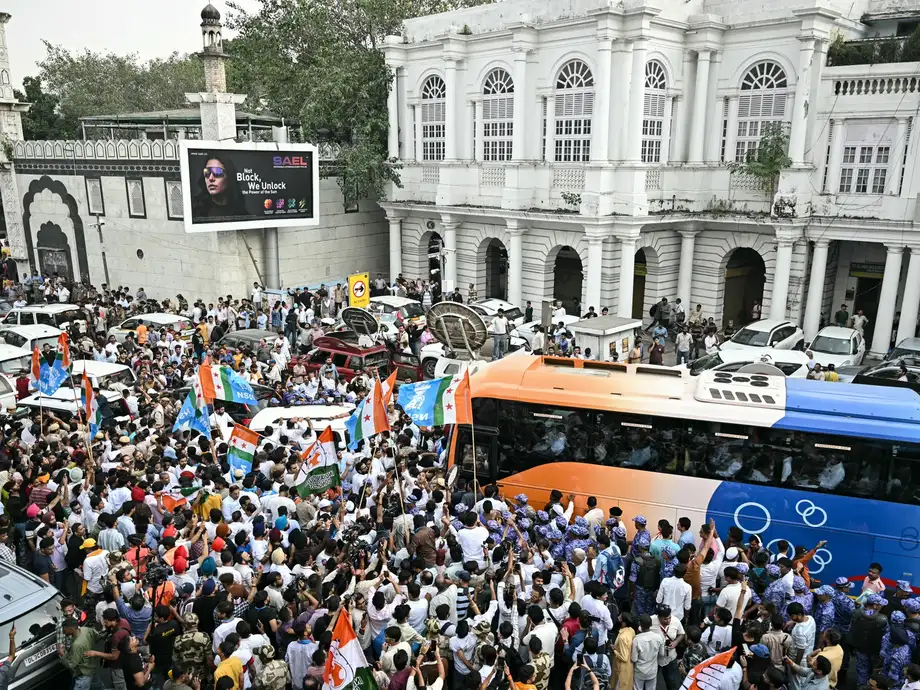
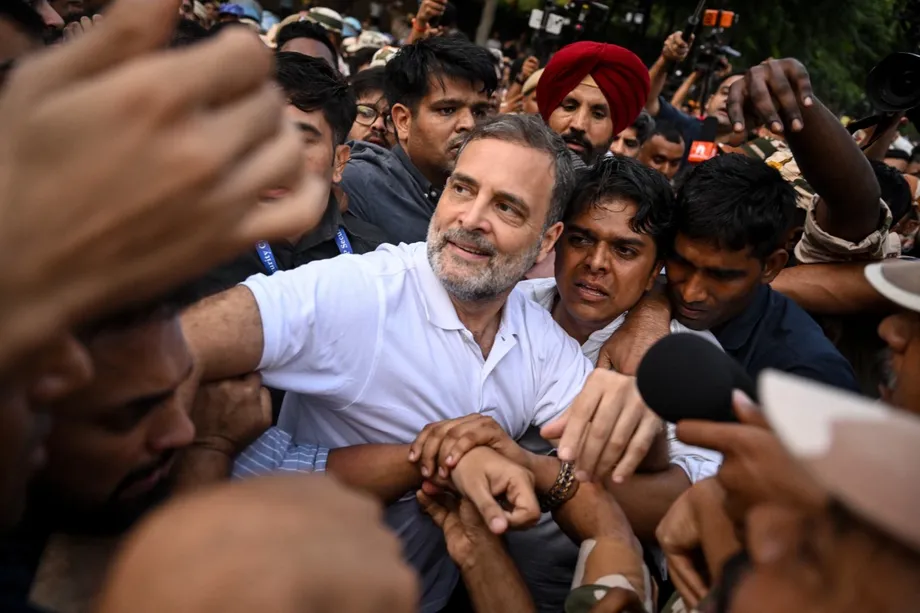
Opposition lawmakers from 19 parties marched towards the ECI on October 6, and Rahul Gandhi was briefly detained. BJP spokesperson Sambit Patra accused the Opposition of creating "an atmosphere of anarchy". The ECI rejects allegations of wrongdoing and says the revision removes dead, shifted and duplicate electors.
The reported schedule keeps claims and objections open until October 30, sets November 25 as the verification target, and November 30 for disposal of notices, claims and objections. The final roll is due December 4. Applications can be submitted through BLOs, assistant electoral registration officers, the voter services portal or ECINET.
What remains unresolved is how widely the bulk certificates are being used, whether their wording is uniform, and how many clearances rest on completed fieldwork rather than signatures obtained under pressure. Publication of the final roll will establish who is included, but it will not by itself explain how each disputed case was decided.
Key Points
- BLO certificates are reportedly being used in five Delhi constituencies to clear notice cases without additional documents or hearings.
- Around 47.5 lakh names were omitted from the draft, while another 33.11 lakh draft voters received notices.
- In New Delhi, 3,385 of 20,777 notice cases were cleared without documents, with the ERO citing earlier BLO field reports.
- Some BLOs allege they were told to sign lists already marked as satisfactory without conducting verification.
- Claims and objections close October 30; final rolls are scheduled for December 4.