
Two days of street protests put voter roll revisions at the centre of a political standoff
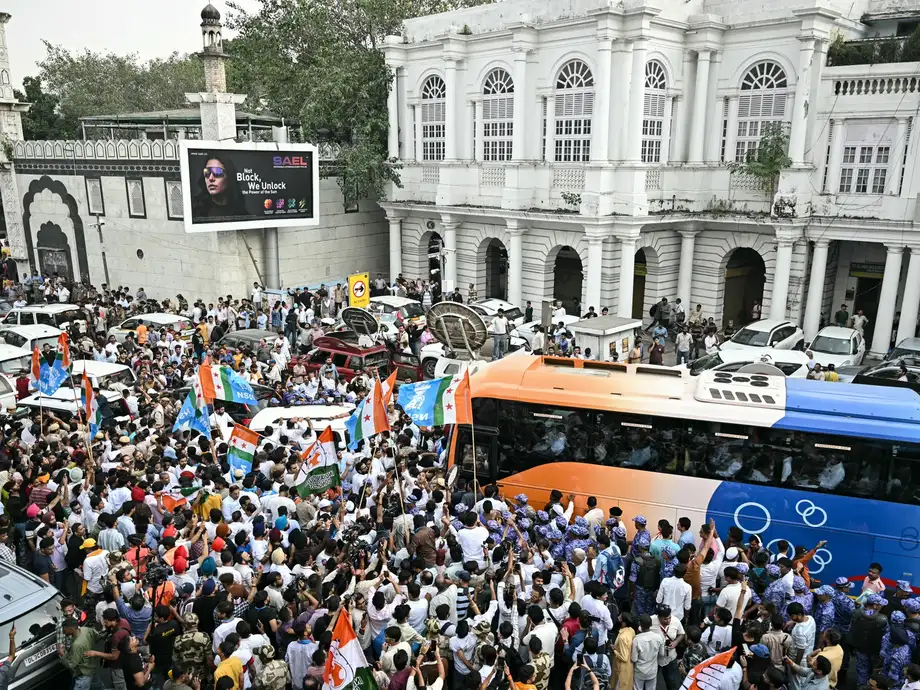
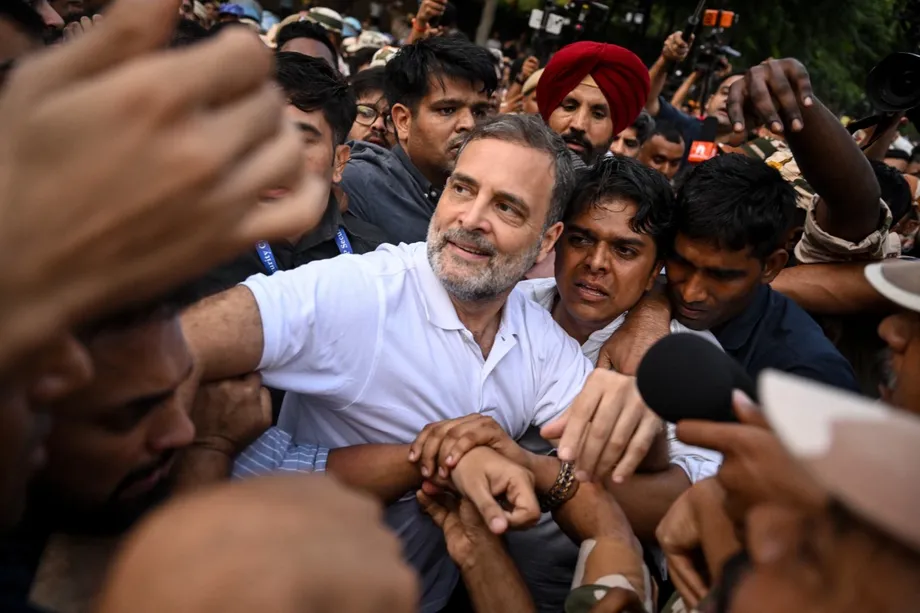
Rahul Gandhi and Priyanka Gandhi Vadra were detained in New Delhi for a second consecutive day as opposition lawmakers tried to reach Jantar Mantar to protest against Chief Election Commissioner Gyanesh Kumar. Police stopped buses carrying the lawmakers near Ashoka Road, then detained Rahul, Priyanka and other demonstrators after they left the vehicles and sat on the road. They were released later that evening.
Contents
- Two days of street protests put voter roll revisions at the centre of a political standoff
- Why are opposition parties challenging the voter revision?
- How did the demonstrations unfold?
- What do the competing claims about access to the Commission show?
- Why has the dispute become a test of opposition unity?
- What happens next in the political and legal dispute?
- The Bottom Line
The protest followed a daylong demonstration on Tuesday, when opposition MPs were blocked from marching to the Election Commission of India’s headquarters. Rahul and Priyanka Gandhi, along with other leaders, staged a sit in at the nearby Akashvani Bhavan premises, seeking a meeting with the election commissioners. Police later removed and detained them. The renewed confrontation brought the dispute over electoral rolls into central Delhi’s streets and prompted opposition parties to announce more demonstrations.
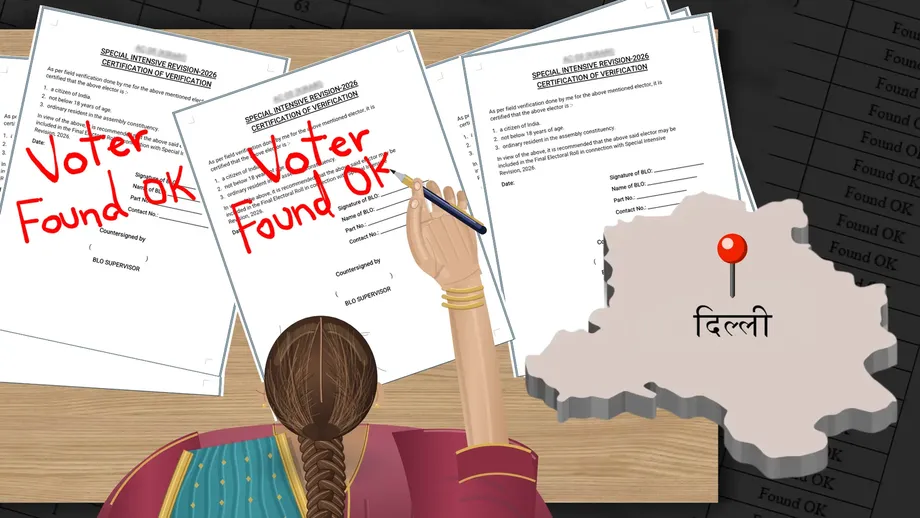
The INDIA bloc, a coalition of opposition parties, is demanding Kumar’s resignation and the suspension of the Special Intensive Revision (SIR), a nationwide process to update electoral rolls. Opposition leaders allege the exercise has removed eligible voters in a way that benefits Prime Minister Narendra Modi’s Bharatiya Janata Party (BJP). The Election Commission and the government reject that charge, saying the revision is intended to remove duplicate and ineligible entries and preserve the registration of eligible voters.
The protests unfolded amid a dispute over how the opposition could present its concerns to the Commission. The poll body said it had not received a formal appointment request before 4 p.m. on Tuesday, when Delhi Police informed it that a delegation of about 240 MPs wanted to meet and submit a memorandum at the Parliament House Annexe. The Commission said its established procedure requires political parties to request appointments through authorised representatives and that meetings take place at its offices. It offered to send a senior official to receive the memorandum, but said the offer was declined.
Why are opposition parties challenging the voter revision?
The SIR is an intensive review of voter lists, the records used to determine who can vote in an election. The process began in Bihar in 2025 before expanding to other parts of India. The Election Commission says it is meant to identify duplicate records and remove people who are no longer eligible. Opposition parties and activists say the process risks excluding eligible voters, and that people whose names are removed must navigate appeals to restore their registration.
More than 130 million names have been removed from draft electoral rolls, according to figures cited in the reports. Millions of people have appealed the removals. The scale of the revision has sharpened concerns because India had about 969 million eligible voters in the 2024 general election. A deletion from a draft list does not by itself establish that a person has permanently lost the right to vote, but it can require that person to challenge the decision and prove eligibility before being restored.
Opposition parties say voters who support them have been disproportionately affected, while voters more likely to support the BJP have been retained or added. The Commission and the BJP deny that the process has a political motive. The allegations have not been established by the information available here, leaving the accuracy and fairness of the revision at the heart of the dispute.
The row also draws on a report that election commissioners Sukhbir Singh Sandhu and Vivek Joshi objected at least 14 times over a 10 month period to decisions they said were issued in the Commission’s name without their knowledge. The reported objections concerned matters including voter additions and deletions, access to voter data and the security of electoral information. The Commission said that differing views are part of institutional work and that decisions were ultimately unanimous.
How did the demonstrations unfold?
On Tuesday, opposition MPs set out from Parliament toward the Election Commission’s office. Police barricades blocked the route, and Rahul Gandhi climbed over a barricade while carrying the national flag. When the march could not proceed, he and other leaders moved to Akashvani Bhavan, close to the Commission headquarters, and began a sit in. Priyanka Gandhi, Samajwadi Party leader Akhilesh Yadav and members of several other parties joined the protest at different points.
The sit in lasted for hours. Rahul Gandhi said the opposition wanted to meet the commissioners and present its accusations directly. Police eventually cleared the gathering and detained lawmakers and supporters, who were released later that night. Police also registered a complaint alleging that Rahul Gandhi, Priyanka Gandhi and others had entered the premises without permission. The Congress said the protest was a response to being blocked from reaching the Commission.
On Wednesday, INDIA bloc MPs regrouped after a lunch hosted by Congress president Mallikarjun Kharge and boarded buses bound for Jantar Mantar, a recognised protest area in the capital. Police stopped the convoy near the Shangri La hotel, citing restrictions on demonstrations and the need for prior permission. When MPs left the buses, Priyanka Gandhi lay on the road holding a copy of the Constitution. Police then carried her away, while Rahul Gandhi resisted attempts to detain him. Other lawmakers and demonstrators were also taken into custody.
Congress workers climbed onto a police bus carrying Rahul Gandhi, and the party said a tyre was punctured. Police transferred him to another vehicle. Rahul was taken to Barakhamba Road police station, while Priyanka Gandhi and some other leaders were taken to Chhatrasal Stadium. They were released after roughly two hours, according to reports. Congress alleged that police used excessive force; the BJP accused opposition leaders of provoking disorder. Police have also registered cases linked to alleged obstruction or assault during the scuffle. Those allegations remain subject to investigation.
What do the competing claims about access to the Commission show?
The Election Commission’s account and the opposition’s account differ over the effort to arrange a meeting. The Commission said no party had formally requested an appointment by 4 p.m. Tuesday. It said police then informed it that a large group of MPs wanted to meet at the Parliament House Annexe, a venue it described as outside normal procedure. The Commission said it offered instead to send a senior official to receive a memorandum there.
Rahul Gandhi has said around 300 MPs wanted to meet the commissioners and ask questions about the voter roll revision. Opposition leaders argued that elected representatives should be able to raise concerns on behalf of voters. The disagreement is partly about substance, the allegations concerning the roll, and partly about procedure: who must request a meeting, where it should take place and whether a large delegation can be accommodated.
The Commission says parties can request meetings at any time and that appointments are scheduled according to availability. That process provides an official channel for political parties to raise issues, but it did not resolve the immediate standoff. The opposition’s attempt to march to the Commission and then hold a sit in was met by police restrictions, while the Commission said the proposed delegation and location did not follow its protocol.
Why has the dispute become a test of opposition unity?
The demonstrations have allowed opposition leaders to present a shared demand despite differences among their parties. Congress, the Samajwadi Party, the Trinamool Congress, the Communist Party of India (Marxist), the Communist Party of India and other groups took part in the protests. The Biju Janata Dal, which has generally kept distance from both the BJP and Congress, also joined the earlier march, according to reports.
Participation was not uniform. The Aam Aadmi Party and the Dravida Munnetra Kazhagam did not take part in the Tuesday protest, and some INDIA bloc leaders were absent from the Wednesday lunch because of prior commitments or short notice. Such absences reflect the coalition’s competing state level interests, though party leaders have said opposition groups remain aligned in challenging the SIR.
For Rahul Gandhi, the protests also continue a broader campaign against what he calls “vote chori,” or vote theft. Opposition parties have called for the SIR to be halted, names they say were wrongly removed to be restored, and Kumar to resign. Congress president Kharge has also called for a return to paper ballots. These demands go beyond the immediate question of how the voter lists are being revised and touch on wider concerns about trust in election administration.
Student groups and the youth led Cockroach Janta Party movement have also opposed the revision and called for further demonstrations. The movement has linked election concerns to broader dissatisfaction with government accountability and other issues. Its involvement has widened the protests beyond parliamentarians, although the opposition parties and youth groups are separate actors with their own organising and demands.
What happens next in the political and legal dispute?
Opposition leaders said they would continue protesting, with INDIA bloc MPs planning another gathering and the Congress calling for demonstrations across state, district and local party organisations. Some opposition leaders said more MPs would join. The protests may increase pressure on the Commission to respond publicly, but they do not determine whether the voter revision is lawful or whether particular names were removed improperly.
The dispute has also reached the Supreme Court. The court has asked the central government and the Election Commission to respond to a petition alleging that Kumar took key decisions without the approval of the other two commissioners. The Commission has defended its decision making, saying differing views were part of the process and that decisions were ultimately unanimous. The court proceedings could examine institutional procedure, while individual disputes over registration may follow separate appeal channels.
Police action has become another point of contention. The authorities cited public order restrictions and the requirement for permission to hold a protest at Jantar Mantar. Opposition lawmakers said they were exercising their right to assemble and objected to being physically removed. The competing claims over police conduct, including allegations of assault and excessive force, will depend on investigations and any evidence reviewed by the relevant authorities.
The central question remains whether the electoral roll revision is accurately identifying ineligible entries while protecting the ability of eligible citizens to vote. The Commission’s stated purpose and the opposition’s allegations are sharply at odds. Public confidence will depend on clear procedures, accessible ways to challenge removals and credible answers to questions about how decisions were made.
The Bottom Line
Rahul Gandhi, Priyanka Gandhi Vadra and other opposition leaders were detained on Wednesday after police stopped their buses near Jantar Mantar.
The detentions followed a Tuesday sit in at Akashvani Bhavan after police blocked an opposition march to the Election Commission.
Opposition parties seek Kumar’s resignation and a halt to the Special Intensive Revision of voter rolls.
The Commission says the revision removes duplicate and ineligible entries; it and the BJP deny claims of political bias.
The Commission said it had no formal meeting request before police notified it of a proposed delegation of about 240 MPs.
Further protests are planned, while a Supreme Court petition is examining allegations about decision making within the Commission.