
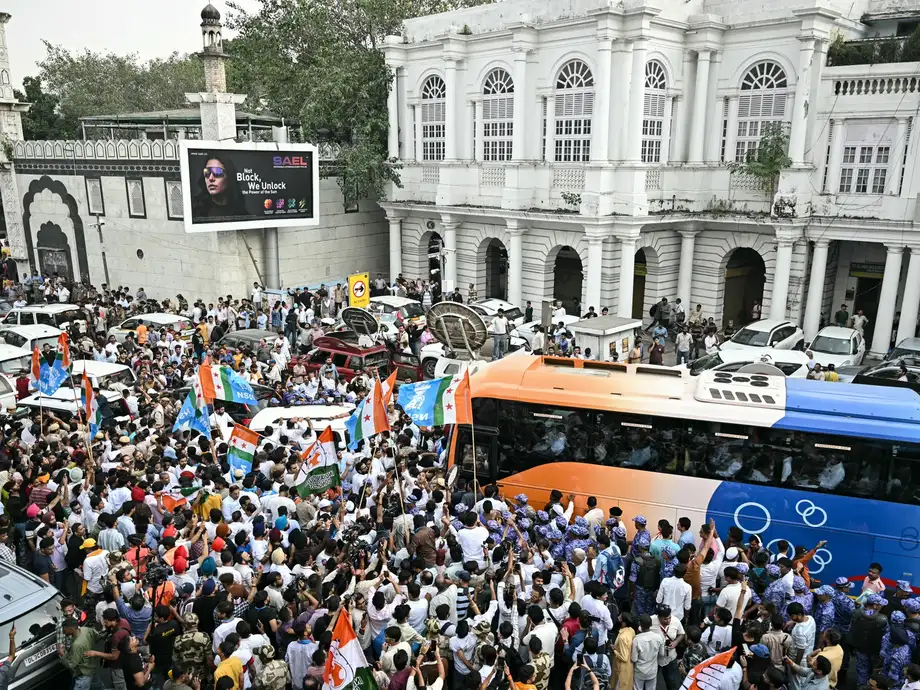
Detentions intensify before planned Delhi rally
India’s Cockroach Janata Party (CJP) says authorities have detained thousands of its supporters, students and opposition activists ahead of a planned protest in New Delhi over the country’s voter list revision. The movement’s spokesperson Ashutosh Ranka put the number detained nationwide at 10,000, including CJP national spokesperson Deepak Baliyan. Authorities had not immediately confirmed the figure, and the group’s claims could not be independently verified.
Contents
Videos posted on social media appeared to show activists being taken away in vans. The CJP also said a group of students travelling by bus from Pune to Delhi for the rally was taken to an unknown location. The planned demonstration is set for Saturday at Jantar Mantar, the capital’s designated protest site, where police have reportedly put up barricades.
The detentions follow days of demonstrations by opposition parties, student groups and civil society organizations. Protesters are demanding the resignation of Chief Election Commissioner Gyanesh Kumar and an end to the Special Intensive Revision (SIR), a nationwide review of electoral rolls. They allege the process risks removing eligible voters and could advantage Prime Minister Narendra Modi’s ruling Bharatiya Janata Party (BJP). The Election Commission and the government deny political interference, saying the review is meant to remove duplicate and ineligible entries.
The CJP emerged from an online youth campaign and gained national attention after protests over leaked examination papers contributed to the resignation of Education Minister Dharmendra Pradhan in July. It has since taken up broader questions of government accountability and democratic institutions. The current campaign is testing whether that earlier success can be repeated on an issue affecting the administration of elections.
At a Bengaluru protest, 22-year-old architecture student Khushi Shrivastava said voting rights are fundamental to democracy and that people who want to vote and care about India’s future risk being denied that right. Demonstrators carried posters reading “Every name counts, Every vote matters” and “Stop the Murder of Democracy.”
What is the voter list revision?
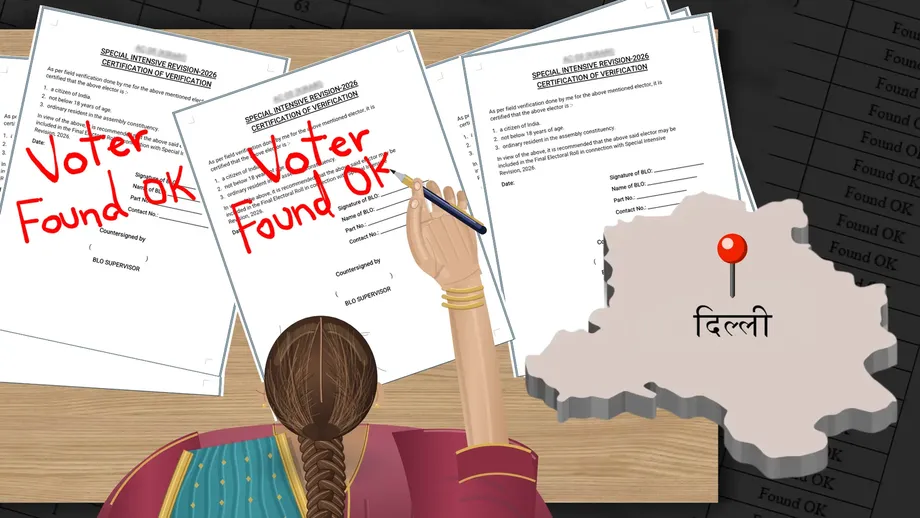
The SIR is a large-scale verification of India’s electoral rolls, the official lists that determine who can vote. It began in Bihar ahead of state elections and has expanded to most states and federally administered territories. The process requires voters to provide documents establishing their eligibility to remain registered.
The Election Commission says the exercise removes duplicate, dead and otherwise ineligible entries while ensuring legitimate voters remain on the lists. Critics say the documentation requirements can be confusing or difficult to meet, particularly for poorer and vulnerable people who may not have older government records. People whose names are deleted can appeal, though critics say restoring a name may be difficult in practice.
More than 130 million names have been removed from voter lists, according to figures cited in reporting on the revision. The scale is striking in a country where about 969 million people were eligible to vote in the 2024 general election. Millions have appealed deletions. Election Commission data has also indicated that rolls in some regions could shrink by as much as 30 percent.
The number of removals does not, by itself, establish how many people were wrongly excluded. The central dispute is whether the verification process accurately distinguishes ineligible entries from people who still have the right to vote, and whether those affected can effectively challenge a deletion before an election.
Why protesters allege political bias
Opposition parties argue that legitimate voters who are more likely to support them are being removed, while voters more likely to support the BJP are being retained or added. The Election Commission and government reject the allegation, saying the revisions have no political motive. The BJP has described the exercise as a way to remove what it calls “infiltrators.”
The controversy has been sharpened by reports that two of the three election commissioners objected to decisions involving voter additions and deletions, registration procedures and the commission’s digital systems. One investigation reported at least 14 objections over 10 months. The Election Commission disputed accounts describing these as formal written objections, saying commissioners had differing views and deliberations and that decisions were unanimous.
India’s election commission is a constitutional body responsible for administering elections and maintaining voter lists. Its decisions shape who can participate in elections, making public confidence in its independence central to the dispute. The opposition has called for an inquiry into Kumar’s conduct, a halt to the current revision and use of earlier electoral lists in future polls. Some opposition leaders have also renewed calls to return to paper ballots, arguing that electronic voting machines could be vulnerable to manipulation. The commission and BJP reject claims that the voting system is being manipulated.
The dispute has also reached the courts. The Supreme Court has issued notices to the government, the Election Commission and Kumar seeking responses to petitions about the revision. In a separate account of the proceedings, the court called for clear and transparent answers. The court has not ordered the process halted, and the commission has said it will compare current rolls with earlier lists and conduct house-to-house checks on people whose names have disappeared.
Protests spread beyond the capital
The demonstrations have extended well beyond Delhi. CJP supporters rallied in Bengaluru, while protests and organizing efforts have been reported in cities including Mumbai. In Bengaluru, actor Prakash Raj and CJP supporters held a “People’s Adalat” at Freedom Park, where residents presented documents and raised concerns about voter registration forms. In Hyderabad, opposition parties led by the Telangana Pradesh Congress Committee marched toward Lok Bhavan to demand that the revision stop and Kumar be removed.
Congress groups in Karnataka also staged a black flag demonstration, protesting the detention of opposition leaders and calling for scrutiny of private agencies involved in collecting data. The movement and its supporters say the issue is not limited to party competition: people who are wrongly removed may lose their ability to take part in elections unless they can navigate the appeals process.
One analysis of protest activity recorded 278 demonstrations in 26 of India’s 28 states during the 10 days to October 2, a pace far above the usual level in the previous 18 months. More than nine in 10 were reported to have passed peacefully. The figures are provisional and depend on how protest events are recorded, but they illustrate the geographic reach of the anger.
The data also suggests that opposition parties, particularly Congress and its affiliates, have been central to the wider campaign. The CJP has been a prominent organizer, though its share of the recorded protests so far appears smaller than during its July campaign over examination paper leaks. That earlier wave moved at roughly twice the daily pace during its final 10 days, according to the same analysis.
Police action draws criticism
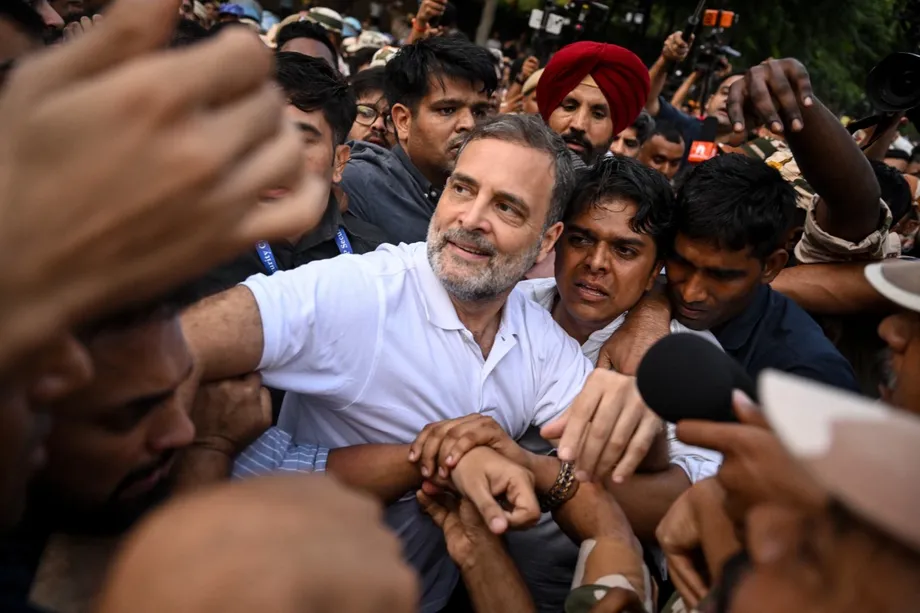
The treatment of demonstrators has become a second focus of the dispute. Opposition leader Rahul Gandhi was briefly detained while trying to reach a protest site in Delhi, in what was described as his third detention in two days. His Congress Party accused police of using “brute force.” Delhi Police said the allegations were being used to defame the force, while BJP spokesperson Gaurav Bhatia called them baseless claims by an irresponsible opposition.
Amnesty International India criticized the use of prohibitory orders, detentions and reported restrictions on internet access and public transport during protests in Delhi and Mumbai. The organization said the right to peaceful assembly is protected by India’s Constitution and international human rights law, and argued that detaining people solely because they intend to protest can violate rights to liberty and assembly. These are Amnesty’s stated assessments; the authorities’ accounts and the legal basis for individual detentions have not been established in every case.
Restrictions on public gatherings can be imposed under Indian law in the name of public order. Rights groups argue that broad or routine use of such powers can prevent peaceful protests and make it harder for people to organize, communicate and document police action. The CJP’s claims of mass detentions remain unverified, but the reports have intensified concerns about the freedom to demonstrate as the planned Delhi rally approaches.
A test of public confidence
The voter list controversy is unfolding amid a broader political contest. The protests offer opposition parties a shared issue and have drawn young people into street politics after the CJP’s campaign over examination leaks. At the same time, the allegations remain contested, and the available figures on deletions do not determine whether the revision has systematically favored one party.
For voters, the immediate stakes are practical: whether their names appear on the rolls and whether they can correct errors in time to cast a ballot. For the Election Commission, the challenge is to demonstrate that the verification is fair, explain the rules in accessible terms and provide an effective route for people to appeal. Court scrutiny and public pressure have increased, while the commission says it is continuing its checks.
The planned rally will be another measure of how much support the campaign can mobilize and how authorities respond. The argument at its center is about more than the size of the demonstrations: it concerns whether voters can trust the institution that decides who is eligible to participate in India’s elections.
The Bottom Line
- The CJP says authorities detained 10,000 people nationwide ahead of a planned Delhi rally; the claim has not been independently verified.
- More than 130 million names have been removed from electoral rolls during the Special Intensive Revision, and millions of people have appealed.
- The Election Commission says the review removes duplicate and ineligible entries; opposition parties allege eligible voters could be excluded and deny the process is politically neutral.
- Protests have spread across multiple states, while detentions and restrictions on demonstrations have drawn criticism from rights groups.
- The Supreme Court has sought responses from the government and Election Commission on petitions challenging the revision.