
A triumphant race weekend with a difficult journey
Formula 1 returned to Sepang after nine years away, drawing a record crowd and giving fans the dramatic racing they had missed. It also left many spectators facing hours of queues, traffic and long walks. Malaysia now has fresh evidence that interest in the sport remains strong, alongside a reminder that a permanent return would require much more than a popular race and a celebrated circuit.
Contents
The Oct. 2 to 4 event was the Bahrain Grand Prix, relocated to Malaysia after the original race could not go ahead amid conflict in the Middle East. Bahrain remained the event’s promoter and paid the reported US$70 million to US$80 million F1 hosting fee. Malaysia contributed to local preparations, with estimates varying across reports from RM10 million to RM16 million, while Sepang International Circuit later put the combined preparation cost at about RM40 million, to be shared with Bahrain.
That arrangement made the weekend an unusually favourable test. Malaysia demonstrated that it could bring F1 back on short notice, but did not have to shoulder the full cost of securing an annual place on the calendar. A permanent Malaysian Grand Prix is estimated to cost at least RM300 million a year.
On track, the event delivered a rain-delayed, action-filled race. Red Bull’s Max Verstappen won, Mercedes’ Kimi Antonelli finished second and Ferrari’s Lewis Hamilton climbed from 18th to third. Sepang’s broad layout, demanding corners and changeable weather helped make the race compelling for fans and drivers.
How did transport problems affect spectators?
For many visitors, the weekend began and ended far from the racing. Free shuttle buses connected the circuit with Kuala Lumpur International Airport Terminal 2, Mitsui Outlet Park and Bandar Baru Enstek. Rapid KL planned to deploy 95 buses, but heavy traffic and the volume of spectators left services struggling to move people after practice and qualifying.
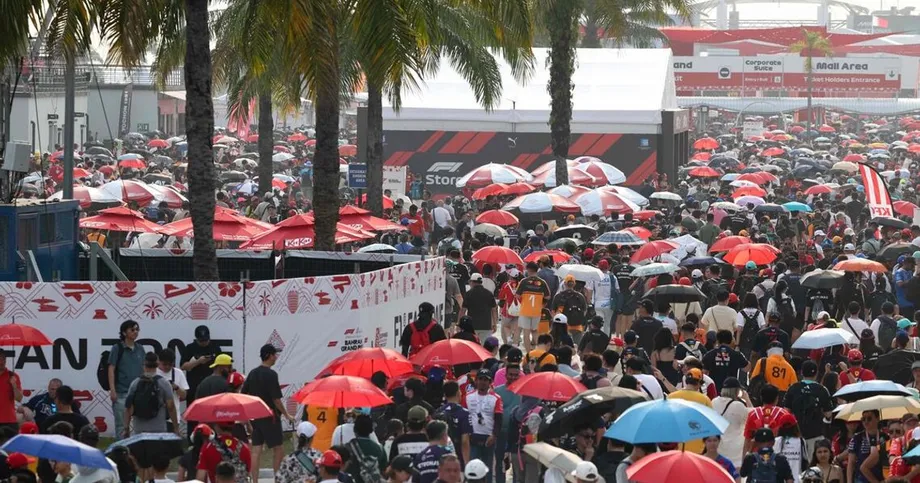
Some fans reported waiting up to two hours for a bus, then spending more than an hour in traffic. Others said their journeys took three to six hours. Comedian Gajen Nad walked more than 40 kilometres over the three days, including along busy roads and through palm oil plantations. Banker Mohd Khalimi Ashraf Mohamed Rethuan said he and his wife walked 11 kilometres to reach their parked car.
Accounts described crowded boarding areas, poor signage, uncertain queues and limited access for ride-hailing vehicles. Some spectators walked towards the airport or nearby transport hubs; others missed onward connections or got home many hours later than expected. Fans also reported long waits for drinking water and insufficient capacity at some food and beverage outlets. The hot, humid conditions added to the strain.
Rapid KL and Sepang International Circuit said they were working with agencies to improve pickup and drop-off arrangements. The operator made changes after the opening day, and some spectators described more orderly queues on subsequent days, though waits remained lengthy at peak times. A short preparation window contributed to the pressure: organisers had less than two months to ready the event, compared with the six or seven months usually available for a race of this scale.
Transport advocacy group Transit Malaysia co-founder M. Zulkarnain Hamzah said the service lacked enough capacity, frequency and reliable queue management. The episode also raised questions about who had authority over key parts of the plan. Bahrain ran the event, while Malaysian agencies and transport operators managed local infrastructure and services. Whatever the division of responsibility, spectators experienced the event under Malaysia’s name.
What did the crowds prove?
More than 261,000 spectators attended over three days, surpassing Sepang’s previous F1 record of 126,690, set in 2008. Ticket sales before race weekend had already approached 100,000, and international visitors accounted for about half of buyers, according to organisers’ figures cited in reports. Ticket prices ranged from roughly RM200 to RM2,313.
The turnout reflects a sport whose audience has expanded since Malaysia’s last race. Netflix’s Drive to Survive, social media and Formula 1’s broader entertainment profile have helped attract new fans. Some visitors came for the atmosphere as much as the competition, while long-time supporters returned for the chance to see F1 at a circuit known for close racing and unpredictable weather.
Still, a record weekend does not establish what attendance would look like every year. The nine-year absence made this return scarce, while the unusual relocation added novelty. Malaysia’s earlier experience also counsels caution: it hosted the Malaysian Grand Prix from 1999 through 2017, but the event’s costs and declining returns eventually became difficult to justify. The key question is whether demand can persist once Sepang becomes a regular stop rather than a rare occasion.
The event’s economic figures also need careful interpretation. Hong Leong Investment Bank projected that the weekend could generate RM1.1 billion to RM1.3 billion in economic output. That is a forecast, not a final audited measure. Entrepreneur Development and Cooperatives Minister Steven Sim said local micro, small and medium enterprises recorded more than RM345 million in economic spillover, with foreign visitors making up almost half the crowd. He said attendees were projected to spend 2.17 times more than visitors at ordinary events.
Tourism, hotels, restaurants, transport, retail and entertainment can all gain when visitors stay longer and spend locally. Yet gross economic activity is not the same as money returned to the government, nor does it show how much public spending the event displaced. A permanent bid would need an independent assessment separating measured benefits from projections and identifying who receives them.
Can the annual cost be justified?
A permanent F1 place would require Malaysia to pay the commercial rights holder, Liberty Media, a recurring hosting fee as well as local operating and preparation costs. The government has previously estimated the total at about RM300 million per year. A five-year commitment could therefore exceed RM1.5 billion before any increases or additional costs, depending on contract terms.
FIA president Mohammed Ben Sulayem has said Malaysia would need a business plan covering at least five years, including commercial, promotional and logistical arrangements. That plan would need to show how public agencies, the circuit, sponsors and private promoters share both costs and responsibilities. It would also need to account for likely attendance, visitor spending, transport investment and the risk that ticket demand falls after the novelty wears off.
Tourism economics professor Hafiz Hanafiah has argued that a well-run race could generate more than RM1 billion in annual returns through its wider economic effects. He has also warned that projected spending should not be treated as government revenue. Singapore’s model offers one possible reference: its race is run through a partnership between the Singapore Tourism Board and private promoter Singapore GP, supported by corporate sponsors. The weekend is paired with concerts and business events that give visitors reasons to stay beyond race day.
Other industry analysts see potential for the Malaysian and Singapore races to complement one another. Sepang is a traditional daytime road course; Singapore is a city-centre night race with a different atmosphere and audience. A back-to-back schedule might encourage some international fans to visit both countries on one trip, spreading tourism spending across the region. The benefit is possible rather than guaranteed, and sponsors could still face competing demands on their budgets.
Malaysia would also be competing for a place in a crowded calendar. Existing contracts limit immediate openings, while other markets are seeking races. Thailand’s Cabinet has approved a 40 billion baht proposal for a Bangkok Grand Prix from 2028. One motorsport report cited 2030 as the earliest possible return for Sepang, based on current agreements, though no deal or timeline has been confirmed. A record crowd does not put the circuit at the front of F1’s queue.
Could better planning turn the test into a lasting bid?
Sepang’s transport failure was not simply an inconvenience. Long waits and unsafe walks can weaken a visitor’s view of the host country, discourage repeat visits and expose organisers to crowd safety risks. Former Sepang chief executive Razlan Razali said poor logistics could convince some spectators that they would not return. He also expressed concern about the spillover effect on the circuit’s reputation as it continues to host MotoGP, for which it is contracted through 2031.
The problems were linked to a combination of short preparation, unfamiliarity with the circuit’s roads and a crowd larger than the event’s organisers had handled at their usual venue. Bahrain International Circuit chief executive Sheikh Salman Isa Al Khalifa said the preparation period was a challenge and that the infrastructure had been put under pressure by the numbers. The event involved about 5,000 people from Bahrain and Malaysia, including more than 500 marshals.
That context explains some of the disruption, but does not remove the need for a detailed mobility plan. A future race would need clear roles among the promoter, circuit, police, public transport operators and road authorities. Measures could include dedicated bus lanes that remain in use, adequate service frequency, marked boarding zones, trained queue staff, reliable real-time updates and contingency plans for heavy rain and post-race surges. Access for taxis and ride-hailing services, water supplies, shade and medical support also form part of the spectator experience.
Malaysia has experience from its annual MotoGP event, but F1 attracts a different crowd profile and may produce different peak movements. The weekend’s difficulties should therefore be treated as a real-world stress test, not proof that Sepang cannot host another race. They show which operational details must be settled before a long-term commitment is made.
What happens next?
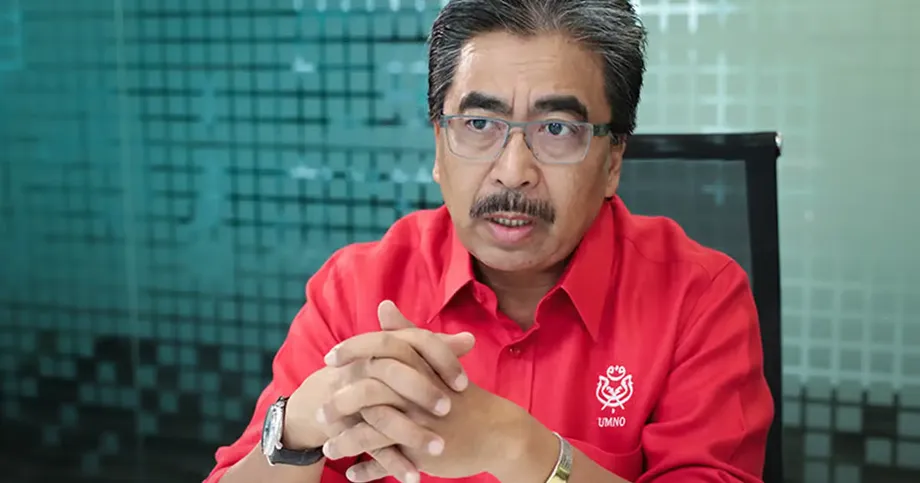
Prime Minister Anwar Ibrahim said he had discussed a permanent return with F1 chief executive Stefano Domenicali and that the Cabinet would consider Malaysia’s capacity, costs and potential benefits. He cautioned that the process would take time because of the crowded calendar and existing contracts. His comments opened a discussion, not an agreement.
The decision will turn on whether Malaysia can build a credible financial and operational case. That means measuring the 2026 event’s actual economic effects, distinguishing public benefits from private revenue, securing private partners and setting limits on public exposure. It also means requiring a promoter to give Malaysian authorities clear control over transport and crowd management, instead of leaving basic visitor services divided among parties without a single accountable lead.
Sepang has shown that F1 can still draw a large audience and produce memorable racing in Malaysia. Fans such as Gajen Nad say the circuit’s layout makes the experience worth paying for, even after the difficult journey. The lasting test is whether the government can turn that enthusiasm into a repeatable event without committing public money on the strength of one exceptional weekend.
The Bottom Line
- More than 261,000 spectators attended Sepang’s first F1 weekend in nine years, setting a circuit record.
- Shuttle delays, traffic and crowd management problems left some fans waiting for hours or walking several kilometres.
- Bahrain paid the reported F1 hosting fee; a permanent Malaysian race is estimated to cost at least RM300 million annually.
- Economic impact projections are not a substitute for an independent post-event assessment.
- Anwar has opened talks about a permanent return, but calendar access, financing and a five-year business plan remain unresolved.