
Eom's 61st minute winner extends a record run
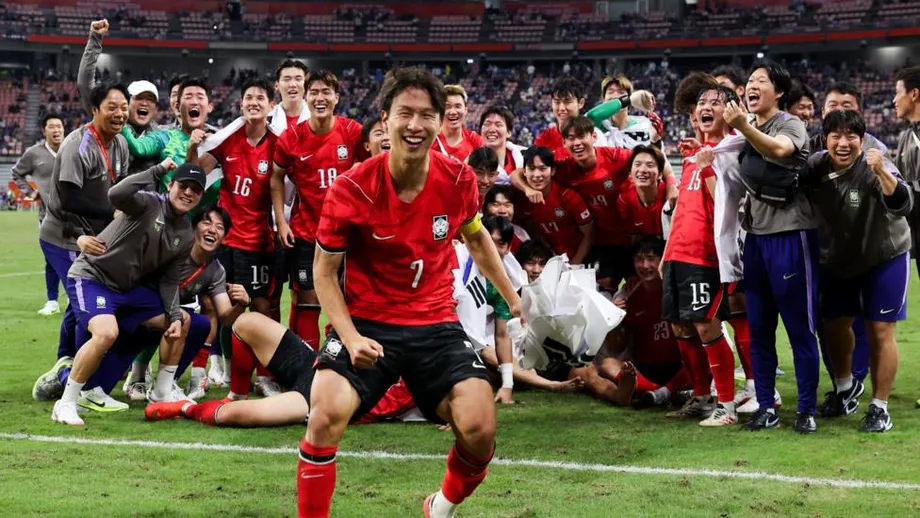
South Korea defeated host Japan 1-0 at Toyota Stadium on October 3, 2026, securing a fourth consecutive Asian Games men's football gold medal through Eom Ji-sung's winning goal in the 61st minute. The Swansea City player finished with his left foot after Yang Min-hyeok's cross, settling a final in which Japan had created repeated chances and later struck the post.
Contents
- Eom's 61st minute winner extends a record run
- How South Korea turned pressure into the decisive goal
- Five victories tell the story of the title
- What the fourth title adds to the rivalry
- Eom's tournament and the figures that differ
- Japan's younger squad faces an injury concern
- Lee Min-sung wins after months of criticism
- What the military service benefit actually means
- Government review goes beyond the football squad
- A stalled flag brings an apology from organizers
- Key Points
The victory completed a tournament in which South Korea won all five matches, scored 13 goals and conceded just two. It also brought a third consecutive victory over Japan in an Asian Games final, following the title matches at Jakarta-Palembang 2018 and Hangzhou 2022, the latter edition held in 2023.
The International Olympic Committee's official final review records South Korea's seventh men's football title, rather than the six stated in some accounts. It lists earlier championships in 1970, 1978 and 1986 before the current sequence began at Incheon 2014. China took bronze, with Japan receiving silver.
The sporting achievement was followed by disputes beyond the pitch. South Korea's flag failed to rise during the national anthem at the medal ceremony, prompting a formal apology from organizers. Celebrations by several players over their military service benefits also drew criticism and renewed government calls to review the system.
Those developments leave two distinct outcomes from the Games: a record extended by a team that survived sustained pressure, and a debate over how sporting success should be rewarded. The proposed military changes have not been presented as an enacted removal of the benefits earned by this squad.
How South Korea turned pressure into the decisive goal
Eom provided an early threat in the sixth minute, driving in from the left before sending a right foot shot over the bar. Japan responded three minutes later from a corner, although its attacking players could not turn the header into a clean finish.
Japan's pressure grew as the first half progressed. Substitute Yuya Fukunaga, introduced after an injury to starting forward Uche Nwadike, helped the hosts find openings. The teams nevertheless reached halftime at 0-0, and Japan continued pressing after the restart through Fukunaga, Yumeki Yokoyama and its set pieces.
The breakthrough began with Yang's persistence on the right. He recovered possession after losing the ball and delivered a cross into the penalty area. The IOC account specifies that goalkeeper Rui Araki reached the cross but could only knock the ball away. Eom collected the loose ball, moved past a defender and finished with his left foot.
That detail matters because the goal was more than a simple finish from an uninterrupted cross. Yang's recovery created the opening, while Eom adjusted after the goalkeeper's intervention and a defender blocked his initial shooting option.
Eom, South Korea's match winner and one of its three permitted older players, explained afterward that the team had expected an opportunity despite spending much of the game defending.
We had to do a lot of defending tonight, but we always knew there would be one chance for us, and with the right timing and right service, it was me.
South Korea still had work to do. Araki denied Lee Young-jun after a pass from Bae Jun-ho, while Korean goalkeeper Kim Jun-hong stopped a powerful Yokoyama effort. In the 79th minute, Hisatsugu Ishii struck the post. Japan continued attacking into added time, with Araki joining the search for an equalizer, but South Korea held its lead.
Five victories tell the story of the title
South Korea's route to gold combined emphatic early wins with narrower results as the tournament reached its decisive stages. Eom scored a hat trick in the opening match against Qatar, establishing the attacking contribution that culminated in his final winner.
The IOC records the following schedule and results:
- September 15: South Korea beat Qatar 4-1 in its Group D opener at Nagoya Mizuho Park Rugby Stadium.
- September 22: A 2-0 victory over Saudi Arabia completed the group stage at the same venue.
- September 25: South Korea defeated Vietnam 4-0 in the quarterfinal at Nagoya Mizuho Park Rugby Stadium.
- September 30: A 2-1 semifinal victory over China at Nagai Stadium secured a place in the final.
- October 3: Eom's goal delivered a 1-0 win over Japan at Toyota Stadium.
Across those five matches, South Korea kept three clean sheets. Its combined winning margin was 11 goals, calculated from 13 scored and two conceded. The semifinal and final were each decided by one goal, contrasting with the larger margins against Qatar and Vietnam.
China recovered from its semifinal defeat to earn bronze, drawing 2-2 with Uzbekistan before winning the penalty shootout 4-3. That result brought China its first Asian Games men's football medal since bronze at Bangkok 1998, a gap of 28 years.
What the fourth title adds to the rivalry
South Korea's sequence now stretches across four editions: Incheon 2014, Jakarta-Palembang 2018, Hangzhou 2022 and Aichi-Nagoya 2026. Hangzhou retained the 2022 designation even though the competition took place in 2023, explaining why the title sequence does not follow a simple four year calendar.
The IOC's tally of seven championships puts South Korea three ahead of Iran's reported total of four. Reports also put South Korea's Asian Games record against Japan at nine wins and one defeat, with six consecutive victories in their meetings at the competition.
Japan had been seeking its first men's football gold since 2010. Instead, it lost a third successive final to the same opponent. The result extends a specific Asian Games pattern, rather than establishing a verdict on every level of football in the two countries.
Eom's tournament and the figures that differ
Eom, 24, finished the competition with four goals: three against Qatar and the winner against Japan. He was reported to share the top scorer position with Uzbekistan's Sardorbek Bakhromov. His performances followed participation in South Korea's World Cup campaign during the summer and a strong start to the season with Swansea.
Reports differ on his assist total. One records three assists, while another gives him four and describes him as the tournament leader in both goals and assists. The IOC match review does not settle that statistical difference. His four goals and decisive contribution in the final are consistent across the accounts.
The attendance is also disputed. Several accounts describe a crowd of about 30,000, including one placing it above 30,000. Another describes Toyota Stadium's 45,000 seats as filled to capacity. The IOC review does not provide an attendance figure, so a single confirmed total cannot be established from those accounts.
After the final, Eom credited the squad's unity and the supporters who helped sustain its effort. His contribution was particularly valuable because South Korea could not control the match for long stretches, yet its most productive scorer converted the chance that mattered most.
Club football quickly returned to the players' schedules. Swansea's next listed Championship fixture was a home match against Norwich City on October 10. Yang returned to KVC Westerlo in Belgium, where teammates welcomed him with applause and a bouquet in a video published on October 7, Korea time.
Japan's younger squad faces an injury concern
The Asian Games men's tournament permits squads aged under 23 with three older players. South Korea used that allowance for Eom, while Japan fielded a mostly domestic squad aged under 21 as part of preparations for the Los Angeles 2028 Olympics.
Japan's coach, Go Oiwa, was reported to be scheduled to take over the senior national team after the following year's Asian Cup. His younger side created enough opportunities to threaten South Korea, but missed chances and Ishii's shot against the post left the hosts without a goal.
Nwadike's injury added a concern extending beyond the final. The 21 year old, 191 centimetre forward plays for Aalborg in Denmark's second division. He suffered a knee injury during a first half challenge and was carried off, with Fukunaga replacing him.
Accounts differ on the timing. The IOC review places the injury at about the 22nd minute, while a later report places the collision around the 24th minute and his removal in the 28th. Aalborg was reported to have warned on October 4 that a lengthy absence was possible. The injury diagnosis, any need for surgery and a return date had not been disclosed.
Lee Min-sung wins after months of criticism
South Korea coach Lee Min-sung entered the Games under pressure after disappointing results, including fourth place at the January Under 23 Asian Cup. His team lost to Japan in the semifinal of that competition and then to Vietnam in the bronze medal playoff.
The Korea Football Association subsequently divided responsibility for the Asian Games and Olympic squads. Lee retained the Asian Games assignment, while Kim Eun-jung took charge of the Olympic team. Lee had said he would resign after the Asian Games, making the tournament the closing test of his tenure.
Preparation brought further difficulties, including disputes over selection and problems assembling players based in Europe. Lee Young-jun joined only after the tournament began. Yang Hyun-jun suffered hamstring trouble and could not recover for the semifinal, while captain Lee Gi-hyuk missed that match with cellulitis after also dealing with a stress fracture during the season.
Lee Gi-hyuk returned for the final, partnering Lee Seung-won in midfield before Hwang Do-yun replaced him in the second half. Lee Min-sung later changed Yang Min-hyeok for Kang Sang-yun and introduced Kim Myeong-jun and Park Seung-su near the end to help preserve the lead.
After winning gold, Lee Min-sung apologized to the players for the pressure they had endured under his leadership.
I am sorry to the players who suffered because of my incompetence as a coach.
The victory came amid wider turmoil in South Korean football. The senior team had exited the World Cup group stage after a loss to South Africa, and coach Hong Myung-bo resigned. Police raided KFA headquarters in August during an investigation into his 2024 appointment. Separately, the association apologized over allegations involving sexual entertainment for foreign referees. The gold medal did not resolve those investigations or allegations.
What the military service benefit actually means
The championship made 20 South Korean players eligible for military service benefits. Three squad members, Lee Young-jun, Lee Seung-won and Kim Jun-hong, had already completed their service.
South Korean men generally face 18 to 21 months of active military service before age 28. Asian Games gold medalists and Olympic medalists can qualify for an alternative arrangement. Although often described as an exemption, it does not remove every obligation: beneficiaries still undertake basic military training, reported to last less than a month, and must complete required public service hours.
The distinction became central after captain Lee Gi-hyuk celebrated by saying he was not going to the military. Yang Min-hyeok also said he had focused on the exemption, while Park Seung-su posted a photograph wearing a cap associated with soldiers completing their service.
Lee and Yang apologized. Yang explained that representing South Korea and winning the championship mattered to him, and that military benefits were one of several motivations rather than his sole purpose. Players also removed disputed posts and photographs. The controversy concerned their words and celebrations, not a finding that they had failed to qualify under the existing rules.
Government review goes beyond the football squad
Culture, Sports and Tourism Minister Choi Hwi-young called Lee Gi-hyuk's comments "utterly immature" and said the exemption system would have to be scaled back. At a National Assembly Culture, Sports and Tourism Committee hearing, he acknowledged the policy's contribution to athletes and artists while arguing that public expectations had changed.
However, the values attached to fairness and public perceptions of military service have changed. I agree that the system should be comprehensively reviewed once again.
Democratic Party lawmaker Cho Kye-won said 44 people qualified for the benefit at these Games, including 36 footballers and baseball players. Those two sports therefore accounted for about 82% of the total, calculated as 36 out of 44. He also pointed to the difference between rewards for Asian Games champions and athletes who win world championships outside the qualifying competitions.
The baseball team, which beat Japan for a fifth consecutive Asian Games gold, faced similar criticism over celebratory remarks. Calls for reform came from both political camps, including Ahn Gyu-back of the Democratic Party and People Power Party spokesperson Park Seong-hoon.
On October 6, Defense Ministry spokesperson Jeong Bit-na said the government intended to include the gradual reduction and eventual abolition of supplementary service arrangements, including those for arts and sports personnel, in its defense reform plan. The ministry cited fairness, declining military manpower and public agreement.
The broader review predates the football celebrations. Military Manpower Administration chief Hong So-young had discussed reductions in August. No final timetable, replacement eligibility rules or decision on how changes would affect existing beneficiaries was specified.
A stalled flag brings an apology from organizers
The medal ceremony produced a separate dispute when South Korea's flag failed to rise during its anthem. Japan's and China's flags went up normally, briefly leaving Japan's highest. South Korea's flag reached the top only after the anthem ended.
Early accounts said the cause was unknown. On October 7, the Korean Sport & Olympic Committee said organizing committee president Hideaki Omura had sent a formal apology. The organizers' investigation identified an operational error: staff had not checked where the hoisting rope was tied, and a knot caught in the pulley at the top of the pole.
That later explanation provides a cause that the initial reports lacked. Player speculation about intent was not evidence of deliberate interference. Lee Gi-hyuk said the episode disappointed players and fans, while Lee Young-jun said the team was trying not to dwell on it after achieving its sporting goal.
The football delegation also experienced a bus arriving at the wrong location before its opening match, leaving players 30 minutes late, and cancellation of official training before the final because of poor pitch conditions. Elsewhere, South Korea's basketball team lost a training session when its bus failed to arrive, and North Korea's anthem was played at a South Korean hockey match.
Korean Sport & Olympic Committee president Yoo Seung-min had sent a protest letter over the disruptions. The committee said it would review the operational failures and continue making recommendations to international sports bodies. The organizers' apology addressed the ceremony and wider transport and protocol problems, without changing the football result.
Key Points
- South Korea beat Japan 1-0 on October 3, 2026, with Eom Ji-sung scoring in the 61st minute.
- The victory secured a fourth consecutive Asian Games men's football gold and a seventh title according to the IOC.
- South Korea won all five tournament matches, scoring 13 goals and conceding two.
- Japan took silver and China won bronze after a penalty shootout against Uzbekistan.
- Twenty Korean players qualified for military service benefits that still require training and public service obligations.
- Government officials proposed reviewing the benefits, but no final implementation timetable was specified.
- Organizers apologized for the stalled South Korean flag and other operational failures.
- Japan forward Uche Nwadike faced a possible lengthy absence, with no diagnosis or return date disclosed.