
New financing awaits IMF board approval
Pakistan could receive about $1.21 billion after completing negotiations with the International Monetary Fund, but the money still requires approval from the lender's Executive Board. The agreement combines approximately $1 billion for economic reforms with $210 million for climate resilience, while Pakistan faces inflation of about 10.3 percent and international oil prices above $100 a barrel.
Contents
- New financing awaits IMF board approval
- What the agreement covers and when funds could arrive
- Growth held up, but energy costs slowed momentum
- The budget must deliver a 2 percent primary surplus
- Higher social spending, less broad fuel support
- Inflation keeps pressure on interest rates and the rupee
- Energy reforms address both import costs and unpaid bills
- Stocks fell despite the financing agreement
- Climate and governance reforms extend beyond the payment
- Key Points
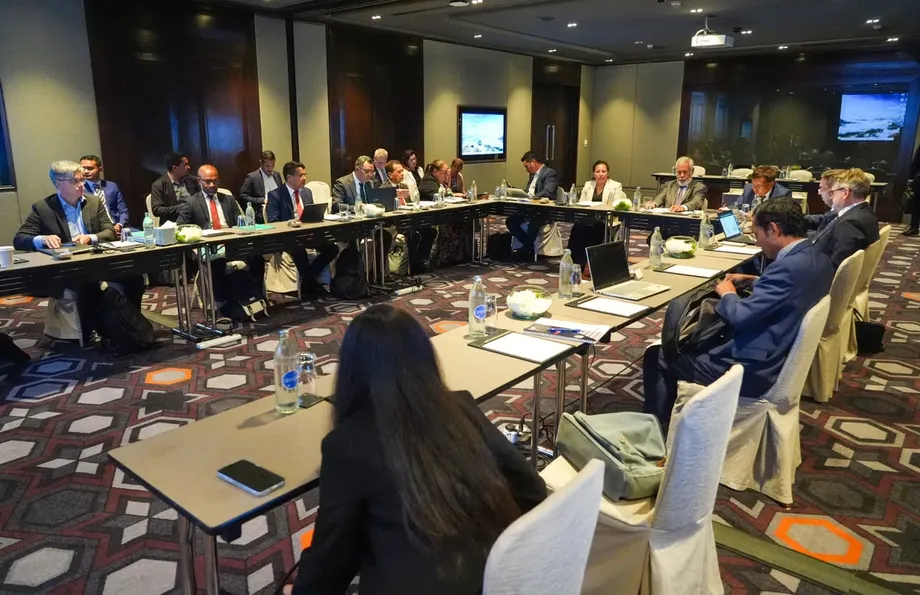
The IMF's October 7 statement records an agreement on the fourth review of the Extended Fund Facility (EFF) and the third review of the Resilience and Sustainability Facility (RSF). An IMF team led by mission chief Iva Petrova held talks in Karachi and Islamabad from September 23 to October 7, 2026.
Approval would bring cumulative disbursements under the two arrangements to about $5.7 billion. The amounts explain why the agreement is described as either $1.2 billion or $1.21 billion: the latter is the sum of the two approximate dollar allocations, rather than a separate financing package.
The agreement recognizes progress in stabilizing the economy, but it also sets out difficult policy choices. Pakistan is expected to maintain tight monetary policy, meet a budget surplus target, adjust energy tariffs and replace broad fuel support with assistance directed at vulnerable households.
Petrova, the IMF mission chief, made the remaining approval requirement explicit:
The staff-level agreement is subject to approval by the IMF Executive Board.
That distinction matters. Negotiators have agreed on the reviews, but the announcement does not mean the funds have already been released or that the board has scheduled its decision.
What the agreement covers and when funds could arrive
The EFF allocation is SDR 760 million, equivalent to approximately $1 billion, while the RSF allocation is SDR 154 million, approximately $210 million. Special Drawing Rights, or SDRs, are the IMF's accounting unit, valued using a basket of major currencies. Dollar equivalents can therefore change with exchange rates.
The current IMF statement describes a 37 month EFF arrangement and a 28 month RSF arrangement. Reports identify the EFF package as $7 billion. One historical account describes the package agreed in July 2024 as lasting 39 months, rather than the 37 months stated in the latest official announcement; the current review is identified here using the IMF's description.
Pakistan reportedly received around $1.32 billion after the previous review. The proposed $1.21 billion release would be approximately $110 million smaller, although both figures are approximate. It remains a substantial addition to external financing.
The sequence of events and the next expected step are:
- September 23, 2026: The IMF mission began discussions in Karachi and Islamabad.
- October 7, 2026: Discussions ended, and the IMF dated its announcement of the agreement and completion of the Article IV discussions.
- At the conclusion of the review: Finance Minister Muhammad Aurangzeb held a closing session with Petrova at the Pak Secretariat in Islamabad. Finance Secretary Imdad Ullah Bosal and IMF Resident Representative Mahir Binici also attended.
- Next step: Executive Board consideration. Reports anticipate access to funds within four to five weeks, but the IMF statement gives no confirmed board meeting or payment date.
Growth held up, but energy costs slowed momentum
The IMF estimates economic growth at 3.6 percent for fiscal year 2026, after growth reached 4 percent in the first three quarters. It attributes the weaker momentum to higher energy prices and supply disruptions associated with the Middle East conflict.
Those figures describe different periods. The 4 percent reading covers the first three quarters, while 3.6 percent is the estimate for the full fiscal year. They indicate that the economy lost some momentum, not that it contracted.
Petrova credited policy decisions with helping Pakistan withstand the external shock:
Supported by the EFF, the authorities have successfully navigated the impact of the Middle East conflict, and strong policies have helped preserve macroeconomic stability.
Headline inflation eased to about 10.3 percent in September after peaking in May. The IMF also said core inflation remained contained. Core inflation generally excludes volatile food and energy prices, helping policymakers judge whether price pressures extend across the economy. The statement does not provide the May peak or a September core inflation figure.
The external accounts showed improvement. Strong remittances helped keep the current account broadly balanced in fiscal 2026, while gross reserves reached about $21.5 billion by the end of September. The current account tracks trade in goods and services alongside income and transfers, including money sent home by workers abroad. A broadly balanced account means those transactions produced little net deficit or surplus over the year.
A separate market update placed State Bank of Pakistan reserves at $21.5 billion on October 2, following a $15 million increase. The figure matches the IMF's rounded total, but the observation date differs. The IMF also cited sovereign rating upgrades and renewed access to international markets, without naming the rating agencies or specific borrowing transactions.
The budget must deliver a 2 percent primary surplus
The fiscal year 2027 budget is anchored by an underlying primary surplus of 2 percent of gross domestic product (GDP). A primary surplus means government revenue exceeds spending before interest payments. It is intended to limit new borrowing, but it does not mean the government has eliminated its total deficit or its debt servicing burden.
The IMF says sustained implementation is needed to put public debt on a durable downward course. Its priorities include audits that focus on the greatest risks of tax noncompliance, digital invoicing and wider use of information from outside taxpayers' own declarations. These measures are intended to improve collection and protect revenue targets.
The Fund also calls for a tax reform strategy that makes the system simpler and fairer while preserving revenue. Alongside collection reforms, it wants more transparent budgeting, procurement, public investment and government cash management.
Recent borrowing figures show why financing costs remain a concern. Central government debt stood at Rs82.95 trillion at the end of August, up 7.1 percent from a year earlier but down 0.5 percent from the previous month. A monthly decline therefore coexisted with a substantial annual increase.
In the latest Pakistan Investment Bonds auction, the government raised Rs381 billion against a Rs350 billion target, exceeding it by Rs31 billion. Yields increased by 26 to 41 basis points on bonds maturing in three, five and 10 years. A basis point is one hundredth of a percentage point. Higher yields generally mean more expensive new borrowing. The two year yield fell by 19 basis points, and bids for 15 year bonds were rejected.
Higher social spending, less broad fuel support
Health and education spending rose from 2.2 percent of GDP in fiscal 2024 to 2.5 percent in fiscal 2026. Authorities have committed to lifting it to 2.8 percent in fiscal 2027, with monitoring and resource reallocations where needed.
The planned increase would put spending 0.6 percentage points of GDP above the fiscal 2024 level. Relative to the original 2.2 percent share, that represents an increase of about 27 percent in the proportion of national output devoted to these services. It is not a measure of the increase in rupee spending, because GDP also changes.
The IMF supports higher targeted cash benefits, broader coverage of eligible households and improvements to payment systems. Its position on fuel assistance is different: it wants the existing broadly targeted scheme phased out promptly because of its cost and the range of people it benefits.
In her statement, Petrova set out the Fund's recommendation:
However, the fuel support scheme should be phased out promptly, given its high cost and broad targeting.
Any future assistance in response to unexpectedly high oil prices should, the IMF says, be limited in duration, directed through established social assistance programs and paid for within the fiscal 2027 budget. The statement gives no specific termination date or eligibility rules.
The recommendation comes at a difficult time for household budgets. The market update recorded petrol prices rising 2.1 percent to Rs398.96 per litre, while diesel prices fell 0.9 percent to Rs395.72. The policy choice is therefore between broad price relief and narrower assistance that protects selected households without increasing the budget envelope.
Inflation keeps pressure on interest rates and the rupee
The IMF recommends that the State Bank of Pakistan maintain an appropriately tight monetary stance until inflation returns durably to its target range. In practical terms, tight policy restrains spending and borrowing to reduce price pressures. The statement does not prescribe a particular interest rate or announce an increase.
Higher bond yields nevertheless encouraged expectations of a possible policy rate increase at the next monetary policy announcement. Those expectations are a market interpretation, not a confirmed central bank decision. No date for that announcement is given.
The rupee ended the reported trading week at Rs277 to the dollar, appreciating by 0.03 percent. The IMF continues to support exchange rate flexibility, further reserve accumulation and gradual easing of restrictions in the foreign exchange system. Its approach treats currency adjustment as one way to absorb external shocks, rather than promising a fixed rupee value.
Energy reforms address both import costs and unpaid bills
Pakistan's exposure to the Middle East extends beyond the immediate oil price increase. Much of its imported energy passes through the Strait of Hormuz. Disruptions to shipping can therefore affect both the cost and availability of supplies.
Ahmad Mobeen, an economist at S&P Global Market Intelligence, has identified Pakistan's dependence on Gulf energy imports, remittances and financing as sources of vulnerability during a prolonged regional conflict. That connects two sides of the IMF assessment: remittances helped balance the current account, while regional disruption could threaten an important source of foreign currency.
The Fund calls for timely tariff adjustments and measures to reduce costs in the electricity and gas sectors. It wants to prevent renewed circular debt, the chain of unpaid bills that builds when utilities and other participants cannot recover enough money to pay one another.
Its priorities include greater efficiency, private participation in electricity distribution, more competition, gas prices that recover costs and reductions in gas lost through leaks, theft or accounting gaps. Protection for vulnerable consumers remains part of the stated policy.
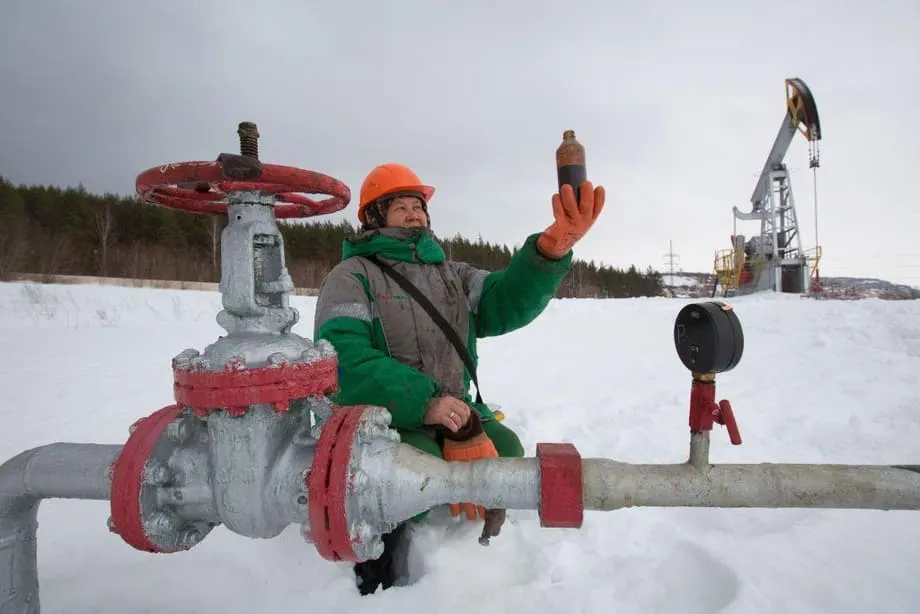
Domestic production figures underline the supply challenge. Oil output fell 6.4 percent over the reported week to 63,700 barrels a day, while gas output declined 1.4 percent to 2,999 million cubic feet a day. Meanwhile, an expansion of Sindh Engro Coal Mining Company's Thar Block II mine could allow Lucky Electric Power Company to move fully to local coal. That is a potential reduction in import dependence, not a completed transition.
Stocks fell despite the financing agreement
The agreement supported sentiment at the Pakistan Stock Exchange, but it did not outweigh concern about geopolitical tensions, oil prices, inflation and borrowing costs. The KSE 100 index lost 1,066 points, or a reported 0.6 percent, over the week to close at 167,089.
Banks accounted for 566 points of the decline, slightly more than half the net loss. Fertiliser companies subtracted 234 points, followed by automobile assemblers, cement companies and textile firms. Habib Bank, MCB Bank and United Bank together accounted for 388 points of the fall.
Oil marketing companies added 110 points, while power companies added 36. Pakistan State Oil contributed 113 points, indicating that losses elsewhere in its sector partly offset its gain. Trading also weakened: average daily volume fell 18.6 percent to 427 million shares, and average traded value declined 2 percent to $67 million.
Business indicators were mixed rather than uniformly weak. September cement dispatches rose 6 percent from a year earlier to 4.62 million tonnes, with domestic sales up 7 percent and exports flat. Across the first quarter of fiscal 2027, domestic cement sales increased 8 percent while exports fell 11 percent. Banking deposits reached Rs39.2 trillion at the end of August, up 14 percent annually, and September cotton arrivals increased 5 percent to 3.2 million bales.
Climate and governance reforms extend beyond the payment
The negotiations also completed discussions under the 2026 Article IV consultation, the IMF's broader assessment of a member country's economy and policies. Those discussions covered competition, trade and regulatory barriers, privatization, governance of state enterprises and institutions responsible for tackling corruption.
The objective is to move production toward activities that generate more value, improve productivity and support investment, employment and exports. The announcement identifies priorities, but it does not provide a schedule for individual privatizations or name enterprises selected for sale.
The RSF component supports a separate climate reform agenda. The IMF reports progress in including climate considerations in public investment planning and improving disaster financing and coordination. Further work covers irrigation water pricing and collection, more targeted electricity subsidies, energy efficiency standards and reductions in transport emissions.
The next immediate decision is the Executive Board's consideration of the reviews. Beyond that payment, Pakistan's commitments will be tested through the fiscal 2027 budget, the 2 percent primary surplus target and the planned increase in health and education spending. The IMF's positive assessment of stability sits alongside its warning that geopolitical tensions, volatile energy prices, tighter global financing and trade disruptions remain major risks.
Key Points
- Pakistan and IMF staff agreed on reviews that could release approximately $1.21 billion, subject to Executive Board approval.
- The proposed allocation is about $1 billion under the EFF and $210 million under the RSF, bringing cumulative disbursements to roughly $5.7 billion.
- Fiscal 2026 growth is estimated at 3.6 percent, and September inflation was about 10.3 percent.
- The fiscal 2027 budget targets a primary surplus of 2 percent of GDP and health and education spending of 2.8 percent.
- The IMF wants broad fuel support phased out, continued tight monetary policy and reforms to electricity and gas finances.
- The KSE 100 fell during the reported week despite the agreement, as energy and geopolitical risks weighed on investors.
- No confirmed board meeting or disbursement date appears in the IMF announcement.