Cheaper crude puts a major export market at risk
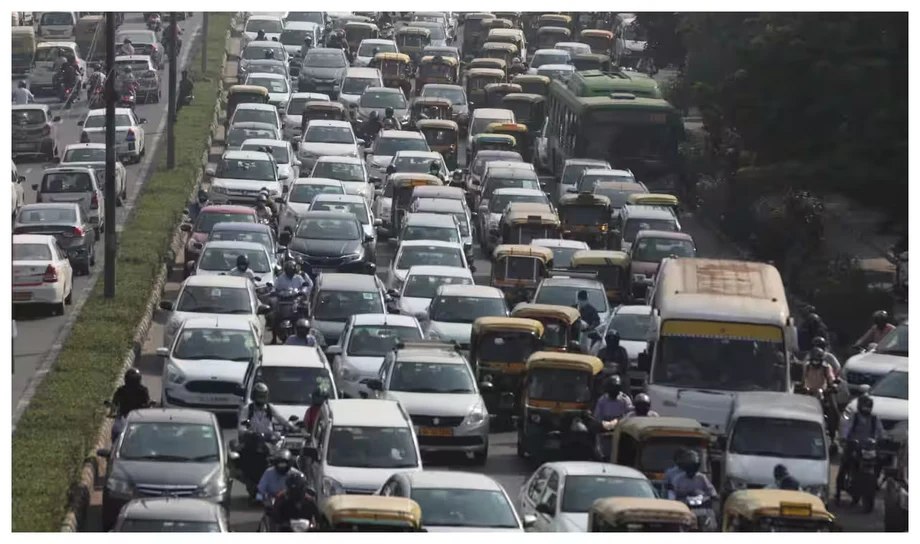
India faces a costly choice between discounted Russian oil and access to one of its most important export markets. As of September 17, 2026, the US House of Representatives has passed legislation allowing President Donald Trump to impose tariffs of up to 100% on countries that buy Russian oil and gas. The Senate has already approved the measure, which now awaits his signature.
Contents
- Cheaper crude puts a major export market at risk
- Russia's growing share of India's oil supply
- Why the Russian discount is shrinking
- How a 100% tariff would reach Indian businesses
- Replacing Russian barrels would carry a price
- China rejects Washington's pressure
- Delhi must weigh fuel savings against export losses
- The dates behind the confrontation
- What Washington and New Delhi must settle
- Key Points
Russia supplied 30.3% of India's crude imports in fiscal 2026, worth about $40.8 billion out of a total crude import bill of $134.7 billion, according to the Global Trade Research Initiative. The United States, meanwhile, imported about $104 billion in Indian goods in 2025. Washington's proposed penalties therefore put two large parts of India's economy into the same negotiation: the cost of buying energy and the ability to sell goods abroad.
India and China are the countries most exposed to the legislation. Both became major customers for Russian energy after Western sanctions and the withdrawal of companies pushed Moscow to redirect crude away from Europe and other traditional markets. Washington wants those buyers to reduce purchases, cutting the revenue that supports Russia's military campaign in Ukraine.
New Delhi says it is watching developments and remains committed to protecting energy security for its 1.4 billion people. Indian officials say they have discussed the issue with senior US representatives in recent months and warned that the legislation could damage bilateral ties and affect international energy markets.
Russian crude has lowered one of India's largest import bills, supported refinery activity and softened the effect of international oil shocks on consumers. A sharp US response could reach far beyond refineries, affecting exporters, the rupee and the balance between what India earns abroad and what it spends on imports.
Russia's growing share of India's oil supply
Russia's share of Indian crude imports exceeded half in July, compared with its 30.3% share across fiscal 2026. The July figures show how heavily purchases can lean toward one supplier even when the figure for the fiscal year is lower.
The United Arab Emirates supplied 10.8% of India's crude imports in July, followed by Saudi Arabia at 9.6%, Venezuela at 6.3%, Brazil at 5.5%, Oman at 5.3% and the United States at 2.9%. Those six suppliers together accounted for 40.4%, less than Russia alone.
India imports more than 88% of the crude it consumes. More than 85% of its crude imports come from six countries, several in politically unstable regions. That reliance exposes the economy to changes in oil prices, shipping costs and overseas supply.
Indian refineries can process a wide range of crude grades, but changing suppliers quickly still takes work. Each plant is configured for particular blends. Different crude can change how much petrol, diesel and other fuel a refinery produces, as well as its maintenance needs and operating efficiency.
India's dependence extends to cooking fuel. It imports more than 60% of its liquefied petroleum gas, or LPG, which is used by more than 330 million households. Its strategic petroleum reserves hold only about nine to 10 days of net oil imports. Refinery stocks provide an additional estimated 64 days, while Japan and South Korea maintain much larger reserves.
The Council on Energy, Environment and Water estimates that India saved about $12.6 billion by increasing Russian oil purchases after 2022. Those savings helped cushion households and businesses from the price surge following Russia's invasion of Ukraine.
Why the Russian discount is shrinking
Russian crude became attractive to Indian refiners when European buyers withdrew and Moscow offered steep discounts. Lower prices, available cargoes and the opportunity to turn crude into saleable fuels made the trade commercially appealing.
Competition for Russian barrels has since increased, while freight, insurance and compliance costs have risen. Shipping companies must navigate sanctions rules involving vessels, banks and insurers. Some cargoes also travel longer routes, adding expense and time before reaching Indian ports.
Sumit Ritolia, an analyst at maritime intelligence firm Kpler, said replacing Russian purchases depends on the availability of other oil, as well as where Russian cargoes might go.
"The issue is not simply whether Russian barrels can be redirected to other buyers, but whether enough alternative crude is available to replace them without tightening the global market further," Ritolia said.
Saudi Arabia, the UAE, Iraq, the United States, Brazil and producers in West Africa could increase sales to India. Spare capacity is limited, however, and supply routes differ. Replacement crude may cost more to buy, while longer voyages can raise freight and insurance bills.
Indian refiners must therefore compare the full cost of a cargo, including transport and the fuel it will produce, rather than its purchase price alone. A smaller Russian discount leaves less room to absorb those extra expenses. A substitute that costs more and produces a less suitable mix of fuels could put further pressure on refinery profits.
How a 100% tariff would reach Indian businesses
The legislation gives Trump broad powers to sanction Russia and impose tariffs on goods from countries that continue buying Russian oil and gas. Its reach extends to Indian exports entering the United States, rather than simply taxing Russian crude arriving in India.
A tariff is a tax charged when goods enter a country. A rate of 100% would add a charge equal to the value of the goods covered, making those Indian products far more expensive in the American market. Buyers could seek other suppliers, leaving Indian producers facing fewer orders or pressure to lower prices.
The legislation normally gives countries 180 days to reduce Russian energy purchases or negotiate with Washington. The president can shorten that period. Waivers also give the administration room to bargain with individual countries.
Two way trade in goods and services between India and the United States reached about $240 billion, according to the US Trade Representative. Indian exports include electronics, pharmaceuticals, machinery, jewellery, chemicals, textiles and refined petroleum products.
Electrical and electronic equipment accounted for about $25.8 billion of Indian exports to the United States in 2025. Pharmaceuticals contributed about $9.7 billion and machinery about $7.2 billion. Together, those three categories amounted to $42.7 billion, roughly 41% of the $104 billion in goods America imported from India that year.
Michael Kugelman, a senior fellow at the Atlantic Council, said the threat creates particular pressure while India and the United States are discussing trade arrangements.
"Up to 100% tariffs from a critical export destination is real bad news, no matter how you slice it and even with successful hedging tactics," Kugelman said.
Electronics manufacturers, medicine producers and textile businesses could consequently face penalties tied to an energy purchasing decision outside their own industries. The pressure on New Delhi would come through both its oil import bill and its export earnings.
Replacing Russian barrels would carry a price
India can obtain alternative crude, but replacing Russian supplies at current volumes would cost money. S&P Global has warned that substitutes could bring higher crude, freight and insurance expenses. If India and China suddenly compete for the same replacement barrels, international oil prices could rise.
The final cost would depend on the Russian discount, world oil prices, shipping rates, insurance conditions and the tariff rate Washington imposes. Exemptions or a wider agreement between Washington and New Delhi could reduce the damage.
Indian refineries also connect crude imports to fuel exports. They buy oil, process it into products such as petrol and diesel, and sell some of those products abroad. Buying Russian crude and selling refined fuel to another country are legally and commercially distinct activities, yet Washington could still view the refining trade as part of Moscow's energy relationship with India.
Russia's own fuel market has been disrupted by Ukrainian attacks on refineries. According to the Centre for Research on Energy and Clean Air, Russian fuel imports reached a record 172,000 tonnes in August, more than seven times the previous monthly high.
India supplied about 120,000 tonnes, or roughly 70% of that total. Much of it was petrol refined from Russian crude at a refinery in Gujarat. The shipments were worth about 78 million euros.
The August trade shows the relationship moving in both directions. India provides a market for Russian crude and can supply finished fuels when Russian refining capacity is under pressure. Cutting those connections would affect fuel flows beyond India's borders as well as the economics of Indian plants.
China rejects Washington's pressure
China accounted for about half of Russia's crude exports between December 2022 and August 2026, while India accounted for 37%, according to the Centre for Research on Energy and Clean Air. Turkey and the European Union each represented about 5%. China and India together therefore bought roughly 87% of Russian crude exports during that period.
Chinese Foreign Ministry spokesperson Guo Jiakun rejected tariffs intended to interfere with energy purchases. He said Beijing's trade with other countries rests on equality and mutual benefit and opposed unilateral sanctions without authorisation from the United Nations Security Council.
"China opposes long arm jurisdiction and unilateral sanctions that have no basis in international law and lack UN Security Council mandate," Guo said.
China may have greater capacity to withstand US pressure because of its large role in manufacturing and critical supply chains. It also buys much of its Russian energy through pipelines across its land border, reducing its exposure to restrictions on shipping and marine insurance.
India has less economic bargaining power over the United States. Its commercial relationship with America is large and growing, but Indian exporters may be more exposed to a sudden loss of market access. That difference could shape how Washington negotiates with each country.
The legislation also comes as Trump and Chinese President Xi Jinping prepare for talks on trade, artificial intelligence and semiconductors. It could serve as pressure on Beijing during those discussions as well as a measure aimed at Russian revenue.
Delhi must weigh fuel savings against export losses
Ajay Srivastava, a former Indian trade official who leads the Global Trade Research Initiative, argues that affordable energy drives India's purchases. He said the trade has also helped keep oil available in world markets.
"India buys Russian oil to secure affordable energy for 1.4 billion people, not to finance war, and these purchases have helped stabilise global supplies and prices," Srivastava said.
Srivastava has warned that Washington could first threaten the maximum tariff and later offer a lower rate if India cuts Russian purchases or accepts concessions in a trade agreement. He has urged Delhi to continue buying Russian crude while it remains commercially competitive and resist allowing US pressure to dictate national energy policy.
Indian officials face a practical trade off. Continuing Russian purchases may preserve energy savings while exposing exporters to punitive US tariffs. Reducing purchases could protect trade ties but raise fuel costs and increase dependence on suppliers in politically sensitive regions.
The rupee adds another cost to the calculation. Higher oil import bills usually increase demand for dollars, placing pressure on India's currency. A weaker rupee then makes crude more expensive in local currency and can raise the cost of imported machinery, gas and other commodities.
Exporters could face a separate shock if tariffs reduce US orders. Businesses may try to redirect goods toward Europe, the Middle East, Africa and Asia, where India has expanded trade ties. New markets, however, cannot always absorb large volumes quickly or pay similar prices.
India has already sought to reduce its exposure through trade deals and stronger commercial ties with the European Union and China. Those relationships provide some protection, but they cannot fully replace the scale of the American market in the short term.
The dates behind the confrontation
India's current dilemma developed over several years, from the rise in Russian oil purchases after 2022 to the growing importance of the US export market and the latest congressional action. The main dates show how the energy and trade relationships became closely connected.
- After 2022: India increased purchases of discounted Russian oil, generating an estimated $12.6 billion in savings.
- December 2022 to August 2026: China bought about half of Russia's crude exports and India bought 37%.
- 2025: The United States imported about $104 billion in Indian goods, while bilateral trade in goods and services was about $240 billion.
- Fiscal 2026: Russia supplied 30.3% of India's crude imports, worth about $40.8 billion.
- July 2026: Russian crude accounted for more than half of India's imports.
- August 2026: Russia imported a record 172,000 tonnes of fuel, with India supplying about 120,000 tonnes.
- September 17, 2026: The legislation has passed both chambers of Congress and awaits Trump's signature.
The legislation's next step is presidential approval. Its normal 180 day period would give affected countries time to reduce purchases or negotiate, although Trump could shorten that period.
What Washington and New Delhi must settle
Trump's signature would give his administration a powerful negotiating tool. The tariff rate, country deadlines, waivers and date of any penalties have yet to be settled; the White House could set conditions and give different countries different timetables.
New Delhi is likely to seek clarity on crude purchases, refined fuel exports, shipping arrangements and transactions involving Indian banks or insurers. It may also press for exemptions while continuing talks on a bilateral trade agreement.
India could respond by diversifying crude sources, making refineries more flexible and expanding emergency reserves. Those measures would require time and investment. A gradual reduction in dependence would be easier to manage than a sudden shift in purchasing policy.
Global oil prices will also depend on how Russian energy flows are reorganised. If India and China compete more aggressively for alternative supplies, prices could rise. If Russia sells its crude to other buyers at deeper discounts, Moscow's revenue may fall while its oil continues reaching the world market.
India's choice therefore connects three costs: the price of replacement oil, the value of Russian discounts and the potential loss of export business in the United States. Negotiations over tariffs and exemptions will determine how much of that pressure reaches refineries, manufacturers and consumers.
Key Points
- Both chambers of the US Congress have passed legislation allowing tariffs of up to 100% on countries buying Russian oil and gas. Trump's signature is the next step.
- Russia supplied 30.3% of India's crude imports in fiscal 2026, worth about $40.8 billion. Its July share exceeded 50%.
- India saved an estimated $12.6 billion by increasing Russian oil purchases after 2022.
- The United States imported about $104 billion in Indian goods in 2025, exposing industries beyond energy to possible tariffs.
- Replacement crude could raise purchasing, shipping and insurance costs, especially if India and China compete for the same supplies.
- India supplied about 70% of Russia's record fuel imports in August, showing how the refining trade connects both countries.
- China has rejected unilateral US sanctions, while India must balance affordable energy against risks to exports and the rupee.
- The legislation normally allows 180 days to reduce purchases or negotiate, with presidential authority to shorten the period and grant waivers.