A new reference point for the cost of money
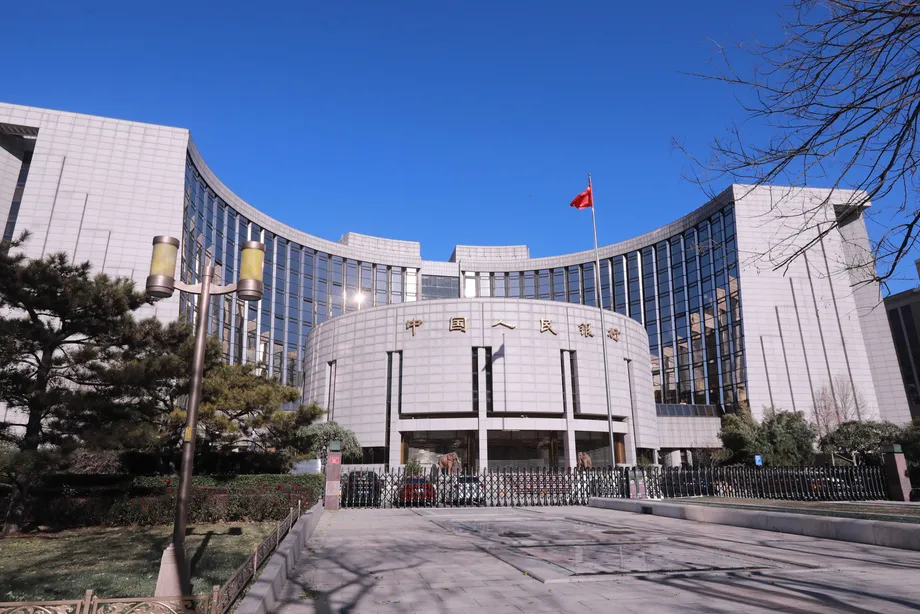
China's central bank will conduct overnight reverse repurchase operations every working day from November 2, 2026, at a rate currently set at 1.25%, shifting the main reference point for monetary policy away from its longstanding seven day operation.
Contents
- A new reference point for the cost of money
- What the central bank will do each day
- Why the overnight rate is taking the lead
- How the change developed
- Market rates were already close to 1.25%
- Seven day funding keeps a different job
- Related rates move down with the new anchor
- Why economists disagree about the easing element
- What changes for bonds, banks and borrowers
- Key Points
The People's Bank of China's Open Market Operations Office announced the changes on October 30 in Public Market Operations Announcement No. 13 of 2026. The notice also changes how seven day operations are priced and moves several related lending and liquidity tools onto the overnight benchmark, while keeping their existing interest rate margins unchanged.
The new reference rate is 0.15 percentage points, or 15 basis points, below the previous seven day benchmark of 1.40%. A basis point is one hundredth of a percentage point. Economists differ over how much easing is built into that gap: some describe the announcement chiefly as a change in how policy operates, while Citic Securities researchers see an easing element in the lower rates attached to related tools.
For banks, the immediate change is a clearer daily reference for borrowing money overnight. For households and companies, any effect would travel through financial markets and bank pricing before reaching loans or deposits. The announcement sets out changes to central bank operations, with no timetable for changes to retail borrowing rates.
What the central bank will do each day
The PBOC's announcement contains three operational changes. Overnight reverse repos become a regular operation each working day. Seven day reverse repos move to auctions used mainly around tax payment periods and month ends. Other specified tools switch their pricing reference from the seven day rate to the overnight rate.
A reverse repo is a way for the central bank to supply cash temporarily against securities, with an agreement that the transaction will be reversed later. An overnight operation supplies that money until the following day. A seven day operation keeps it available for a week.
For overnight operations, the PBOC will fix the interest rate and invite bids for quantities. Banks therefore know the central bank's stated price before submitting their requests. The notice puts that price at 1.25%.
Seven day operations will work differently: the central bank will set the quantity available, while bidders compete on interest rates. Successful bids can carry different rates. This separates the main daily policy signal from the price of funding supplied for particular periods of pressure.
Why the overnight rate is taking the lead
PBOC Governor Pan Gongsheng outlined the direction of the reform at the Financial Street Forum annual meeting on October 19. He said the central bank was studying a switch in the maturity of its main open market operation to overnight, with the corresponding rate becoming the main policy rate.
Pan identified a mismatch in the existing framework. DR001, the closely watched interest rate for overnight borrowing among deposit taking institutions against qualifying securities, had effectively become the central bank's operating target. Yet its main operation and policy rate still had a maturity of seven days.
In simple terms, the central bank was trying to guide the price of borrowing for one night while giving its clearest signal through the price of borrowing for a week. Aligning those maturities gives the market a more direct reference.
Pan said overnight market rates had become more stable as policy guidance and the interest rate corridor improved. The corridor is a range of central bank rates intended to help keep market borrowing costs from moving too far above or below the desired level.
How the change developed
The October announcement formalizes a tool already being used. Overnight reverse repo operations began in late June, and the PBOC disclosed their 1.25% rate publicly for the first time in the October 30 announcement. The rate had been reported at the same level when the first operation took place in June.
- Late June 2026: The PBOC introduced overnight reverse repo operations.
- October 19: Governor Pan outlined plans to make an overnight operation the main policy instrument.
- October 30: The Open Market Operations Office published Announcement No. 13, setting out the new arrangements and disclosing the 1.25% rate.
- November 2: Daily overnight tenders and the revised arrangements for seven day operations and related tools take effect.
The timetable gives banks a specific implementation date and a published reference price. The change also makes an existing instrument more transparent, rather than introducing overnight funding to the market for the first time.
Market rates were already close to 1.25%
DR001's weighted average stood at 1.2890% on October 30, while its average for the month was 1.2805%. During October, it had generally traded between 1.25% and 1.30%, already below the old seven day policy benchmark of 1.40%.
The new 1.25% reference is therefore close to the price banks were already paying for overnight money. October's average DR001 rate was 3.05 basis points above it, compared with 11.95 basis points below the old seven day benchmark. Those figures help explain why several economists view the move as bringing the policy framework into line with market practice.
Overnight reverse repo operations had reached their 1 trillion yuan operation limit for four consecutive trading days through October 30. Alongside the market interest rates, that shows the instrument was already handling substantial volumes before becoming the regular daily tool.
Ming Ming, chief economist at Citic Securities, said the 1.25% price broadly matched the prevailing overnight funding level and sent a stabilizing signal. He expected money market rates to operate around the overnight reverse repo rate after the change.
Seven day funding keeps a different job
The PBOC will retain seven day reverse repos mainly for tax payment periods, month ends and similar points when demand for cash can fluctuate. Tax payments can move money out of commercial bank accounts, while banks also adjust their cash positions around reporting dates.
Funding that lasts a week can cover those temporary pressure points without requiring banks to replace the entire amount every morning. Overnight operations will handle routine daily conditions, while seven day operations provide support across a longer window when needed.
Ming said the revised auction method resembles those used for the medium term lending facility and outright reverse repos. Under the new system, successful seven day bids can have different interest rates, allowing their pricing to reflect demand for that particular funding period.
Dong Ximiao, chief economist at Merchants Union Consumer Finance, said the clearer division of responsibilities would help markets distinguish routine liquidity management from the central bank's main policy signal. Changes in a seven day auction rate would then be understood alongside the timing and purpose of that operation.
Related rates move down with the new anchor
The announcement also changes the reference used to price temporary repo and reverse repo operations and repo facilities for overseas central bank type institutions. Their existing margins above or below the benchmark stay the same, but the benchmark moves from 1.40% to 1.25%.
That arithmetic lowers the rates on those linked tools by 15 basis points. A margin is simply an amount added to or subtracted from a reference rate. Keeping the margin unchanged while lowering the reference moves the resulting rate down by the same amount.
Citic Securities' fixed income department calculated that, under the rule placing temporary overnight repo and reverse repo rates 25 basis points either side of the policy rate, their range would shift from 1.15%–1.65% to 1.00%–1.50%.
The range would remain 50 basis points wide, but both ends would be lower. Dong said using a common overnight reference strengthens its position as the main policy rate, while unchanged margins provide continuity during the transition.
Why economists disagree about the easing element
Dong's assessment focuses on the operating framework: daily overnight operations should keep DR001 close to the policy rate and reduce disruption to the policy signal around tax dates and month ends. He said the useful tests would be how narrowly overnight rates trade around 1.25% and whether the margins on other instruments remain stable.
Citic Securities' fixed income researchers put more weight on the size of the price gap. They argued that the 15 basis point difference between the overnight and seven day policy rates was larger than the market's usual charge for extending borrowing from one night to a week.
Their figures put the average gap between DR007 and DR001 during 2026 at 7.8 basis points. The gap between the two central bank rates is therefore almost twice that market average. They also cited average government bond yield gaps of 9.9 basis points between maturities of three years and one year, and 12.3 basis points between seven years and five years.
Citic's researchers interpreted the 1.25% pricing and the downward shift in linked rates as containing an easing element. The competing assessments focus on different parts of the same change: one on aligning the policy instrument with its operating target, the other on the lower prices attached to the revised framework.
What changes for bonds, banks and borrowers
China's government bond market reacted to the announcement. The yield on bonds maturing in 10 years fell from 1.638% to about 1.625%, a decline of 1.3 basis points, before trading within a narrow range later in the session. Bond yields generally fall as bond prices rise.
Citic's fixed income researchers placed the announcement against pressure in stocks and credit markets. They said the Shanghai Composite and ChiNext indexes were respectively 15.5% and 44.9% below their highs for the year by October 30. They also described the risk that withdrawals from investment products combining bonds with other assets could force sales and deepen market swings.
For banks, a steadier daily funding reference can make cash management and the pricing of other transactions more predictable. Ming said the reform could also support a wider range of loan pricing benchmarks and improve the route through which lower market rates reach broader financing costs.
Households and businesses would feel any benefit further along that route. Overnight funding costs influence other short term rates, which in turn affect bond yields and banks' decisions about lending and deposits. Each step involves other considerations, including credit risk and competition for customers.
Zhou Hao, chief economist at Guotai Junan International, compared the change with the operating arrangements of other major central banks:
"What occurred today is arguably the clearest signal yet that the PBOC is moving toward an overnight-rate-based operating system similar to those employed by major central banks including the Federal Reserve, the European Central Bank and the Bank of Japan," said Zhou Hao.
From November 2, the practical focus will be the daily auctions and how closely market funding costs track 1.25%. The reform gives the PBOC a more direct daily instrument, while seven day operations remain available to handle temporary demands for cash.
Key Points
- The PBOC will conduct overnight reverse repo tenders every working day from November 2, 2026, at a rate currently set at 1.25%.
- Seven day operations will mainly serve tax periods and month ends, using auctions with a fixed quantity and multiple successful interest rates.
- Related tools will switch to the overnight benchmark with unchanged margins, lowering their rates by 15 basis points.
- October's average DR001 rate was 1.2805%, already close to the new overnight reference.
- Economists agree the framework is changing, but differ over how much monetary easing is built into the pricing.
- The immediate effects concern bank funding and market rates; changes to household and business borrowing costs would follow through bank pricing.