Chemicals, furniture and machinery could face new limits
The European Union is preparing possible restrictions on imports of chemicals, furniture and machinery, with proposals potentially arriving in the first quarter of 2027 as it seeks to narrow a goods trade deficit with China reported at €360 billion in 2025.
Contents
- Chemicals, furniture and machinery could face new limits
- Why Brussels is considering broader action
- How the proposed restrictions would work
- The hybrid vehicle plan sets the scale
- Other vehicle exporters could face quotas
- Beijing signals resistance as chemical scrutiny grows
- Parcels and market access widen the dispute
- The decisions expected before and after December
- Key Points
The European Commission, which manages trade policy for the bloc, is examining whether sharp increases in imports justify safeguards. These are temporary measures that can limit incoming goods to give domestic industries time to adjust. Options under consideration include import caps, additional tariffs and tariffs charged only after imports exceed a specified volume.
The plans would extend an approach being developed for hybrid vehicles from China: an initial annual allowance of 350,000 cars, increasing by 6% each year after the first year. The proposed arrangement would last four years.
Although China is the main focus, restrictions could reach other suppliers outside the European Economic Area. South Korea, Japan and other vehicle exporters are already watching how their shipments might be affected.
For European manufacturers, the measures could reduce pressure from competing imports. For companies importing vehicles, chemicals or machinery, they could change how much can enter the market and at what cost. Beijing has warned that it will defend its interests, leaving Brussels to balance industrial protection against the risk of retaliation.
Why Brussels is considering broader action
The €360 billion deficit means the EU bought that much more in goods from China than it sold there in 2025. Dividing the figure by 365 puts the gap at roughly €986 million a day. Reducing it has become a central objective of the proposed trade measures.
Eurostat's 2025 trade figures put the deficit at €359.8 billion, rounded to €360 billion, based on exports to China of €199.6 billion and imports of €559.4 billion. The figures come from dataset ds-059331 in Eurostat's COMEXT database. Eurostat's trade data methodology explains that the statistics are compiled monthly and cover the 27 EU member states' trade with countries outside the bloc, recording imports by country of origin and exports by final destination.
European industries face pressure from inexpensive Chinese products, including goods benefiting from subsidies, alongside weaker demand and restricted access to parts of China's market. The Commission has begun examining trade data to identify sectors experiencing import surges.
EU leaders called for action across economic sectors at a Brussels summit in October. Commission President Ursula von der Leyen subsequently said the executive had heard manufacturers' requests and intended to respond.
Our industries have called for action and we have heard them, and we will respond, including some more safeguards,
Chemicals, furniture and machinery are among the sectors being considered. The exact products, restrictions and country allocations remain subject to discussions with EU member states and China. The Commission declined to comment on the reported plans.
How the proposed restrictions would work
A quota sets a ceiling on the quantity of a product allowed into a market. A tariff is a tax on imported goods. A tariff quota combines the two: imports can enter under one set of conditions up to a limit, while shipments above that limit face an additional charge.
The Commission is considering these tools as alternatives, so the eventual effect would depend on which measure is selected for each sector. A hard cap limits the volume available; a tariff can allow imports to continue while making them more expensive.
The proposed safeguards are intended to comply with World Trade Organization rules and extend to suppliers outside the European Economic Area, which includes the EU, Iceland, Liechtenstein and Norway. Safeguards generally address an import surge causing serious harm to domestic producers, making their scope broader than a measure directed solely at a particular country's subsidies.
Brussels would retain the option of acting without Beijing's agreement. Negotiating an arrangement first, however, could reduce the risk of China answering with restrictions on European exports. The 350,000 vehicle allowance was reportedly chosen partly because officials considered it large enough to discourage retaliation.
The hybrid vehicle plan sets the scale
The proposed first annual quota of 350,000 hybrid vehicles from China compares with an expected 800,000 imports this year. That would be a reduction of 450,000 vehicles, or approximately 56%. The comparison uses a forecast for this year's imports, rather than a completed annual total.
Applying the proposed 6% annual increase would raise China's allowance to 371,000 vehicles in the second year, 393,260 in the third and about 416,856 in the fourth. Even the final allowance would be substantially below the projected 800,000 vehicles.
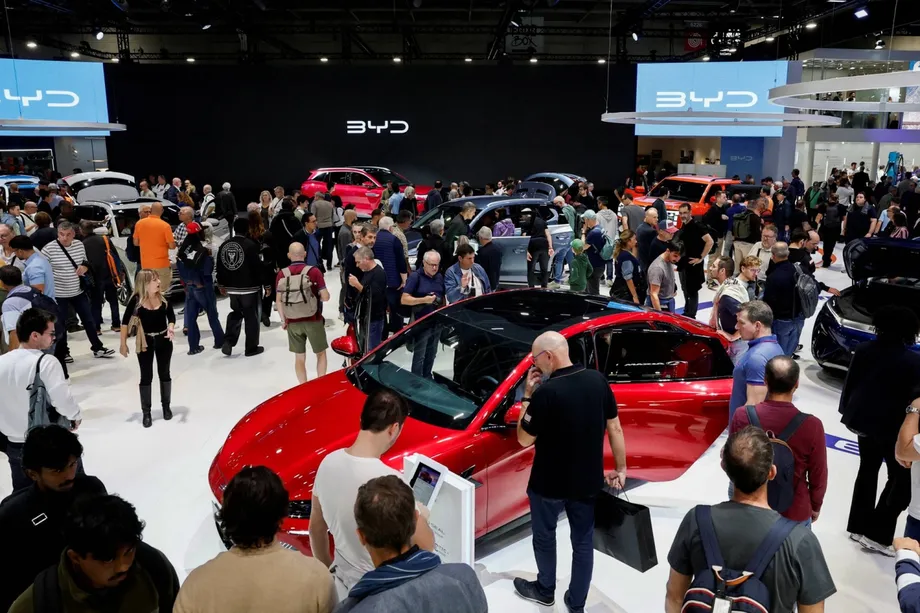
BYD and Chery Automobile have been expanding quickly in Europe. Their European sales reportedly rose 135% and 256%, respectively, during the first nine months of the year compared with the same period a year earlier. Those company sales figures describe their wider market performance; the proposed quota concerns hybrid vehicle imports.
The timetable has two descriptions: Commission proposals could allow restrictions to begin in December, while the four annual quota periods have also been described as starting next year. A safeguard investigation was expected to precede implementation. The precise relationship between a December start and the first annual allowance remains unsettled.
Other vehicle exporters could face quotas
South Korea, Japan, Türkiye, the United Kingdom and the United States could receive country allocations based on their recent vehicle exports to the EU. The Commission has indicated that reductions for other countries would be smaller than those facing China.
The proposed treatment of shipments above the vehicle quotas is particularly consequential: they would reportedly be turned back at customs rather than admitted subject to an additional tariff. An importer could therefore face a delivery interruption, not simply a larger tax bill.
Hyundai Motor and Kia could be affected as they pursue European demand for hybrid cars. Their exposure would depend on the size of South Korea's allocation and how much of their European supply comes from vehicles imported under the covered categories.
The wider reach shows why the proposal matters beyond EU relations with Beijing. A safeguard aimed at an import surge dominated by Chinese products can also change trading conditions for manufacturers elsewhere. Country allocations would determine how much room those suppliers retain.
Beijing signals resistance as chemical scrutiny grows
China's Ministry of Commerce has warned the EU against using pressure to secure concessions. In an October statement, the ministry set out Beijing's position on protecting its commercial interests.
No one should harbor the illusion that they can benefit by exerting pressure, nor should they underestimate China's resolve and ability to safeguard its national interests.
China also announced an anti-dumping investigation in October into imports of p-nitrotoluene. The chemical is used to make dyes, pigments, pesticides and pharmaceuticals, connecting the dispute to production chains well beyond finished consumer goods.
An anti-dumping investigation examines whether imported goods are being sold below their normal value and harming domestic producers. If the legal tests are met, it can lead to additional duties. That process differs from a safeguard investigation, which focuses on the damage caused by a surge in imports.
European chemical producers could consequently face pressure from both directions: new rules governing access to the EU market and Chinese scrutiny of products entering China. The next negotiations will take place against that risk of further action on each side.
Parcels and market access widen the dispute
European consumers ordering directly from overseas could also encounter a new cost. A separate reported EU decision would introduce a €2 handling fee per product category in parcels sent directly to consumers, affecting purchases through platforms such as AliExpress and Temu.
The reported fee is scheduled to begin on the first day of the month following the late October account of the decision. Charging by product category means the proposed cost structure differs from a single flat charge on every parcel, making the contents of an order relevant to the fee.
Brussels is also pursuing concessions that would make it easier to sell European goods in China. Agreements reached so far would include Chinese tariff reductions on certain vehicle parts, olive oil and ice cream.
The EU is seeking better market access and simpler Chinese export procedures for critical minerals and permanent magnets. These materials matter to manufacturers because they are used in industrial equipment and technologies such as electric motors. Their place in the talks gives European companies an interest in keeping negotiations moving even as import restrictions are considered.
The decisions expected before and after December
The Commission is preparing more than sector quotas. Before mid-December, it plans proposals to diversify supplies and create an instrument for responding rapidly to aggressive trade measures. The proposed response tool could restrict access to the EU single market for selected goods and services more quickly and broadly than current options.
The sequence of planned steps stretches into early 2027:
- October: EU leaders urged action at a Brussels summit, and China announced its p-nitrotoluene investigation.
- December: Hybrid vehicle restrictions could begin under the proposed implementation timetable.
- Before mid-December: The Commission aims to present supply diversification and rapid response proposals.
- First quarter of 2027: Broader safeguards covering sectors such as chemicals, furniture and machinery could be presented.
- Early 2027: EU trade chief Maros Sefcovic is due to review progress and discuss further steps with Chinese counterparts.
Manufacturers and importers will be watching the product definitions and quota allocations closely. Those details will determine which shipments face limits, whether firms can absorb extra charges, and whether orders need to be redirected to other suppliers.
Key Points
- The EU is considering wider import safeguards as early as the first quarter of 2027, with chemicals, furniture and machinery among the sectors under review.
- Eurostat's figures put the goods trade deficit with China at €359.8 billion in 2025, rounded to €360 billion.
- A proposed hybrid vehicle arrangement would start at 350,000 imports from China annually, rising 6% each year over four years.
- Other vehicle exporters, including South Korea and Japan, could also face country quotas.
- China has warned against pressure and opened an anti-dumping investigation into p-nitrotoluene imports.
- Further EU trade tools are planned before mid-December, with talks involving trade chief Maros Sefcovic expected in early 2027.