A quarterly breakthrough reshapes Europe's car market
Chinese car brands captured 12.7% of European registrations in the three months through September 2026, overtaking Japanese manufacturers for the first time over a full quarter, according to market researcher Dataforce. Japanese brands, including Toyota, held 11.9%, leaving a gap of 0.8 percentage points.
Contents
- A quarterly breakthrough reshapes Europe's car market
- What the sales figures reveal
- The UK gives Chinese brands a powerful boost
- Several Chinese manufacturers are expanding at once
- Why hybrids are central to the advance
- Pressure in China pushes manufacturers abroad
- EU policy could change which cars receive support
- Local factories become the next competitive test
- Key Points
Registrations of Chinese brands roughly doubled from a year earlier, with hybrids leading the advance. Their share accelerated toward the end of the quarter: Dataforce put September's figure at a record 14.5%, almost three percentage points above August. Another September market tally put Chinese brands at 182,462 vehicles and 13.6%.
European manufacturers such as Volkswagen and Renault still dominate the region. Yet Chinese brands have moved from barely 1% of European sales five years ago to a quarterly share approaching one car in eight. They are competing with Japanese companies that spent decades establishing factories, dealerships and familiar model names across Europe.
The breakthrough comes as the European Union considers further restrictions on imports from China and incentives favoring vehicles produced locally. Chinese manufacturers are responding on two fronts: selling more hybrids and preparing factories inside Europe.
September's detailed figures show why the change matters beyond a contest between national groups. Toyota remained Europe's second largest individual car brand that month, with 78,319 registrations. BYD ranked 11th with 49,340, while Chery's Jaecoo 7 became the first Chinese model to enter the European top 10. A growing collection of Chinese brands, rather than one manufacturer alone, is changing the competitive balance.
What the sales figures reveal
Chinese brands recorded 1,023,762 European sales during the first nine months of 2026 in the detailed market tally, an increase of 113.2%. Their share reached 9.7%, compared with 4.8% in the same period of 2025. That is a gain of 4.9 percentage points and roughly twice the previous share.
The quarterly figure of 12.7% sits above that January to September average, showing how strongly sales gathered pace later in the year. September's result was stronger still. Chinese manufacturers were gaining customers faster than the wider market was expanding.
Dataforce recorded 1,343,518 registrations across the European Union, the European Free Trade Association and the United Kingdom in September, up 10.2%. The European Automobile Manufacturers' Association, known as ACEA, recorded 1,363,210, also up 10.2%. Europe's car market in this comparison therefore extends beyond the EU's borders, an important detail when considering trade rules that apply specifically to the bloc.
Registrations count vehicles newly entered into national vehicle registers. They provide a practical measure of market demand, although the buyers include companies and fleet operators as well as private households.
The UK gives Chinese brands a powerful boost
The United Kingdom played an unusually large role in September's results. Its registrations rose 12% to 350,536 vehicles, compared with 256,774 in Germany. Britain's twice yearly registration plate changes make March and September especially busy months for car purchases.
BYD drew 52% of its September European sales from the UK, where it ranked second among brands. Across Europe, its 49,340 registrations represented growth of 102.3% from a year earlier. Toyota's 78,319 registrations were up 0.2%, illustrating the difference between the Chinese challenger's rapid expansion and the Japanese manufacturer's much larger established base.
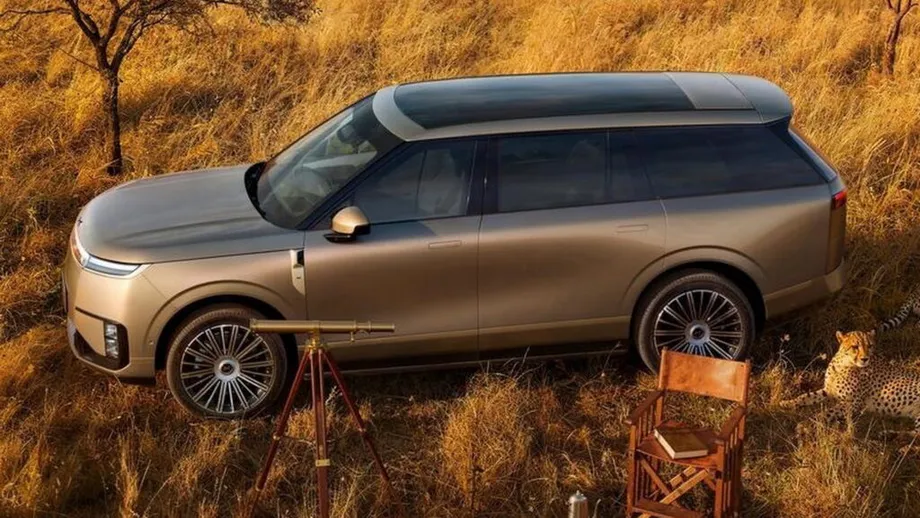
Chery's Jaecoo 7 was Britain's best selling model in both March and September. In September, it registered 15,470 sales across Europe and ranked 10th among models, with the UK accounting for 70% of that total. The wider Jaecoo brand sold 24,321 vehicles, up 156.6%.
Those figures show that the Chinese advance is unevenly distributed across Europe. Success in a large market during its busiest registration months can have a substantial effect on regional rankings. For BYD and Jaecoo, Britain has become a major source of volume.
Several Chinese manufacturers are expanding at once
Chery Group recorded 56,552 European registrations in September, up 187.3% from a year earlier. Its brands include Jaecoo, Omoda and Chery, allowing it to compete through several names rather than relying on a single range of vehicles.
Leapmotor registered 14,382 vehicles, an increase of 324.2%. Geely Group recorded 51,493, up 31.3%, while SAIC Motor reached 41,707, up 24.4%. The figures describe company groups, which can own several brands; they are a different comparison from rankings of individual brands such as Toyota or BYD.
Europe's established manufacturers had a more difficult month. Volkswagen Group registrations fell 2.8%, Renault Group declined 0.8%, and BMW Group was essentially unchanged. Stellantis grew 5.1%, below the market's 10.2% expansion.
Japanese manufacturers retain deep roots. Toyota began selling cars in Europe in 1963 and now operates factories across the continent. Nissan has produced vehicles at Sunderland in Britain since 1986. Chinese brands have overtaken the Japanese total for one quarter while competing against industrial networks built over generations.
Why hybrids are central to the advance
Hybrids led the increase in Chinese brands' quarterly registrations. A hybrid combines an engine with an electric motor. A plug-in hybrid also has a battery that can be charged from an external electricity supply, allowing some journeys to use electricity before the engine is needed.
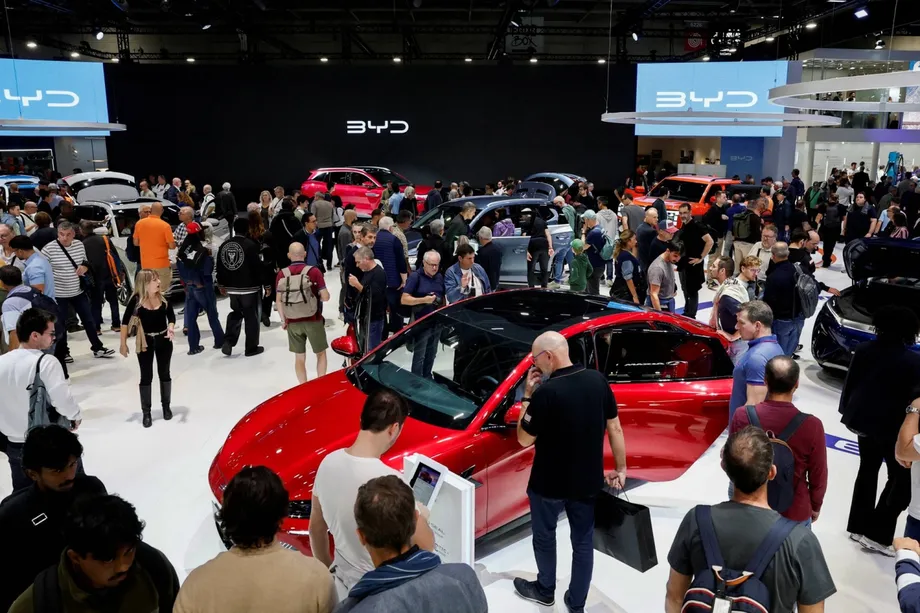
BYD brought the Dolphin G DM-i, a compact plug-in hybrid developed specifically for Europe, to the Paris Motor Show in October. Chery and Zeekr Intelligent Technology, part of Geely Holding Group, also displayed new models. The launches show manufacturers adapting their ranges to European buyers rather than relying solely on vehicles developed for China.
Battery electric cars are growing rapidly too. September registrations reached 416,443, up 59.9% from a year earlier, and their market share rose to 30.5% from 21.1%. These vehicles run entirely on electricity stored in a battery, without a petrol or diesel engine.
Chinese manufacturers are therefore competing in two expanding areas at once. Hybrids are bringing much of their immediate growth, while fully electric models give them access to a market that now accounts for about three in every 10 new registrations in September's tally. High fuel prices also increase buyers' interest in reducing petrol use.
Pressure in China pushes manufacturers abroad
Volkswagen and BMW face Chinese competitors in their largest market as well as in Europe. Chinese buyers are choosing domestic brands whose manufacturers are introducing models faster and at lower cost. Weaker demand in China is also pushing companies such as BYD to seek more customers overseas.
BYD's difficulties earlier in 2026 show the financial pressure behind that expansion. During its February sales downturn, January global deliveries fell 30.1% to 210,051 vehicles, the fifth consecutive monthly decline. The company had also lost more than $60 billion in market value since the preceding May.
Exports offered a growing outlet: BYD shipped 100,482 new energy vehicles abroad in January. That category includes battery electric vehicles and plug-in hybrids. European growth gives the company another source of customers while intense competition at home puts pressure on selling prices and profits.
European manufacturers consequently face competition on both sides. They are losing ground to Chinese brands inside China while those same rivals expand into Europe. The commercial contest now connects domestic pricing pressure in China with model launches, imports and factory investments thousands of kilometres away.
EU policy could change which cars receive support
The European Union has already added extra tariffs to battery electric vehicles made in China. Tariffs are taxes on imports that raise the cost of bringing a product into a market. In October, the bloc also agreed in principle to curb rapidly growing hybrid imports from China. The final terms and start date of those hybrid measures have not been specified.
Hybrid shipments have accelerated amid expectations of further action. Meanwhile, the EU is considering rules that would favor locally produced vehicles when governments provide subsidies or other incentives, including some tax benefits for company cars.
Company and fleet buyers account for a large share of purchases in markets such as Germany. Changing which vehicles qualify for tax advantages could therefore influence substantial numbers of purchases, beyond the choices made by individual households.
Toyota has challenged a narrow definition of eligible European production. In its October incentives appeal, it sought recognition for vehicles made in Japan, Britain and Türkiye under the proposed Industrial Accelerator Act. Toyota operates factories inside the EU in France and the Czech Republic, as well as outside it in Britain and Türkiye.
Yoshihiro Nakata, president and chief executive of Toyota Motor Europe, described the company's position in its October policy statement:
Toyota is not a guest in Europe. We are a European manufacturer, and we want Europe's automotive industry to succeed
Mercedes-Benz has welcomed political support for European manufacturing while warning that changes to global supply chains could raise costs. Britain, Türkiye and Morocco supply vehicles and parts to the EU, so the precise rules could affect factories well beyond the bloc.
Local factories become the next competitive test
Chinese companies are already preparing to manufacture more vehicles within Europe. Chery is preparing production in Barcelona, while Leapmotor has started making its B10 SUV at Stellantis' plant in Zaragoza, Spain, through the companies' joint venture.
BYD's Hungarian factory at Szeged is scheduled to begin production in the fourth quarter of 2026 after earlier delays. The company's European factory plans also include examining France as a possible location for further manufacturing, with competitive energy prices cited as an attraction.
The timetable connects the sales breakthrough with the next stage of investment:
- September 2025: BYD's initial target for starting production in Hungary.
- July to September 2026: Chinese brands overtook Japanese manufacturers across a full European quarter.
- October 12, 2026: BYD discussed further European factories at the Paris Motor Show.
- October 16, 2026: Toyota called for broader access to proposed European industrial incentives.
- October to December 2026: BYD's revised window for launching production at Szeged.
BYD plans to begin Hungarian assembly with the Dolphin Surf city car, followed by the Atto 2 SUV. The factory's target annual capacity is 300,000 vehicles, while actual output will depend on how production develops.
Local manufacturing could make Chinese companies employers and purchasers of European supplies as well as importers. Eligibility for proposed incentives will depend on the final rules, including requirements for assembly and components. The contest is moving from who can sell the most cars to where those cars, batteries and parts will be made.
Key Points
- Chinese brands held 12.7% of European registrations in the third quarter of 2026, ahead of Japanese brands at 11.9%.
- Chinese brands' registrations roughly doubled from a year earlier, led by hybrids.
- Britain supplied 52% of BYD's September European sales and 70% of the Jaecoo 7's registrations.
- European manufacturers remain dominant, but several large groups grew more slowly than the market or lost sales in September.
- The EU is considering further import restrictions and incentives tied to European production.
- Chinese manufacturers are expanding local assembly, with BYD targeting a Hungarian production launch before the end of 2026.