French energy prices put a new factory in contention
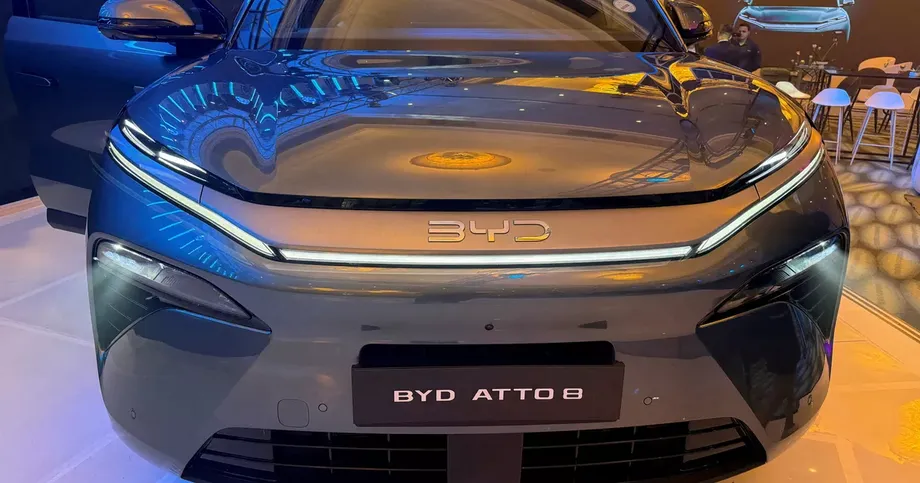
BYD is closely examining France as a location for a new car factory while preparing to launch production at its delayed Hungarian plant in the fourth quarter of 2026. Executive vice president Stella Li outlined the plans on October 12 at the opening of the Paris Motor Show, saying the Chinese manufacturer wants to establish a second and third factory in Europe.
Contents
- French energy prices put a new factory in contention
- Hungary comes first after changes to the schedule
- How many additional factories are planned?
- What makes French electricity attractive?
- Sales growth gives the expansion a commercial basis
- Trade policy adds urgency, but details are unsettled
- Local identity means more than an assembly line
- Fast charging is another part of the Paris pitch
- Key Points
France has reached the shortlist, not the final investment stage. Li identified competitive energy prices as a reason for considering the country, but did not announce a municipality, investment amount, production capacity or opening date for a French facility. Her remarks also did not establish that both additional factories would be built in France.
Li, who is leading BYD's international expansion, explained the attraction in direct terms:
France is on the shortlist because your energy is very competitively priced,
The search comes as Chinese manufacturers face pressure to produce more vehicles within Europe, where governments are debating local production requirements and trade restrictions. BYD is also trying to turn rapidly rising sales into a lasting industrial presence, including manufacturing, research jobs, technology investment and support for local sellers.
The immediate test remains Hungary. Production at Szeged is expected between October and December, following earlier delays. That makes the Paris announcement a statement of expansion plans rather than confirmation that BYD already has a fully operating European production network. A successful Hungarian launch would give the company its first practical foundation for the wider manufacturing strategy Li described.
Hungary comes first after changes to the schedule
The Szeged factory was initially expected to start producing cars in September 2025. Its timetable subsequently moved to the second half of 2026, with the latest reporting specifying the fourth quarter. Describing that final window as another delay requires care: October through December still falls within the previously stated second half.
During a visit to BYD's London offices earlier in 2026, Li identified Hungary as the company's first priority and said equipment was still being installed. The October comments maintained the expectation of an opening before the end of the year. They did not provide a precise production date or confirm when the factory would reach substantial output.
The reported sequence is:
- September 2025: the initial target for starting production in Hungary.
- Second half of 2026: a revised production window following delays.
- June 2026: reporting placed the expected start in the fourth quarter, with equipment installation continuing.
- October 12, 2026: Li discussed further European factories in Paris while Hungary remained scheduled to launch before year end.
The Dolphin Surf city car is expected to be the first model assembled at Szeged, followed by the Atto 2 SUV. Two more models are planned, but their identities have not been disclosed. The factory has a target annual capacity of 300,000 vehicles. That is a planned production ceiling, not a forecast for its first year or evidence that customer demand already matches that volume.
How many additional factories are planned?
The clearest account of Li's Paris remarks points to two additional European factories after Hungary, creating a network of three. One report instead describes two to three additional plants. Those accounts differ, and there is no detailed investment schedule resolving the discrepancy.
France is being considered for that expansion, but there is no announced allocation of either proposed factory. The distinction matters: a country making a shortlist is a meaningful step in a location search, yet it does not establish that land has been secured, permits requested or construction approved.
A separate factory project in Turkey has been put on hold. Earlier reporting also raised the possibility that BYD could use an existing, underused European automotive site. No acquisition or agreement to use such a facility has been announced in connection with the French discussions.
What makes French electricity attractive?
Energy is the most specific commercial reason Li gave for considering France. Automotive plants require reliable electricity, while battery manufacturing adds substantial energy demand if it is included at a site. BYD's activities span both batteries and finished vehicles, making power costs relevant to its industrial choices.
One reported comparison puts French electricity at €90 per megawatt hour against more than €120 in Germany. At those stated prices, the French figure is at least 25% lower. However, the comparison does not identify the contract period, customer category or treatment of network charges and taxes. It is an indication of the attraction, not a verified electricity bill for a future BYD factory.
France's electricity supply also has a relatively low carbon footprint because of its substantial nuclear generation alongside hydroelectricity and other renewable sources. Reporting on the factory discussions puts its electricity carbon intensity below 50 grams of carbon dioxide per kilowatt hour and points to planned European battery footprint requirements in 2027.
Those figures should not be treated as a guarantee of a particular regulatory outcome. The emissions attributed to a battery depend on more than electricity at the final factory, including materials and other production stages. Li has not announced a French battery plant, and no detailed French manufacturing plan establishes which operations would take place locally.
Competitive power therefore helps explain why France is under consideration. It does not settle the investment decision, or establish the final cost and carbon footprint of a vehicle made there.
Sales growth gives the expansion a commercial basis
BYD's European sales rose from 50,912 vehicles in 2024 to 187,657 in 2025, according to figures attributed to the European Automobile Manufacturers' Association. That is an increase of 136,745 vehicles, or approximately 269%. The 2025 total was about 3.7 times the previous year's figure.
Its French business is also growing quickly from a smaller base. Sales reached 14,311 vehicles in 2025, a reported increase of 150%. By late August 2026, the company had sold more than 18,000 vehicles in France, already exceeding its full 2025 result by at least 3,689 vehicles, or about 26%.
The comparison has a limit: eight months of 2026 cannot establish the eventual growth rate for the full year. It does, however, show that the company passed its previous annual total well before December.
BYD still accounted for only about 1.5% of the French market at that point. Figures attributed to France's automotive industry body, the PFA, put Stellantis at 371,913 sales and Renault at 342,435 over the reported period, far ahead of BYD.
The Hungarian plant's planned capacity of 300,000 vehicles is about 60% above BYD's reported European sales in 2025. These are different measures, production capacity and sales, but the comparison shows that the investment is designed to support further growth rather than simply reproduce the company's existing annual volume.
Trade policy adds urgency, but details are unsettled
The location search is taking place alongside European debate over an Industrial Accelerator Act and possible requirements for manufacturers to produce more within the region. Such rules would distinguish between selling imported vehicles in Europe and carrying out qualifying industrial work there.
That distinction matters for BYD. A local factory could create employment and production activity in a market where the company has so far expanded largely through vehicle sales. Whether a particular operation would satisfy future rules would depend on the final legislation and its definitions of local production and content.
Reports also describe a Chinese commitment, announced on the Friday before the Paris show, to moderate hybrid vehicle exports to the European Union. One account gives an annual import limit of 350,000 vehicles, compared with 800,000 previously. Other accounts describe restraint without specifying a numerical ceiling.
No published agreement or legal text accompanies those figures, and Li said the company had heard the announcement but did not yet have the details. The precise quota numbers therefore should not be treated as settled policy, nor can their effect on BYD's individual models be established.
Li presented regulatory tensions as temporary compared with BYD's longer commitment to Europe. That is the company's position, not confirmation that trade restrictions will have little effect. The final rules could influence which vehicles BYD builds locally, how it sources components and how quickly additional factories become commercially useful.
Local identity means more than an assembly line
Li's ambition extends beyond moving production across borders. In Paris, she described investment in manufacturing, research and development employment, and technology. She also said BYD wants to support local sellers and wants French consumers to regard the company as a French brand.
That is an aspiration about how the business is perceived, not an announced change in ownership or corporate nationality. BYD remains a Chinese company. Li has separately described a goal of Europeans seeing it as a European brand within ten years.
The company brings substantial manufacturing experience to that effort. It produces batteries as well as vehicles and controls many stages of its production process. Jamel Taganza, cofounder of automotive consultancy Inovev, has described that control as a way for BYD to manage costs and reduce exposure to shortages.
Its global scale is already substantial. Reported 2025 sales reached 2.26 million fully electric vehicles, compared with 1.64 million for Tesla. Those figures concern fully electric cars, not every vehicle BYD sells. They put BYD ahead by about 620,000 vehicles in that category.
European growth also comes while intense competition and price cutting pressure manufacturers in China. Taganza has linked that domestic competition to the need to expand exports. BYD's proposed European factories would take that international strategy a step further, replacing some reliance on cross border shipments with production nearer its customers.
Fast charging is another part of the Paris pitch
BYD also planned to present its flash charging technology in Paris during the show week. The company says the system can replenish driving range in a few minutes, making charging speed another element of its effort to win European buyers.
The launch chronology differs across reports. One account dates the Super e Platform presentation to 2025 and describes a claim of up to 470 kilometres of added range in five minutes. Another links improved Chinese sales to a flash charging launch in March 2026. Those accounts do not establish whether they refer to the same system, an update or different stages of its introduction.
The power requirement helps explain why charging hardware and electricity connections matter. Delivering 80 kilowatt hours of energy in five minutes would require an average of 960 kilowatts, before charging losses. That follows from dividing 80 kilowatt hours by one twelfth of an hour.
This calculation is illustrative, not evidence that every BYD vehicle can accept that amount of energy in five minutes. Actual performance depends on the vehicle, battery condition, starting charge level and charger. There is also no announced French deployment schedule, network size or grid investment budget for the system.
For the factory strategy, the next milestones are more concrete: the start of production at Szeged, disclosure of a chosen location for another European plant, and details of the investment and models involved. No deadline for a French decision has been announced. The Paris remarks establish serious interest, while leaving the central investment choices open.
Key Points
- Stella Li said on October 12, 2026, that France is on BYD's factory shortlist because of competitive energy prices.
- BYD is seeking a second and third European factory, but has not confirmed a French site or investment.
- Production at Szeged, Hungary, is expected in the fourth quarter of 2026 after earlier delays.
- The Hungarian plant targets annual capacity of 300,000 vehicles, with Dolphin Surf production expected first.
- European sales rose from 50,912 vehicles in 2024 to 187,657 in 2025.
- Future European production rules and reported hybrid import restrictions remain important uncertainties.
- No opening date, model allocation or decision deadline has been announced for a French factory.