A $30 Billion Framework Meets Detroit's Concerns
A U.S.-China agreement covering approximately $30 billion in imports on each side offers selective tariff relief while leaving automakers exposed to restrictions on vehicles, technology and critical materials. The framework emerged from the September 24-26, 2026, Washington summit, alongside an announced extension of the existing trade truce through January 10, 2027.
Contents
- A $30 Billion Framework Meets Detroit's Concerns
- What the Tariff Framework Covers
- How the Trade Truce Developed
- Why Automobiles Follow Different Rules
- Materials Remain a Factory Concern
- Technology Restrictions Continue Alongside Trade Talks
- New Boards Create a Channel for Disputes
- What Changes for Workers and Buyers
- Key Points
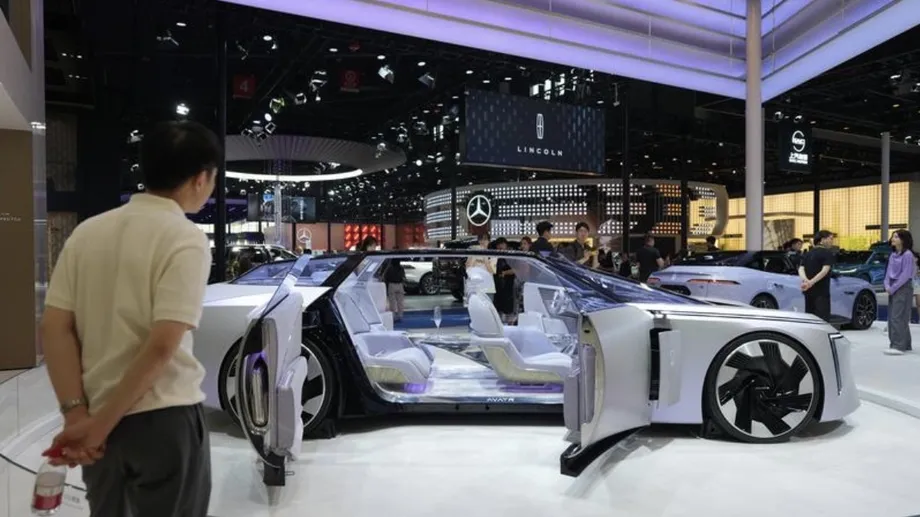
The proposed reductions concentrate on goods considered less sensitive to national security, including small appliances, toys, holiday decorations and children's car seats exported from China. For the automotive industry, the central issues remain broader: competition from Chinese vehicles, protection of intellectual property and reliable access to materials needed to keep factories running.
Glenn Stevens Jr., chief automotive and innovation officer of the Detroit Regional Chamber and executive director of MichAuto, framed the industry's concerns around protecting American technology and markets.
"We have to protect our intellectual property and we have to protect our markets," Stevens said.
Stevens also described the competitive threat he sees from Chinese vehicles, using the term dumping, which in trade disputes refers to exports sold below a benchmark such as their normal market value.
Those are dumped vehicles. They are disruptive to the markets they're going into, and they would disrupt our economy, not just Detroit, but everywhere that they're built in this country.
His comments capture the tension facing manufacturers: they want protection against competition they consider unfair, while their production networks depend on international trade. The agreement provides some breathing room in that relationship, but its reach is concentrated in selected product categories.
What the Tariff Framework Covers
Wilson Sonsini Goodrich & Rosati's Washington summit analysis describes a reciprocal framework under which each country agreed in principle to provide more favorable tariff treatment for approximately $30 billion in imports. The newly established U.S.-China Board of Trade will oversee implementation.
The two amounts refer to the value of imports covered, rather than money paid by either government. Together, they represent approximately $60 billion in trade selected for more favorable treatment.
Covered American exports include agricultural goods, fish and seafood, logs and wood products, cosmetics and medical devices. Chinese exports covered by the framework include the consumer products listed above. Children's car seats give the agreement a direct connection to purchases associated with driving, although the wider automotive supply chain faces separate trade rules.
More than 90 percent of affected products would receive tariff treatment set out in the countries' World Trade Organization schedules. These schedules record countries' tariff commitments. WTO bound rates are generally agreed ceilings on import duties, rather than a promise that goods enter without any tax.
The framework remains an agreement in principle. Detailed implementation measures, the full scope of relief and confirmation of the extended U.S. export control suspension were still outstanding in the summit analysis. Those details will determine which businesses can claim relief and when.
How the Trade Truce Developed
The Congressional Research Service's tariff timeline report, updated January 12, 2026, documents the escalation and negotiations that preceded the Washington summit. Its account covers actions through December 31, 2025, providing an earlier benchmark for the later agreement.
In April 2025, the two countries raised the tariffs at the center of their dispute to 125 percent. Negotiations then reduced that particular tariff layer to 10 percent. The change was 115 percentage points, a substantial reduction for affected imports, even as other duties continued to apply.
- April 2025: The United States and China escalated the disputed tariffs to 125 percent.
- May 12, 2025: Both countries announced a reduction from 125 percent to 10 percent for 90 days.
- August 2025: The tariff reduction was extended for another 90 days.
- November 2025: The truce was extended through November 10, 2026, and the United States reduced its separate fentanyl related tariff on China from 20 percent to 10 percent.
- September 24-26, 2026: The Washington summit produced the selective tariff framework and an announced truce extension through January 10, 2027.
The January CRS report records the November 2026 deadline; the later summit analysis describes the additional two months. For companies ordering materials months before production, these deadlines affect purchasing decisions, delivery schedules and the price they can promise customers.
Why Automobiles Follow Different Rules
Automobiles and parts sit within a separate tariff system. The CRS report records a general rate of 25 percent under Section 232 of the Trade Expansion Act of 1962, with preferential arrangements of 10 percent for the United Kingdom and 15 percent for Japan, South Korea and the European Union, including most favored nation duties under those arrangements. Some exceptions apply under the United States-Mexico-Canada Agreement.
Section 232 allows import restrictions when the government determines that imports threaten to impair national security. That legal basis is separate from the emergency powers used for several other tariffs imposed in 2025.
The difference matters because a negotiated reduction in one tariff category changes only part of the rules governing an import. A manufacturer must identify the product, its country of origin and the legal authority behind each applicable duty before calculating its costs.
CRS explains that many tariff measures are cumulative, meaning several duties can be added together. It also records exceptions, including the exclusion of goods subject to certain Section 232 actions from the trade deficit tariff program. A single headline percentage therefore gives buyers only part of the information they need.
For example, a 25 percent duty on a hypothetical shipment with a customs value of $100,000 would amount to $25,000 before other applicable charges or exceptions. The importer pays the duty at the border. How much reaches consumers through higher prices depends on decisions by manufacturers, suppliers and sellers.
Materials Remain a Factory Concern
China's controls on critical raw materials are especially important for electric vehicles and other advanced manufacturing. Rare earth materials are used in magnets, including those used in some electric motors. Restrictions can affect the ability to obtain a component as well as its price.
The Busan agreement suspended certain Chinese rare earth export controls, including rules that could reach goods manufactured outside China when they contained specified Chinese rare earth materials meeting a 0.1 percent value threshold. Such rules can follow materials through several stages of production, reaching companies far from the original exporter.
The Washington summit analysis says those suspended measures form a limited part of China's broader export control system. Other controls on critical raw materials remain in place, and businesses still face uncertainty over the availability of export licenses and the time required to obtain them.
The White House described continuing efforts to address shortages of rare earths and other critical minerals and restore shipment levels. The Chinese announcements discussed in the analysis contained no reference to rare earth export controls or licensing requirements.
For a factory, a license delay creates a different problem from a tariff. A tariff increases the cost of a shipment that can enter the country. An export restriction can hold up the shipment itself. Assembly schedules depend on parts arriving together, so a relatively small missing component can become a production problem.
Automakers consequently have two practical questions to resolve: what their imports will cost and whether suppliers can deliver them on time. The selective tariff framework addresses the first question for covered goods, while licensing rules continue to shape the second.
Technology Restrictions Continue Alongside Trade Talks
The United States also maintains export controls on advanced semiconductors, computing and artificial intelligence technologies. U.S. Trade Representative Jamieson Greer indicated after the summit that discussions concerning certain advanced American semiconductors remained outside the negotiations.
American restrictions can also follow corporate ownership. The Commerce Department's Bureau of Industry and Security Affiliates Rule was designed to extend export restrictions to unlisted entities owned 50 percent or more by restricted parties. The earlier truce suspended implementation of that rule.
The practical task for a supplier is to examine both the company receiving a product and the companies that own it. A customer may operate under a different name from its parent, while ownership rules can connect their treatment under export controls.
Restricted party lists continue to change as well. The summit analysis records the addition of 43 companies based in China to the Uyghur Forced Labor Prevention Act Entity List in July 2026, along with continued additions to other American restriction lists.
Those measures affect sourcing and access to goods, software and technology through rules separate from tariff rates. For automotive companies buying electronics, materials and manufacturing equipment, checking suppliers remains part of doing business even when trade negotiations produce lower duties.
New Boards Create a Channel for Disputes
The Washington summit brought the U.S.-China Board of Trade and Board of Investment into operation, following agreements in principle reached during the May 2026 summit in Beijing. Both create regular channels for addressing commercial issues between the two governments.
The trade board is overseen by Chinese Vice Premier He Lifeng and, on the American side, Treasury Secretary Scott Bessent and U.S. Trade Representative Jamieson Greer. Meetings among deputy officials are expected at least quarterly, with working teams meeting regularly.
The board's initial responsibilities include implementing the reciprocal tariff framework. An agricultural working group will address market access, while the investment board provides a channel for discussing investment opportunities and obstacles.
Regular meetings give companies a more predictable process through which their governments can raise trade problems. The next concrete tests are implementation of the product relief and management of the January 10, 2027, truce deadline. Neither board replaces the national security rules that both governments continue to apply.
What Changes for Workers and Buyers
American manufacturing communities face a trade policy balancing act. Stevens is arguing for protection of domestic production and intellectual property, meaning valuable inventions, designs, software and other business knowledge. His concern extends beyond Detroit to places where vehicles are manufactured across the country.
Manufacturers also need dependable supplies and costs they can plan around. Extending the truce reduces the immediate risk of a return to the much higher disputed tariff rates during the extension period. Selective relief may lower import costs for covered products, including some goods purchased by families.
Vehicle prices, however, depend on many separate costs: parts, materials, labor, transport and the duties applying to a particular vehicle or component. The framework supplies no estimate of savings on a finished car, household purchases or automotive employment.
The agreement's most concrete contribution is a period of greater tariff stability for selected trade, paired with institutions intended to keep negotiations moving. For the auto industry, the unresolved work remains specific: securing materials, protecting technology and understanding which rules apply to each shipment.
Key Points
- The Washington summit produced a framework covering approximately $30 billion in imports from each country, mainly goods considered less sensitive to national security.
- More than 90 percent of affected products would receive tariff treatment under the countries' WTO schedules.
- The existing trade truce was announced as extended through January 10, 2027.
- Automobiles and parts face separate Section 232 tariff arrangements, with rates and exceptions varying by origin.
- Rare earth licensing, technology restrictions and supplier screening remain central concerns for automotive production.
- MichAuto executive Glenn Stevens Jr. called for protection of American intellectual property and markets against Chinese vehicle competition.