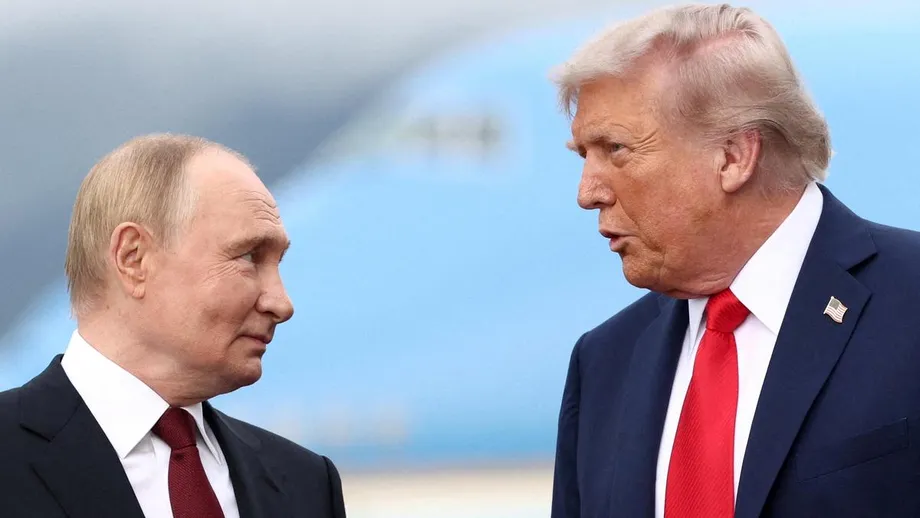
Two proposed meetings, two different futures for Ukraine
Russia has agreed in principle to resume negotiations with Ukraine and the United States after November 10, while promoting a different meeting that would bring Donald Trump, Vladimir Putin and Xi Jinping together in China without Ukraine or European governments. The competing formats put a basic issue at the center of the peace effort: who gets to negotiate Ukraine's future.
Contents
- Two proposed meetings, two different futures for Ukraine
- What Moscow and Washington want to discuss
- Kyiv wants its own place at the table
- The route from Oslo to possible November talks
- Why China might attend without becoming a mediator
- A shared interest in changing the security balance
- Fuel, sanctions and military support shape the pressure
- Europe's influence extends beyond the guest list
- A December ambition meets unresolved demands
- Key Points
Following nearly three hours of talks between Putin and US special envoy Steve Witkoff in St. Petersburg on October 21, 2026, Kremlin aide Yury Ushakov said technical negotiations could take place in Abu Dhabi. Their focus would be security arrangements for Russia and Ukraine after the fighting ends.
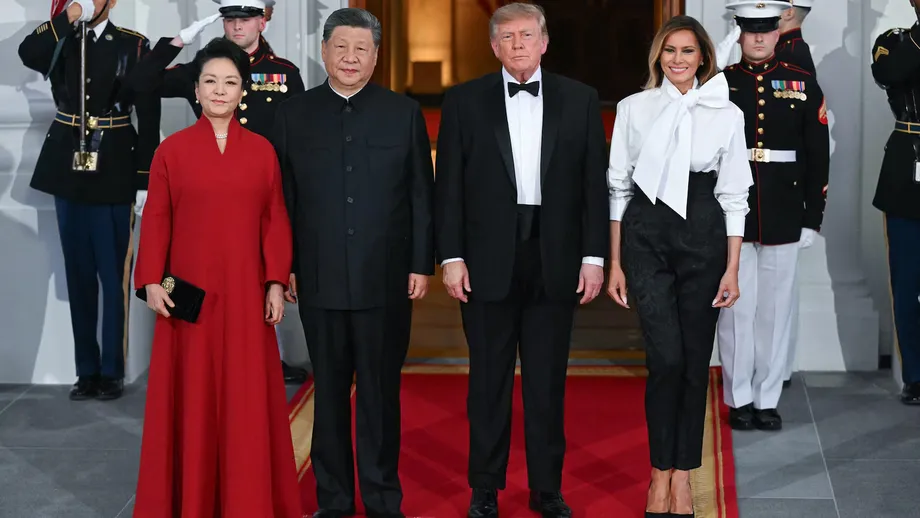
The proposed gathering of Trump, Putin and Xi would take place alongside the Asia-Pacific Economic Cooperation summit scheduled for November 18 and 19 in Shenzhen. Moscow sees an opportunity to pursue a settlement favorable to Russia. Trump has described a different priority: nuclear weapons and disarmament.
China's public position is more cautious than Moscow's description of preparations. Foreign Ministry spokesperson Mao Ning said she had no information about the proposed meeting, while promising that Beijing would continue encouraging peace negotiations. No final agreement on the leaders' meeting, its arrangements or its agenda has been announced.
Ukraine's President Volodymyr Zelenskyy said in Oslo on October 20 that the three leaders could decide for themselves whether to meet. Negotiating over Ukrainian territory, security and sovereignty, he insisted, requires Ukraine's participation. European governments face a similar concern: decisions made in Shenzhen could affect their security and their continuing support for Kyiv.
What Moscow and Washington want to discuss
Putin reportedly proposed the summit during an October 9 telephone conversation with Trump, the same conversation that produced an agreement involving Russian diesel exports. Accounts of diplomatic contacts describe Moscow seeking a settlement that would advance its war aims and allow Washington to press Kyiv toward accepting it.
Kremlin spokesperson Dmitry Peskov has described the gathering as a hypothetical possibility acknowledged by all three capitals. Ushakov later said none had dismissed the idea and that China could add it to the APEC program if circumstances were favorable. Ushakov also said Moscow had offered practical ideas, without detailing them.
Trump, by contrast, has publicly presented the meeting principally as an opportunity for arms control. Speaking outside the White House, the US president explained the subjects he wanted to raise.
We would have it to talk about nuclear weapons and denuclearization.
Trump said trade could also enter the discussion. He has expressed willingness to pursue an end to the Ukraine war without Zelenskyy's participation and suggested that someone else should negotiate on Ukraine's behalf.
China has resisted joining the nuclear negotiations Washington wants. Its Foreign Ministry says China's nuclear forces are much smaller than those of Russia and the United States, making trilateral disarmament negotiations inappropriate at this stage. Peskov also acknowledged that Beijing was not interested in the nuclear agenda described by Washington.
Nuclear arms control means agreements limiting weapons, deployments or related military activity. With New START, the treaty limiting deployed US and Russian strategic nuclear forces, having expired in February 2026, Washington's proposed discussion concerns a separate security problem from the terms of peace in Ukraine. The leaders would need to reconcile those priorities before a shared agenda could take shape.
Kyiv wants its own place at the table
Zelenskyy made Ukraine's position explicit at an Oslo press conference alongside Norwegian Prime Minister Jonas Gahr Støre and Finnish President Alexander Stubb. He said his preferred leaders' meeting would involve Ukraine, Russia and the United States.
The Ukrainian president explained why the membership of any negotiating group matters.
I don't know whether the trilateral meeting will be between America, China and Russia. It's up to them. But of course, if the issue is about Ukraine, our future, it can be acceptable only when we are at the table of negotiations. It's absolutely clear.
Ukrainian Foreign Minister Andrii Sybiha had warned on October 19 that a Ukraine-US-Russia summit could help end the war sooner, while a Russia-China-US gathering would encourage Putin to continue fighting. He argued that Putin should first take a serious step toward peace, such as accepting a ceasefire.
Kyiv is seeking a halt to the fighting while rejecting territorial concessions. Zelenskyy has described freezing hostilities along the existing front as the minimum step needed to begin ending the war. A halt along that line would leave forces in their current positions; Ukraine would still face negotiations over occupied territory and the security arrangements needed to prevent another attack.
Russia's demands include control of the entire Donetsk region, rejection of Ukrainian NATO membership and a comprehensive settlement rather than a temporary ceasefire. Those positions leave substantial distance between an agreement to attend talks and an agreement that could stop the war.
The route from Oslo to possible November talks
Witkoff's St. Petersburg visit followed consultations in Oslo with Ukrainian, American and European representatives. Zelenskyy said the discussions covered security guarantees, territory, sanctions, reconstruction and Europe's future security arrangements.
The sequence shows how Washington is pursuing both negotiations involving Ukraine and a possible gathering of the three major powers:
- October 9: Trump and Putin discussed Russian diesel exports, and Putin reportedly proposed the meeting with Xi.
- October 19: Trump expressed openness to a summit focused on nuclear arms, while Sybiha warned against excluding Ukraine.
- October 20: Zelenskyy met Witkoff and European leaders in Oslo to discuss peace proposals and security guarantees.
- October 21: Witkoff presented proposals to Putin in St. Petersburg, after which Moscow signaled readiness to resume negotiations.
- November: Zelenskyy sought talks by early November, while Ushakov described Russian readiness on or after November 10, around the middle of the month.
- November 18 and 19: The scheduled APEC summit in Shenzhen provides the proposed setting for a Trump-Putin-Xi meeting.
Witkoff brought documents outlining possible approaches to peace. Russian investment envoy Kirill Dmitriev attended the St. Petersburg meeting, and Trump's son-in-law Jared Kushner joined remotely. The visit was Witkoff's ninth meeting with Putin in person.
Representatives of Ukraine, Russia and the United States had already held three rounds of negotiations earlier in 2026: two in Abu Dhabi in January and February, followed by another in Geneva in February. Those talks produced little progress beyond exchanges of prisoners of war.
Zelenskyy said Kyiv would support ceasefire proposals, an energy truce and humanitarian measures, including prisoner returns. Moscow's response remained guarded. Peskov said Putin was not considering an energy ceasefire, despite Trump's earlier announcement of such an arrangement.
Why China might attend without becoming a mediator
Temur Umarov, a researcher specializing in China-Russia relations at the Carnegie Russia Eurasia Center in Berlin, sees the proposed format partly as an effort by Moscow to secure recognition as a major international power.
Umarov believes China would prefer to participate symbolically while avoiding responsibility for delivering a settlement. He summarized Beijing's likely approach in direct terms.
Beijing has no intention of taking responsibility for Ukraine's future.
A seat beside Trump and Putin would give Xi a role in a major diplomatic event. According to Umarov, China would likely favor language broad enough to preserve its freedom to respond to later developments, rather than commitments that required it to enforce a settlement or pressure Moscow.
Michael Kimmage, director of the Kennan Institute in the United States, also doubts that Beijing is preparing to become a more active mediator. He argues that China has reasons to prefer stability and continued trade with Ukraine and neighboring countries, while placing greater value on its relationship with Putin.
Kimmage identified the priority he believes guides Beijing's choices.
More important to China is the political survival of Vladimir Putin.
Russia supplies China with inexpensive energy and a diplomatic partner that rarely obstructs Beijing's foreign policy, Kimmage said. He expects China to continue indirectly supporting Russia's military effort to prevent defeat, even if a complete Russian victory is not Beijing's main objective.
A shared interest in changing the security balance
Yurii Poita, a senior associate researcher at the Mercator Institute for China Studies, places more weight on the strategic goals China and Russia share. He argues that both favor a different security order across Eurasia, with a smaller Western military presence and weaker NATO influence.
Poita described how decisions made by Washington could affect the battlefield.
If Russia and China manage to convince the United States to reduce its military presence in Europe and military assistance to Ukraine, Russia would gain additional advantages on the battlefield.
Poita also believes such a shift would weaken European confidence in the United States as a NATO ally. His assessment gives Beijing a possible interest in the substance of negotiations, even if China avoids the obligations of a formal mediator.
Umarov and Poita focus on different potential benefits for China: diplomatic standing without responsibility, and changes to the military balance that favor Beijing and Moscow. Kimmage adds a third concern, preserving a useful Russian partner. Together, their assessments explain why Chinese participation could carry weight even without a Chinese peace proposal.
Beijing's response to the nuclear agenda remains a practical obstacle. Russia wants to discuss Ukraine, Washington wants arms talks, and China has publicly resisted the proposed nuclear format. Hosting all three presidents would require an accommodation among those preferences.
Fuel, sanctions and military support shape the pressure
Trump's diplomatic push has combined closer economic contacts with Russia and stronger pressure on Ukraine. The October 9 diesel agreement was followed by the temporary easing of some sanctions. Witkoff thanked Putin for lifting Russia's diesel export ban, saying additional supply would help American farmers and truckers.
Trump has blamed Ukrainian attacks on Russian refineries for contributing to high diesel prices. Zelenskyy has attributed the shortage to the closure of the Strait of Hormuz amid the conflict involving Iran. Their disagreement puts Ukraine's attacks on Russian energy facilities inside a wider argument over fuel costs and US policy.
Putin also offered Russian fertilizer for American farmers, help addressing Iran and possible joint economic projects. Russia released retired American teacher Stephen Hubbard, aged 74, during the diplomatic push. The US State Department had called the mercenary charges against him fabricated, and Trump said Moscow sought no prisoner exchange.
Ukraine has reported interruptions to US intelligence sharing and restrictions affecting satellite communications, alongside concerns over Patriot interceptor deliveries. Accounts of who ordered satellite restrictions remain disputed: Elon Musk said such decisions belonged to the US military or president, Trump denied responsibility, and Secretary of State Marco Rubio denied that Washington had withdrawn Ukraine's Starlink access.
Zelenskyy said after the Oslo discussions that US intelligence providing early warning of Russian ballistic missile launches was working again. He also raised Starlink and Patriot systems with Rubio. For civilians, advance warning can provide precious time to reach shelter; for Ukrainian forces, reliable communications help coordinate operations.
Russian attacks continued during the diplomatic exchanges. At least 550,000 households lost electricity after one major assault. Ukrainian officials reported five deaths and 25 injuries in attacks overnight before the October 21 talks, while Russia's Defense Ministry said it intercepted 373 Ukrainian drones overnight.
Europe's influence extends beyond the guest list
Kateryna Krasina, a junior researcher at the Kyiv-based New Geopolitics Network, believes excluding Ukraine and Europe would reflect a Chinese view that Kyiv lacks independent influence and European governments are relatively weak.
Kimmage points instead to the practical importance of European financial assistance and defense industry cooperation, including Germany's work with Ukraine. That support helps Ukraine continue resisting Russia and gives European governments a role in determining whether a proposed settlement can work.
Kimmage also cites European diplomacy surrounding the 2025 Trump-Putin summit in Alaska, which he believes helped prevent outcomes unfavorable to Europe. European leaders may have limited ability to stop a meeting in Shenzhen, while retaining the ability to influence Ukraine's resources and security choices.
References to a new Yalta have sharpened concerns about smaller countries being assigned a future by larger powers. The comparison recalls the 1945 meeting of US, British and Soviet leaders over the defeat of Nazi Germany and Europe's postwar order. Peskov rejected the description as inaccurate. For Kyiv and European capitals, the concrete concern is whether territorial and security commitments would be negotiated without their consent.
A December ambition meets unresolved demands
Trump's advisers reportedly envisage a peace agreement signed by Putin and Zelenskyy during the G20 summit planned for mid-December at Trump's golf resort near Miami. Zelenskyy has confirmed plans to attend and expressed willingness to meet Putin anywhere; Putin has not accepted the invitation.
The November 3 US congressional elections add another political deadline. Ukrainian officials fear Trump could intensify pressure before the new Congress takes office on January 3, particularly if Republicans lose control of either chamber. The prospect of a December signing remains an ambition described by advisers rather than an agreed diplomatic timetable.
Security guarantees remain central to Kyiv's position. Zelenskyy said the Oslo documents included arrangements resembling NATO's Article 5, the alliance's collective defense commitment. Ukraine wants concrete protection against renewed Russian attacks after any settlement.
Umarov argues that Ukraine's decisions and the battlefield will continue to shape the outcome, whatever larger powers discuss. A meeting in Shenzhen could influence US policy and international pressure. Implementing a durable settlement would still require decisions by the country fighting the war and the governments supporting it.
Key Points
- Russia has agreed in principle to resume talks with Ukraine and the United States after November 10, potentially in Abu Dhabi.
- A separate Trump-Putin-Xi meeting has been proposed alongside the November 18 and 19 APEC summit in Shenzhen.
- Moscow wants to discuss Ukraine, while Trump has described nuclear disarmament as his principal priority.
- China has publicly resisted trilateral nuclear negotiations and has not confirmed the proposed leaders' meeting.
- Zelenskyy insists Ukraine must participate in negotiations concerning its future.
- European military and financial support remains important to Ukraine despite Europe's exclusion from the proposed summit.
- Territory, security guarantees and the terms of a ceasefire remain unresolved.