Carrier aircraft launch 250 kilometers south of Ishigaki
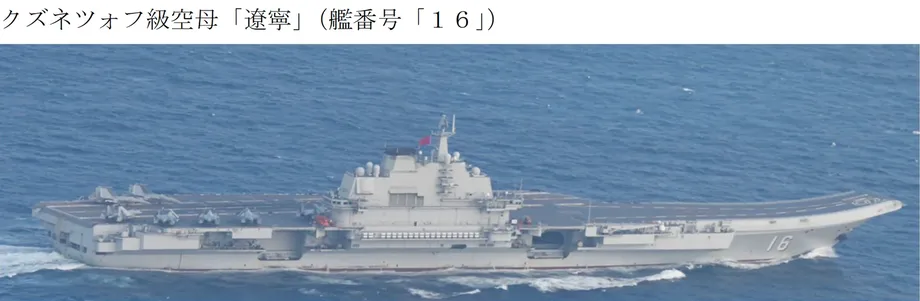
Japan confirmed Chinese fighter aircraft taking off from and landing on the aircraft carrier Liaoning about 250 kilometers south of Ishigaki Island on October 14, after the carrier and three accompanying warships sailed southeast between Okinawa's main island and Miyako Island into the Pacific.
Contents
- Carrier aircraft launch 250 kilometers south of Ishigaki
- How the group reached the Pacific
- Japan sends ships, patrol planes and fighters
- What China says the training is for
- Why the location inside Japan's economic zone matters
- What the flight counts tell readers
- Earlier encounters explain the attention to safety
- Other exercises add to a busy regional calendar
- Key Points
The Japanese Defense Ministry said the group had been observed at about 11 a.m. on October 13 roughly 390 kilometers southwest of the Danjo Islands in Nagasaki Prefecture. Its subsequent passage through Japan's southwestern island chain brought it into waters where Japanese ships, patrol aircraft and fighter jets monitored its movements.
The aircraft operations took place within Japan's exclusive economic zone, according to the ministry's account. Japan said it had detected no unusual behavior such as Chinese fighters or ships approaching Japanese aircraft. Officials were still analyzing the number of aircraft involved and the number of takeoffs and landings.
China's navy described the deployment as routine training under its annual plan, intended to test the group's ability to operate in realistic conditions. It said the exercise complied with international law and practices and was not directed against a particular country or target.
The deployment follows Liaoning's return to Qingdao on June 22 after an extended period of training in the South China Sea and western Pacific. Japan's latest observations put the carrier back near its southwestern islands roughly four months after its previous deployment, renewing the practical task of following a moving naval group while its aircraft operate nearby.
How the group reached the Pacific
Liaoning's route took it from the East China Sea through the waters between Okinawa and Miyako, then toward an operating area south of Ishigaki in the Philippine Sea. The passage connects the seas west of Japan's southwestern islands with the wider Pacific.
Japan described the accompanying vessels as three missile destroyers. More detailed identification named Anshan, hull number 103, Wuxi, hull number 104, and Huainen, hull number 123. Anshan and Wuxi are also classified as cruisers in some naval descriptions, accounting for the different labels used for the same four ships.
The key movements and announcements were:
- May 19: China announced Liaoning's previous western Pacific training deployment.
- May 26 to 28: Japan recorded about 170 aircraft takeoffs and landings during that deployment.
- June 22: The carrier group returned to Qingdao.
- October 13, about 11 a.m.: Japan observed Liaoning and three accompanying warships southwest of the Danjo Islands.
- October 14: The group passed southeast between Okinawa and Miyako, and Japan confirmed aircraft operations south of Ishigaki.
China did not announce the latest deployment's duration or its detailed operating area. Japan's observations establish where the group was seen, while the Chinese announcement describes the stated purpose of its mission.
Japan sends ships, patrol planes and fighters
The Maritime Self-Defense Force deployed the destroyer Yugiri and P-1 and P-3C patrol aircraft to conduct surveillance and gather information. The Air Self-Defense Force also scrambled fighter jets in response to Liaoning's aircraft operations.
A scramble is an urgent launch of aircraft to identify or monitor activity. In this case, Japanese fighters were responding as aircraft operated from the Chinese carrier. Ships and patrol planes provided other ways to follow the naval group's position and movements.
Japan's Defense Ministry said monitoring and information gathering would continue. Its initial account described repeated aircraft launches and recoveries, alongside the absence of unusual approaches toward Japanese aircraft or vessels during the latest observations.
The combination matters for understanding the immediate situation: active carrier training was taking place close enough to Japan's southwestern islands to prompt a substantial monitoring response, while the ministry's initial description focused on tracking rather than a confrontation.
What China says the training is for
The People's Liberation Army Navy said the western Pacific mission was organized under its annual training program to test and improve the group's ability to carry out missions under realistic conditions.
In its announcement, the Chinese navy described the exercise's intended audience in these terms:
not directed against any specific country or target.
China's previous deployment gives a more concrete picture of the activities such a mission can involve. The navy announced training in tactical flights far from shore, live firing, support and protection operations, and rescue work during the deployment that began in May.
A carrier group must coordinate the ship carrying the aircraft, the aircraft themselves and the accompanying warships. Repeated launches and landings provide practice in keeping those parts working together while the group moves through different sea areas. Japan's observation of flight operations is therefore an important part of following the deployment, alongside recording the ships' route.
Why the location inside Japan's economic zone matters
The waters about 250 kilometers south of Ishigaki fall within Japan's exclusive economic zone, or EEZ. An EEZ gives a coastal country rights over resources such as fish, oil and gas, generally extending as far as 200 nautical miles from its coast, subject to boundaries with neighboring countries.
Navigation and overflight freedoms continue within an EEZ. Territorial waters, where a coastal state exercises sovereignty subject to international law, generally extend only 12 nautical miles from the coast. These are different legal areas, even though both appear on maps showing a country's maritime interests.
Japan's announcement placed the aircraft operations in its EEZ and described the military response taken to monitor them. China's statement asserted that its training followed international law and practices.
Ishigaki's position also makes the location strategically relevant. The carrier was operating east of the southern end of Taiwan and near the broader approaches to the Luzon Strait, the passage between Taiwan and the Philippines. Japan's southwestern islands sit alongside routes used by Chinese naval forces moving between nearby seas and the Pacific.
What the flight counts tell readers
Japan's reference to about 170 takeoffs and landings over three days concerns the previous deployment. A June announcement described that activity, while a more detailed account dates the observations to May 26 through May 28, in Pacific waters east of Luzon.
Takeoff and landing totals measure observed aircraft movements. They are different from a count of individual aircraft: the same fighter or helicopter can contribute several movements by flying repeatedly. Readers should therefore understand the figure of 170 as a measure of activity over those days.
Japan's official records from 2025 show how much larger a cumulative total can become when observations cover several periods. The Joint Staff's June 2025 activity report recorded about 150 Liaoning aircraft takeoffs and landings from June 17 to 19, bringing its total across specified observation periods in May and June to about 700.
The daily Liaoning figures in that document were about 80 on June 17, 30 on June 18 and 40 on June 19. The carrier was observed southwest of Okinotorishima, south of Okidaitojima and southeast of Miyako during those three days.
The same document recorded about 120 aircraft movements from China's Shandong carrier over June 17 to 19, and about 350 across the stated June observation periods. Liaoning's cumulative figure of 700 was twice Shandong's 350, although the two totals covered different sets of dates. Together, they show the scale of aircraft activity Japanese forces were tracking during that earlier period.
Earlier encounters explain the attention to safety
Japanese and Chinese forces have previously disagreed sharply over surveillance around Liaoning. After the deployment that ended in June, China accused Japanese ships and aircraft of conducting dangerous surveillance at close range and harassing the group. Japan's Joint Staff rejected those accusations and said its monitoring prioritized safety.
A more serious dispute followed alleged radar encounters in December 2025. Japan said Chinese J-15 fighters operating from Liaoning directed fire control radar at Japanese F-15s twice over international waters southeast of Okinawa. Beijing rejected Japan's account and said foreign aircraft had approached the training area too closely.
The December radar dispute prompted a Japanese protest and demands for measures to prevent another incident. No damage or injuries were reported. Fire control radar is used to track a target accurately enough to help direct weapons, making allegations about its use especially sensitive during encounters between military aircraft.
The Joint Staff's December 2025 monitoring statement also provides a precise record of carrier activity during that earlier deployment. It counted about 50 aircraft takeoffs and landings on December 6 and another 50 on December 7.
That statement identified Liaoning and three destroyers, with hull numbers 101, 117 and 124, moving northeast between Okinawa and Minamidaitojima before heading east about 190 kilometers east of Kikaijima. Japan assigned the destroyer Teruzuki to surveillance and scrambled fighters in response to carrier aircraft operations.
The December record and the latest October observations concern different deployments, with different accompanying ships and routes. They show the repeated demands placed on Japanese monitoring forces as Chinese carriers move through waters around the island chain.
Other exercises add to a busy regional calendar
China's carrier deployment coincided with military activities scheduled across five coastal zones from October 12 to 17. The areas extended across the Bohai, Yellow, East China and South China seas, near Dalian, Qinhuangdao, Yancheng, Wenzhou and Zhanjiang.
The schedule included live firing near Dalian on October 12, exercises continuing through October 16 near Zhanjiang, and live firing near Yancheng on October 16 and 17. Chinese authorities did not state whether those activities or Liaoning's deployment were connected to Taiwan President Lai Ching-te's National Day speech.
Lai called for stronger defense capabilities while accusing China of seeking to change the situation across the Taiwan Strait through military pressure. Beijing responded by describing its military exercises around Taiwan as a means of deterring Taiwan independence advocates and foreign intervention.
The United States and Japan were also preparing for the Keen Sword 27 exercise, due to begin five days after the carrier deployment announcement. Planned activities included joint training against ships in waters south of Shikoku and east of Kyushu, and in another area stretching from southwest of Kyushu toward northeast of Okinawa.
The regional picture is therefore one of several forces operating or preparing to train across nearby areas. For Japan, the immediate task remains specific: follow Liaoning's ships and aircraft, maintain awareness of their movements and manage encounters safely.
Key Points
- Liaoning and three accompanying warships passed between Okinawa and Miyako on October 14.
- Japan confirmed carrier aircraft operations about 250 kilometers south of Ishigaki, within its exclusive economic zone.
- Japan deployed a destroyer and patrol aircraft for surveillance and scrambled fighter jets.
- The Defense Ministry reported no unusual approaches toward Japanese aircraft or vessels during the latest observations.
- China called the deployment routine annual training and said it was not directed at a particular country or target.
- The latest aircraft totals were still being analyzed, and China had not announced when the deployment would end.