Sakhalin arrest leads to custody in Moscow
Russia has detained Yuki Imai, a 34 year old Japanese correspondent for Hokkaido Shimbun, on allegations that he collected military information for Japanese intelligence. Moscow's Lefortovo District Court ordered him held on October 13, 2026, in an espionage case that could carry a prison sentence of up to 20 years if he is convicted.
Contents
- Sakhalin arrest leads to custody in Moscow
- What Russia alleges he collected
- What the court order means
- Video shows the operation, not proof of the charge
- Who is Yuki Imai?
- Tokyo checks the facts as Moscow makes a broader accusation
- The islands connect the allegation to a territorial dispute
- How the events unfolded
- Earlier cases show different possible outcomes
- Key Points
The Federal Security Service (FSB) said officers detained the journalist in Yuzhno-Sakhalinsk, the capital of Russia's Sakhalin region, as he was preparing to leave the country. He was then flown to Moscow. Reports describe the court's detention order as two months or nearly two months, with one account giving December 12 as the date through which he would remain in custody.
The agency alleges that Imai gathered information about residents of the Kuril Islands who were mobilized or volunteered to fight in Russia's invasion of Ukraine. It also alleges that he acted on instructions from a Japanese intelligence service. Those accusations have not been established by a conviction, and no response from Imai or his lawyer has been made public in the reports.
Russia's Foreign Ministry identified the reporter by name after the FSB initially described him only as a Japanese national working for Hokkaido Shimbun. The newspaper, based in Sapporo, said it was checking the details. Japan's embassy in Moscow also said it was working to confirm the facts.
What Russia alleges he collected
The FSB's account centers on information about Russia's defense capabilities, specifically the number of mobilized soldiers and volunteer fighters from the Kuril Islands who took part in the war in Ukraine. Russian authorities refer to that war as a special military operation.
Some accounts describe the accusation as collecting and storing information. Another says the FSB accused Imai of collecting it with the intention of passing it on. The reports do not establish that a transfer took place, identify an alleged recipient, or name the Japanese intelligence service said to have directed him.
That distinction matters because the alleged subject of the information is not, by itself, evidence of espionage. The number of people recruited for a war can also be a subject of news reporting. The central unresolved issue is what evidence Russian investigators have for their claim that Imai was acting for intelligence officials rather than carrying out journalism.
No detailed evidence supporting that claim has been publicly described. The accounts do not identify particular documents, explain how the information was obtained, or establish whether the figures were classified. The FSB's Investigative Directorate has opened a criminal case, but the investigation's findings and the journalist's defense are not yet public.
What the court order means
Reports citing the Moscow court's case record identify the charge as espionage under Article 276 of Russia's Criminal Code. The reported statutory prison term is 10 to 20 years. The maximum sentence is a possible penalty following conviction, not a sentence already imposed on Imai.
The October 13 ruling authorized custody while investigators pursue the case. Although footage shows the journalist inside a cage facing a judge, the proceeding described in the reports was a detention hearing, not a completed trial on whether he committed espionage.
The duration is described slightly differently across reports: two months in several accounts and nearly two months in others. A reported December 12 endpoint gives the most specific date, but the order itself has not been reproduced here through an official publication. No date for a trial or a further hearing is identified.
The chronology of the arrest also has a small gap. Russia's Foreign Ministry said Imai was detained on October 13, the same date as the reported court order. Other accounts announced the detention that day without specifying when the arrest or hearing took place. The publicly described sequence is clearer than the exact timing: detention in Sakhalin, transfer by air, then custody in Moscow.
Video shows the operation, not proof of the charge
The FSB released footage showing masked officers detaining a man in what appears to be a hotel room. Accounts of the video describe him being pushed to the floor, handcuffed and subjected to a search of his belongings. His face was blurred in footage described by one report.
The images also reportedly show officers requiring him to unlock electronic devices. Later scenes show him boarding a plane with two FSB personnel and appearing in the Moscow courtroom. These images document parts of the authorities' operation, but they do not establish the truth of the espionage allegation.
Reports also describe a search of Hokkaido Shimbun's Yuzhno-Sakhalinsk bureau. Some initially presented that search as apparent, while another said the FSB released footage of officers searching the office. No inventory of seized material, or explanation of how any item supports the criminal case, has been publicly described.
The detention therefore involves both the removal of an individual correspondent and an investigation touching the newspaper's local operations. What happened to his reporting materials, devices and access to the bureau remains unspecified.
Who is Yuki Imai?
Imai is reported to have visited Russia since 2014 and to have studied at Saint Petersburg State University. His latest stay began in summer 2026. Russia's Foreign Ministry spokeswoman Maria Zakharova said he was accredited with the ministry as a correspondent.
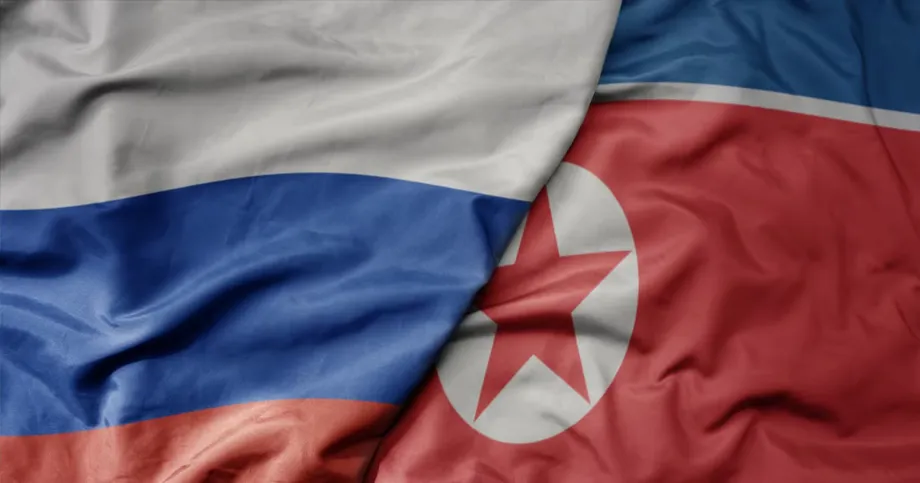
His recent reporting covered several subjects beyond military affairs: elections to the State Duma, Russia's lower house of parliament; a monument in Khabarovsk marking the Soviet victory over Japan; North Korean citizens in Sakhalin; and the growing relationship between Russia and North Korea. His latest reported article, published on October 5, concerned North Korean nationals in the Sakhalin region.
During his latest trip, he also visited Vladivostok and Nakhodka in the Primorsky region. Accounts describe reporting on cultural centers, everyday life in the Russian Far East, historical relations between Russia and Japan, and Russian speaking residents of Japan.
Hokkaido Shimbun maintains bases in Moscow and Yuzhno-Sakhalinsk. It is reported to be the only Japanese news organization currently keeping a Japanese journalist permanently stationed in Sakhalin. That makes Imai's detention consequential for Japanese reporting from a region immediately north of Hokkaido, although the newspaper has not announced what will happen to its bureau.
Tokyo checks the facts as Moscow makes a broader accusation
Japan's embassy in Moscow said it was urgently checking the facts surrounding the detention. Hokkaido Shimbun similarly said it was confirming the details. Neither response amounted to an acceptance of Russia's accusation, and the reports contain no substantive Japanese government answer to the alleged intelligence connection.
Zakharova, the Russian Foreign Ministry spokeswoman, went beyond identifying Imai. She accused Tokyo of using correspondents to obtain information harmful to Russian security and framed the case as part of a broader pattern.
Attempts by Tokyo to use its correspondents in Russia... to gather information aimed at undermining the security of our state is regrettable,
Zakharova also said this was "not an isolated case." Russia's Foreign Ministry called on Japan to abandon what it described as hostile measures against Russia. The reports do not provide evidence supporting that wider allegation against Japanese correspondents.
No details have been disclosed about Japanese consular access to Imai, his legal representation or an appeal against detention. Those omissions leave basic questions about his immediate circumstances unanswered, even as Moscow has publicly presented its version of the case.
The islands connect the allegation to a territorial dispute
The Kuril chain stretches between Russia's Kamchatka Peninsula and Japan's northern island of Hokkaido. Japan claims four islands at its southern end, calling them the Northern Territories. Russia controls those islands, which Soviet forces occupied in 1945.
The geographical distinction matters: Japan's Northern Territories claim concerns those four islands, not the entire Kuril chain. Sakhalin is a separate island, although the Sakhalin administrative region includes the disputed islands. Imai was reportedly detained in Yuzhno-Sakhalinsk, not on one of the disputed islands.
The unresolved territorial dispute has prevented Russia and Japan from signing a formal peace treaty following World War II. Relations have also deteriorated over Japan's sanctions against Russia and its support for Ukraine. Moscow classifies Japan as an unfriendly country.
Reports place the arrest after President Vladimir Putin's August 2026 visit to Iturup, one of the disputed islands. Japan summoned Russia's ambassador to protest. Prime Minister Sanae Takaichi rejected the visit as contrary to Japan's position on the Northern Territories.
absolutely unacceptable
Moscow, in turn, summoned the Japanese ambassador over statements by Japanese officials and asserted Russian sovereignty over the southern Kurils. These exchanges explain the diplomatic setting of the arrest, but they do not demonstrate that the territorial dispute caused the prosecution.
How the events unfolded
The reported sequence places Imai's latest reporting trip, the island dispute and the criminal proceedings within a few months. His October 5 article preceded the October 13 detention announcement by eight days.
- Summer 2026: Imai reportedly began his latest visit to Russia.
- August 2026: Putin reportedly visited Iturup, prompting a Japanese protest and a Russian diplomatic response.
- October 5: Imai's latest reported article covered North Korean nationals in Sakhalin.
- October 13: The FSB announced the detention, and Moscow's Lefortovo District Court reportedly authorized custody.
- October 14: Japanese reports described the embassy as urgently checking the facts.
- December 12: One report identifies this as the endpoint of the current custody order.
The December date is a reported detention deadline, not a scheduled verdict or a guarantee of release. No further hearing, trial date or timetable for completing the investigation has been announced in the accounts.
Earlier cases show different possible outcomes
A Japanese journalist was detained in Russia on espionage allegations in 2019, accused of trying to obtain classified information about military capabilities in the Russian Far East. That journalist was expelled. Imai's case has instead proceeded to a criminal investigation and court authorized custody, making the immediate response more severe.
Another prominent case involved American journalist Evan Gershkovich, arrested in 2023, convicted of espionage and sentenced to 16 years in prison. He was released in August 2024 through a multinational prisoner exchange. That exchange also freed journalist Alsu Kurmasheva, American Paul Whelan and Russian dissidents, among others.
Those cases offer comparisons, not a prediction of Imai's outcome. No exchange proposal involving him has been announced. Reports also place news of his detention near an account of Japan extraditing a Russian suspect to Germany over an alleged ransomware attack on a logistics company. No evidence of a connection between that extradition and Imai's arrest has been established.
The immediate issue is narrower than those possible diplomatic scenarios: Russia must investigate its accusation, while Japan and the newspaper are still seeking confirmation of basic facts. The evidence for an intelligence assignment, the status of any alleged information transfer and Imai's own account remain unknown.
Key Points
- Yuki Imai, a 34 year old Hokkaido Shimbun correspondent, was detained in Sakhalin and transferred to Moscow.
- The FSB alleges he collected information about Kuril Islands recruits for Japanese intelligence. The allegation has not been established by a conviction.
- A Moscow court reportedly ordered custody on October 13 under Article 276, which carries a reported prison term of 10 to 20 years.
- Reports describe custody lasting about two months, with one giving December 12 as the endpoint.
- Japan's embassy and Hokkaido Shimbun said they were checking the facts.
- No trial date, public defense account or detailed evidence supporting the alleged intelligence connection has been disclosed.