Seven new listings target missiles, labour and fuel
The Council of the European Union imposed sanctions on three individuals and four entities on October 12, 2026, targeting a North Korean missile technician in Russia, a Russian property developer employing North Korean workers and a shipping company accused of transporting Russian fuel to North Korea.
Contents
- Seven new listings target missiles, labour and fuel
- Why the Council listed Ri Song Jin
- Samolet faces sanctions over construction workers
- Black Horse and the industrial investment project
- The tanker route from Russia to North Korea
- What the EU restrictions actually do
- A timeline of restrictions and earlier designations
- Monitoring continues after Russia's UN veto
- What the decision leaves unanswered
- Key Points
The decision brings the EU's autonomous sanctions list concerning the Democratic People's Republic of Korea (DPRK) to 80 individuals and 25 entities. The additions connect military assistance with construction labour, industrial investment and petroleum shipments, showing how the Council is targeting several channels of cooperation between Moscow and Pyongyang rather than weapons deliveries alone.
Among those listed is Ri Song Jin, a researcher at North Korea's National Aerospace Technology Administration and an official at its Missile General Bureau. The Council says he was deployed to Russia as a technician supporting Russian forces in their use of North Korean missiles.
The other individuals are Anna Nikolaevna Akinshina, chief executive of Russian property developer Samolet Group, and Vladimir Aleksandrovich Sokolov, founder and president of Russian holding company Black Horse. The four entities are Samolet Group, Black Horse, its subsidiary Golden Autumn Agroholding and Paekyangsan Shipping Co Ltd.
The Council says the activities violate United Nations Security Council restrictions that Russia itself approved as a permanent member. Its decision addresses support for North Korea's nuclear weapons, ballistic missiles and other weapons of mass destruction programmes, alongside violations and evasion of UN sanctions.
The legal acts have been published in the Official Journal of the EU. Those listed face asset freezes and restrictions on receiving funds or economic resources. The three individuals also face travel bans to the European Union.
Why the Council listed Ri Song Jin
The Council's case against Ri centres on his technical role in Russia's use of North Korean missiles. This identifies a form of military assistance that extends beyond manufacturing or supplying weapons: personnel can also help the receiving military operate them.
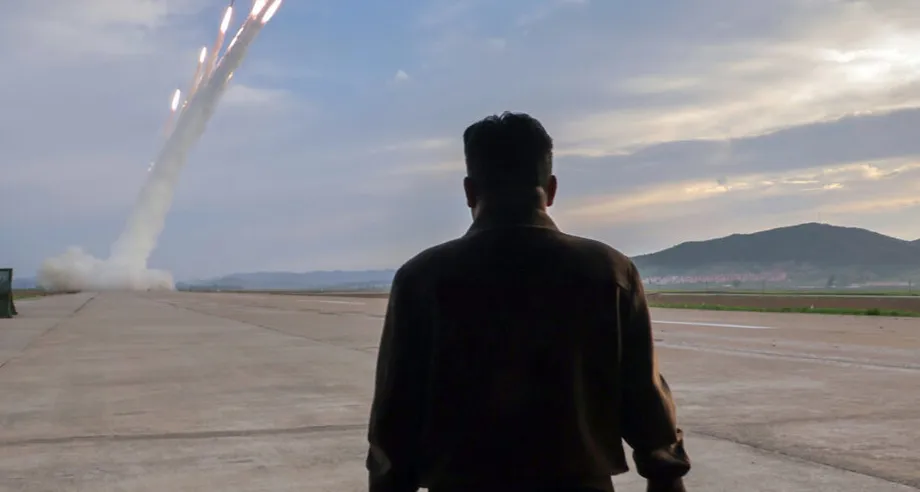
The designation reasons published in the EU's Official Journal say Ri was observed wearing a Russian military uniform alongside Russian soldiers in a Russian area near the Ukrainian front. They also say he accompanied North Korean leader Kim Jong Un during a December 2023 inspection of a facility identified as a factory producing short range ballistic missiles.
Those details connect Ri to both North Korea's missile production and the subsequent use of its weapons by Russia. His employer, the National Aerospace Technology Administration, is itself subject to UN sanctions connected with satellite and launch rocket development.
Some reports describe Ri as training Russian forces. The Council's statement uses the broader description of a technician supporting Russia's use of North Korean missiles. That wording does not establish the precise tasks he performed, the number of personnel he assisted or the missile systems involved.
Samolet faces sanctions over construction workers
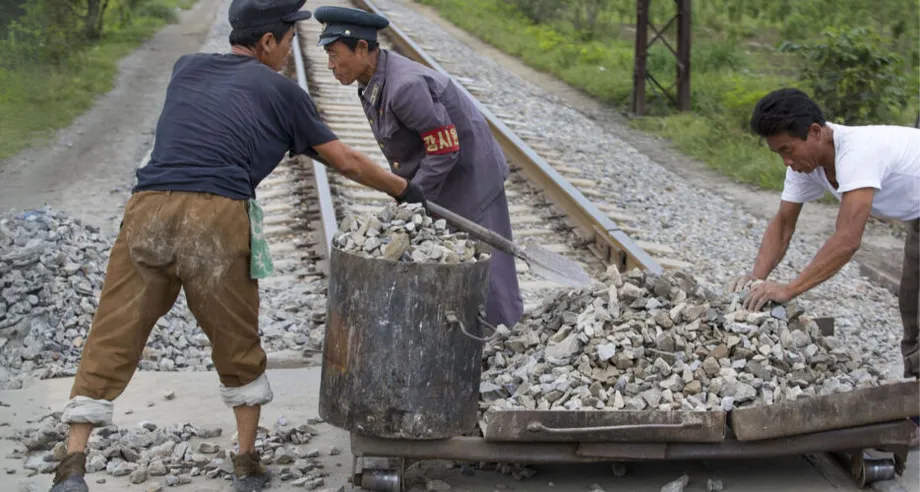
The Council listed Samolet Group and Akinshina because the company employed North Korean workers on construction projects in Vladivostok, Russia's Pacific port city. The designation makes a major civilian business part of the EU's response to cooperation between Russia and North Korea.
The relevant legal provision is UN Security Council Resolution 2397, adopted in 2017. It requires the repatriation of North Korean workers abroad, subject to applicable national and international law. The deadline for that repatriation was December 2019.
The distinction matters: the Council is not treating construction work as a weapons activity in itself. It is applying restrictions on North Korean overseas labour, one of the economic activities addressed by the UN sanctions regime.
The announcement does not specify how many North Korean workers Samolet employed, how long they worked on its projects or the amounts paid. It also does not provide a detailed account of recruitment or payment arrangements. The stated basis for the listings is the company's employment of those workers and Akinshina's responsibility for the company.
Black Horse and the industrial investment project
Sokolov, Black Horse and Golden Autumn Agroholding were listed over commercial and industrial cooperation involving North Korea. The Council identifies a joint industrial investment project in Primorsky Krai, the Russian region that includes Vladivostok and borders North Korea.
The EU's designation account says Sokolov publicly announced the establishment of that project in April 2026. It also says Black Horse exported products to North Korea and identified the country as a priority market.
The Council links these activities to UN Security Council Resolution 2375, adopted in 2017, which prohibits the establishment and operation of joint ventures or cooperative entities with North Korean entities or individuals. A joint venture is a business undertaking shared by participating partners, rather than a simple sale between separate companies.
Black Horse is also reported to be building a plastics factory in Vladivostok with a North Korean company. That project adds detail to the reported industrial relationship, although the Council's announcement does not set out its ownership structure, financing or construction schedule.
Golden Autumn Agroholding is identified as a Black Horse subsidiary. The announcement does not provide a separate operational account of its role. Its inclusion brings another company within the holding group's corporate network under EU restrictions.
The tanker route from Russia to North Korea
Paekyangsan Shipping Co Ltd was sanctioned because it operates the North Korean flagged vessel Paek Yang San 1. The Council says the vessel was involved in shipments of refined petroleum products from Russia to North Korea in violation of Resolution 2397.
That resolution restricts crude oil and refined petroleum supplies to North Korea. Refined products, which include fuels processed from crude oil, are subject to an annual limit of 500,000 barrels. The Council does not give the volume carried by Paek Yang San 1, so its contribution to shipments against that limit cannot be calculated from the announcement.
A March 2024 satellite imagery assessment identified at least five North Korean tankers, including Paek Yang San 1, loading petroleum products at an oil company berth in Russia's Vostochny port. The vessels were reported to have their location signals switched off.
The assessment described the movements as the first confirmed direct maritime transport of petroleum from Russia to North Korea since the 2017 fuel restrictions. That earlier observation gives the shipping designation a documented history, rather than leaving it solely as a general allegation about fuel transfers.
The Council places the shipments within a wider exchange of weapons for oil. Its announcement does not, however, identify a particular weapons shipment as payment for a particular tanker cargo. The broader description should not be read as proof of an individual barter transaction.
What the EU restrictions actually do
The measures apply an asset freeze to the listed individuals and entities. They also prohibit making funds or economic resources available to them, directly or indirectly. The prohibition extends beyond handing over cash: it covers resources with economic value that could benefit a listed person or organisation.
An asset freeze prevents covered assets from being moved or used. It is not the same as confiscating them. The announcement gives no estimate of the assets held by these individuals or companies within EU jurisdiction, so the immediate financial effect cannot yet be measured.
The Council's statement specifies that travel bans apply to the listed individuals. Some reports describe EU entry and movement restrictions more broadly as applying to everyone sanctioned, but the official distinction is between financial restrictions on both people and entities and travel restrictions on people.
The EU's autonomous list supplements UN sanctions already incorporated into EU law. Autonomous sanctions are additional measures adopted by the EU through its own decision making, rather than new designations agreed by the Security Council.
Before this decision, the autonomous list contained 77 individuals and 21 entities. Adding three people and four entities increased those totals to 80 and 25 respectively. The entity count rose by about 19 percent, compared with about 4 percent for individuals, reflecting the prominence of companies in this round.
A timeline of restrictions and earlier designations
The October 2026 decision follows earlier UN restrictions, observations of fuel movements and sanctions imposed by other governments. Several of the newly listed targets were already subject to measures outside the EU.
- 2017: Security Council Resolutions 2375 and 2397 restricted joint ventures, overseas North Korean labour and petroleum supplies.
- December 2019: The deadline passed for repatriating North Korean workers abroad under Resolution 2397, subject to applicable law.
- December 2023: Ri Song Jin accompanied Kim Jong Un on an inspection of a facility identified as a short range ballistic missile factory, according to the EU designation reasons.
- March 2024: Satellite imagery analysis identified at least five North Korean tankers loading petroleum products at Russia's Vostochny port.
- May 2024: The United Kingdom sanctioned Paekyangsan Shipping.
- December 2024: South Korea sanctioned Ri Song Jin.
- February 2025: The United Kingdom sanctioned Ri Song Jin.
- April 2026: Sokolov publicly announced the joint industrial investment project in Primorsky Krai, according to the EU designation account.
- June 18, 2026: The European Council condemned North Korean military deployment in Russia's war against Ukraine.
- October 12, 2026: The Council of the EU added the three individuals and four entities to its autonomous North Korea sanctions list.
A reported check of the US Treasury's Office of Foreign Assets Control sanctions list on October 12 found none of the seven newly listed EU targets there. That is a dated finding about those names, not a conclusion that US restrictions on North Korea or related transactions are absent.
Monitoring continues after Russia's UN veto
The new designations come after a major change in international sanctions monitoring. The UN Panel of Experts that monitored North Korea sanctions ended its work in 2024 after Russia vetoed the renewal of its mandate.
The panel's closure did not repeal the Security Council resolutions. It ended that particular UN mechanism for investigating and reporting on compliance. An 11 country Multilateral Sanctions Monitoring Team has since continued monitoring, alongside national enforcement and sanctions decisions.
This separates two issues often treated as one: whether a prohibition remains in force and whether there is an agreed international body investigating breaches. The EU maintains that the restrictions on workers, joint ventures and fuel remain binding despite the loss of the panel.
The Council also points to the tension between Russia's approval of the original restrictions and its expanding cooperation with North Korea. In conclusions dated June 18, 2026, the European Council condemned the deployment of North Korean forces in Russia's war against Ukraine and continued military support for Moscow from North Korea, Iran and Belarus.
The European Council, which brings together EU national leaders, is distinct from the Council of the EU that adopted the sanctions. The June conclusions supplied the political position; the October listings apply restrictions to named people and entities.
What the decision leaves unanswered
The Council's announcement identifies targets and legal grounds, but it does not quantify the full relationship between Russia and North Korea. It gives no total for workers involved, petroleum transported, investment committed or missiles supported by the listed technician.
The Council, the EU body responsible for adopting these restrictive measures, set out its demand to North Korea in the announcement. It called for abandonment of the prohibited programmes:
in a complete, verifiable and irreversible manner.
The demand covers nuclear weapons, other weapons of mass destruction and ballistic missile programmes. The Council also urged meaningful discussions with relevant parties aimed at sustainable peace and security. No new hearing, negotiation date or review deadline was announced.
A separate report described Estonia requesting the removal of a Russian supplier and a related individual from a sanctions package because of strategically important materials supplied to NPM Silmet. Kerstin Lepik, spokesperson for Estonia's permanent representation in Brussels, confirmed the request. The account does not establish a connection between those unnamed targets and the seven North Korea related listings, so it does not demonstrate an exemption from this decision.
The immediate outcome is therefore specific: seven additional targets are covered by EU restrictions. Whether the measures interrupt the cited labour arrangements, industrial projects, technical assistance or fuel routes will require evidence beyond the announcement itself.
Key Points
- The EU added three individuals and four entities to its North Korea sanctions list on October 12, 2026.
- Ri Song Jin was listed for supporting Russia's use of North Korean missiles.
- Samolet Group and CEO Anna Akinshina were targeted over North Korean workers employed in Vladivostok construction projects.
- Black Horse, founder Vladimir Sokolov and Golden Autumn Agroholding were listed over commercial and industrial cooperation with North Korea.
- Paekyangsan Shipping was targeted over Russian refined petroleum shipments carried by Paek Yang San 1.
- All seven targets face financial restrictions; the three individuals also face EU travel bans.
- The EU's autonomous North Korea list now contains 80 individuals and 25 entities.
- The announcement gives no totals for affected assets, workers, investment or fuel volumes.