Refusals put direct testimony at risk
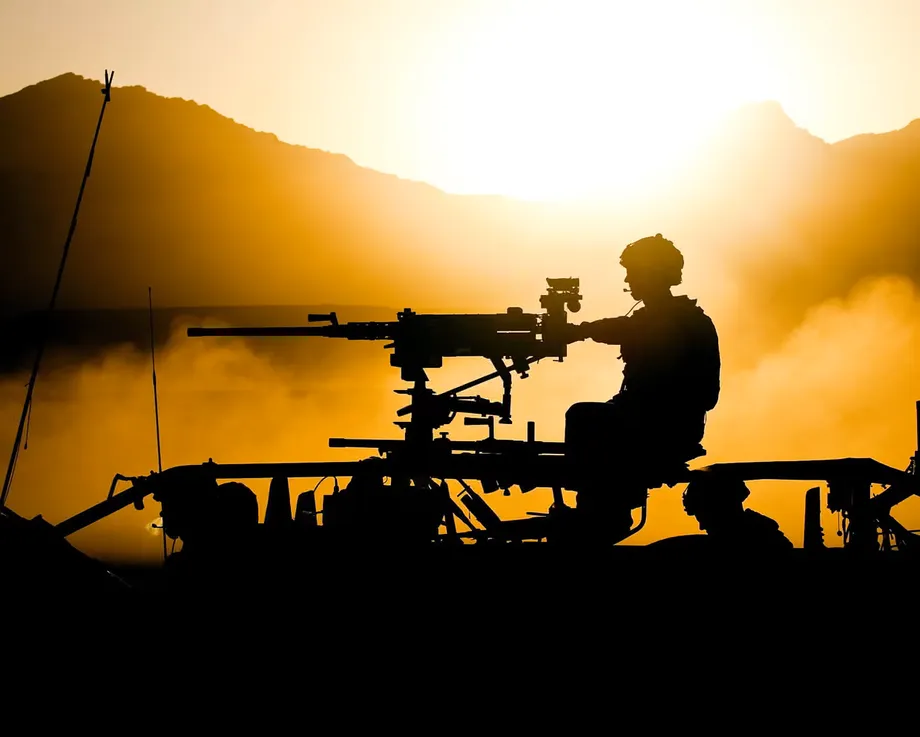
A high proportion of SAS personnel approached by the public inquiry into alleged unlawful killings in Afghanistan have refused to answer its questions, Lord Justice Haddon-Cave has said. The inquiry is examining allegations involving more than 50 deaths, possible concealment of wrongdoing and failures by the Royal Military Police to investigate properly.
Contents
- Refusals put direct testimony at risk
- What the inquiry must establish
- The 54 deaths and the families seeking answers
- Repeated accounts of detainees reaching for weapons
- Photographs may test the operational records
- Allegations extend through the chain of command
- Earlier investigations ended without charges
- A soldier challenges restrictions on evidence
- Undisclosed documents and the next hearing
- Key Points
The judge said the inquiry had identified numerous members of the Special Air Service whose direct evidence it wanted about deliberate detention operations. These were raids intended to detain suspected Taliban commanders and disrupt networks involved in making bombs. Formal written requests were sent to the personnel concerned.
Haddon-Cave, who chairs the Independent Inquiry relating to Afghanistan, described their response:
A high proportion have indicated their intention to rely on their privilege against self-incrimination and have refused to answer any questions asked by the inquiry.
The privilege protects people against being compelled to provide answers that could incriminate them. Invoking it is not an admission of guilt. Nevertheless, the refusals leave the inquiry seeking answers about disputed operations without direct testimony from many of the soldiers it has approached.
No precise number of recipients or refusals was given in the account of the hearing. The judge's description therefore establishes a substantial problem with obtaining testimony, rather than a measurable response rate.
The inquiry has also obtained about 10,000 photographs from the operations, heard evidence about concerns raised within special forces and faced a legal challenge over restricted evidence. Separately, an official notice announces a hearing on 25 September 2026 about a significant increase in documents that have not been disclosed. Together, these developments concern both what happened during the raids and whether investigators have received the evidence needed to establish it.
What the inquiry must establish
The inquiry covers operations between 2010 and 2013. Its tasks include assessing whether credible evidence supports allegations of numerous extrajudicial killings by British armed forces, whether the circumstances were concealed and whether Royal Military Police investigations were proper and effective.
Extrajudicial killings are unlawful killings carried out without legal justification or judicial process. Here, the central allegations concern detainees and unarmed people allegedly killed during military operations, rather than deaths already established by a court to have been unlawful.
Haddon-Cave said the period under examination "sufficiently captures the allegations currently being made." The inquiry will also consider lessons arising from its findings.
The written approaches to SAS personnel were Rule 9 requests. These are formal requests by a statutory public inquiry for witness statements or documents. They are evidence gathering steps, not criminal charges.
The distinction matters because the inquiry can examine conduct and institutional failures but cannot itself determine civil or criminal liability. Its conclusions may still carry serious consequences for individuals and institutions, a point raised in the separate court challenge over access to evidence.
The 54 deaths and the families seeking answers
Ministers announced the inquiry after allegations that one SAS unit killed 54 Afghans in suspicious circumstances in Helmand province during 2010 and 2011. A detailed investigation described those 54 deaths as possible unlawful killings during a single six month deployment, rather than the total number killed by the squadron.
The squadron's reported death toll during that deployment was in the triple figures. The 54 figure therefore identifies a group of suspicious deaths within a larger operational toll, not a finding that every death during the tour was unlawful.
One case was brought by law firm Leigh Day for an Afghan identified as Saifullah. He alleged that his father, two brothers and a cousin were killed during an SAS raid on a compound in southern Afghanistan in February 2011.
The inquiry is seeking evidence from Afghan families whose relatives died during the operations. Their testimony could provide accounts of detention, shootings and events inside compounds to compare with military records. Those comparisons remain part of the investigation, not settled findings.
Repeated accounts of detainees reaching for weapons
Operational reports from the deployment describe repeated incidents in which detained Afghan men were taken back inside buildings and then allegedly reached for rifles or grenades. The recurrence of similar explanations prompted concern within special forces headquarters.
Accounts of raids on 29 November 2010 and 15 January 2011 described detainees attempting to use grenades after being taken indoors. Reports of fatal shootings on 7, 9 and 13 February gave similar explanations involving a detainee attempting to engage the patrol with a rifle.
On 16 February, two detainees were reportedly killed after one retrieved a grenade from behind curtains and another picked up a rifle from behind a table. On 1 April, two more detainees were killed after allegedly raising a rifle and attempting to throw a grenade.
People who served with the squadron alleged that unarmed men were killed and that weapons were planted to justify shootings. These allegations have not been established as findings of the inquiry. Their significance lies in the potential conflict between operational explanations and accounts from personnel present during the deployment.
No SAS injuries were reported across the raids examined in the detailed investigation. That does not by itself prove unlawful conduct, but it is another fact to assess alongside the recurring descriptions of threats from detained men.
Photographs may test the operational records
Haddon-Cave said the inquiry had obtained approximately 10,000 photographs taken during deliberate detention operations. He described them as images with high resolution that do not appear to have formed part of the Royal Military Police inquiries.
Reports describe the photographs as having been captured by the SAS and not examined by military police. The judge's formulation is more cautious about their absence from earlier investigations. The inquiry has not announced what the images establish about any particular death.
Photographs can potentially help compare the physical scene with operational accounts and witness testimony. Their evidential value depends on when and where they were taken, what they show and how reliably they can be connected to an incident. The number alone does not establish wrongdoing.
Allegations extend through the chain of command
Richard Hermer KC, representing seven bereaved families in opening submissions, argued that military documents showed more than suspicious shootings. He alleged destruction of evidence, coaching of witnesses and failures by those responsible for discipline to investigate implausible accounts.
Hermer named former directors of special forces Lieutenant General Jonathan "Jacko" Page and General Sir Mark Carleton-Smith. He alleged that they knew of serious suspected wrongdoing but failed to ensure that concerns reached the Royal Military Police or to prevent a recurrence. These were submissions to the inquiry, not findings against either officer.
A separate investigation alleged that concerns were placed in a classified file with restricted access rather than passed to military police. It also alleged that Carleton-Smith was briefed about suspicious killings and did not disclose earlier concerns when the military police began an investigation in 2013. He declined to comment on that account.
The documents discussed at the inquiry suggest anxiety about scrutiny within headquarters. Hermer cited a May 2011 email from the senior lawyer at special forces headquarters warning that a complaint reaching a higher level could lead to pressure for a military police investigation.
He also described a 2016 email about suspected murders that reached Simon Case, then a senior official in the prime minister's office, as well as the cabinet secretary and attorney general. That year, Ministry of Defence permanent secretary Stephen Lovegrove expressed concern to the head of the military police about the culture within special forces.
The Ministry of Defence accepted that it had seriously misled a bereaved family and the High Court, while denying that it had done so intentionally. It has also denied obstructing investigations and said earlier inquiries found insufficient evidence to prosecute.
Earlier investigations ended without charges
The inquiry is examining Operation Northmoor and Operation Cestro, two Royal Military Police investigations with different scopes. Northmoor investigated more than 600 alleged offences, was wound down in 2017 and closed in 2019. Its investigators worked for five years, but no charges resulted.
Cestro concerned the deaths of four young people in Loy Bagh, Helmand, on 18 October 2012. The youngest were 14 and 12. Three soldiers were referred to the Service Prosecuting Authority, including the shooter on four counts of murder, but no prosecutions followed.
A referral for prosecution is distinct from a decision to charge. Likewise, the absence of charges does not resolve the inquiry's separate task of assessing whether the investigations were effective and whether relevant evidence reached investigators.
Paul Greaney KC, representing the Royal Military Police, said investigators faced practical difficulties during active conflict and depended on commanders referring possible war crimes and serious offences. He stressed that senior officers were legally obliged to make those referrals.
Brian Altman KC, representing the Ministry of Defence, set out the department's position on lawful conduct and investigation:
Operations must be conducted within the clear boundaries of the law and credible allegations against our forces must always be investigated thoroughly.
A soldier challenges restrictions on evidence
A senior soldier identified as Witness IIA126 has brought a legal challenge against the inquiry's decision to withhold certain restricted evidence from him and his lawyers. The dispute concerns material referred to in court as the green material.
Kate Grange KC, representing the soldier, said that evidence included an allegation that someone was shot in the head while possibly asleep during a deliberate detention operation. She argued that withholding it failed to meet basic standards of procedural fairness.
Grange explained why the soldier considered access important despite the limits on a public inquiry's powers:
Despite the fact that statutory public inquiries cannot make findings of civil or criminal liability, they nevertheless can have extremely significant consequences for individuals.
Jonathan Glasson KC, representing the inquiry, defended secrecy on public interest grounds and said an adverse finding against an identifiable individual, including the claimant, was far from inevitable. Edward Craven KC, representing families of 16 people killed, supported the restrictions as fair and said certain witnesses had serious, objectively justified fears.
The Ministry of Defence is funding IIA126's legal costs but adopted a neutral position on the merits of the challenge. The court hearing was expected to finish on a Tuesday, with a written judgment later. No judgment or calendar date for its delivery is established in the account of that hearing.
During a related High Court hearing, the ministry identified material suggesting that special forces personnel deployed on some operations under examination may have committed serious offences under the Armed Forces Act 2006. That assessment signals possible criminal conduct, not a determination of guilt.
Undisclosed documents and the next hearing
The Independent Inquiry relating to Afghanistan's official hearing notice announces an open hearing for Friday 25 September 2026. It says the inquiry will seek assurances from the Ministry of Defence legal team about a significant and unexpected increase in documentation relating to its Terms of Reference that has not been disclosed.
The Terms of Reference define what the inquiry is authorised to investigate. The notice therefore concerns documents relevant to its remit, rather than an unspecified collection of unrelated records. It does not give the number of documents, explain why they remain undisclosed or state what they contain.
The sequence of key events separates the operations under investigation from later efforts to examine them:
- November 2010 to April 2011: the deployment associated with allegations of 54 suspicious deaths.
- February 2011: the raid in which Saifullah alleges four relatives were killed.
- 18 October 2012: four young people were killed in Loy Bagh, later investigated through Operation Cestro.
- 2013: military police began a murder investigation described in allegations about withheld concerns.
- 2017 and 2019: Operation Northmoor was wound down and then closed.
- 25 September 2026: the inquiry's official notice schedules an open hearing about undisclosed documentation.
Accounts of Haddon-Cave's statement about witness refusals describe public hearings continuing through October and November, with an expected finish at the end of November. They do not establish the year for that schedule, so it should not be treated as the timetable for the separately dated September 2026 hearing.
The unresolved issues are substantial: what the photographs show, whether the military investigations received all relevant evidence, how restricted testimony can be handled fairly and what explains the additional undisclosed documents. The inquiry has yet to determine whether the alleged killings and concealment occurred.
Key Points
- A high proportion of SAS personnel approached by the inquiry have invoked privilege against self-incrimination and refused questions.
- The inquiry covers alleged unlawful killings, concealment and investigation failures between 2010 and 2013.
- About 10,000 operational photographs do not appear to have formed part of earlier military police inquiries.
- Operation Northmoor and Operation Cestro ended without prosecutions.
- A senior soldier is challenging restrictions on access to evidence; no resulting judgment is established here.
- An official notice schedules a hearing on 25 September 2026 about additional undisclosed documents.
- The allegations remain under investigation and are not findings of criminal guilt.