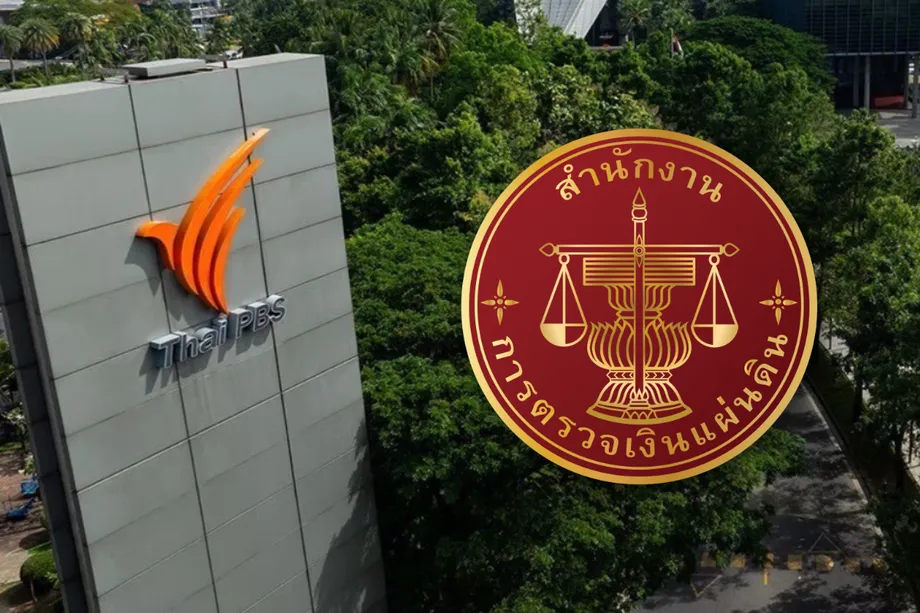
Two disputes emerge from a 5.09 billion baht spending review
A reported State Audit Office letter dated October 7, 2026, asks the Thai PBS policy board to take action concerning director Vanchai Tantivitayapitak and pursue repayment of 85,222,935.65 baht over programme contracts and payments to presenters and guests. Thai PBS says it had not received official notification of the findings and has challenged the disclosure of information identifying people involved.
Contents
- Two disputes emerge from a 5.09 billion baht spending review
- What the reported audit letter seeks
- Why 85.22 million and 230.20 million are different figures
- Which procurement and payment rules are in question?
- Production companies come under scrutiny
- Thai PBS seeks an investigation into disclosure
- The timeline and disputed deadlines
- Financial recovery and a proposed change in funding
- Reform plans face a practical test
- Key Points
The disputed repayment figure comprises 15.84 million baht for programme production contracts during fiscal 2023 to 2025 and 69,382,935.65 baht for presenter, host, guest and participant payments in fiscal 2025. The wider review covered 5,094.56 million baht in spending during fiscal 2022 to 2025.
The case now involves two separate questions: whether the broadcaster followed procurement and payment rules, and whether audit information was released improperly before Thai PBS could formally respond. Neither a reported recommendation to recover money nor the identification of employees establishes that a court has found anyone guilty.
A subsequent account says the State Audit Office has established a committee to investigate the alleged disclosure, with work expected to begin after the IMF and World Bank Annual Meetings in Bangkok on October 12 to 18, 2026. No result of that investigation has been announced in the reports describing the development.
What the reported audit letter seeks
The October 7 letter, described as being from the auditor general to the chairman of the Thai PBS policy board, identifies alleged failures to comply with laws and internal rules. It concerns the use of a specific procurement method for programme production and compensation paid without rules setting the criteria, procedures, conditions and rates.
The letter reportedly asks the board to act within its authority concerning Vanchai and arrange recovery of the stated damages. Separate recommendations concern disciplinary action involving 10 employees or other staff members. The director and those 10 staff members make 11 people, a distinction that matters because some accounts describe only 10 people as facing action.
Reports divide the staff cases into three people connected with programme procurement and seven connected with compensation approvals. They do not establish how any repayment would be allocated among individuals, whether liability would be shared, or whether the board has accepted the proposed amount.
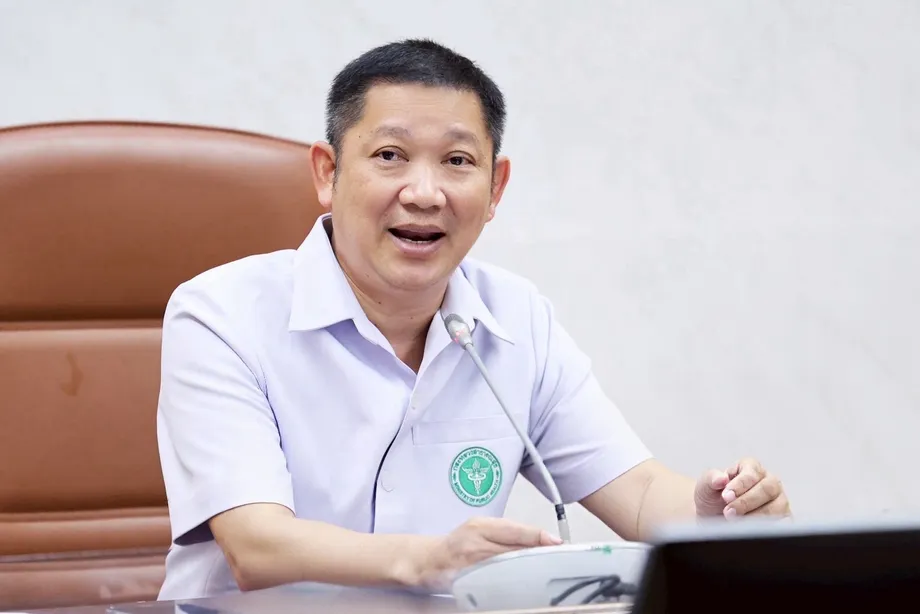
Thai PBS deputy director for administration Piset Chiyasak says the broadcaster could not verify the circulating claims because it had not received an official report. His position is that audit findings identify shortcomings and recommend corrective action, rather than automatically imposing punishment or resolving legal liability.
Why 85.22 million and 230.20 million are different figures
A broader account of the audit describes 230.20 million baht in spending associated with deficiencies. That amount combines the same 15.84 million baht in production contracting with 214.36 million baht in compensation payments during fiscal 2023 to 2025.
The reported recovery request uses a narrower compensation period: fiscal 2025 alone, amounting to approximately 69.38 million baht. The two totals therefore should not be treated as interchangeable estimates of the same claim. One describes a wider group of questioned expenditure, while the other is the specific amount reportedly sought as damages.
Using the reported figures, compensation represents about 81.4% of the 85.22 million baht recovery request. The requested recovery is approximately 1.67% of the 5,094.56 million baht reviewed, while the broader 230.20 million baht figure represents about 4.52%.
Those comparisons show the relative size of the questioned spending, not the amount of corruption proven. The account describing the larger figure says corrupt conduct had not been established in those matters. A failure to follow spending rules can require corrective action without proving that every payment was stolen or that every recipient acted unlawfully.
Which procurement and payment rules are in question?
The procurement allegations cite the Public Procurement and Supplies Administration Act 2017, including Section 56, paragraph one, subsection (2)(c). The reported concern is whether particular programme contracts qualified for the specific procurement method used.
In simple terms, that method allows an agency to approach a particular supplier under legally defined conditions rather than use an open competition. The central issue is whether the conditions applied and were properly documented. Selecting a particular producer is not, by itself, proof of wrongdoing.
The compensation issue is different. It concerns payments to presenters, hosts, guests and programme participants allegedly made without sufficiently established internal rules. Such rules determine who may receive payment, who may approve it, how a rate is chosen and what documentation is required.
Thai PBS maintains that its procurement and administration were transparent and denies corruption or wrongdoing. Its management says contracting went through the government electronic procurement system, known as e-GP, and that programmes were produced and broadcast. Delivery of programmes and use of an electronic system are relevant facts, but they do not independently resolve whether the chosen procurement method or payment approvals met every legal requirement.
Production companies come under scrutiny
Reported contract details identify Alka Link Co Ltd as receiving nine contracts worth 28.06 million baht. Journalist Karuna Buakamsri is described as holding a 45% stake. The work included Flashpoint, a programme about international affairs, with a reported production fee of 230,000 baht per episode, and presentation work for Tob Jote.
Karuna has defended the value of the production work by referring to the costs of licensing and international reporting. No detailed cost comparison is given that would independently establish whether the episode fee was reasonable or excessive.
Two other companies also appear in the contract reporting. Kafae Dam Co Ltd received at least 27 projects worth more than 26.23 million baht. Veteran journalist Suthichai Sae Yoon is described as a director and its largest shareholder, with 69%. Khon Khom Khit Co Ltd received at least four contracts worth 2.2 million baht, with presenter Wisut Khomwatcharapong described as a director and 50% shareholder.
The stated amounts for those last two companies add up to approximately 28.43 million baht. These contract totals must not be added to the reported damages request: the accounts do not establish that every listed contract forms part of the 15.84 million baht procurement claim. Company ownership and receipt of contracts also do not establish improper influence, a conflict of interest or unlawful conduct.
Thai PBS seeks an investigation into disclosure
Thai PBS has petitioned the chairman of the State Audit Commission, described in some English accounts as the National Audit Committee, to examine how audit details and names reached the public. Earlier accounts describe a planned petition; subsequent accounts say it was filed, including through a letter from Vanchai.
The broadcaster cites Section 35 of the national audit legislation and a relevant commission announcement concerning the right of an audited agency to challenge a process it considers inconsistent with audit policies or standards. Its complaint also raises Section 104 of the Organic Act on State Audit 2018 in connection with the alleged disclosure. Whether that provision was breached has not been determined.
The petition asks for clarification in four areas:
- Whether information and names were disclosed while the audit process was still underway.
- What confidentiality measures applied and how information reached social media before official notification.
- Whether any disclosure resulted from deliberate conduct or negligence, and who was responsible.
- How misunderstandings could be corrected and harm to Thai PBS and the people concerned addressed.
Piset also invokes the Official Information Act 1997 when discussing the rights of those identified. He argues that premature publication damaged reputations and staff morale. Explaining that concern, the deputy director for administration said:
"Premature disclosure risks portraying employees as guilty before they have an opportunity to respond and damaging their morale," he said.
Thai PBS says it does not oppose the audit and will consider useful recommendations once it receives the official report. The disclosure complaint does not resolve the spending allegations, just as the spending allegations do not establish who released the information.
The timeline and disputed deadlines
The reporting gives a sequence of spending periods, correspondence and planned investigative steps. It also contains a material disagreement over the time allowed to complete action after notification.
- Fiscal 2022 to 2025: the wider spending review covered 5,094.56 million baht.
- Fiscal 2023 to 2025: the questioned programme procurement total was 15.84 million baht; a broader compensation review covered 214.36 million baht.
- Fiscal 2025: compensation of 69,382,935.65 baht formed part of the reported recovery request.
- October 7, 2026: the reported auditor general letter was dated and addressed to the Thai PBS policy board chairman.
- October 8, 2026: Thai PBS said it had not received formal notification of the findings.
- October 12 to 18, 2026: the IMF and World Bank Annual Meetings were scheduled at Queen Sirikit National Convention Center in Bangkok, after which the disclosure investigation was reportedly expected to begin.
Reports agree on a requirement to initiate action within 60 days. They differ on the completion period: accounts describing the letter give 120 days, while another gives 240 days after notification.
That discrepancy cannot be resolved without confirmed formal documentation. The receipt date also matters because the deadlines are described as running from notification, not simply from the date written on a letter. With Thai PBS disputing receipt, there is no confirmed calendar deadline for completion. No date is given for the disclosure committee to publish its findings.
Financial recovery and a proposed change in funding
The audit dispute coincides with debate over replacing the broadcaster's dedicated tobacco and alcohol tax funding with ordinary government budget allocations. The proposed amendments form part of a package affecting four organisations, with Bhumjaithai lawmakers reported to be seeking changes.
Thai PBS reportedly receives about 1.9 billion to 2 billion baht annually from the dedicated taxes, subject to a ceiling of 2 billion baht a year. Piset says that money is spent under fiscal discipline and procurement laws and is audited by the State Audit Office and other regulators. The broadcaster must also submit annual performance reports to the House of Representatives and Senate under its governing law.
Opponents of the funding change argue that requiring annual budget approval could expose the broadcaster to political pressure. Supporters question the value and accountability of current spending. Piset declined to say whether the audit dispute was connected to the government's funding proposal. The reports do not establish a causal connection between them.
Reported financial results show net deficits of between 155 million and 275 million baht annually during fiscal 2021 to 2024, followed by a net surplus of 69.05 million baht in fiscal 2025. Programme production and acquisition costs fell from 1,085 million baht in fiscal 2021 to 858.36 million baht in fiscal 2025, a reduction of 226.64 million baht, or about 20.9%.
Depreciation and amortisation expenses also reportedly declined. The figures do not separate how much of the improved result came from operating changes and how much from accounting expenses. A surplus does not settle compliance questions, and the audit allegations do not by themselves demonstrate that a different funding model would produce better results.
Reform plans face a practical test
Vanchai has proposed a reform programme spanning 2027 to 2029, with an initial phase beginning in October 2026. Through March 2027, the plan calls for fewer duplicated tasks, a staffing review, trials of artificial intelligence in 10 processes and greater disclosure of budget information.
From April 2027 to March 2028, the reported plan would expand One Content Workflow, an integrated process for producing and distributing content, alongside an enterprise resource planning system, or ERP. ERP software brings functions such as finance, purchasing and resource management into a shared system. The same phase includes One Archive and an AI Platform.
The final phase, from April 2028 to September 2029, aims to connect broadcasting and media management systems and develop VIPA as a national streaming platform. These are proposed organisational changes, not evidence that the questioned expenditure has already been addressed.
The practical test is whether the reforms produce clear compensation rules, documented reasons for procurement choices and traceable approvals. The reports do not specify when new payment rules will take effect, how success will be measured or how progress will be disclosed. For now, the unresolved decisions are the board's response to the formal audit findings, any determination of individual liability and the outcome of the disclosure investigation.
Key Points
- A reported audit letter seeks recovery of 85,222,935.65 baht, comprising programme procurement and fiscal 2025 compensation payments.
- The wider 230.20 million baht figure covers questioned expenditure across a broader period and is not the same as the recovery request.
- Reports identify the director and 10 staff members as facing proposed action, not established legal guilt.
- Thai PBS says it had not received official findings and has requested an investigation into the disclosure of information and names.
- The State Audit Office reportedly established a disclosure committee, with work expected after the October 12 to 18, 2026, meetings in Bangkok.
- Reports disagree on whether action must be completed within 120 or 240 days after notification.
- Funding changes and organisational reforms are separate decisions that do not resolve the disputed audit findings.