Electricity demand puts project deadlines under scrutiny
Vietnam has ordered a review of individual power projects as it seeks electricity supplies capable of supporting annual economic growth of at least 10% through 2030. The pressure is already visible: electricity generation and imports reached 171.54 billion kilowatt hours in the first half of 2026, up 9.85% from a year earlier, while peak demand reached 57,537 megawatts.
Contents
- Electricity demand puts project deadlines under scrutiny
- What the project review must deliver
- How the current plan took shape
- The capacity targets are large, but accounts differ
- LNG delays expose the delivery gap
- Hai Phong shows why replacement decisions matter
- Storage and grids must grow together
- Financing and electricity rules are under review
- Imports, rural access and market reform widen the task
- What to Know
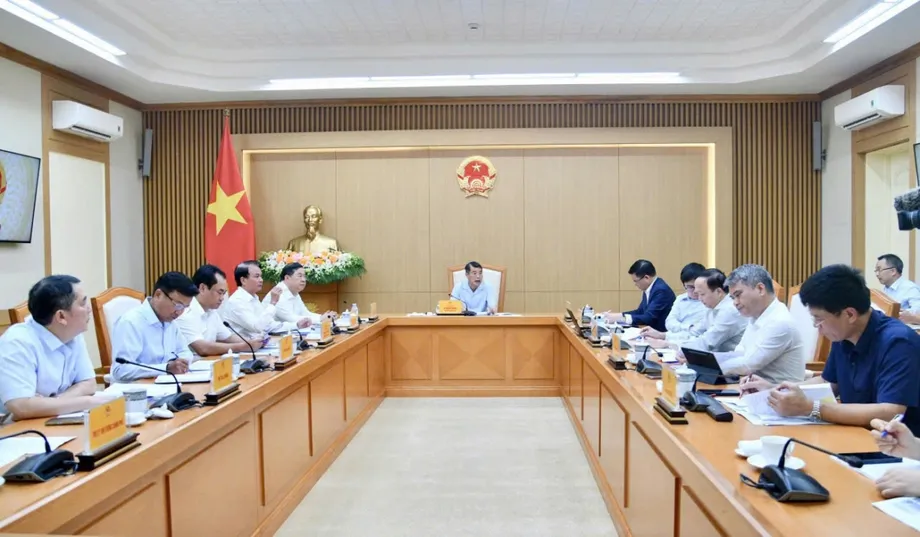
At an October 12, 2026 meeting in Hanoi, Prime Minister Le Minh Hung instructed the Ministry of Industry and Trade to identify delayed or unfeasible projects, propose additions or replacements, and assign responsibility for investors, financing and delivery. The meeting covered major generation and transmission projects, immediate supply measures for the remaining peak demand months of 2026, and electricity security in 2027 and through 2030.
The direction is to reconsider implementation of the National Power Development Plan VIII, known as PDP VIII, which was already revised in April 2025. It is not an announcement that a further revised plan or a new project list has been approved. Hung said changes must be feasible and lead to completed projects operating in accordance with regulations and quality requirements.
Data centres were singled out alongside other technology projects as demand the plan must accommodate. Hung described 2026 as the foundation for faster progress in 2027 and delivery of the development goals for the current government term. He also cited energy security directives from General Secretary and President To Lam.
The central problem is the gap between planned capacity and electricity that can actually be delivered. Large targets for gas, renewables, storage and nuclear power do not resolve immediate supply risks if construction, contracts or grid connections arrive late.
What the project review must deliver
The Ministry of Industry and Trade will lead the review with the Ministry of Finance and other agencies, working with state enterprises and local authorities. Each project must be checked against its implementation schedule rather than treated simply as an entry in the national plan.
Officials are to distinguish projects falling behind schedule from those that are no longer feasible. They must also identify projects requiring adjustments, new schemes to add and existing schemes to replace. The resulting list should specify implementation timelines and the responsibilities of ministries, agencies, enterprises and localities.
Investor selection and funding sources are explicit parts of the assignment. Problems beyond the authority of the bodies conducting the review must be referred to the competent authorities. No deadline for publishing the completed review or approving further PDP VIII changes was announced in the meeting accounts.
The emphasis on delivery builds on the Ministry of Industry and Trade's implementation plan, approved under Decision No. 1509/QD-BCT on May 30, 2025. That plan already assigned responsibilities for generation, grids, fuel supplies, land clearance and monitoring. The October instructions call for those responsibilities to be checked against actual progress.
How the current plan took shape
The present review follows a sequence of planning and institutional changes. The principal dates show how the government moved from approving higher ambitions to examining whether projects can meet them:
- April 15, 2025: Decision No. 768/QD-TTg approved the amended PDP VIII.
- May 30, 2025: The Ministry of Industry and Trade approved its implementation plan through Decision No. 1509/QD-BCT.
- September 15, 2026: Separate proposals to restructure the electricity sector and Vietnam Electricity, known as EVN, were submitted to the government.
- October 12, 2026: Hung chaired the supply meeting and ordered a review of projects, schedules, investors and financing.
- October 2026: The ministry had indicated that amendments to the Electricity Law were expected to be submitted to the National Assembly.
The 2025 revision therefore remains the benchmark for the latest instructions. Its numerical targets should not be presented as new commitments agreed at the October meeting, and proposed replacements should not be treated as approved projects.
The capacity targets are large, but accounts differ
The ministry's implementation plan sets 2030 targets of 22,524 MW for power generated from liquefied natural gas, or LNG, 14,930 MW from domestic gas and 31,055 MW from coal. Hydropower is targeted at 33,294 to 34,667 MW, solar at 46,459 to 73,416 MW, and onshore wind at 26,066 to 38,029 MW.
The US International Trade Administration's revised plan assessment gives the same wind range for onshore and nearshore projects, compared with an original target of 21,880 MW. Calculated from those figures, the increase is about 19% at the lower end and 74% at the upper end.
Some published totals do not agree. A&O Shearman's plan analysis describes total capacity of 89.655 to 99.934 gigawatts by 2030, equivalent to 89,655 to 99,934 MW. A separate account gives 183,291 to 236,363 MW. The former range is also difficult to reconcile with the individual technology targets listed by the ministry. These totals should not be treated as interchangeable or reconciled without checking their underlying definitions.
Offshore wind timing also needs care. The ministry specifies 6,000 MW for domestic demand by 2030 and 17,032 MW by 2035. The US assessment describes an increase from 6,000 MW to 17,032 MW without making that timing distinction in its summary. A&O Shearman places projects totalling 6,000 to 17,032 MW in a 2030 to 2035 operating window. The ministry's explicit dates are the clearest basis for distinguishing the two milestones.
LNG delays expose the delivery gap
LNG is natural gas cooled into liquid form for transport by ship. For Vietnam, expanding its use requires more than building power stations: terminals, fuel contracts, electricity sales agreements and financing must fit together.
Reports describe nearly all of the proposed LNG developments as delayed. Industry and Trade Minister Le Manh Hung said only LNG Hiep Phuoc was on schedule among 18 proposed projects with combined capacity exceeding 20 GW. Deputy Minister Truong Thanh Hoai said only two had started construction.
Hiep Phuoc, in Ho Chi Minh City, is targeting commercial operation in the fourth quarter of 2028. About five of the other 17 projects are intended to finish before the end of the decade. These schedules leave little room for treating the entire LNG target as an immediate answer to demand growth.
The project counts themselves differ. One account describes 15 projects supporting a roughly 22.5 GW target by 2030, while the minister's assessment covers 18 proposed developments. At a ministry press conference, Electricity Department Deputy Director Bui Quoc Hung described Hai Phong LNG as one of 12 LNG projects in the revised plan. The accounts do not establish whether those counts cover different project groups or planning stages.
The obstacles are consistent across the accounts: land and site clearance, investor selection, financing, construction agreements, fuel supply contracts and power purchase agreements. A power purchase agreement sets the terms under which a buyer will purchase a plant's electricity. Lenders commonly need that revenue arrangement before financing construction, while the electricity price depends partly on fuel costs that developers must negotiate.
One account places Asian LNG prices at about $25 per million British thermal units, a measure of fuel energy, and estimates that operating 22.5 GW at high utilisation could require 200 to 300 cargoes annually. Those are reported market and operating estimates, not procurement commitments. Expectations of additional global LNG supply after 2028 could improve buying conditions, but waiting for cheaper fuel does not solve Vietnam's nearer supply requirements.
Hai Phong shows why replacement decisions matter
Hai Phong LNG offers a concrete example of the choices facing the review. Bui Quoc Hung said the project had investment approval, selected investors and an agreement for gas turbines from GE. It had been scheduled to begin construction in September 2025, although that schedule alone does not establish that construction began.
The ministry also received a proposal for a renewable energy complex combined with battery storage to replace the LNG project. It recommended continuing Hai Phong LNG under the approved plan and sought guidance from the prime minister on the alternative proposal. A final decision on the renewable complex was not announced.
Elsewhere, possible substitutions include more coal generation. Duong Dinh, associate director at Vietcap Securities, described the delivery problems and a proposed response:
These delays are now widely recognized,
Dinh said the trade ministry had proposed adding 5,300 MW of coal capacity equipped with carbon capture to compensate for delayed LNG projects. Vietcap expects a possible generation shortage in 2028 to 2030. That is a named firm's assessment, not a confirmed shortage, and the additional coal capacity remains a proposal in the account.
The alternatives have different costs, fuel requirements and construction schedules. Replacing an LNG project with renewables and batteries, or adding coal capacity, therefore requires more than comparing their rated generating capacity. The review must establish when each option could supply electricity and how it would connect to the system.
Storage and grids must grow together
Battery storage is one of the largest changes from the original PDP VIII. The revised target is 10,000 to 16,300 MW by 2030, against 300 MW previously. That is approximately 33 to 54 times the earlier target, calculated from the published figures.
The ministry requires concentrated solar development to include batteries with power capacity equal to at least 10% of the solar installation's capacity and storage lasting two hours. For example, a 100 MW solar project would require at least 10 MW of batteries capable of supplying that output for two hours, equivalent to 20 megawatt hours of stored energy.
Storage can shift electricity from periods of high solar output to periods when it is needed. It does not eliminate the need for transmission infrastructure. A reported investment programme includes 12,944 kilometres of 500 kilovolt lines and 15,307 kilometres of 220 kilovolt lines between 2025 and 2030.
EVN and its units reportedly began construction on 98 grid projects and energised 100 projects operating at 110 to 500 kilovolts in the first seven months of 2026. Those figures indicate activity, but they do not show that every connection required by the generation plan is ready. The US International Trade Administration identifies grid readiness, regulation, investor guarantees and project financing as continuing challenges.
Nuclear power also falls largely outside the immediate supply window. Ninh Thuan 1 and 2 are planned to enter operation between 2030 and 2035, with combined capacity of 4,000 to 6,400 MW. Their contribution cannot be assumed for the remaining months of 2026 or for 2027.
Financing and electricity rules are under review
The investment requirement is substantial, although published estimates differ. The US International Trade Administration gives $134.7 billion by 2030 and up to $523 billion by 2050. A&O Shearman lists $118.2 billion for generation and $18.1 billion for transmission during 2025 to 2030, totalling $136.3 billion. Another account uses that same $136.3 billion total.
The difference between the two near term estimates is $1.6 billion. Their summaries do not explain the discrepancy, so neither should be presented as the single undisputed figure. Both indicate why the prime minister made funding sources and investor responsibility central to the project review.
The ministry's implementation plan assigns the Ministry of Finance a role in developing electricity pricing and financial mechanisms. Local authorities are responsible for updating plans, arranging land, clearing sites and monitoring progress. EVN must implement assigned generation and transmission projects, assess supply and demand, and help resolve connection and land problems.
The legal chronology also needs clarification. The October meeting accounts refer to government submission of the Electricity Law and Resolution 253/2025/QH15, concerning national energy development mechanisms and policies for 2026 to 2030. A&O Shearman identifies adoption of the new Electricity Law on November 30, 2024. Separately, Bui Quoc Hung described proposed amendments expected to go to the National Assembly in October 2026, aimed at implementing Resolution No. 70-NQ/TW on energy security through 2030, with a vision to 2045.
These are distinct legislative stages. The ministry was also preparing a government report on electricity supply in 2027 to 2030, including adjustments to generation and grids. No final approval date for that report was given.
Imports, rural access and market reform widen the task
The ministry's plan includes electricity imports from Laos reaching 9,360 to 12,100 MW by 2030. It allows consideration of larger or earlier imports into northern Vietnam if connections, conditions and prices are suitable. Imports are therefore part of the planned supply mix, not merely a contingency for delayed domestic plants.
Exports are planned too: around 400 MW to Cambodia by 2030 and 5,000 to 10,000 MW to regional markets such as Singapore and Malaysia by 2035. The ministry makes larger export ambitions conditional on economic performance, domestic energy security and defence requirements.
The plan also covers basic access and agricultural electricity needs. Its programme reaches about 911,400 households across 3,099 communes, including around 160,000 households without electricity and 751,400 requiring improvements. It targets supply to 2,478 irrigation pumping stations in the Mekong Delta and remaining island communities.
Two proposed renewable energy industrial and service centres, one in the north and another across southern areas, would combine equipment manufacturing, ports, logistics, research and training. Their role is to support the infrastructure needed to build and maintain energy projects.
Market restructuring proceeds alongside construction. Bui Quoc Hung said EVN owns less than 40% of generation projects and facilities. The ministry is considering separating the National Power Transmission Corporation from EVN and separating distribution from retail functions at five EVN electricity corporations. Those proposals should not be described as completed reorganisations.
Tariff work is another separate process. Decision No. 963/QD-BCT identifies peak hours as 5:30 p.m. to 10:30 p.m., Monday through Saturday. The related proposal initially concerns large and industrial consumers rather than households. The ministry has requested data from 34 provinces and centrally administered cities for proposed household tariff revisions, but no final household tariff change is established by these accounts.
What to Know
- Prime Minister Le Minh Hung ordered a project review on October 12, 2026, to support electricity supply and growth ambitions through 2030.
- The review must identify delays, unfeasible projects, possible replacements, investors, funding sources and delivery responsibilities.
- Only Hiep Phuoc was described as on schedule among 18 proposed LNG developments; its operating target is the fourth quarter of 2028.
- Battery storage targets rose from 300 MW to 10,000 to 16,300 MW by 2030.
- Published investment estimates differ between $134.7 billion and $136.3 billion by 2030.
- Nuclear plants are planned for 2030 to 2035, while immediate supply measures concern 2026 and 2027.
- No completed new project list, final replacement decisions or approval date for further PDP VIII revisions was announced.