Trade paperwork at the center of nearly $52 million in transfers
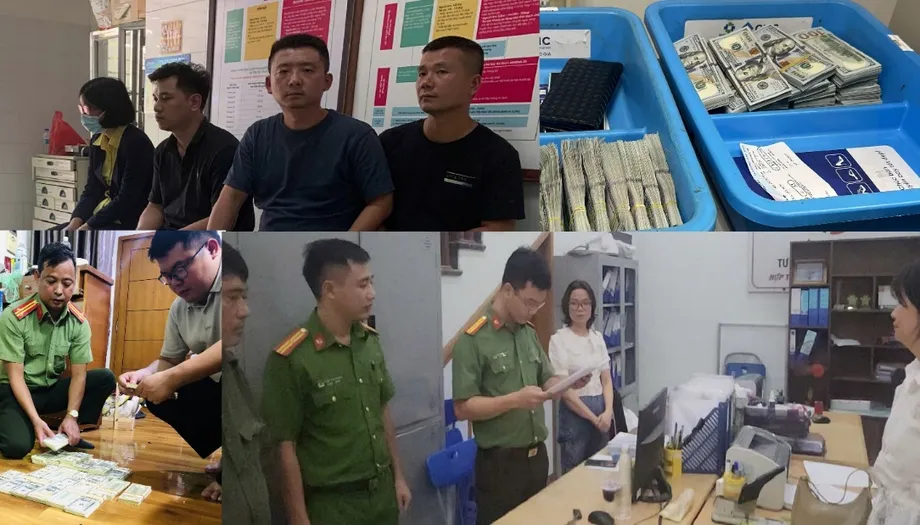
Seven people have been charged in Hanoi over an alleged currency transfer operation that moved more than US$40.2 million out of Vietnam and more than US$11.7 million into the country through contracts for electronic components. Prosecutors say two companies, Việt Linh and Phong Lâm, were used to present customer transfers as payments for imports and exports.
Contents
- Trade paperwork at the center of nearly $52 million in transfers
- Who allegedly arranged the transfers?
- Why small electronic components mattered
- How personal accounts fed company payments
- Việt Linh accounted for most of the money
- Phong Lâm and the disputed role of a signatory
- Customer payments used unrelated descriptions
- USDT transactions and other inquiries remain separate
- The legal warning and the dates to watch
- Key Points
The outward transfers were valued at about VND923.8 billion, while the incoming transfers were valued at about VND269.4 billion. The VND923.8 billion figure is not a US$923.8 million transaction total. The stated dollar amounts for both directions add up to approximately US$51.9 million, representing money transferred rather than an established loss to victims or the state.
Hanoi’s People’s Procuracy has charged Nguyễn Mạnh Linh, Lê Đăng Khoa, Đinh Thị Lịch, Meng Jun, Lê Thanh Phương, Trần Thanh Tùng and Yang Jing with illegally transporting currency across the border. The case file has been sent to the court at the same level for an initial trial reported as scheduled for October 15. The year of that hearing is not specified in the account announcing it.
The allegations connect company directors, two former bank employees, accountants and business customers. They also extend to a Chinese national, Zheng Yan Fei, whom prosecutors describe as the organizer of customer arrangements. His activities, along with separate cryptocurrency transactions and two other companies, remain under investigation. The charges are allegations, not findings of guilt.
Who allegedly arranged the transfers?
According to the indictment account, Linh met Zheng in 2019. From 2021, Zheng allegedly found customers seeking to move money between Vietnam and other countries, principally China, negotiated fees and instructed Linh to prepare import and export paperwork. Linh was listed as director of both Việt Linh and Phong Lâm.
Khoa and Lịch worked at OCB Bank’s Hanoi branch at the time of the alleged arrangements. Prosecutors say Zheng contacted them to help Linh prepare international payment documents. Khoa reportedly helped with company formation and tax declarations and introduced Lịch to work as Việt Linh’s accountant.
The alleged assistance included opening bank accounts, preparing documents about the companies’ business capacity, arranging letters of credit and completing payment paperwork. These steps mattered because they provided a commercial explanation for money moving abroad, even though prosecutors say the underlying purpose was to transfer customer funds.
Meng was Phong Lâm’s chief accountant, while Phương was listed as an accountant at Việt Linh. Tùng, director of Vinaecom, and Yang, director of Newmone Vietnam’s Hanoi branch, were investigated as customers who allegedly sent money through Linh’s personal account for payments to China. Their reported roles differ from those of the people accused of preparing the companies’ documents.
Why small electronic components mattered
The contracts concerned temporary imports and subsequent exports of electronic components, including chips and chip resistors. Prosecutors say these small items were difficult to value, while the contracts involved large sums and lacked adequate descriptions of brands, technical standards, specifications and quality certification.
A Hanoi police warning, published on the Ministry of Public Security’s website and dated July 30, 2026, describes an alleged chip resistor scheme involving more than US$51 million. That rounded description is consistent in scale with the approximately US$51.9 million obtained by combining the prosecution’s stated incoming and outgoing amounts, although the warning does not give an identical detailed total.
The notice describes a network of shell companies in Hong Kong, China and Singapore. It says contracts had unusually high values but sparse commercial detail, including missing information on manufacturers, production years, insurance and goods inspections, as well as absent certificates of origin and quality.
Police also describe payment terms allowing sellers to receive money immediately while buyers could defer payment for up to 12 months. According to the warning, participants exploited customs clearance channels with reduced physical inspection and then failed to bring back export proceeds, or brought back amounts far below the payments already made abroad. Those features made the correspondence between goods, contracts and money a central concern.
How personal accounts fed company payments
For transfers into Vietnam, prosecutors say money entered Việt Linh’s account under export contracts. Linh allegedly withdrew some of it and placed it in personal savings accounts, earning interest and using the deposits as security for letters of credit.
A letter of credit is a bank’s commitment to pay a seller when the required documents are presented. In this case, the alleged use of personal deposits as security connected incoming funds to the banking arrangements used for later payments. The existence of a bank payment instrument did not itself establish that the underlying trade was genuine.
For transfers abroad, customers allegedly paid Linh’s personal account. Money was then withdrawn and deposited into company accounts before being sent overseas as payment for imported goods. Prosecutors say this sequence gave customer funds the appearance of ordinary business revenue and trade expenditure.
The police warning describes funds being divided into transfers below VND500 million, circulated through personal accounts and accompanied by vague descriptions such as payments for goods or purchases of USDT. Police say this was intended to avoid reporting to the State Bank of Vietnam. The warning also identifies UPAS L/C and T/T payments: the former lets a seller receive prompt payment while the buyer pays later, and the latter is a direct bank transfer. Both are legitimate payment methods that police say were misused.
Việt Linh accounted for most of the money
Prosecutors attribute more than US$35.5 million in outward transfers, valued at about VND813.5 billion, to Việt Linh. They also attribute more than US$11 million in incoming transfers, valued at about VND253.2 billion, to the company.
Using the rounded dollar figures, Việt Linh accounted for roughly 88% of the alleged US$40.2 million sent abroad. Its stated incoming amount represented roughly 94% of the US$11.7 million entering Vietnam. These comparisons show that Việt Linh was the principal channel in both directions, rather than the two companies contributing equally.
Between February and August 2021, Lịch allegedly made 16 withdrawals totaling more than VND96.9 billion from the company account and seven deposits totaling more than VND36.4 billion into Linh’s personal account. These transactions form part of the alleged account activity; they should not be added to the international transfer totals as separate amounts sent across the border.
Prosecutors say Linh received about VND300 million and Khoa about VND40 million, while Lịch was paid VND5 million a month for accounting work. Those alleged personal benefits are distinct from the much larger amounts processed through the accounts. The transaction volume does not mean that any defendant personally retained the full sum transferred.
Phong Lâm and the disputed role of a signatory
In early 2022, Linh allegedly began using Phong Lâm for similar arrangements. At Zheng’s direction, Meng opened personal bank accounts to receive payments from people in Vietnam, then withdrew money and deposited it into Phong Lâm’s accounts.
From May 13 to June 13, 2022, Meng’s accounts received more than VND67.3 billion. Meng also signed 11 contracts for transfers abroad. Prosecutors attribute US$4.73 million in outward transfers, worth more than VND110.2 billion, and US$699,945 in incoming transfers, worth more than VND16.2 billion, to Phong Lâm.
The company figures broadly reconcile with the case totals after rounding. The stated outward amounts of US$35.5 million and US$4.73 million add up to US$40.23 million. The incoming figures of US$11 million and US$699,945 add up to approximately US$11.7 million. Several amounts are described as exceeding the stated figure, so these calculations are comparisons, not exact audited totals.
Phương allegedly signed 120 international transfer orders totaling more than US$30.4 million, or about VND697.1 billion, for Việt Linh. Yet prosecutors also say Phương did not know the contents of the documents and received no benefit. That account leaves a consequential issue for the court: how the alleged signing activity supports criminal responsibility alongside the prosecution’s description of Phương’s knowledge. The reported amount is part of the company’s transactions, not another sum to add to the case total.
Customer payments used unrelated descriptions
Tùng’s company, Vinaecom, operated an online business and had a logistics agreement with AEG Express Limited in China. Tùng said the Chinese partner instructed him to send money to Linh’s account with a description indicating a deposit for landscaping trees.
The recorded description was "CHUYEN TIEN DAT CAY CONG TRINH". Tùng said there was no actual tree purchase. Investigators found that he transferred more than VND63.8 billion to Linh’s account for payments to parties in China. The discrepancy between the payment description and the stated business purpose is one of the specific details underpinning the alleged concealment.
Yang traded cutting and grinding stones imported from China. After encountering difficulty paying suppliers, Yang allegedly contacted a WeChat account named "Trận chiến ở Việt Nam" and was directed to pay Linh’s account. From March to August 2021, Yang asked employees to make eight transfers totaling more than VND1.42 billion.
These customer accounts show how the alleged operation reached beyond the companies’ own employees. Money associated with logistics and imported industrial goods was routed through an individual’s account, then allegedly paid abroad through electronics contracts. Prosecutors must still establish each defendant’s responsibility for that process.
USDT transactions and other inquiries remain separate
Linh’s account also received VND140 billion from accounts connected to Nguyễn Bá Nam, Vũ Phương Thảo and others. Nam said the money represented payment for USDT transactions. USDT is a cryptocurrency designed to track the value of the US dollar; trading it can involve payments in ordinary currency between buyers and sellers.
Investigators identified signs that cryptocurrency trading may have been used to disguise the source of funds and separated those materials for further investigation. Although one account describes USDT purchases as part of the wider transfer mechanism, the reported decision to investigate this activity separately means it should not be treated as a resolved finding against everyone involved.
The VND140 billion should not automatically be added to the VND923.8 billion outward total. It describes receipts into Linh’s account, and the extent to which those receipts overlap with the charged international transfers has not been established in the public account.
Investigators also separated materials concerning Phúc Thịnh in Hải Phòng and Việt Mỹ in Hanoi over suspected illegal currency transfers across the border. The reported reason was that the investigation period had ended, leaving further verification to a separate inquiry. Neither company is described as one of the two principal companies used in the seven defendants’ charged transactions.
The legal warning and the dates to watch
The police notice distinguishes lawful temporary import and subsequent export activity from its alleged misuse. It cites Article 29 of the Commercial Law, in consolidated document 113/VBQH dated August 27, 2025, defining the activity as bringing goods into Vietnam through import procedures and then exporting those same goods.
Police say related payments must comply with foreign exchange rules, the 2022 law on preventing money laundering, and customs and foreign trade requirements. The warning cites Criminal Code Article 189 on illegal transport of currency across the border and Article 324 on money laundering. Its reference to both offenses does not mean that the seven defendants have been reported as charged with both.
The sequence spans several years, with the alleged transfers concentrated in 2021 and 2022:
- 2019: Linh reportedly met Zheng Yan Fei.
- 2021: Zheng allegedly began arranging customers and directing the preparation of trade documents; Việt Linh handled transfers.
- February to August 2021: Lịch allegedly made the specified company withdrawals and personal account deposits.
- March to August 2021: Yang allegedly arranged eight payments to Linh’s account.
- Early 2022: Linh allegedly began using Phong Lâm for similar transfers.
- May 13 to June 13, 2022: Meng’s accounts received more than VND67.3 billion.
- June 11, 2025: Zheng left Vietnam.
- July 30, 2026: The Ministry of Public Security website dates the Hanoi police warning.
- October 15: The reported date for the initial trial, with the year unspecified.
Investigators requested assistance from Chinese authorities concerning Zheng but had not received a response at the stage described. Materials relating to him were separated for continued verification. His departure is established in the reported immigration record, but that fact alone does not establish why he left.
The police warning asks businesses not to lend their legal status or company accounts for other people’s payments. It also calls on banks to check the authenticity of documents, compare import payments with subsequent export receipts within 12 months, and report suspicious transactions. These recommendations address the alleged mismatch between commercial paperwork and actual money movements.
The trial is the next reported step for the seven charged defendants. The outcome, any further action concerning Zheng, and the findings of the separate cryptocurrency and company inquiries have not been established in the accounts describing the prosecution.
Key Points
- Seven people face charges over alleged illegal currency transfers through Việt Linh and Phong Lâm.
- Prosecutors allege more than US$40.2 million went abroad and more than US$11.7 million entered Vietnam.
- The VND923.8 billion outward figure is not US$923.8 million.
- Electronics contracts, personal accounts and international bank payment documents allegedly disguised customer transfers.
- Việt Linh accounted for most of the stated transaction volume.
- Prosecutors say Phương signed 120 transfer orders but did not know their contents or receive a benefit.
- Inquiries involving USDT, Zheng Yan Fei, Phúc Thịnh and Việt Mỹ remain separate.
- An initial trial is reported as scheduled for October 15, without a specified year; no verdict is established.