511 Million Tonnes of Allowances, but Little Price Evidence
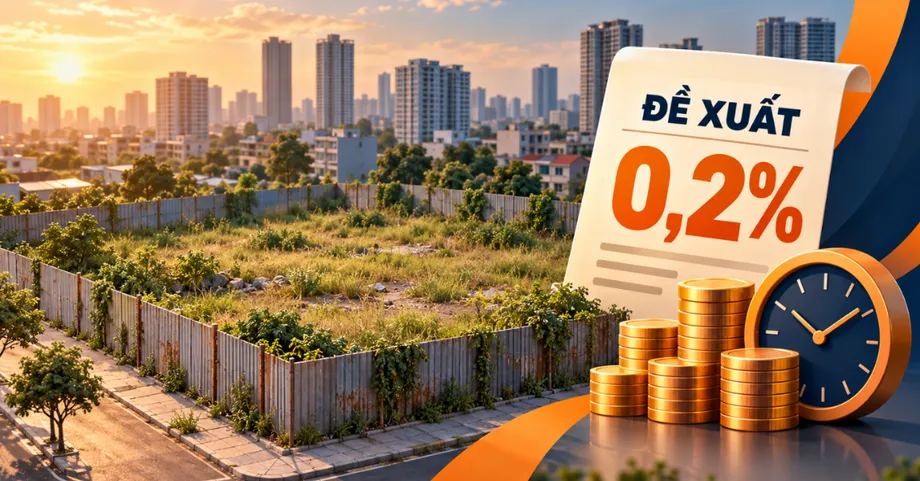
Vietnam has allocated 511.47 million tonnes of emissions allowances to 110 establishments for the 2025 to 2026 compliance period, yet recent trading records show zero volume and value. That contrast captures the central challenge for its emerging carbon market: creating tradable instruments is one step, turning them into reliable income that can support investment is another.
Contents
- 511 Million Tonnes of Allowances, but Little Price Evidence
- Allowances and Credits Have Different Financial Roles
- International Transfers Come With Limits
- A Market Opening Without Established Liquidity
- Why Data Determines Access to Finance
- Financing the Gap Before Carbon Payments
- Agribank Shows the Scale of Agricultural Demand
- Export Carbon Costs Change the Investment Calculation
- Forest Revenue Depends on Quality and Shared Benefits
- International Partnerships and Blue Carbon Expand the Agenda
- The Dates and Decisions to Watch
- Key Points
The VN2025 allowance allocation, recorded in Hanoi Stock Exchange data, sits alongside a new international transfer framework. Decree 112/2026/ND-CP took effect on May 19, 2026, setting rules for exchanging emissions reduction outcomes and carbon credits with foreign partners. Together, these developments could give cleaner factories, agricultural projects and forest protection programmes new ways to attract capital.
Vietnam already has evidence that verified reductions can generate money. In early 2024, it received $51.5 million from the World Bank for 10.3 million tonnes of verified reductions under the North Central Region Emissions Reduction Programme. That payment worked out at $5 per tonne. It demonstrates a completed transaction, rather than a forecast based on the size of a forest or the promise of cleaner production.
The financial challenge is to repeat that process across projects with different technologies, costs and buyers. Equipment, project preparation and emissions monitoring require money before credits are issued. Banks and investors need to know whether the eventual carbon income will arrive, who owns it and how much can legally be sold.
Allowances and Credits Have Different Financial Roles
An emissions allowance is permission to emit a specified quantity under a compliance scheme. A carbon credit represents a verified reduction or removal that meets the relevant methodology, standard and registration requirements. One credit generally represents one tonne of carbon dioxide equivalent, a common unit used to compare different greenhouse gases.
The distinction matters because the domestic exchange currently deals mainly in allowances. A factory operating below its allocation may have an allowance surplus, subject to market rules. A forest or rice project needs a separate process to establish whether its environmental results qualify as credits. Neither instrument should be assumed to have identical trading rights or uses.
Su Thanh Long, director of international dairy projects at TH Group, argues that companies should first reduce emissions within their operations and then address what remains. He also warns against treating every internal reduction as a saleable asset.
Reducing emissions within our own operations does not automatically create tradable carbon credits.
His example is a company cutting emissions from 100 tonnes to 10 tonnes. The remaining 10 tonnes are the amount it would seek to offset. The 90 tonnes eliminated internally do not automatically become credits available for sale. This distinction prevents businesses from counting the same environmental result twice in their financial plans.
International Transfers Come With Limits
Decree 112 establishes three routes for international transfers: agreements under Article 6.2 of the Paris Agreement, the Article 6.4 mechanism, and independent carbon standards. Article 6.2 supports cooperation between countries, while Article 6.4 establishes a mechanism for crediting emissions reductions under international supervision.
The Ministry of Agriculture and Environment grants Vietnam's international transfer approvals. Transactions must be recorded in the national registry for greenhouse gas allowances and carbon credits. Approval involving a corresponding adjustment comes only after the reduction outcomes or credits have been issued and the relevant management agencies have given their views.
A corresponding adjustment is an accounting safeguard. When a reduction is transferred for another country's climate target, the accounting must prevent both countries from claiming the same reduction toward their commitments. This protects the integrity of Vietnam's nationally determined contribution, or NDC, its climate pledge under the Paris Agreement.
The decree also differentiates projects by their need for support. Activities involving new, expensive technologies that have not been widely deployed in Vietnam may transfer up to 90% of their eligible outcomes internationally. Activities already deployed but needing further financial or technological assistance face a maximum of 50%.
For the same eligible volume, the 90% ceiling allows 1.8 times the international transfer share permitted under the 50% ceiling. These are maximum shares, not guaranteed sales or approvals. Investors must establish which category applies before projecting foreign carbon revenue.
A Market Opening Without Established Liquidity
Nguyen Ngoc Tung, head of the VinaCarbon Fund at VinaCapital, says the Hanoi Stock Exchange carbon exchange began operating and recorded its first transaction at the end of June. Recent exchange data showing zero trading volume and value do not necessarily contradict that account. A first transaction and subsequent inactive trading days can both occur in a new market.
Nguyen Phuong Nam, chief executive of climate consultancy KLINOVA, points to the small pool of participants. Around 110 establishments received allocations, but the number of entities participating in buying and selling was only slightly above 90 because one company can own several establishments. This limits opportunities for frequent transactions.
Without regular trading, banks have little evidence for a dependable domestic reference price. Liquidity means the ability to buy or sell without long delays or large price changes. An allocated allowance volume is not evidence that equivalent demand, trading activity or cash income exists.
Reports also differ on the scope of the system. One gives 2,441 establishments subject to mandatory greenhouse gas inventories, up from just over 1,900 in 2022, an increase described as nearly 28%. Another gives 2,166 facilities representing roughly 30% of national emissions and anticipates a pilot involving about 150 power, steel and cement enterprises. These figures cannot be treated as interchangeable: an inventory obligation, a planned pilot and an actual allowance allocation measure different things, and a complete reconciliation has not been established.
Why Data Determines Access to Finance
To create a credit, a project needs an accepted methodology, a baseline against which reductions are calculated, and reliable measurement, reporting and verification, commonly called MRV. Independent checks then establish whether the claimed result meets the applicable requirements. Registration, issuance and sale are further steps, each with its own costs and risks.
Nam estimates that moving from project registration to qualifying credits can take about two years. Dispersed farms and forest areas can make measurement particularly costly. Cooperatives or coordinated production areas may help organise data collection, but they also need credible management and clear agreements with participants.
Pham Lien Anh, who heads the International Finance Corporation's advisory programme on economic reform and research for Vietnam, Laos and Cambodia, explains why poor measurement affects both production decisions and financing.
An inability to measure emissions accurately means difficulty identifying which stages require priority investment, proving reduced carbon volumes, and meeting market as well as financial institution requirements.
The Ministry of Agriculture and Environment's Decision 3696/QD-BNNMT set a deadline before October 10, 2026, for building and operating the national registry. That deadline is not, by itself, confirmation that every function was delivered. Ta Thanh Binh, general director of the Vietnam Securities Depository and Clearing Corporation, says a carbon allowance and credit depository and settlement system has been established and connected with relevant agencies. The ministry is also developing online emissions reporting.
Financing the Gap Before Carbon Payments
A project's funding needs begin with surveys, feasibility studies, technical documentation and consultants. Implementation adds equipment, infrastructure and working capital. Once operations start, monitoring and verification continue to require spending, while credit issuance and buyer payment may still be months or years away.
The lending approach described by Nguyen Thi Thu Ha, deputy head of Agribank's environmental, social and governance steering committee, separates ordinary business income from prospective carbon revenue. Core production income remains the foundation for debt repayment. Carbon revenue becomes an additional source only to the extent that its certainty can be assessed.
That certainty changes across the project cycle. Estimated reduction potential is weaker than a registered project with reliable data. Verified results are stronger, issued credits stronger still, and a firm purchase agreement provides more evidence of future receipts. Even a signed agreement requires checks on the buyer's ability to pay, transfer rights, payment conditions and possible disputes.
Carbon value can affect finances through three distinct channels: lower production costs, reduced spending on additional compliance allowances, and income from selling eligible reductions or credits. Calculating them separately helps avoid overstating returns. Loans, bridge funding, guarantees and finance combining public or concessional support with private capital can address the timing gap, but do not remove the underlying risks.
Agribank Shows the Scale of Agricultural Demand
Agribank's customer base makes this financing problem especially relevant. By mid 2026, the bank reported assets exceeding $108 billion, deposits above $100 billion and outstanding loans above $80 billion. By the end of August, lending to agriculture, farmers and rural areas exceeded $53.6 billion, accounting for 64.7% of outstanding loans.
Its green credit portfolio stood at nearly $1.2 billion at the end of March. The bank also reported a $120 million green credit programme for individuals and a $2 billion programme for clean and advanced agricultural production in 2026. A lending programme supporting linked production, processing and consumption under the Mekong Delta's one million hectare rice scheme has a minimum scale of $1.2 billion.
These portfolio and programme figures describe different categories and reporting dates. They should not be added together as if they were separate amounts already invested in carbon projects. Eligibility under a green classification does not automatically create carbon credits, and a project generating credits does not automatically qualify for green credit.
Agriculture nevertheless offers practical opportunities in rice cultivation, livestock, biomass and waste treatment. Agribank's more than 58,000 lending groups, with over 910,000 members as of July 31, provide an existing network for financing rural activity. Turning that reach into carbon income still requires project design, measurement and agreements specifying who receives the proceeds.
Export Carbon Costs Change the Investment Calculation
More than $3 billion in Vietnamese exports to the European Union fall within product categories affected by its Carbon Border Adjustment Mechanism, or CBAM. The mechanism links the carbon cost of covered imports to the EU carbon pricing system, making emissions data and cleaner production increasingly relevant to export economics.
Tran Ngoc Quan, commercial counsellor and head of the Vietnam Trade Office in Belgium and the EU, cites a CBAM certificate price of EUR75.28 per tonne of carbon dioxide for the second quarter of 2026. At roughly two tonnes of emissions per tonne of steel, the illustrative carbon amount is EUR150.56. Against an export price of EUR650 per tonne, that equals about 23.2% of product value.
This is a comparison at the stated carbon price, not a universal invoice for steel exports in 2026. The reported phase in begins at about 2.5% in 2026 and rises to full coverage by 2034. Actual exposure depends on the applicable rules and emissions calculations.
Vo Thai Xuan Thuy, marketing and sustainability director at Fico-YTL Cement, says its EcoCem products reduce emissions by roughly 30% to 70%, depending on the product, and the company plans around VND300 billion in transition spending in 2027. Such investments can improve operating economics and competitiveness without depending entirely on credit sales.
Global pricing estimates also differ. The World Bank's State and Trends of Carbon Pricing 2026 records 87 direct pricing policies covering more than 29% of global emissions, with over $107 billion in government revenue in 2025 and an average price near $21 per tonne. Another account cites about 80 mechanisms covering approximately 28%. Those estimates are not identical, and neither provides a substitute for a Vietnamese project price.
Forest Revenue Depends on Quality and Shared Benefits
Vietnam's completed $51.5 million forest transaction provides a useful benchmark, but not a guaranteed future price. Tom Alpe, a trade policy adviser in the international forestry division of the UK's Foreign, Commonwealth and Development Office, says buyers may pay $10 to $20 per forest credit for sustainable projects. That range is two to four times the $5 price in the completed transaction, although the projects, terms and quality requirements may differ.
International demand is described as shifting toward forestry and land use credits and away from some renewable energy credits. The United Nations Environment Programme's State of Finance for Forests 2025 puts annual global investment in forests and climate solutions based on nature at about $23.5 billion during 2020 to 2024, compared with less than $12 billion in the preceding five years. This measures broader investment, not carbon credit sales alone.
For Nghe An, which has more than one million hectares of forest, Vo Xuan Vinh, director of the Institute of Business Research at the University of Economics Ho Chi Minh City, proposes clearer carbon ownership and benefit allocation among the state, forest owners, communities and investors. He argues that forest owners and communities should receive most of the income.
His proposals include provincial MRV systems, digital maps, satellite data, price floors and ceilings, and allowing a roughly 5% share of domestic forestry credits for compliance offsets. These are recommendations, not established permissions. He also suggests combining forest protection with biodiversity credits and income from activities beneath the forest canopy. Fair payments and transparent revenue allocation matter because the people maintaining the forest help sustain the environmental result buyers are purchasing.
International Partnerships and Blue Carbon Expand the Agenda
Vietnam has approved bilateral carbon cooperation agreements with Singapore and Japan, while technical negotiations with South Korea and Switzerland are expected to lead to signatures by the end of 2026. Approval of an agreement creates a route for cooperation, rather than an assurance that any individual project will secure a buyer.
Andri Meier, deputy head of development cooperation at the Swiss Embassy in Vietnam, calls for MRV and registry systems that can work together, pilot projects, safeguards for market integrity and stronger company data capabilities. Switzerland's Cooperation Programme for 2025 to 2028 prioritises sustainable trade, finance, and cleaner industrial and urban development. Meier says an operational bilateral Article 6 agreement could provide another financing channel for qualifying projects.
Blue carbon, the carbon stored in coastal and marine ecosystems, is another area under development. A September 23 meeting convened by the Ministry of Agriculture and Environment and the United Nations Development Programme considered a national action roadmap for 2026 to 2030. The proposed focus for 2026 to 2027 is institutions, data, technical standards and a blue carbon classification system, with unified ecosystem management and gradual integration into national climate commitments targeted by 2030.
Hanoi is pursuing a related but distinct urban agenda. Resolution 57/2025/NQ-HDND addresses low emissions zones, while Document 34/UBND-NNMT of January 5, 2026, concerns emissions control, greener transport and electric vehicle charging infrastructure. The city targets good or moderate air quality on 80% of days by 2030. Cleaner air and lower greenhouse gas emissions can support overlapping policies, but meeting an air quality target does not itself generate carbon credits.
The Dates and Decisions to Watch
Reports differ on when full market operation begins. Some refer to 2028, while another places the end of the trial phase in 2028 and planned exchange operation in 2029. Nam recommends treating 2026 to 2028 as a period of practical testing. These descriptions should not be collapsed into a single confirmed launch date.
The main milestones distinguish completed payments, legal changes, administrative targets and future plans:
- Early 2024: Vietnam received $51.5 million for 10.3 million tonnes of verified forest emissions reductions.
- May 19, 2026: Decree 112 took effect, establishing international transfer rules.
- End of June 2026: Tung says the Hanoi exchange began operating and recorded its first transaction.
- Before October 10, 2026: Decision 3696 set the national registry completion and operation deadline.
- October 14, 2026: A green credit and carbon market workshop involving the State Bank of Vietnam is scheduled at 47 Quan Thanh, Hanoi, with contributions from the central bank, Asian Development Bank and Agribank.
- December 2027: Trading in the VN2025 allowance code is scheduled to end.
- 2028 and 2029: Accounts differ on the transition from trial arrangements to full operation.
The unresolved issues are practical: which credits may enter domestic trading, who may buy and sell them, how they connect to compliance demand, and whether enough verified supply and buyers will emerge to establish reliable prices. For investors, Tung's distinction is central: they assess a company and business model, not simply a stock of prospective credits. The test is whether transparent carbon value helps fund projects that deliver measurable reductions.
Key Points
- Vietnam allocated 511.47 million tonnes of allowances to 110 establishments, but recent trading records provide little price evidence.
- Decree 112 permits international transfers through three routes, with maximum transfer shares of 90% or 50% depending on the activity.
- Verified forest reductions have already generated $51.5 million at $5 per tonne.
- Core business income remains the primary basis for loan repayment; carbon receipts require separate risk assessment.
- Data quality, ownership, verification and community benefit allocation determine whether potential reductions become saleable assets.
- Reports differ on facility totals and whether full market operation begins in 2028 or 2029.