A 117 Billion VND Fundraising Faces Scrutiny
Hanoi police say the AntEx cryptocurrency project collected 4.5 million USDT, valued at approximately 117 billion VND, through sales of 33.2 billion tokens between August and November 2021. Investigators allege that money intended to develop a digital currency and electronic wallet was instead transferred to personal wallets, converted into Vietnamese dong and divided among project members, or redirected to companies within the NextTech group.
Contents
- A 117 Billion VND Fundraising Faces Scrutiny
- What AntEx Promised and What Investors Funded
- The Dates Behind the Collapse and Investigation
- Celebrity Promotion and the Alleged Movement of Money
- Five Warning Signs to Examine Before Investing
- Blockchain Records Help, Exchange Cooperation Matters
- Frozen Assets Are Not a Compensation Fund
- A Large Market With Uneven Investor Protection
- What Investors Can Do and What Remains Unresolved
- Key Points
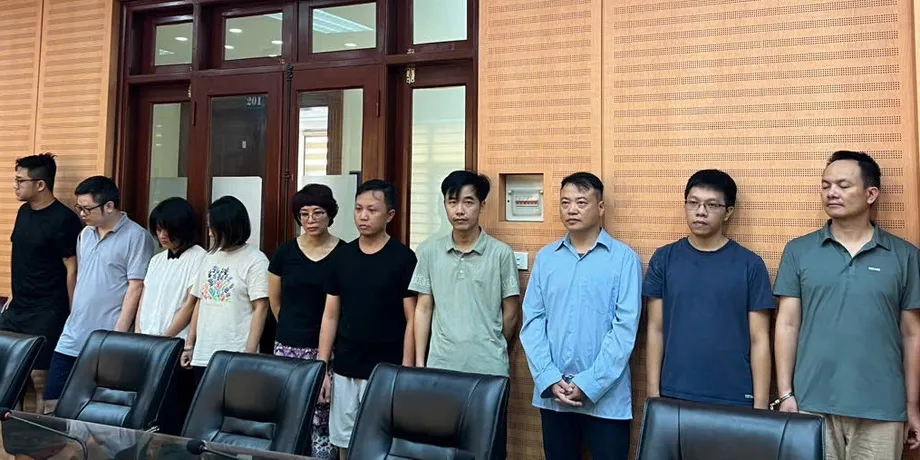
The investigation involves Nguyễn Hòa Bình, known as Shark Bình, chairman of NextTech, and nine other people charged in October 2025. A December 15 update from the Ministry of Public Security described an expanding investigation involving alleged investment fraud, accounting violations and tax evasion. Police reported seizing, freezing or suspending transactions involving assets worth about 900 billion VND.
The case connects a heavily promoted technology venture with practical warnings about investment fraud: ambitious promises, incomplete products, influential promoters and uncertainty over who controls investors' money. ANTEX reportedly lost about 99% of its value within five months of beginning trading in late November 2021. Its subsequent conversion into Rabbit tokens did not resolve investor concerns.
Bình previously said he was himself a victim and was only an investor and capital contributor in AntEx. Investigators now allege a more direct role in its promotion and the movement of funds. These are criminal allegations, not findings of guilt by a court. No trial judgment or hearing date is identified in the official updates discussed here.
What AntEx Promised and What Investors Funded
According to the government's October investigation notice, development discussions began around May 2021. The founders agreed to contribute 5 billion VND, including 2 billion VND from Bình. His contribution therefore represented 40% of the initial capital.
Bình allegedly directed the establishment of Blockchain Vietnam Technology Services Joint Stock Company. The initial money paid for employees, technical staff and servers. Selling AntEx tokens was intended to finance VNDT, a proposed digital currency, and its electronic wallet. Police say the VNDT project had not been completed when fundraising took place.
Public promotion presented a broader Vietnamese blockchain ecosystem, including an exchange, a wallet, financial applications, a blockchain and a payment system. VNDT was described as a stablecoin tied to the Vietnamese dong. A stablecoin aims to maintain a reference value, but that description alone does not establish that reserves exist, that redemption is possible or that the operator has regulatory approval.
The founders planned to sell 100 billion tokens. Police say the 33.2 billion actually issued and sold during August through November 2021 amounted to 33.2% of that planned total. The approximately 117 billion VND raised was 23.4 times the founders' initial 5 billion VND contribution, illustrating how quickly outside funding exceeded the money committed by the project team.
Reports differ on the fundraising total. One account puts it at $7.3 million, while police identify 4.5 million USDT, treated in their account as equivalent to $4.5 million. No explanation establishes whether those figures cover different fundraising stages. They should not be combined or treated as interchangeable.
The Dates Behind the Collapse and Investigation
AntEx's history spans development, token sales, a public launch, trading, a regulatory warning and a later change of name. Those events are distinct. A reported September 2021 launch does not necessarily conflict with trading beginning in late November, or with fundraising having started in August.
- May 2021: Police say Bình and other participants began developing AntEx to fund VNDT and its wallet.
- August to November 2021: Investigators say 33.2 billion tokens were sold, collecting 4.5 million USDT.
- September 2021: The project was publicly introduced as a Vietnamese blockchain ecosystem, according to reports.
- November to December 2021: Bình promoted Next100 Blockchain and a commitment to invest $50 million over 10 years.
- Around March 2022: The State Bank of Vietnam publicly warned about risks associated with AntEx, according to the Ministry of Public Security.
- March 2023: ANTEX was reportedly converted into Rabbit, or RAB, at 1,000 old tokens for one new token.
- October 10, 2025: The official government notice dates the criminal charging decisions against Bình and nine others to this day.
- October 14, 2025: Police publicly presented initial findings. Additional tax evasion charges were also brought against Bình and Nguyễn Hữu Tuất.
- December 15, 2025: Police provided a broader update on the investigation and assets restrained.
Some reporting associates the start of proceedings with October 14. The official notice specifies October 10 for the charging decisions and October 14 for the public briefing. Separating those dates avoids confusing an investigative decision with its announcement.
The Rabbit conversion also requires care. Exchanging 1,000 tokens for one changes the number of units held; it does not, by itself, prove either a recovery or a further loss in value. Investors would need the price, trading liquidity and rights attached to the replacement token to assess the result. Reports describe continued problems after the conversion, but do not establish that investors recovered their original funds.
Celebrity Promotion and the Alleged Movement of Money
Police say Bình used his reputation and social media presence in November and December 2021 to promote Next100 Blockchain, announcing a commitment of $50 million for cryptocurrency projects over 10 years. Investigators describe that promotion as a way to advertise AntEx and strengthen investor confidence.
A commitment to invest across multiple projects over a decade is not the same as money deposited into one project's account. Nothing in the official account establishes that $50 million was available to AntEx investors or guaranteed their holdings. The distinction matters when a large headline figure becomes part of a project's appeal.
The alleged misconduct concerns the use of proceeds, not simply a falling token price. Police say Bình and NextTech shareholders agreed to withdraw funds from the main AntEx wallet, send them to individuals' wallets and convert them into dong for distribution. Other funds allegedly went to companies in the NextTech ecosystem for purposes unrelated to the stated investment objective.
The Ministry of Public Security's December investigation update adds that payments used the Ngân Lượng gateway. It also says the State Bank had detected and publicly warned about AntEx risks around March 2022, and alleges that Bình concealed information while funds were withdrawn.
The official descriptions refer both to approximately 30,000 investors and to 30,000 investor wallets. Those counts are not necessarily identical because one person can control several wallets. Establishing the number of distinct victims and the amount owed to each remains a separate task from tracing transactions.
Five Warning Signs to Examine Before Investing
Trần Huyền Dinh, head of ChainTracer and the Fintech Applications Committee of the Vietnam Blockchain and Digital Assets Association, describes investment fraud as a combination of psychological pressure and technology. He says people are attracted by the prospect of high returns, safety and quick access to their money.
Drawing on analysis of hundreds of cases, the association identified five warning signs. Dinh said applying them could help investors avoid 80% to 90% of fraudulent projects. That is his assessment, not a guarantee that a project passing a checklist is safe.
- Promises of annual returns of 10% to 15% or more.
- Very little information about the project in the media or on social networks.
- An unfamiliar investment model that the investor cannot understand.
- Promotion by an individual or influential personality previously associated with multilevel marketing.
- Suspicious security practices, assessed through the T.E.S.T.S. tool or process.
A return above that threshold does not, by itself, prove fraud. The concern is a promise that makes substantial returns appear dependable while obscuring risk. Equally, widespread publicity is not proof of legitimacy. AntEx shows how an influential promoter can generate attention without answering questions about completed products, control of funds or the use of proceeds.
The description of T.E.S.T.S. does not explain its components or provide a scoring method, so it cannot be presented here as a reproducible security test. The broader warning remains useful: investors need to understand how their assets are held and what authority the project team has to move them.
Dinh also described schemes that pay earlier participants with money from later arrivals, then withdraw what remains when fresh funding dries up. This differs from a legitimate investment generating income from its underlying activity. A rug pull is the abrupt removal of funds or support by those controlling a project. The AntEx allegations should nevertheless be assessed on their own evidence rather than assuming every feature of that general pattern occurred.
Blockchain Records Help, Exchange Cooperation Matters
ChainTracer analysts helped map AntEx transactions recorded on the blockchain, identify suspicious wallet clusters and follow transfers between wallets and exchanges. They also supported requests for customer and business identity records from domestic and international exchanges.
Those records are commonly called KYC and KYB, meaning checks used to identify customers and businesses. A blockchain address can show where tokens moved without revealing the legal identity of the person controlling it. Exchange records can help investigators connect the transaction trail to a person or company.
Dinh said the persistence of blockchain records allowed transactions to be examined more than three years after the events. That is a useful investigative advantage, but a visible transaction trail does not automatically identify the final beneficiary or return money to victims.
He also said Gate and MEXC had not responded or supplied information promptly despite official cooperation requests, delaying identification of ultimate beneficiaries. This is Dinh's account of cooperation difficulties, not a finding that either exchange participated in the alleged fraud.
ChainTracer reported supporting 65 cases involving estimated losses of $10 million. Its other recent work included WorldMall.app, an alleged investment fraud affecting thousands of Vietnamese investors and involving tens of billions of dong. Those figures describe a separate body of tracing work, not additional AntEx losses.
Frozen Assets Are Not a Compensation Fund
The October government notice listed approximately 900 billion VND in restrained assets, including money, securities accounts, 597 taels of gold, 18 land use right certificates and two cars. The December update again gave a total of about 900 billion VND across seized assets, frozen holdings and suspended transactions.
That total is roughly 7.7 times the 117 billion VND valuation attached to the identified AntEx fundraising. It should not be interpreted as money available exclusively to AntEx investors. The investigation extends to other alleged offenses, and ownership, claims against assets and decisions about restitution still require legal resolution.
Police reported that suspects had paid 3.45 billion VND toward remedying the consequences. That equals about 2.95% of the 117 billion VND fundraising figure, but the notice does not establish that the payment had been distributed to AntEx victims. Payment by suspects, seizure of property and compensation received by an investor are different events.
The wider investigation includes NextLand, established in 2022. Police allege that two sets of accounting books and understated property sale values concealed revenue, causing state budget losses exceeding 44 billion VND. Separately, they say Vimo understated revenue in February, March and April 2024, evading more than 29 billion VND in tax.
The December update says Bình and Nguyễn Hữu Tuất faced additional tax evasion charges on October 14, 2025, while Vimo executive Đỗ Công Diễn was arrested. Police also described a NextTech ecosystem of 35 companies, with 11 operating and 22 stopped or undergoing dissolution. Those categories account for 33 companies; the update does not explain the status of the other two.
A Large Market With Uneven Investor Protection
The National Cybersecurity Association estimated Vietnamese online fraud losses at 18.9 trillion VND in 2024 and identified fake investment schemes as the most common category, accounting for 70.72% of cases. The percentage describes cases, not necessarily the share of money lost.
VinaCapital estimates that 17 million Vietnamese people have participated in cryptocurrency trading, with annual transaction value exceeding $100 billion. Transaction value measures activity, which can include repeated trades using the same money. It is not a measure of household savings invested or losses suffered. YGG SEA separately counted approximately 1,000 blockchain game projects underway in Vietnam in early May 2025.
Other cases show the reach of return promises. Alos Coin reportedly attracted 32,000 participants with promises of 180% annual returns. In August 2025, the operators of Wingstep and Game Naga Kingdom were accused of raising $7.86 million from more than 3,000 investors before the projects collapsed.
Trần Xuân Tiến, general secretary of the Ho Chi Minh City Blockchain Association, described how some schemes manufacture apparent demand and use new deposits to pay existing investors. Discussing that mechanism, he said:
The initial price increase largely came from 'artificial demand' created by the system itself. The funds paid to investors mainly came from money deposited by later investors.
Fraud risk also differs from market risk. KardiaChain's KAI token reportedly fell from $0.16 in April 2021 to around $0.001, a decline of approximately 99.4%. That price comparison alone does not establish fraud. Likewise, security threats are a separate problem: Kaspersky has warned that attacks exploiting Model Context Protocol, a connection standard used with artificial intelligence tools, can expose wallet data and install malicious software.
What Investors Can Do and What Remains Unresolved
Hanoi police have asked people who believe they were harmed in the Bình case to contact the Economic Police Department. The government notice identifies investigator Bùi Đức Hiếu and gives the telephone number 0993297743. The invitation to report is concrete; it is not a promise of a particular recovery amount or payment date.
The October notice identifies charges under Article 174 of the Criminal Code, covering fraud and appropriation of property, and Article 221, covering accounting violations causing serious consequences. The December update says investigators were continuing to collect evidence and expand the case. It gives no trial date, restitution deadline or timetable for completing that work.
Dinh argues that the Law on Digital Technology Industry and Resolution 05/2025/NQ-CP, establishing a pilot cryptocurrency asset market, can support clearer supervision and investor protection. Reporting at the time said no exchanges had yet been licensed under the pilot. That is a dated description, not confirmation of the licensing position at every later point.
Phan Phương Nam, deputy head of the Commercial Law Faculty at Ho Chi Minh City University of Law, says tokenized assets can create new ways to raise capital, but regulation cannot remove every investment risk. Tokenization means representing an asset or associated rights through digital tokens; it does not by itself verify those rights or guarantee repayment. Nam urged investors to examine their own decisions:
What is more necessary than the law, perhaps, is the vigilance of each individual. When a new investment opportunity arises, pause for a moment to ask yourself whether you are investing rationally or being swept away by greed?
For AntEx investors, the unresolved issues are specific: the final number of victims, the amount attributable to each claim, the identities behind relevant wallets and the assets legally available for compensation. The investigation has produced detailed allegations and substantial asset restraints, but those steps are not yet a final judgment or a completed recovery.
Key Points
- Police say AntEx raised 4.5 million USDT, approximately 117 billion VND, through token sales in 2021.
- Bình and nine others were charged on October 10, 2025; police publicly presented findings on October 14.
- Investigators allege that project funds went to personal wallets and other NextTech companies.
- About 900 billion VND in assets was restrained across an investigation that also includes accounting and tax allegations.
- The five warnings concern return promises, limited information, confusing models, promoter histories and security practices.
- Blockchain tracing can reveal transfers, but identifying beneficiaries may require exchange identity records.
- Police have invited victims to report to investigator Bùi Đức Hiếu at 0993297743.
- No final judgment, compensation timetable or trial date is identified in the official updates.