P319.33 Million in Transfers Draw Security Scrutiny
Alleged remittances totaling P319.33 million from mainland China and Hong Kong to a food company linked to Vice President Sara Duterte's husband have become the focus of a Philippine government investigation, with President Ferdinand Marcos Jr. warning that the allegations could represent a threat at the highest level if proven true.
Contents
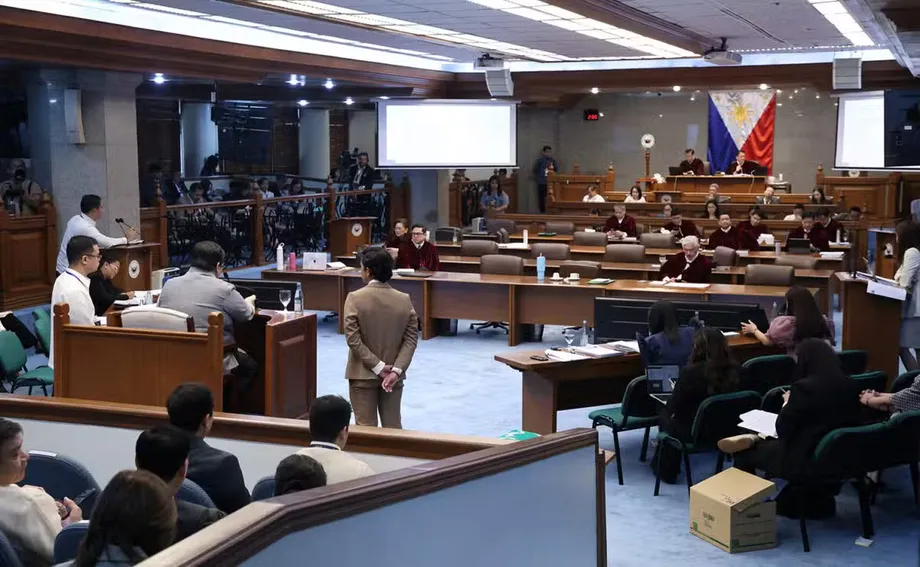
The amount emerged in testimony by Anti-Money Laundering Council (AMLC) Executive Director Ronel Buenaventura during Duterte's impeachment trial. The recipient was identified as Cale88 Foods Corporation, a company in which her husband, lawyer Manases Carpio, had a business interest.
Speaking during a Kapihan interview in Singapore on Sunday, Marcos said the alleged involvement of Chinese money warranted scrutiny beyond the political dispute surrounding the vice president. He described the concern in national security terms while repeatedly making his assessment conditional on evidence.
Marcos, the Philippine president, explained why he considered the allegations serious:
The most disturbing aspect of it is the Chinese money. That now rises to a national security issue.
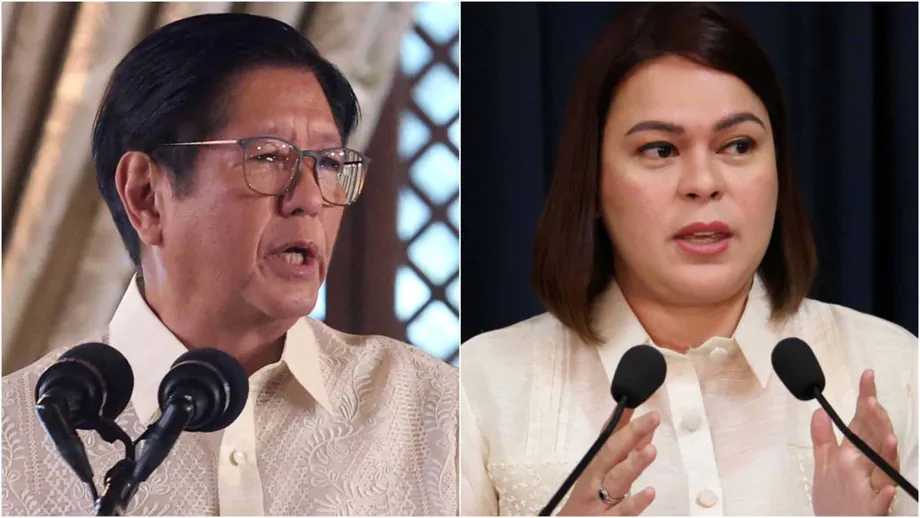
Duterte subsequently challenged that reasoning, arguing that many Philippine businesses import from or export to China. Her response brings a central distinction into focus: evidence that a company received foreign payments does not, by itself, establish unlawful conduct or a threat to the state.
No wrongdoing has been established. The dispute now involves several separate questions: whether the transfers occurred as described, who sent them, what commercial purpose they served, and whether they had any connection to improper foreign influence. Marcos said investigators must establish the truth before reaching conclusions.
What the Financial Testimony Establishes
Buenaventura testified that Cale88 received P319.33 million in inward remittances from mainland China and Hong Kong. An inward remittance is money transferred into the country from abroad. The term identifies the direction of a payment, not whether it was lawful or what it purchased.
Another account of the congressional discussion put the amount at P319 million. That is P330,000 below the more precise figure attributed to Buenaventura and appears to be a rounded presentation of the same total, rather than an independently identified set of transfers.
The company's name also appears differently in reports: Cale88 Foods Corporation in the account of Buenaventura's testimony, and Calle88 Foods Corp. in the account of a proposed congressional investigation. Both descriptions concern a food business associated with Carpio, but the spelling discrepancy has not been resolved through a corporate document presented publicly in these accounts.
The business was described in the congressional discussion as an alleged banana chip company associated with Duterte and Carpio. The more specific description accompanying the AMLC testimony identified Carpio as having a business interest. Neither description establishes that Duterte personally received the remittances.
The testimony gives the controversy a specific financial amount and a named recipient. It does not settle the purpose of the payments, the company's ownership at the time of each transfer, or whether goods or services were supplied in return.
Were the Senders Chinese State Entities?
Senator-Judge Risa Hontiveros said her investigation indicated that the businesses sending money to the corporation were allegedly Chinese state-owned entities. That allegation is distinct from the AMLC testimony identifying mainland China and Hong Kong as the origins of the remittances.
A state-owned enterprise is a business owned or controlled by a government. Establishing that status would help identify the senders, but it would not automatically prove that a particular payment was intended to influence a Philippine official.
The distinction matters because the concern raised by Marcos involves possible foreign influence, while Duterte's response concerns ordinary trade. Determining the senders' ownership and the purpose of the transactions is necessary to assess those competing positions. Hontiveros's allegation has not been presented as a final finding of wrongdoing.
Marcos Says Evidence Must Come First
Marcos confirmed that the government was thoroughly investigating the allegations and said the Department of National Defense (DND) had a duty to examine their possible national security consequences. He did not announce a completed assessment or identify a proven threat.
The president set out the sequence he said investigators should follow:
The first step in dealing with this whole situation, these allegations that are being thrown out, is let's find the evidence and see what the truth is. That's what's important.
Asked what instructions he had given the DND and whether he had communicated with Chinese officials, Marcos declined to speculate. His answers did not disclose specific investigative directions or establish whether diplomatic contact had taken place.
He said substantiated allegations would move near the top of the country's security concerns because they would involve Philippine sovereignty and the safety of the state. At the same time, he said he would welcome evidence disproving them.
Marcos described that possibility in personal terms:
Nothing would make me happier than proof that it is not so. Then it's one less thing that I have to worry about.
Duterte Challenges the Security Argument
In remarks reported on Monday, October 12, 2026, Duterte questioned whether doing business with China was being treated as a national security risk. She pointed to the many Philippine companies whose imports or exports involve China.
Duterte also said Marcos's comments made it seem that his administration had regarded her as a threat since 2023. That was her interpretation of his remarks, not an admission by Marcos that the government had made such an assessment.
Her defense focused on the commercial nature that foreign transactions can have. It did not resolve the specific questions about the remitting companies, their alleged state ownership, or the underlying transactions described during the impeachment proceedings.
Duterte separately alleged that the impeachment case was collapsing for lack of evidence and that its proponents had shifted attention to Chinese funds. She accused them of inventing evidence and criticized what she said was the absence of supporting attachments when the complaint was filed. Those accusations remain contested claims, not findings by the impeachment court.
Congressional Inquiry Is Expected
Bukidnon Representative Jonathan Keith Flores, a member of the House prosecution panel, said a resolution was expected to be filed in Congress seeking an investigation into the alleged funds. His remarks described a planned step, not a resolution already adopted or an inquiry with a confirmed timetable.
Flores said the prosecution panel learned about the funds during witness presentations at the Senate Impeachment Court. According to his account, the panel did not know about them before the impeachment proceedings.
That timing is relevant to Duterte's accusation that the case's proponents changed their narrative. Flores described information emerging during testimony; Duterte portrayed the focus on China as a response to weaknesses in the case. Neither account alone determines the validity of the financial allegations.
Flores also said the Department of Foreign Affairs, Department of Justice and Office of the Ombudsman were expected to act on the company issue. No specific filing dates, investigative mandates or decisions by those agencies were announced in the accounts of his comments.
How the Dispute Developed
Former Senator Antonio Trillanes IV first publicly disclosed allegations about transactions involving Chinese entities and the company at a press conference. The controversy then moved into financial testimony, proposed congressional scrutiny and a public exchange between the president and vice president.
- At a press conference, Trillanes raised allegations concerning Chinese funds and the company linked to Carpio. The exact date was not specified.
- During the impeachment trial in the week preceding October 12, 2026, Buenaventura testified about P319.33 million in inward remittances from mainland China and Hong Kong.
- On Sunday in Singapore, Marcos confirmed an investigation and described the possible security threat as conditional on proof.
- On Monday, October 12, Duterte challenged the security framing and accused the impeachment proponents of shifting their narrative.
A separate political exchange concerned Duterte's accusation that the administration was behind allegations raised by dismissed police officer Rodulfo Gracioso Jr. Marcos denied involvement and demanded evidence. That exchange should not be treated as proof that Gracioso's allegations and the company remittances are the same matter.
Marcos said completing his administration's priorities concerned him more than following the political exchanges. The next concrete steps remain unspecified: no date was given for the proposed congressional resolution, an investigative report or a decision establishing whether the remittances involved wrongdoing.
Key Points
- AMLC Executive Director Ronel Buenaventura testified that Cale88 Foods Corporation received P319.33 million from mainland China and Hong Kong.
- The company was linked to a business interest held by Duterte's husband, Manases Carpio.
- Hontiveros alleged that the remitting businesses were Chinese state-owned entities; that claim is not a final finding.
- Marcos confirmed an investigation and said any security assessment must depend on evidence.
- Duterte challenged the treatment of Chinese trade as a security concern and disputed the strength of the impeachment case.
- A congressional resolution is expected, but no filing date or investigation deadline was announced.
- No wrongdoing or improper foreign influence has been established.