
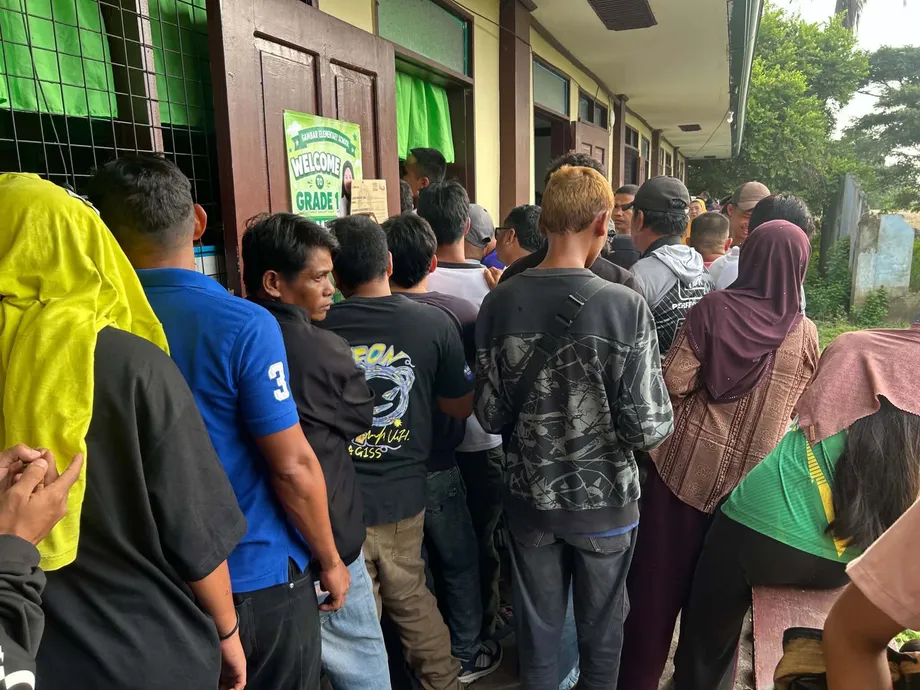
A narrow result puts government formation at center stage
The Bangsamoro Federalist Party won 31 seats and the United Bangsamoro Justice Party won 30 in the southern Philippine region's first parliamentary election on September 14, 2026, leaving neither with the 41 seats needed to control the 80 member legislature. The contest brought 2,018,478 voters to the polls, a turnout of 84.34 percent, and shifted the next decision from voters to their elected representatives: who will lead the autonomous government.
Contents
- A narrow result puts government formation at center stage
- What the seat totals mean for a coalition
- A leadership split rooted in the interim government
- Autonomy includes choosing the executive
- Maluso's ballots exposed a custody failure
- Strong turnout came with unresolved voting complaints
- Deaths qualify descriptions of a peaceful election
- Representation and recovery remain unfinished
- The dates shaping the transition
- Key Points
The incoming Parliament is scheduled to assume office on October 30 and elect the chief minister, Parliament speaker and other officers. Unlike an election in which voters directly choose an executive leader, this parliamentary process requires a candidate for chief minister to secure support inside the legislature. Coalition negotiations therefore determine both the governing majority and the leadership of the regional executive.
The vote marks a major stage in implementing the 2014 Comprehensive Agreement on the Bangsamoro, under which the Moro Islamic Liberation Front abandoned its pursuit of a separate state in exchange for broader autonomy. Its roughly 40,000 fighters were expected to leave armed service and enter civilian life. Members of the movement subsequently served in the interim government after voters approved the autonomous region in 2019.
High participation and the completion of the election do not resolve every concern. Deadly violence, allegations of interference with voting and the discovery of ballots already marked before polling began accompanied the contest. The result also leaves two political camps with roots in the same former rebel movement negotiating from almost equal positions.
What the seat totals mean for a coalition
The Federalist Party, known as BFP, needs 10 additional votes to reach a majority. The United Bangsamoro Justice Party, or UBJP, needs 11. Together, their reported 31 and 30 seats would produce a 61 seat majority, but their shared origins have not prevented a bitter leadership division.
Reports differ on the strength of the other parties. One detailed tally gives the BARMM Grand Coalition eight seats, Serbisyong Inklusibo-Alyansang Progresibo Party six, Pro Bangsamoro one, Raayat one and Itihad one, alongside two representatives of non-Moro indigenous communities. Those figures account for the 19 seats outside BFP and UBJP.
A separate account gives the Grand Coalition 15 seats. That larger figure cannot be treated as interchangeable with the eight seat tally: a bloc of 15 could put either leading party above 41 on its own, while a bloc of eight could not. The difference leaves uncertainty about the precise coalition arithmetic beyond the two largest parties.
Another distinction is between regional party seats and total parliamentary strength. Of the 40 regional party seats, BFP won 16, UBJP 15, the Grand Coalition eight and Raayat one. District and sectoral representatives occupy the remaining 40 seats. The smaller party seat figures therefore do not contradict BFP's 31 seats or UBJP's 30 across the full Parliament.
BFP has announced that it has secured enough support to form a majority, while coalition discussions have continued. That announcement is not the same as a parliamentary vote electing a chief minister. No completed leadership election is established ahead of the October 30 assumption of office.
A leadership split rooted in the interim government
BFP leader Abdulraof Macacua, the interim chief minister and a former commander of the Moro Islamic Liberation Front, emerged as the principal rival to UBJP, which remains associated with the front and its chairman, Ahod Ebrahim, also known as Al Haj Murad. Both men won places in the new Parliament.
The split deepened after President Ferdinand Marcos Jr. replaced Ebrahim with Macacua as interim chief minister in March 2025. Macacua had been UBJP's secretary general before leaving to run as an independent. He became BFP president and chairman about a month before the election.
Other senior figures also moved from UBJP to BFP, including Akmad Brahim, Abunawas Maslamama and Tomanda Antok. The front's central committee subsequently removed Macacua and those figures from positions in its armed wing, the Bangsamoro Islamic Armed Forces.
Ebrahim, the MILF chairman and a winning UBJP nominee, expressed willingness to negotiate after casting his ballot:
"If the party does not get majority of the seats, we will look for parties who can be our allies so that we can form a coalition," Murad said.
The institutional test is whether this division can be managed through parliamentary bargaining. The election has given both camps substantial representation, rather than allowing either to determine the government alone.
Autonomy includes choosing the executive
Peace Adviser Mel Senen Sarmiento, who also chairs the government's Peace Implementing Panel, said on October 7 that elected representatives must be free to choose their leaders. His statement followed a manifesto from 10 Bangsamoro civil society organizations urging Marcos to leave the chief minister selection to Parliament.
Sarmiento connected that choice directly to the peace settlement:
The gains of the peace process must now be carried forward through the parliamentary process," Sarmiento said. "Members of Parliament must be free to choose their leaders and determine who will lead the executive branch.
His statement did not endorse a party or candidate. It drew a distinction between national support for the peace process and the elected legislature's authority to decide who heads the regional executive. That distinction carries particular weight after the presidential replacement of the interim chief minister helped divide the former rebel movement.
The International Republican Institute, a nonprofit election observation organization, also identified government formation as an early test in its preliminary election findings. It urged parties to negotiate responsibly and pursue disputes through established legal and institutional channels.
IRI Vice Chairman Randy Scheunemann, who led its delegation, described the shift now required of the competing parties:
For the first time, political parties publicly debated one another on the issues facing the Bangsamoro. They now need to shift from campaigning and mobilizing to governing to demonstrate that the new parliamentary system can deliver for citizens.
Maluso's ballots exposed a custody failure
In Maluso, Basilan, the Commission on Elections discovered ballots already shaded in 36 precincts before voting began. It ordered replacements and placed the municipality under its control, taking direct command of local government workers and police officers for election purposes.
Reports disagree on the municipality's total number of precincts. The initial account gave 68, while subsequent updates gave 86. Both identified 36 affected precincts. IRI's preliminary findings confirm the 36 precinct figure without specifying the municipal total.
Replacement ballots arrived at 6 p.m. on September 14. Comelec Chairman George Erwin Garcia said they would be distributed directly to electoral board members early the next morning rather than stored in municipal halls. Voting continued on September 15 from 7 a.m. to 7 p.m.; Garcia described this as a continuation of the election, not a new election date.
In Al-Barka, also in Basilan, Comelec extended voting until 9 p.m. after teachers were prevented from taking election materials to their assigned polling centers. These incidents show why regional opening figures alone did not capture every local disruption: although 98.1 percent of polling stations were reported open early on election day, some communities faced substantial delays.
IRI credited Comelec with replacing Maluso's compromised ballots and allowing affected voters to participate. It also called for a transparent investigation into how the ballots were accessed. The replacement addressed the immediate voting problem, but the findings do not establish who was responsible or whether anyone has been held accountable.
Strong turnout came with unresolved voting complaints
The recorded turnout of 84.34 percent exceeded election officials' earlier expectation of 80 percent by 4.34 percentage points. Voting was organized across 5,212 precincts in 105 municipalities and cities, with nearly 2.4 million registered voters.
At 10:14 p.m. on election night, 93.38 percent of returns had been processed in a partial, unofficial count. BFP had 614,672 regional party votes, reported as 34.8 percent, and UBJP had 571,703, reported as 32.6 percent. Four parties had passed the 2.5 percent threshold for regional party representation. These figures were an early count, not the final allocation of all parliamentary seats.
Election monitors raised concerns that high participation might coexist with interference in individual voting choices. The Legal Network for Truthful Elections reported alleged irregularities in assisted voting, including the shading and feeding of ballots. The Parish Pastoral Council for Responsible Voting relayed a poll watcher's allegation that people linked to a local mayor's wife took a voters' list in Maguindanao del Sur to cast ballots using names of people who had not yet voted.
IRI also identified allegations involving ballot manipulation, transported voters and improper assistance. It called for stronger protections for ballot secrecy, voter identification and ballot handling. These allegations require investigation and should not be presented as proven conduct across the region.
Administrative pressures were substantial. More than 800 teachers withdrew from election duties or could not serve, requiring substitute electoral board members in some locations. IRI nevertheless found that automated counting and transmission generally operated as designed.
Deaths qualify descriptions of a peaceful election
More than 20,000 soldiers and police officers were deployed for the vote. Officials described polling as largely peaceful, and IRI said voting proceeded without major security disruption across much of the region. That assessment coexists with serious violence in particular locations.
Casualty figures differ by account and reporting period. The initial account recorded three deaths and 15 injuries in a shooting in Cotabato City late on September 13, followed by one death after a disturbance at a polling station on September 14. Another account cited at least three deaths in multiple shootings on election day. IRI's broader assessment recorded at least five deaths and more than 20 injuries in shootings and explosions surrounding the election in Cotabato City. These totals should not be added together because they may include overlapping incidents.
Gunfire was also reported near the municipal government compound in Shariff Saydona Mustapha, Maguindanao del Sur, where a police Special Action Force armored vehicle entered the area. Authorities had not identified the responsible armed group in that account. Subsequent localized fighting in the region's Special Geographic Area prompted deployment of joint government and MILF security mechanisms.
Brigadier General Jemuel Siason, deputy police director of the Bangsamoro region, said security forces would remain in place after the winners were proclaimed:
"We will still hold our deployment in place even after the proclamation of winners. We are trying to ensure that the security situation will remain stable," Siason said.
IRI recommended impartial investigations and a review of election security preparations. Its own direct election day observation was limited to four teams in Cotabato City because of security conditions. Although 108 international observers from multiple organizations monitored the election, IRI cautioned that its observations should not be treated as representative of the whole region.
Representation and recovery remain unfinished
Ten women won seats across party, district and sectoral contests, giving them 12.5 percent of the incoming Parliament. IRI said that share was unchanged from the transitional legislature, despite women's active participation in the election. It urged parties to examine recruitment, nominations and placement in positions where candidates could realistically win.
Sectoral representation gave communities additional routes into Parliament, including the two representatives of non-Moro indigenous people. IRI found that some voters left sectoral choices unmarked, suggesting that parts of the new system were not fully understood. It recommended further voter education, particularly for isolated communities and voters facing language or accessibility barriers.
The election's political reach also differed from that of the earlier autonomous arrangement. Sulu is no longer part of the Bangsamoro electorate. Mahardika and the Bangsamoro Party, associated with factions of the Moro National Liberation Front, won no seats, although figures linked to that movement entered through other parties and individual representatives.
For residents still rebuilding after conflict, parliamentary representation will be judged against practical needs. The 2017 siege of Marawi lasted five months, killed more than 1,100 people, mostly militants, and destroyed commercial and residential districts. Some families have returned to rebuilt homes, while hundreds remain in temporary shelters.
Marawi resident Analyn Pangandaman said her family had waited nearly nine years for government compensation and could not afford to rebuild without it. The MILF has also halted the disarming of former fighters, citing the government's failure to provide promised aid. Completing those commitments remains a separate task from completing an election.
The dates shaping the transition
The change to elected government has unfolded through polling, proclamations and preparations for the new legislature. The main dates are:
- September 14, 2026: Bangsamoro held its first regular parliamentary election.
- September 15: Voting continued in Maluso after compromised ballots were replaced.
- Shortly after midnight on September 16: The 80 member Parliament was proclaimed.
- October 5: Officials broke ground for a new Parliament building in Cotabato City.
- October 7: Peace Adviser Sarmiento called for elected members to choose their leaders freely.
- October 30: The incoming Parliament is scheduled to assume office and elect its leadership.
- June 30, 2031: The special transition term is scheduled to end, with subsequent parliamentary elections held every three years.
The building project is another part of the institutional transition, but it will not be ready when the elected members take office. Transitional Parliament Speaker Mohammad Yacob led the groundbreaking for a building of 10 stories at the Bangsamoro Government Center, on the site of the existing Parliament building.
Committee on Accounts chair Khalid Ma-amor Hadji Abdullah said the first construction phase has an allocation of 800 million Philippine pesos, with completion expected within three years. The project is intended to address a shortage of working space that has left some members renting offices outside the government center.
The immediate unresolved decisions concern the governing coalition and parliamentary leadership. Investigations into violence and ballot interference also remain unfinished in the accounts of the election. IRI plans a final comprehensive assessment, but has not given a publication date.
Key Points
- BFP won 31 seats and UBJP 30, leaving both below the 41 seat majority threshold.
- A total of 2,018,478 voters cast ballots, producing turnout of 84.34 percent.
- Reports differ on the Grand Coalition's total strength, giving either eight or 15 seats.
- Maluso voting continued on September 15 after marked ballots were discovered in 36 precincts.
- IRI recorded at least five deaths and more than 20 injuries in violence surrounding the election in Cotabato City.
- Women will hold 10 of the incoming Parliament's 80 seats.
- The new Parliament is scheduled to take office on October 30 and choose the chief minister and its other leaders.