Senate vote sets up a dispute over who can go online
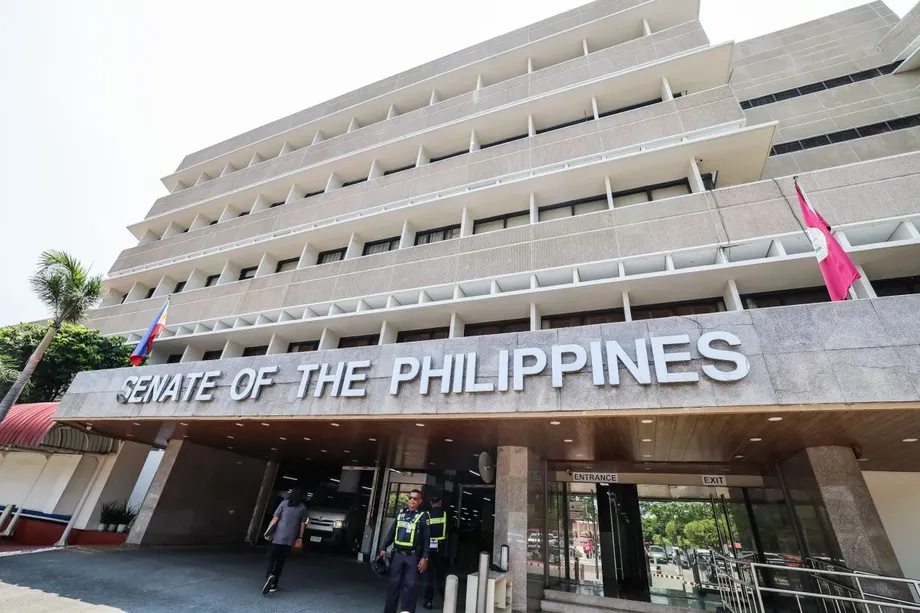
The Philippine Senate approved Senate Bill No. 2424, the Safe Media Access and Responsible Technology for Kids in Digital Spaces (SMART KIDS) Act, on October 8, 2026, with 16 votes in favor, one against and no abstentions. The proposal would bar people below 18 from creating or using accounts on digital services classified as posing high risks to children, while exposing covered platforms to fines of P5 million to P20 million per violation.
Contents
- Senate vote sets up a dispute over who can go online
- Which services and accounts would be covered?
- Age checks, platform fines and duties for parents
- How complaints would reach platforms
- The House proposes a different boundary
- Why Hontiveros opposed the blanket restriction
- Rights and mental health groups challenge the approach
- School violence drives concern, but causation is unresolved
- Australia illustrates the enforcement challenge
- What still has to happen
- Key Points
The measure is not yet law. Its passage on third and final reading completes the Senate stage, but a different approach is advancing in the House of Representatives. House Bill No. 11566, approved on second reading on October 6, would allow older adolescents some access with safeguards rather than exclude everyone below 18.
That difference puts the central policy choice before Congress: whether protecting children requires keeping them off covered platforms until adulthood, or allowing access at younger ages while restricting harmful features, adult contact and commercial practices. The disagreement extends beyond the minimum age to how children can work, communicate with relatives abroad, report abuse and learn to navigate online spaces.
Senator Robinhood Padilla sponsored the Senate measure. Senator Risa Hontiveros cast the sole dissenting vote, arguing for graduated protections instead of a blanket prohibition. President Ferdinand Marcos Jr. subsequently said the government was still studying a blanket ban and needed a better understanding of the psychological factors behind violence involving young people.
The Senate's official passage announcement records the vote on Thursday, October 8. Reports differ on the date: one gives October 9 while also describing the sitting as Thursday, and another describes the approval as occurring on Wednesday. The official Senate account places final passage on October 8.
Which services and accounts would be covered?
The Senate proposal would establish a framework for identifying digital services that may pose risks to children. Its official announcement names Meta Platforms, Roblox and Gorebox as examples. Covered services would have to prevent anyone below 18 from creating or accessing an account and act against existing accounts reasonably determined to be owned, operated or used by a minor.
The required responses could include suspension, restriction, disabling or removal. The reference to accounts used by minors matters: the proposed restriction is not limited to an account registered in a child's own name. However, the precise procedures for determining ownership or use are not explained in the Senate announcement.
The proposal does not cover every online activity. The Senate lists exemptions for email, private messaging, educational platforms, news services, professional collaboration services and online games that are not primarily used for social networking. The initial description of the measure also limits the messaging exemption to apps without public or group features.
The gaming distinction is especially important because Roblox and Gorebox appear among the examples of services that could be covered. Gaming is not presented as an unconditional exemption. Whether a service is primarily used for social networking could determine its treatment. Reports also describe an exemption for qualifying educational platforms certified by relevant agencies, subject to child protection safeguards.
Age checks, platform fines and duties for parents
Covered providers would have to introduce age assurance measures to determine whether users meet the minimum age. Age assurance is a general term for checks that verify or estimate someone's age. The official announcement does not specify a required technology, the information users would need to provide, or how incorrect assessments would be challenged.
Platforms violating the proposed law could face P5 million to P20 million in fines for each violation, plus P100,000 for every day of continued failure to comply. At that daily rate, 30 days would add P3 million to the initial penalty. That calculation illustrates the possible cost of persistent violations, although the announcement does not explain how separate violations would be counted.
Parents or legal guardians who knowingly help children bypass age assurance mechanisms could face a fine of up to P50,000, community service and mandatory attendance at digital parenting and child safety programs. One report gives a parental fine range of P5,000 to P50,000; the official announcement specifies the maximum but does not state that lower limit.
The condition that assistance must be knowing is important. The official description targets deliberate help in circumventing the checks, rather than simply stating that every parent whose child obtains an account would be fined. Reports also say international providers operating in the Philippines would need to designate a local representative and cooperate with Philippine authorities.
How complaints would reach platforms
If the measure becomes law, the Department of Information and Communications Technology (DICT) would oversee implementation. It would also establish and maintain an accessible public platform where suspected violations could be reported free of charge.
Reports involving harmful content that requires immediate action would receive expedited referral or escalation to the digital service concerned. This creates a route for urgent complaints, separate from the broader task of checking whether minors are holding prohibited accounts.
The Senate announcement does not give a fixed response deadline for those urgent referrals or explain how the department would determine which reports qualify. It also leaves several operational questions unanswered, including the detailed criteria for classifying services, the treatment of disputed age assessments and the process for restoring an account removed in error.
The stated objectives extend beyond removing harmful content. The bill seeks to reduce distraction from mobile devices and electronic gadgets, support children's development and promote a safe learning environment. Its implementation would therefore involve both access controls and a broader effort to limit risks associated with digital use.
The House proposes a different boundary
House Bill No. 11566, the Safe and Friendly Environment for Kids in Digital Spaces Act, passed second reading on October 6. Its approach distinguishes younger children from older adolescents, but reports disagree on the exact treatment of children aged 13.
Several accounts describe a prohibition for children below 13, with access for those aged 13 to 17 subject to parental consent and additional safeguards. Another describes a ban for children 13 and younger, with restricted access for older teenagers. Those formulations are not interchangeable: they place a 13-year-old on different sides of the boundary. The precise cutoff needs clarification as the House measure advances.
The proposed House safeguards would address harmful advertising, livestreaming, short video feeds selected by algorithms, features resembling gambling, contact with unknown adults and certain artificial intelligence features. An algorithm is a set of automated rules used, for example, to decide which posts or videos a person sees next.
Pasig Representative Roman Romulo, who sponsored the House proposal, explained the rationale for treating younger children and adolescents differently:
"Younger children require a clear minimum age boundary, while adolescents require a framework that recognizes their growing capacity for independence without disregarding the risks to which they remain exposed," Romulo said.
The difference between the chambers is substantial, not merely procedural. The Senate would generally exclude minors from accounts on covered services; the House approach would permit some teenage access under restrictions. The versions must be reconciled before a final bill can be sent to the President.
Why Hontiveros opposed the blanket restriction
Hontiveros acknowledged risks including cyberbullying, sexual abuse and exploitation, grooming, harmful content and violent extremism. Her objection was to using the same access rule for children at very different stages of development.
Explaining her dissent, the senator distinguished the legal age of adulthood from a child's developing ability to make decisions:
"Eighteen is the legal threshold for adulthood. But it is certainly not a developmental threshold," Hontiveros said.
She cited the United Nations Convention on the Rights of the Child and its recognition of children's evolving capacities. Her alternative would place stronger protections around younger adolescents and gradually allow older teenagers more independence. She proposed a minimum age of 15, having earlier suggested 13.
Her examples showed the activities that could be interrupted. They included a 17-year-old working student earning through TikTok sales and work as a virtual assistant for social media personalities, a child communicating with a mother working overseas, and a minor abuse survivor who found support through online communities. She also cited a student whose public account of alleged harassment prompted a school to examine a complaint it had previously disregarded.
Hontiveros argued for stronger default privacy settings, tighter limits on adult contact, restrictions on targeted advertising and profiling, and greater parental and educational supervision. Profiling involves using information about a person to infer interests or behavior, often to select advertising or content.
She also called for regulation of algorithms and designs that encourage excessive use. Her digital literacy proposals included teaching children how data is collected, misinformation spreads and grooming operates, as well as how to recognize scams, report abuse and respond to cyberbullying. She noted that Filipinos can vote in Sangguniang Kabataan elections and legally work from age 15, subject to labor rules, making access to information and economic opportunities relevant to the age debate.
Rights and mental health groups challenge the approach
The Child Rights Network criticized the Senate vote as a setback for children's rights. The organization argued that restricting children's access shifts the burden of online harm away from platforms and perpetrators and onto young people.
In its statement, the network described its objection in these terms:
"This is not protection. It is punishment. Children should not be punished for the failure of adults to keep them safe," the group said.
The network also questioned the Senate's deliberations, contrasting them with House discussions it described as more inclusive and consultative. It said child rights organizations had opportunities to bring children's views into the House process. Hontiveros separately said her position aligned with calls from the Council for the Welfare of Children, the Department of Social Welfare and Development, and child rights advocates for stronger platform safeguards rather than a blanket prohibition.
The Philippine Mental Health Association also rejected a blanket ban as a sufficient answer to youth violence. Its national executive director, Dr. Carolina Uno-Rayco, called for a broader prevention strategy:
"Preventing violence requires a comprehensive approach that includes mental health support, safe school environments, responsible online platforms, and early identification and intervention," Uno-Rayco said.
Uno-Rayco supported safety built into online services, digital literacy and help for young people in recognizing harmful behavior and seeking support. These objections do not deny that online harm exists. They dispute whether excluding minors addresses its causes and whether other protections would reach children more effectively.
School violence drives concern, but causation is unresolved
The Senate vote followed concern over school shootings in Tacloban City, Zamboanga City and South Cotabato. One account describes three deadly shootings between June and September 2026. Senate President Sherwin Gatchalian linked the legislation to alarm over children's digital safety, including alleged online grooming connected to violence.
Senate Majority Leader Juan Miguel Zubiri described the proposal as a landmark measure and argued that social media requires guidance and regulation. Padilla said its passage was an important step toward protecting children online. Senator Joel Villanueva argued that platforms bear responsibilities because harmful behaviors can generate profits for them.
Those concerns explain the urgency behind the vote, but they do not establish that social media caused each incident or that an account ban would have prevented it. The mental health association described youth violence as involving multiple factors beyond digital activity.
At a forum with Philippine media in Singapore on October 11, Marcos said a blanket ban remained under study and would be a difficult decision. He called for advice from psychologists and psychiatrists specializing in children's mental health, alongside school security, parental involvement and attention to children's psychological well-being.
The President explained why he did not consider any single measure sufficient:
"There's no silver bullet to this. You have to bring many, many things together," Marcos said.
Religious leaders have also urged responsible technology use. Archbishop Rex Andrew Alarcon, chairman of the Catholic Bishops' Conference of the Philippines Episcopal Commission on Social Communications, called for technology to be used responsibly, effectively, safely and meaningfully. That position stresses adult guidance, though it does not by itself resolve the legislative age cutoff.
Australia illustrates the enforcement challenge
Australia's restriction on social media accounts for children under 16 took effect in December 2025. Reported figures attributed to its eSafety Commissioner show usage among children below 16 declining from 85.9% before the restriction to 81.5% three months afterward.
That is a reduction of 4.4 percentage points, or about 5.1% relative to the initial 85.9% rate. More than eight in ten children in the reported group still used social media. These figures concern usage, however, and do not establish whether exposure to harmful content or other measures of safety improved.
Reported examples of circumvention included new accounts, alternative devices and assistance from adults. Facial age estimation also reportedly classified some teenagers as older than 16 and some adults as minors. An expert involved in Australia's age assurance trial attributed some failures to inconsistent platform implementation.
British online safety campaigner Ian Russell, whose daughter Molly died by suicide at 14 in 2017, has argued that bans do not address harmful algorithms and platform design. An inquest concluded that harmful online content contributed to her death. His position connects the access debate to a separate question: what providers must change about the content and features users encounter.
For the Philippines, enforcement also has a jurisdictional dimension. Marcos pointed to difficulties dealing with providers without a physical presence in the country. The proposed local representative requirement addresses that concern, although the practical arrangements and effectiveness have not yet been established.
What still has to happen
The legislative sequence shows why Senate approval should not be mistaken for an active prohibition:
- October 6, 2026: The House approved House Bill No. 11566 on second reading.
- October 8, 2026: The Senate recorded final passage of Senate Bill No. 2424 by 16 votes to one, with no abstentions.
- October 11, 2026: Marcos said a blanket ban remained under study during a media forum in Singapore.
- Next steps: The remaining House process and reconciliation of the chamber versions must be completed before a final bill can reach the President.
No date is specified for a final House vote, reconciliation, presidential action or implementation. The final minimum age, permitted activities for adolescents, platform safeguards and enforcement procedures therefore remain unsettled.
The choice need not be reduced to whether online risks exist. Supporters and opponents both identify serious dangers. The unresolved issue is which combination of access limits, safer platform design, accountability, education and support will protect children without unnecessarily cutting off useful connections and opportunities.
Key Points
- The Senate approved the SMART KIDS bill on October 8, 2026, by 16 votes to one. It is not yet law.
- The Senate proposal would restrict accounts for people below 18 on services classified as posing high risks to children.
- Email, private messaging, education, news, professional collaboration and games not primarily used for social networking have stated exemptions.
- Covered platforms could face P5 million to P20 million per violation, plus P100,000 daily for continued failure to comply.
- The House favors graduated access for adolescents, but reports differ on whether its youngest excluded group includes children aged 13.
- Hontiveros, child rights advocates and mental health advocates favor stronger safeguards and support rather than a blanket prohibition.
- The chamber versions still need reconciliation, and Marcos has said a blanket ban remains under study.