Nearly three in ten young women married before 18
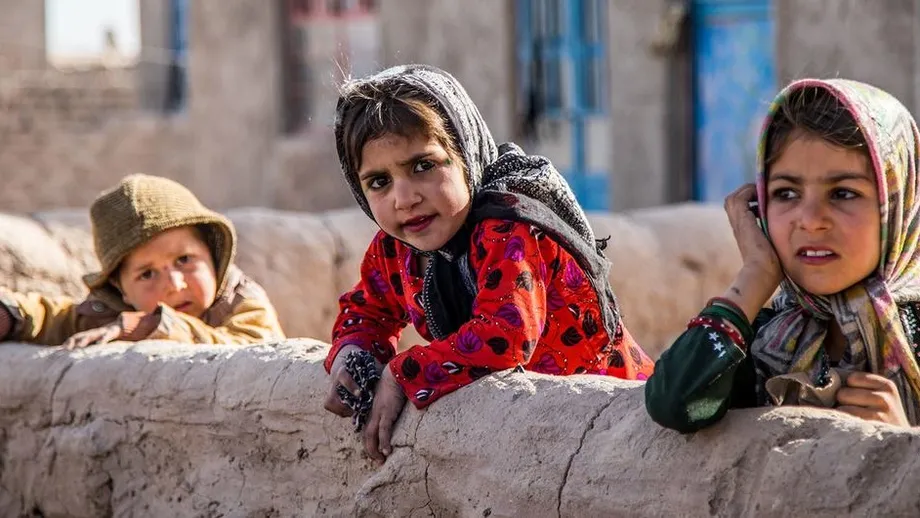
UNICEF renewed its call to end child marriage in Afghanistan on October 11, 2026, citing a national survey showing that 28.7 percent of women aged 20 to 24 were first married before their 18th birthday. Another 9.6 percent were married before turning 15. Among the poorest women in that age group, the proportion married before 18 reached 43.6 percent, compared with 17.5 percent among the richest.
Contents
- Nearly three in ten young women married before 18
- What the survey measures
- Poverty and location divide the risks
- School closures narrow girls' choices
- Early childbirth adds a measurable health burden
- Women's accounts describe pressure inside communities
- Support for families is part of prevention
- Protection requires more than a renewed appeal
- Education losses extend to teachers and health workers
- Key Points
The appeal, issued for International Day of the Girl, links protection from early marriage with reopening schools beyond grade six, supporting families facing economic hardship and providing health and protection services. It comes as restrictions on secondary and university education continue to narrow the choices available to Afghan girls and women.
Tajudeen Oyewale, UNICEF's representative in Afghanistan, put girls' right to a childhood at the center of the appeal:
Every girl deserves a childhood. She deserves to learn, to grow, to be safe, to develop her skills and to have the opportunity to shape her own future.
The national figure does not mean that half of all Afghan girls marry before 18. UNICEF's warning that the proportion reaches one in two in some areas describes geographic differences. The survey also measures different age groups, a distinction essential to understanding both the national estimate and the provincial figures.
What the survey measures
The figures come from the Afghanistan Multiple Indicator Cluster Survey for 2022 to 2023, conducted by UNICEF with the National Statistics and Information Authority and funded by the Afghanistan Reconstruction Trust Fund. UNICEF's survey publication page lists a June 2023 publication date, while the report itself carries a May 2023 date.
MICS is a household survey programme designed to produce internationally comparable information about children and women. The Afghan survey covers marriage alongside education, child labour, maternal health, gender equality and adolescent health. Its child marriage indicator records whether women were first married before ages 15 and 18.
The Summary Findings Report gives two national measures: 28.7 percent among women aged 20 to 24 and 38.9 percent among women aged 20 to 49. The latter covers a much wider range of marriage histories. The difference is 10.2 percentage points, but it is not a measured change between two survey dates and cannot establish the direction of marriage rates after the education restrictions.
Poverty and location divide the risks
Among women aged 20 to 24, the survey found that 31.9 percent in rural areas married before 18, compared with 20.2 percent in urban areas. Marriage before 15 affected 10.8 percent in rural areas and 6.6 percent in urban areas. These figures show that the risk is uneven, even before considering differences in household wealth.
The wealth gap is larger. For the same age group, marriage before 18 was about 2.5 times as common among the poorest women as among the richest, based on the survey's 43.6 percent and 17.5 percent figures. Marriage before 15 affected 19.5 percent of the poorest women, compared with 3.5 percent of the richest.
The provincial table uses women aged 20 to 49, rather than the younger group. In that broader population, 52.2 percent in both Helmand and Herat were first married before 18, as were 50.5 percent in Faryab. Paktya recorded 17 percent and Logar 19.2 percent. These provincial results give precision to the warning about one in two, but should not be presented as measurements of girls currently under 18.
The report also records lower marriage prevalence among women with higher education. That association does not prove a single cause: leaving education can increase vulnerability to marriage, while marriage can interrupt schooling. UNICEF's response addresses both risks rather than treating school attendance as a complete solution.
School closures narrow girls' choices
UNICEF is asking Afghanistan's de facto authorities to allow adolescent girls to return to school beyond grade six. Restrictions on secondary education followed the Taliban's return to power in August 2021, and women were prohibited from attending universities in December 2022. Afghanistan is described as the only country where girls and women are barred from both secondary and higher education.
Reports differ on how many girls have lost access to schooling. One estimate puts the number at about 2.5 million. Another, attributed to UNICEF in August 2026, puts it at more than 2.6 million denied secondary education since the ban began. The reporting does not establish whether the difference reflects timing, rounding or a different counting method.
The restrictions and successive warnings span several years:
- July 2018: UNICEF and an Afghan government ministry published research on community attitudes toward child marriage.
- August 2021: The Taliban returned to power, followed by restrictions on girls' secondary schooling.
- November 12, 2021: UNICEF warned that poverty and school closures were increasing the risk of child marriage.
- December 2022: Women were prohibited from attending universities.
- 2022 to 2023: MICS collected the household data underpinning the current marriage figures.
- October 11, 2026: UNICEF renewed its appeal to end child marriage and reopen schools beyond grade six.
School exclusion removes learning opportunities and a setting where girls can maintain social connections and receive support. UNICEF says keeping girls in school is one of the most powerful ways to protect their rights, while stressing that education alone cannot end child marriage.
Early childbirth adds a measurable health burden
UNICEF warns that child marriage increases exposure to violence and social isolation and raises the risks associated with early pregnancy and childbirth. Pregnancy related deaths are a leading cause of mortality among Afghan girls aged 15 to 19, the agency says. Its appeal does not provide a death count or a mortality rate for that group.
The MICS report provides a separate measure of adolescent childbirth: 62 births per 1,000 women aged 15 to 19 nationally, calculated for the three years preceding the survey. This is a birth rate, not the percentage of girls who are mothers, and it does not identify how many births followed child marriage.
Provincial differences are substantial. Nimroz recorded 128 births per 1,000 women aged 15 to 19, eight times Paktya's rate of 16. Badghis recorded 125, Helmand 115 and Farah 113. The rate was 88 among the poorest women and 42 among the richest. By education, it was 82 among women with no education and 20 among those with upper secondary education.
The survey also found that 0.8 percent of women aged 15 to 19 had experienced a live birth before age 15. Together, these measures show why UNICEF's plan includes adolescent mothers as well as girls at risk of marriage. Preventing future marriages does not meet the immediate needs of girls already facing pregnancy, parenting or interrupted schooling.
Women's accounts describe pressure inside communities
Research by Bishnaw-Wawra adds accounts of family and community pressure that national marriage statistics cannot capture. In August 2023, the organization interviewed 3,840 women across 23 provinces through conversations in person, video calls and focus groups. Seventy percent of more than 3,000 respondents answering a question about forced marriage said they knew girls forced to marry before 18.
That result measures respondents' knowledge of cases, not the proportion of Afghan girls forced into marriage. Respondents may know the same people, and the research should not be treated as a national prevalence estimate. Nevertheless, it records concerns about marriages involving girls aged 11 and 12 and the pressures families face.
Mariam Safi, director of the Organization for Policy Research and Development Studies, of which Bishnaw-Wawra is a member, described the effect of restrictions on education and work:
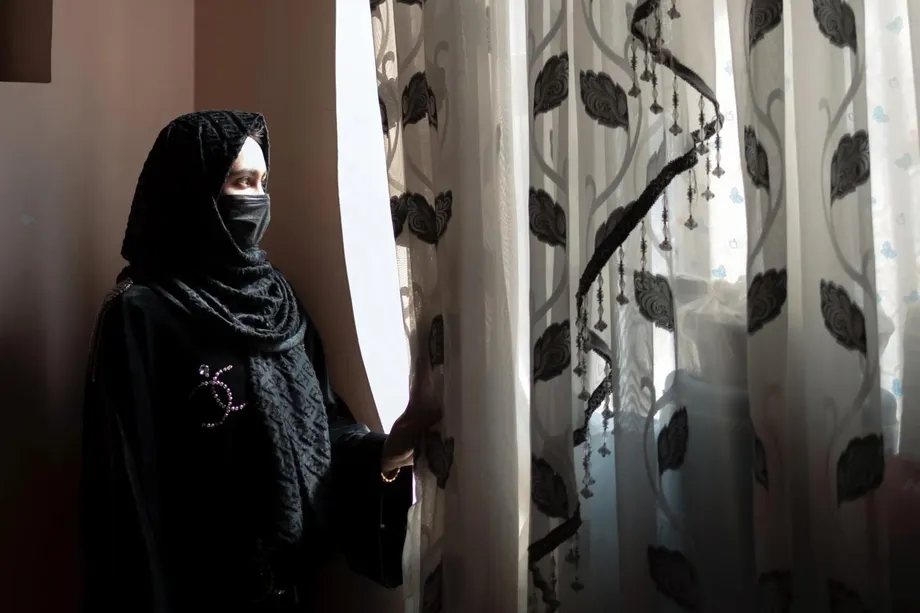
The Taliban prohibit young women from working in most sectors, studying, and moving around the city alone, and many families are once again feeling the burden and urgency to marry off their daughters as soon as possible. That is why we are seeing girls getting married younger and younger, at 11 and 12 years of age.
The findings also distinguish community practices from personal preferences. Fifteen percent of respondents said brides in their communities were under 15, while more than 70 percent considered ages 18 to 25 appropriate for marriage. Those answers suggest that accepting later marriage in principle does not necessarily protect girls from pressure in practice.
The reporting describes Afghan law as setting 16 as the minimum marriage age for women. That is different from UNICEF's statistical definition, which counts marriage before 18 as child marriage. The current appeal does not clarify how marriage age rules are being applied or enforced under the de facto authorities.
A separate Bishnaw-Wawra survey across 18 provinces found that 67 percent of more than 2,000 respondents knew girls experiencing mental health problems, particularly depression and anxiety. Another 164 respondents said they knew a woman who had attempted suicide. These are accounts of known cases, not a clinical assessment or a national suicide rate, and cannot establish how much distress is attributable specifically to marriage.
Fawzia Koofi, a former Afghan parliamentarian and advocate for women's rights, described education as a remaining source of hope. She said she managed a clandestine learning center from abroad serving 200 girls aged 14 to 18, without diplomas and with scarce resources. Such initiatives show efforts to preserve learning, but do not replace access to formal education and recognized qualifications.
Support for families is part of prevention
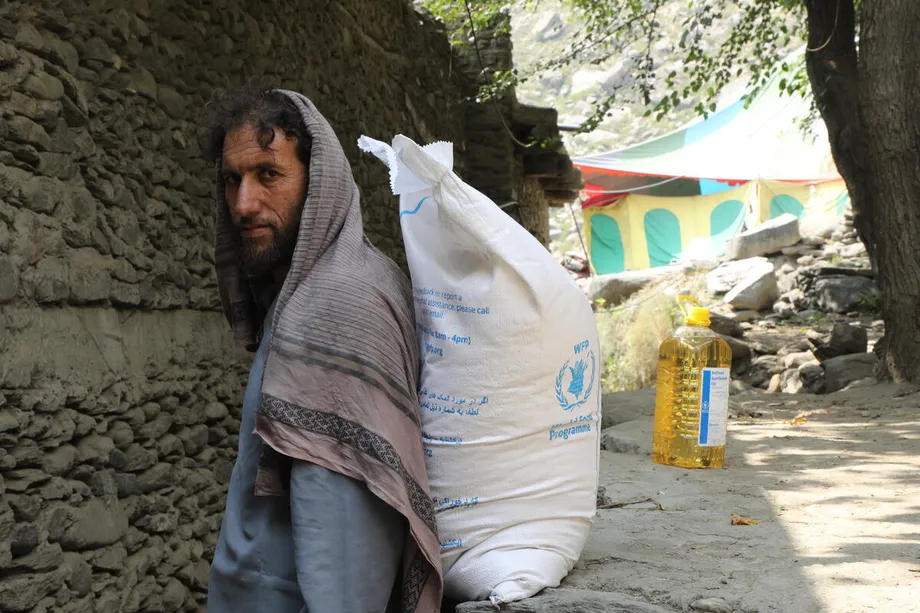
UNICEF's appeal treats economic hardship as a central part of prevention. It calls for support so that households do not turn to child marriage as a way to cope with poverty. The survey's wealth differences support targeting vulnerable families, although they do not mean every early marriage is driven by money.
The link between hunger and marriage pressure was already explicit in UNICEF's November 2021 statement. Henrietta Fore, then UNICEF executive director, said partners had registered 183 child marriages and 10 cases of selling children in Herat and Baghdis during 2018 and 2019. The children involved ranged from six months to 17 years old.
Fore also described reports of future marriage arrangements involving infants. These reports concerned children being offered for marriage later, a distinction from saying infants had begun married life. She said:
We have received credible reports of families offering daughters as young as 20 days old up for future marriage in return for a dowry.
At that time, UNICEF said it had begun cash assistance to reduce the risks of hunger, child labour and child marriage. It also planned work with religious leaders to prevent their involvement in marriage contracts for young girls. These measures address different points in the process: financial pressure on families and the community participation through which marriages take place.
Protection requires more than a renewed appeal
The 2026 call builds on years of concern rather than identifying a newly discovered practice. UNICEF and the former Ministry for Labour, Social Affairs, Martyrs and the Disabled published Changing the Narrative in July 2018. The report examined community knowledge, attitudes and practices to guide programmes preventing child marriage or reducing its harms.
In November 2021, concern also reached the Committee on the Elimination of Discrimination against Women, which monitors compliance with the international convention on women's rights. Its chairperson, Gladys Acosta Vargas, said the committee had requested an exceptional report on women and girls in Afghanistan and sought an informal task force to consider the effects of the changing political, economic and social situation.
The figures used across these periods need care. UNICEF's 2021 statement estimated that 28 percent of women aged 15 to 49 had married before 18. The later MICS figure of 28.7 percent concerns women aged 20 to 24, while its 38.9 percent figure concerns women aged 20 to 49. Different age groups and measurement periods make these unsuitable for a simple calculation of growth.
Reports of increasing child marriage after the education ban are serious, but the MICS results alone do not quantify that increase. Establishing the recent trend would require comparable measurements over time. The distinction does not lessen the documented burden; it separates what is measured from what community accounts describe.
UNICEF says it will continue working with communities and partners to provide education, life skills, health care and protection services, including for adolescent mothers. The appeal does not announce a programme budget, a number of girls to be reached, or a deadline for reopening schools. It calls on families, religious leaders, service providers and international partners to act together.
Education losses extend to teachers and health workers
The restrictions also threaten the future supply of women working in essential services. Estimates attributed to UNICEF in April 2026 warned that continued limits on girls' education and women's employment could leave Afghanistan short of up to 20,000 women teachers and 5,400 female health workers by 2030. The estimated loss in economic output was approximately $84 million annually.
The staffing figures are projections, not confirmed vacancies today. Their connection to child marriage is practical: restricting the education of girls reduces the pool of women able to become teachers and health workers, while UNICEF's prevention plan depends on access to those same services. Girls need protection now, but maintaining services also requires pathways into professional training.
UNICEF points to an estimated 68 million child marriages averted worldwide over the past 25 years through investment in education, legal reform and social protection. That global estimate shows the agency's case for prevention; it is not a forecast of what any single measure would achieve in Afghanistan.
No date for lifting the education restrictions or formal response to the October 2026 appeal is identified. The next dated benchmark in the reporting is the 2030 workforce projection, not a promised policy change. For girls currently excluded from school or already married, the immediate issue is whether education, financial support, health care and protection become accessible in practice.
Key Points
- UNICEF renewed its call to end child marriage on October 11, 2026, and urged schools to reopen beyond grade six.
- MICS found that 28.7 percent of women aged 20 to 24 married before 18, and 9.6 percent before 15.
- Marriage before 18 affected 43.6 percent of the poorest women in that age group, compared with 17.5 percent of the richest.
- Provincial figures exceeding 50 percent concern women aged 20 to 49, not girls currently under 18.
- The adolescent birth rate was 62 per 1,000 women aged 15 to 19, ranging from 16 in Paktya to 128 in Nimroz.
- Reports put education exclusion at about 2.5 million girls or more than 2.6 million, without explaining the difference.
- UNICEF calls for family support and services for girls at risk and adolescent mothers; no reopening deadline is announced.