Prisoner disclosure and fuel accusations strain relations
South Korea has decided to recall its ambassador to Ukraine after a dispute over the disclosure of two North Korean prisoners' transfer to Seoul widened into accusations about petroleum shipments to Russia. The confrontation now involves the safety of the soldiers and their relatives, conflicting accounts of a confidentiality agreement, and allegations that South Korean fuel helped Russia withstand Ukrainian attacks on its refineries.
Contents
- Prisoner disclosure and fuel accusations strain relations
- What the ambassador recall means
- The confidentiality agreement both sides dispute
- Why the two soldiers' destination is sensitive
- How the confrontation developed
- Fuel shipments open a second dispute
- Peninsula tensions sharpen Seoul's response
- Aid and arms remain separate decisions
- What remains unresolved
- Key Points
Seoul's Foreign Ministry announced the decision on Thursday without giving a date for the ambassador's return. Foreign Minister Cho Hyun had told a parliamentary audit on Tuesday that Ukraine's apology fell short of South Korean expectations and that recalling the envoy was under consideration.
The announcement followed Ukrainian President Volodymyr Zelenskyy's September 23 address to the United Nations General Assembly, in which he revealed that two captured North Korean soldiers had been transferred to South Korea. Seoul says the transfer, reported to have taken place in the middle of September, was covered by an agreement to keep it confidential. Kyiv denies agreeing to such a deal.
The dispute represents a sharp deterioration between countries with a shared concern about North Korea's military cooperation with Russia. South Korea has provided $445 million in humanitarian assistance to Ukraine since 2022, while Kyiv has sought stronger military support from Seoul.
Neither government has announced a break in diplomatic relations. South Korea says consultations will continue, and Ukraine says it remains open to dialogue. The immediate uncertainty is whether the two sides can settle their conflicting accounts of the prisoner transfer before the dispute affects wider cooperation.
What the ambassador recall means
Recalling an ambassador is a strong diplomatic protest, but it does not by itself close an embassy or end relations. Here, Seoul paired the decision with a statement expressing hope that outstanding issues would be resolved smoothly through continued consultations.
The Foreign Ministry said:
We hope that all outstanding issues between the two countries will be resolved smoothly, and to this end, we will continue consultations with the Ukrainian side.
Most reports identify the envoy as Park Ki-chang, although one gives his name as Park Hee-chang. No return date or duration for the recall has been announced. The move is described as South Korea's first ambassador recall since 2008, when it brought home its envoy to Japan over Tokyo's renewed territorial claim to the Dokdo islets.
Ukraine had invited the South Korean ambassador to its Foreign Ministry during the week to convey its position and seek a solution. Kyiv described the meeting as an invitation rather than a summons. Seoul, meanwhile, had summoned Ukraine's ambassador as part of its protest and threatened unspecified further measures.
In a statement, Ukrainian Foreign Ministry spokesperson Heorhii Tykhyi said the ministry had "invited" the ambassador that week "to seek constructive solutions" and convey Ukraine's position.
Ukrainian Foreign Ministry spokesperson Heorhii Tykhyi urged both governments to keep the disagreement within diplomatic channels. He said:
Diplomacy must prevail over emotions.
Tykhyi also said Ukraine remained open to constructive dialogue despite the recall. His statement said: "Despite Seoul's decision to recall its ambassador, Ukraine is willing to resume constructive dialogue, even if it takes time." Those statements leave a route to negotiations, even as Seoul signals that the responses received so far have been insufficient.
The confidentiality agreement both sides dispute
The central disagreement is not whether the soldiers were transferred, but whether Ukraine had promised to keep their arrival in South Korea secret. Seoul says an understanding existed and was breached. Zelenskyy's office says there was no nondisclosure agreement.
Tykhyi gave the Ukrainian Foreign Ministry's account at a briefing, saying: "The reason the two countries exchanged public criticism lies in differences in interpreting the agreement on how to maintain confidentiality." Ukraine's position is that disclosing only the fact that the North Korean prisoners had been sent to South Korea, without revealing the specific agreement process or transfer arrangements, did not breach the agreement.
South Korea's presidential office has offered a more detailed account of the discussions. It says Ukraine indicated that Zelenskyy would mention the soldiers in his United Nations speech, but would not disclose their transfer. That distinction matters: discussing captured North Korean troops would expose Pyongyang's role in the war without publicly identifying South Korea as their destination.
Vice Foreign Minister Park Yoon-joo lodged a formal complaint in September with Ukrainian counterpart Andrii Vieshkin. President Lee Jae Myung subsequently demanded an official apology and threatened unspecified punitive steps. Cho's comments at the parliamentary audit show that Seoul regarded the message it received as an apology, but did not regard it as adequate.
Tykhyi described that message as an expression of regret rather than an apology. He said Ukraine had expressed regret "that the situation had reached the stage of exchanging critical remarks."
Ukrainian Foreign Minister Andrii Sybiha has described the incident as a "diplomatic misunderstanding." No text establishing the alleged confidentiality arrangement has been made public in the reporting on the dispute. Without that, the disagreement over what was promised remains unresolved.
Why the two soldiers' destination is sensitive
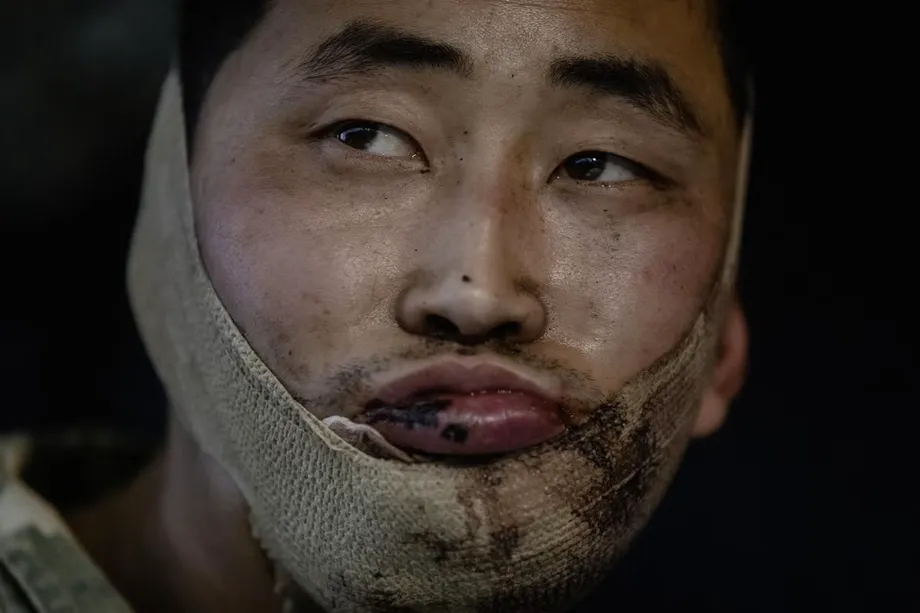
The prisoners were among thousands of North Korean troops sent to support Russia's war against Ukraine. Both had expressed a wish to settle in South Korea rather than return to North Korea, where they feared persecution.
Accounts differ on the timing of their capture. Several place it in early 2025, while another describes it as early last year without specifying the calendar year. The earlier legal fight over their fate identified their capture as January 2025 in Russia's Kursk region and detailed their requests to go south. The latest dispute concerns the disclosure of their subsequent transfer, rather than the legitimacy of those requests.
South Korea regards North Koreans as its citizens under its constitutional framework and has a policy of accepting and financially supporting defectors. That gives Seoul a direct responsibility toward the men, rather than treating their destination solely as a matter for Kyiv and Pyongyang.
Seoul says confidentiality was needed to protect the soldiers and their families in North Korea. Their relatives' circumstances have not been disclosed, and no specific retaliation against them has been reported. The concern is nevertheless central to South Korea's explanation for demanding secrecy.
Lee's office also says Kyiv had reason to avoid publicity because transferring the men could attract criticism that Ukraine had surrendered an opportunity to exchange them for Ukrainian prisoners. That is Seoul's account of Ukraine's motivation, not an agreed explanation from both governments.
How the confrontation developed
The dispute unfolded alongside a separate security incident on the Korean Peninsula and then expanded into a row over trade with Russia. The sequence helps explain why an argument about confidentiality became a broader confrontation:
- Early 2025: Several accounts place the capture of the two North Korean soldiers in this period.
- July: Lee pledged $100 million in assistance to Ukraine during a meeting with Zelenskyy.
- Middle of September: The prisoners were reportedly transferred to South Korea.
- September 21: Three South Korean soldiers were injured in a landmine blast in the Demilitarized Zone. Investigators attributed the mine to North Korea.
- September 23: Zelenskyy disclosed the prisoner transfer in his United Nations speech.
- September 27: Ukrainian intelligence official Kyrylo Budanov warned that tensions between the Koreas could lead to an uncontrollable armed confrontation.
- Tuesday of the recall week: Cho said the apology was insufficient, while a Ukrainian sanctions official criticized petroleum shipments from South Korean ports.
- Wednesday: Seoul rejected the sanctions accusation and said it was checking the shipments.
- Thursday: South Korea announced the ambassador's recall, while Ukraine urged continued diplomacy.
The recall announcement does not specify a calendar date in the accounts of the decision. No deadline for resolving the dispute or date for the ambassador's return has been given.
Fuel shipments open a second dispute
Vladyslav Vlasiuk, Ukraine's presidential commissioner for sanctions policy, said Russia imported more than 176,000 tonnes of petroleum products from South Korean ports in July and August. The shipments were reported to consist mostly of diesel. Ukraine also said South Korea accounted for 31 percent of Russia's fuel imports in August.
Those figures describe different periods and cannot be combined to calculate Russia's total imports. The tonnage covers two months, while the percentage applies only to August. Neither figure, by itself, establishes whether a shipment violated a specific sanctions rule or South Korean export control.
Vlasiuk argued that the deliveries helped compensate for lost Russian refining capacity after Ukrainian attacks. Explaining his accusation on Facebook, the sanctions commissioner wrote:
These shipments began precisely when Ukrainian strikes on Russian oil refineries were reducing processing volumes and creating a fuel shortage within Russia.
Seoul rejected the allegation. Its response has been quoted as both "incorrect and inappropriate" and "inaccurate and inappropriate." The presidential office said South Korea had consistently implemented sanctions and export controls against Russia in coordination with international partners since the 2022 invasion.
At the same time, Seoul said it was verifying the shipment facts and reviewing whether domestic export controls had been violated. That review leaves the underlying transactions unresolved. Departure from a South Korean port, the origin of a cargo, its seller and its legal status are separate questions that require transaction details.
Peninsula tensions sharpen Seoul's response
The prisoner dispute has unfolded against Lee's efforts to reopen engagement with North Korea. His government faces the immediate security threat from Pyongyang while also seeking communication with a state that has rejected Seoul's overtures.
The September 21 landmine explosion, which injured three South Korean soldiers, made the peninsula's security risks especially immediate. Budanov's subsequent warning about an uncontrollable confrontation added to the diplomatic tension. Lee accused Zelenskyy of "plotting for the outbreak of war on the Korean Peninsula," an unusually severe statement that should not be treated as evidence of a Ukrainian plan to provoke conflict.
Lee's response has also drawn domestic criticism. Opposition figures accused him of trying to conceal the transfer to appease Pyongyang. His office says the decision to seek confidentiality reflected national security concerns and the need to protect the prisoners' relatives.
Leif-Eric Easley, a professor of international studies at Ewha University in Seoul, said South Korea has legitimate reasons to protect sensitive information about North Korean defectors and their families. He also questioned whether the men's status could have remained unknown indefinitely to Russian, Chinese and North Korean intelligence services.
North Korean state media have not commented on the transfer. There is no announced response from Pyongyang that establishes how it will react to the disclosure.
Aid and arms remain separate decisions
South Korea's $445 million in humanitarian assistance since 2022 shows that the dispute comes after substantial support for Ukraine. Lee's $100 million pledge in July also preceded the confrontation. The reported figures do not establish whether the July commitment is included in the $445 million total, so they should not be added together.
Seoul has maintained its policy against supplying lethal weapons to countries engaged in active war. Its assistance has included helmets, personal armor and medical equipment. Ukraine has sought advanced air defense missiles to protect its energy infrastructure from Russian attacks.
The earlier air defense request described Zelenskyy's proposal to share Ukrainian drone technology in return for South Korean defensive equipment. The ambassador recall has not been accompanied by a decision to cancel that discussion or change Seoul's aid policy.
Russia's Foreign Ministry has warned it would have "no choice but to retaliate" if South Korea supplied Ukraine with arms, without specifying what action it would take. Seoul therefore faces pressure from Kyiv for stronger support and from Moscow against a weapons transfer.
No suspension of humanitarian assistance has been announced as part of the recall. The distinction between a diplomatic protest, an aid decision and a weapons decision matters because each would affect the relationship differently.
What remains unresolved
The immediate negotiations concern the content of the confidentiality understanding and what form of apology Seoul would accept. Cho has said the apology received was insufficient, but South Korea has not publicly set out terms that would bring the ambassador back.
The petroleum dispute requires a separate factual assessment. Seoul's review could establish the cargoes' origins, destinations and compliance with domestic rules. No completion date or findings have been announced.
Both governments also have reasons to preserve cooperation. Ukraine holds intelligence about North Korea's military relationship with Russia and battlefield experience that could be useful to South Korea. Easley identified drone warfare as one area where Kyiv's experience could contribute to Seoul's security.
Sanghun Seok, a senior associate fellow at the Royal United Services Institute, described the public confrontation as "growing unnecessarily contentious." His assessment points to the practical cost of the dispute: public pressure may make it harder for Seoul to consider cooperation that both countries could otherwise find useful.
The recall is an announced protest, not a declared end to the relationship. Consultations remain open, while the confidentiality dispute, the shipment review and the scope of any further South Korean measures remain undecided.
Key Points
- South Korea has decided to recall its ambassador to Ukraine, without announcing a return date or duration.
- Seoul says Kyiv breached an agreement to keep two North Korean prisoners' transfer confidential. Ukraine denies such an agreement existed, while its Foreign Ministry says the dispute concerns differing interpretations of confidentiality and that disclosing the transfer alone did not breach the agreement.
- Ukraine says it invited the South Korean ambassador to seek constructive solutions and remains willing to resume dialogue despite the recall.
- Seoul regarded Ukraine's message as an insufficient apology; Ukraine describes it as an expression of regret over the exchange of criticism.
- Zelenskyy disclosed the transfer during his September 23 United Nations speech.
- Ukraine alleges that more than 176,000 tonnes of petroleum products reached Russia from South Korean ports in July and August.
- Seoul rejected the sanctions accusation and is reviewing shipment facts and possible export control violations.
- Neither government has announced a break in relations, and both say diplomatic consultations remain possible.