Two prisoners seek safety as six activists face investigation
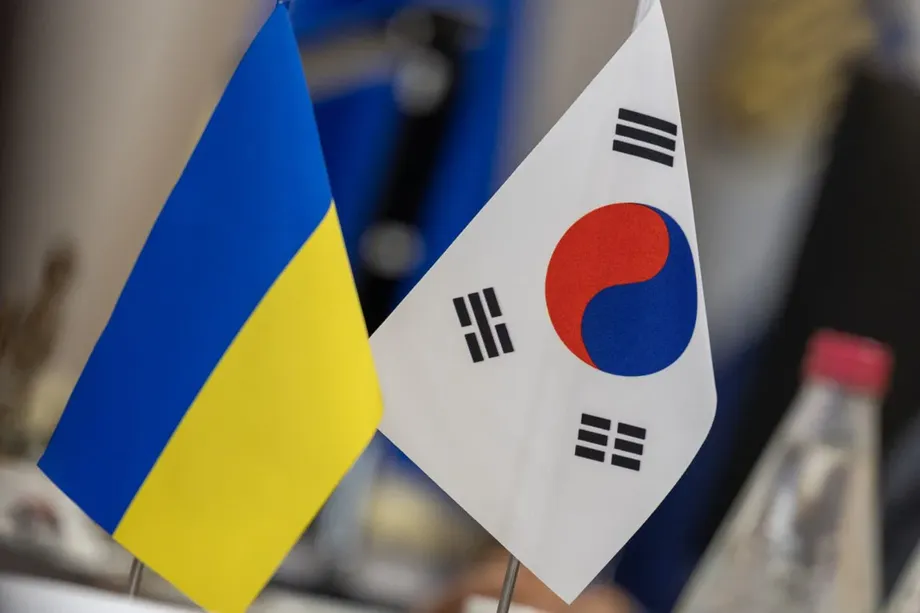
Two wounded North Korean soldiers captured by Ukrainian forces in Russia's Kursk region in January 2025 want to go to South Korea. Their request has drawn Kyiv, Seoul, Moscow and human rights activists into a dispute over prisoner exchanges, protection from torture and the right to seek safety outside their home country.
Contents
- Two prisoners seek safety as six activists face investigation
- How Ri and Baek reached the battlefield
- Why the soldiers fear returning home
- How prisoner rules and protection from torture meet
- Why Seoul regards them as South Korean citizens
- Why the activists traveled without approval
- What the Passport Act investigation involves
- How the case affects human rights advocacy
- What Ukraine and South Korea must decide
- Key Points
The soldiers, identified only by their surnames Ri and Baek, were fighting alongside Russian troops when they were captured. Both have reportedly asked to settle in South Korea rather than return to North Korea, where they fear imprisonment, torture or death. Their families could also face punishment because they became prisoners.
Six South Korean activists are now under police investigation after traveling to Kyiv from May 7 to 11 without the special authorization required under Seoul's travel ban on Ukraine. They say their purpose was to urge Ukrainian authorities to respect the soldiers' wishes and prevent their forced return.
South Korea has said it is ready to accept North Korean prisoners who freely choose to go south. Ukraine must decide how to handle that request while meeting its obligations toward prisoners of war and considering the danger the men could face if sent home.
As of August 11, 2026, the dispute remains unresolved. Seoul and Kyiv have discussed a humanitarian solution, but no public transfer agreement, timetable, route or legal procedure has been announced. North Korea has not publicly commented on the two prisoners, while Ukrainian authorities say Russia has repeatedly sought information about the possibility of their return.
How Ri and Baek reached the battlefield
Ri, 27, and Baek, 22, told interviewers that they were sent to Russia in 2024. Their deployment came as North Korea deepened its military relationship with Russia following Moscow's invasion of Ukraine.
South Korean officials have estimated that Pyongyang sent about 15,000 troops to support Russian operations, particularly around the Kursk border region. The deployment followed a military cooperation agreement between North Korean leader Kim Jong-un and Russian President Vladimir Putin.
North Korean forces have reportedly gained combat experience, military support and other benefits in return for assisting Russia. Ri and Baek became part of that cooperation, then entered Ukrainian custody after suffering serious wounds.
Ri sustained injuries to his arm and jaw. Baek suffered a serious leg injury in a drone attack and now uses crutches. Their injuries form part of a case that involves both their treatment as wounded prisoners and their request for protection from their own government.
The main events span several dates:
- In February 2022, South Korea placed Ukraine under a Level 4 travel ban because of the war.
- In 2024, Ri and Baek were sent to Russia, according to their accounts.
- In January 2025, Ukrainian forces captured the wounded soldiers in Russia's Kursk region.
- From May 7 to 11, the six South Korean activists visited Kyiv without receiving exceptional travel authorization.
- In May 2025, the soldiers were excluded from a major prisoner exchange between Ukraine and Russia after Seoul requested separate consideration of their possible transfer.
- In June, the South Korean and Ukrainian foreign ministers discussed a solution based on international law and humanitarian principles.
- In July, the two countries' presidents discussed the case in Ankara on the sidelines of a NATO summit.
- In October 2025, Ri described the stigma of captivity in an interview recorded at a Ukrainian detention facility.
Why the soldiers fear returning home
Ri and Baek describe a military culture in which becoming a prisoner is treated as betrayal. North Korean soldiers are reportedly taught that death is preferable to capture. Activists and defectors say some troops have been instructed to use grenades or other means to avoid being taken alive.
Ri, one of the captured North Korean soldiers, explained that stigma during the interview recorded at a Ukrainian detention facility in October 2025.
If you become a prisoner, it's like you're a traitor. It's like betraying the country.
Baek, the other captured soldier, described his fear of returning to North Korea and his wish to reach the South.
If I go back to North Korea, I won't survive. I hope I can go to South Korea, not North Korea.
Both men have expressed a desire to settle in South Korea through interviews, meetings and written messages. In a letter distributed by the defector group Gyeoreol Unification Solidarity, they said they had decided to go south and regarded South Koreans as relatives.
Ri has also said he does not know whether his mother is still alive. He fears that his capture may bring consequences for his family. North Korea has long operated a system in which relatives of people accused of political disloyalty can face discrimination, detention or forced labor.
South Korean activists consider the soldiers' fears credible because surrender is treated as a serious military and political offense. The men could also be questioned about their time in Russia, their contact with Ukrainians and their public statements about seeking asylum.
Russia's repeated inquiries about their possible return have added urgency for the activists. They want the men treated as individuals whose wishes and safety must be considered, rather than as part of a possible negotiation between Moscow and Kyiv.
How prisoner rules and protection from torture meet
The Third Geneva Convention sets rules for the treatment of prisoners of war. It says prisoners should generally be released and repatriated without delay after active hostilities have ended. Repatriation means returning someone to their country. The rule is intended to prevent prisoners from being held indefinitely after a conflict.
International refugee and human rights law also includes the principle of non refoulement. In plain language, it bars a state from sending a person to a country where there are substantial grounds to believe that person could face torture or cruel, inhuman or degrading treatment.
Ri and Baek's case brings both responsibilities into the same decision. They are prisoners captured during an international armed conflict, and they also appear to be seeking protection from their own government.
Elizabeth Salmon, the United Nations special rapporteur on human rights in North Korea, said Ukraine had reasonable grounds to believe the soldiers could face torture if returned. She also said Ukraine could, in certain circumstances, transfer them to a third country or grant them protection.
Ukrainian authorities therefore have to consider the Geneva Conventions, the soldiers' personal choices, security concerns and relations with Russia and North Korea. The obligation to release prisoners after hostilities and the obligation to protect people from torture both matter to the handling of their case.
The immediate decision remains with Ukraine because it holds the men. Any arrangement must address their status as prisoners as well as their request to live somewhere they believe they will be safe.
Why Seoul regards them as South Korean citizens
South Korea bases its position on Article 3 of its Constitution, which defines the territory of the Republic of Korea as the entire Korean Peninsula and its adjacent islands. Under that interpretation, North Koreans are legally regarded as South Korean citizens.
Seoul has told Kyiv that it is prepared to accept North Korean prisoners who freely choose to go south. Practical arrangements are still required before a person can be transferred and resettled, including confirmation that the choice is voluntary and agreement on safe movement.
The two soldiers were excluded from a major prisoner exchange between Ukraine and Russia in May 2025 after South Korea asked that their possible transfer be considered separately. That placed their request on a different track from the wider exchange.
South Korean Foreign Minister Cho Hyun and Ukrainian Foreign Minister Andrii Sybiha discussed the issue directly in June. They agreed to seek a solution based on international law and humanitarian principles.
South Korean President Lee Jae myung and Ukrainian President Volodymyr Zelensky also discussed the matter in Ankara in July on the sidelines of a NATO summit. Those discussions brought the case to the highest political level, while the practical task of arranging a transfer remained unfinished.
Why the activists traveled without approval
The six activists went to Kyiv from May 7 to 11 to argue against sending the soldiers back to North Korea. During the visit, they met Ukrainian officials, civil society representatives and personnel from the Ukrainian Defense Ministry's Coordination Headquarters for the Treatment of Prisoners of War.
The group includes Jang Se yul, a North Korean defector and former intelligence officer who leads Gyeoreol Unification Solidarity; North Korean human rights activist Lee Byung rim; and Kang Dong wan, a professor and chairman of the group Tongil Korea.
The activists say they sought permission before departing and submitted documents requested by South Korea's Foreign Ministry. According to their account, officials repeatedly requested additional material and eventually sought a recommendation from the Ministry of Unification.
Kang said the group had been in contact with the Foreign Ministry for about two months. He described the alleged request for a recommendation as unprecedented. Because the meetings in Kyiv had already been arranged, the activists traveled despite not receiving approval.
Kang, speaking as a member of the visiting group and chairman of Tongil Korea, explained why he said the application could not be completed.
We went to the Ministry of Unification and submitted the documents, but the ministry had no reason to provide such approval. Ultimately, we were not able to obtain it.
The Foreign Ministry disputes that account. It says it did not require approval from a specific ministry. Instead, it pointed to a provision allowing exceptional passport use when a mission serves national interests or business activity and carries a recommendation from the head of the relevant central government agency.
What the Passport Act investigation involves
South Korea placed Ukraine under a Level 4 travel ban in February 2022 because of the war. South Korean citizens may enter only after receiving exceptional approval to use their passports.
Unauthorized travel to a banned country can lead to up to one year in prison or a fine of up to 10 million won, about $7,000. Police have booked the six activists for suspected violations of the Passport Act, and the Foreign Ministry has declined to discuss details while the investigation continues.
The government says the travel ban protects citizens from danger and supports national security. It also warns that visits to active conflict zones can create demands for emergency assistance or cause diplomatic problems.
Officials maintain that the investigation concerns unauthorized passport use, not the activists' political views. They have said South Koreans who enter countries under a travel ban without permission may face criminal proceedings regardless of the purpose of their visit.
The activists' explanation centers on their humanitarian purpose and their attempts to secure permission. The dispute over the application process sits alongside the question police are examining: whether the trip violated the Passport Act.
How the case affects human rights advocacy
Human rights advocates argue that the group traveled to protect two people facing a serious risk and had tried to obtain authorization. The investigation has prompted debate about how far Seoul can restrict wartime travel and whether the rules are applied fairly.
Shin Hee seok, a legal analyst with the Transitional Justice Working Group, said restrictions on movement may be lawful but should not be arbitrary, discriminatory or disproportionate. His concern addresses how a restriction is applied, including whether its burden is greater than necessary for its purpose.
The activists question why humanitarian work does not receive a clearer exception. Their supporters say the case could discourage defectors and rights groups from raising urgent concerns involving North Korean citizens abroad.
The government continues to defend the requirement for prior approval. The resulting debate involves two responsibilities: protecting South Korean citizens from the dangers of war and allowing advocates to pursue humanitarian work involving people at risk.
What Ukraine and South Korea must decide
Ukraine could continue holding Ri and Baek while their status is negotiated, transfer them to South Korea or another country, or provide a form of protection. Any move would require coordination with Seoul and careful security planning.
South Korea's willingness to accept the soldiers gives the governments a possible destination to discuss. Authorities still need to confirm that the men's choice is voluntary, arrange their safe movement and determine how they will be treated under Ukrainian and international law.
Sending the men to North Korea could trigger criticism over the danger of torture. Sending them to South Korea could anger Pyongyang and complicate Kyiv's dealings with Moscow. Russia may also seek their return because they fought under Russian command, although they are North Korean nationals.
The activists' immediate priority is to prevent any forced return before the men's wishes and safety have been fully assessed. For Seoul, the case tests how its constitutional position that North Koreans are South Korean citizens works when those citizens are prisoners abroad.
Kyiv faces a rare prisoner case involving a third country that has become directly involved in the war. Its decision will determine how the soldiers' captivity, request for protection and possible transfer are handled together.
Key Points
- Ri, 27, and Baek, 22, were captured while wounded in Russia's Kursk region in January 2025.
- Both North Korean soldiers have reportedly asked to settle in South Korea and fear punishment if returned home.
- South Korea says it is ready to accept North Korean prisoners who freely choose to go south.
- Six activists face a Passport Act investigation after visiting Kyiv from May 7 to 11 without exceptional travel approval.
- The activists and Foreign Ministry dispute what was required during the permission process.
- Ukraine must consider prisoner of war rules, protection from torture, the men's wishes and security concerns.
- As of August 11, 2026, no public transfer agreement, timetable, route or legal procedure has been announced.