
Beijing talks produce a deal, but no published quota
China and the European Union reached a preliminary understanding on hybrid vehicle trade on October 9, 2026, after two days of negotiations in Beijing. European Commissioner for Trade and Economic Security Maroš Šefčovič said the arrangement could reduce Chinese hybrid exports by several million vehicles over four years. The export baseline, binding limits and enforcement rules have not been published, and the agreement still requires approval in Brussels.
Contents
- Beijing talks produce a deal, but no published quota
- What does halving exports actually mean?
- The figures behind Europe's concern
- Why hybrids became the focus
- Safeguards and the unresolved WTO question
- The wider bargain goes beyond cars
- Rare earth licensing is not a supply guarantee
- Industry welcomes talks while awaiting the rules
- The next decisions and dates
- Key Points
The understanding forms part of 16 points of consensus negotiated with Chinese Commerce Minister Wang Wentao on October 8 and 9. The package covers trade and investment, export controls, intellectual property protection and World Trade Organization reform. It also includes further talks on European access to China's market and faster processing of Chinese export licences for rare earths and permanent magnets.
The immediate pressure comes from a sharp rise in Chinese hybrid shipments, which have avoided the additional duties imposed on Chinese battery electric cars in October 2024. Figures attributed to Eurostat put EU imports of Chinese plug-in hybrids at 50,408 vehicles in July 2026, an increase of 163.2% from a year earlier.
Šefčovič presented the negotiations as a way to address mounting industrial and political pressure without escalating into a wider trade confrontation. Speaking after the Beijing talks, he described their limits as well as their progress:
This is far from the end. It's a crucial first step, but only a first step.
That distinction matters for manufacturers and buyers. The announcement establishes a negotiating direction, not a fully published system determining how many cars may enter Europe, at what prices or from which date.
What does halving exports actually mean?
Reports differ on the central promise. Some describe China as agreeing to halve hybrid exports. Another says shipments would fall by more than half over four years compared with 2026 volumes. Other accounts describe a reduction of more than 50% against the European Commission's forecasts for future exports, rather than an immediate cut to current shipments.
These are different commitments. A reduction against projected growth could still allow imports to rise from today's level, provided they remain below the forecast. A reduction against actual 2026 volumes would instead mean a contraction from an existing level. Without the baseline and annual schedule, the size of the restraint cannot be calculated reliably.
The arithmetic illustrates the uncertainty. At roughly 50,000 vehicles a month, shipments would total about 600,000 a year, or 2.4 million over four years if that pace stayed unchanged. A reduction of several million vehicles would therefore require a substantially higher forecast, a broader vehicle category or another reference point. Those details have not been disclosed.
China's Ministry of Commerce described the outcome as an understanding consistent with WTO rules, but its statement did not specify a percentage reduction. Reports of a proposed market share ceiling of about 15%, or of exports being cut in half, should not be treated as a signed quota with published operating rules.
The figures behind Europe's concern
Chinese customs figures cited in reports show that exports of plug-in hybrids to Europe rose 155% in 2025, compared with 12% growth for battery electric cars. The shift continued in 2026: EU imports of Chinese hybrids were valued at €3.176 billion in the first four months, exceeding the €2.808 billion recorded for battery electric vehicles by €368 million, or about 13%.
Longer comparisons also show rapid growth. Eurostat figures put Chinese plug-in hybrid imports at 217,764 vehicles in the first seven months of 2026, compared with 56,706 during all of 2022. Conventional hybrid imports reached 160,662 in those seven months, against just 659 in 2022. The periods differ, but the partial 2026 totals already far exceed the earlier annual figures.
A separate dataset attributed to the China Passenger Car Association puts complete vehicle exports to the EU at 1.56 million in the first eight months of 2026. It includes 630,000 electric vehicles, 490,000 plug-in hybrids and 270,000 conventional hybrids, with respective annual growth rates of 49%, 179% and 142%.
The passenger car association's export figures and Eurostat's import figures are not interchangeable. They cover different periods and record different sides of the trade flow. The reported totals also differ substantially, and no reconciliation has been published. They support the same broad finding of rapid hybrid growth, but should not be combined into a single series.
Figures attributed to the European Automobile Manufacturers' Association, known as ACEA, put Chinese brands at 14% of Europe's conventional hybrid market and 25% of its plug-in hybrid market in the first half of 2026. Both shares were 2% in 2024. Other reports cite more than one third of a hybrid market or about one quarter in August, without establishing the same geography and vehicle categories. Those percentages cannot be treated as directly comparable.
Why hybrids became the focus
The EU's October 2024 measures imposed additional duties of 7.8% to 35.3% on Chinese battery electric vehicles, on top of the standard 10% car import tariff. At the highest rate, the combined duty reached 45.3%. Hybrids were excluded from those additional duties and remained subject to the standard 10% tariff.
A conventional hybrid, often abbreviated HEV, combines an engine with an electric motor and recharges its battery through the engine and braking. A plug-in hybrid, or PHEV, can also charge from an external power supply and generally travel farther on electricity alone. A battery electric vehicle runs entirely on stored electricity.
The tariff distinction gave Chinese manufacturers a reason to expand their hybrid ranges in Europe. It does not establish that tariffs alone caused the sales surge. Prices, model availability and consumer demand also matter. For Brussels, however, the concern is that competitive pressure has shifted into a category outside the 2024 measures.
The preliminary understanding does not cancel the existing battery electric vehicle duties. China and the EU agreed to continue procedures for company price undertakings and reviews in that case. A price undertaking is a commitment by a company to observe specified pricing conditions, potentially providing an alternative to a duty where the authorities accept it.
Safeguards and the unresolved WTO question
Before the Beijing agreement, Brussels was reportedly considering safeguard measures using tariff quotas. Under such a system, imports within a defined volume would enter on existing tariff terms, while shipments above that volume would face an additional duty. A safeguard addresses a surge in imports causing or threatening serious injury to domestic producers, rather than requiring a finding of subsidies.
The reported safeguard proposal was not officially confirmed. Its quota size, additional tariff rate and legal procedure remain unpublished. Reports that restrictions could begin on December 1 also lack confirmation of a final implementation timetable.
There is a separate legal issue surrounding voluntary export restraints. On September 18, China's commerce ministry rejected the earlier EU request on the grounds that such restraints violate WTO rules. The October statement nevertheless described the new hybrid understanding as compatible with those rules.
Šefčovič, explaining why he considered the talks unusual, said China had accepted a negotiated approach before the usual escalation:
It is the first time that China has accepted to moderate its exports without going through the phase of prior trade tension.
The legal mechanism is therefore central to the agreement, not a minor technical detail. Reports have discussed company pricing commitments as a possible route, but the precise relationship between those commitments, export volumes and any EU safeguard procedure has not been made public.
The wider bargain goes beyond cars
The 16 points of consensus address a trade imbalance that European officials put at more than €1 billion a day. Šefčovič cited €1.18 billion daily. Germany and France have called for stronger tools to protect European producers, while the Commission has presented hybrids as a possible pilot for negotiated solutions in other sectors.
The automotive trade figures show pressure in both directions. In 2025, EU exports of cars and components to China fell 34% to €16 billion, while imports from China rose 8% to €22 billion. That left a €6 billion EU deficit in this category, alongside weaker sales into China for European manufacturers.
The package includes exploration of tariff reductions on certain goods within WTO rules, although neither the products nor the reductions have been identified. Market access discussions cover European food and drink, medical devices, cosmetics, pharmaceuticals and computer reservation systems.
China also agreed to accelerate recognition of regional animal health conditions for eligible EU member states, based on risk assessments. Such recognition can allow imports from unaffected regions even when disease restrictions apply elsewhere in a country. The talks included exchanges on disease control and possible removal of restrictions related to bluetongue disease.
Other commitments include a technical dialogue on the EU's Foreign Subsidies Regulation, further consultation on financing guidance for inverter projects, and cooperation on intellectual property enforcement. The intellectual property working group is to monitor progress against interim targets. These are work programmes rather than evidence that the underlying disputes have been settled.
Rare earth licensing is not a supply guarantee
China's Ministry of Commerce said it was willing to continue processing EU applications for rare earth and permanent magnet export licences through a green channel. Rare earth magnets are used in electric motors and other industrial equipment, making licensing delays a concern for automotive supply chains.
The commitment concerns approval procedures. It does not abolish export controls, promise a fixed supply volume or guarantee approval for every customer. No complete list of eligible products, processing deadlines or applicant requirements has been published, and Šefčovič did not provide a timetable for deliveries.
The EU and its member states made a reciprocal commitment to help resolve priority licensing cases involving exports to China in the dual use sector. Dual use goods can serve civilian purposes but also have military applications, which is why they may require export authorisation.
The two sides also discussed advance notification before goods are added to control lists, greater transparency when items are listed or removed, and possible arrangements for compliant trade. For businesses, the practical test will be whether those changes make delivery schedules more predictable. Faster paperwork alone does not establish assured access to materials.
Industry welcomes talks while awaiting the rules
European automotive groups welcomed the reduction in trade tensions, while stressing the need for concrete details. Hildegard Müller, president of Germany's automotive industry association VDA, called the consensus a "positive signal". The China Chamber of Commerce to the EU welcomed the prospect of a stable compliance framework for Chinese businesses.
ACEA Director General Sigrid de Vries warned that abrupt market disruption would carry wider economic costs:
A sharp and sudden destabilisation of the market in Europe, along with price wars that mirror the current market situation in China, would be highly disruptive to the European economy as whole
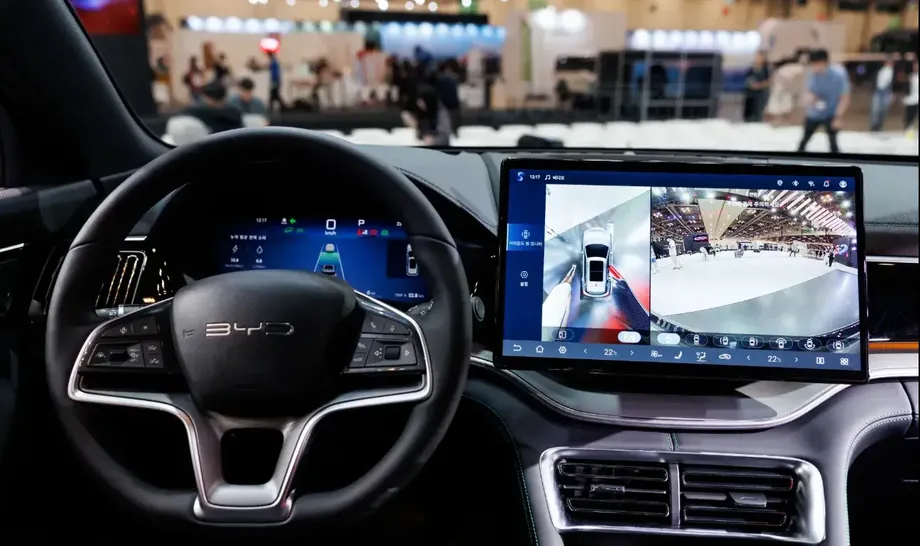
The competition is already visible in individual models. Reported sales figures for the first half of 2026 put three Chinese models at the top of Europe's plug-in hybrid rankings: BYD's Song PLUS DM-i at about 44,700 vehicles, BYD's Yuan UP DM-i at about 31,600, and Chery's Explore 06 C-DM at about 29,900.
A separate EU proposal, the Industrial Accelerator Act, could affect how manufacturers respond through local production. Its reported provisions would require publicly supported electric vehicles and plug-in hybrids to be assembled in the EU, with at least 70% of components other than batteries sourced locally. It would also screen investments exceeding €100 million from outside the EU in strategic industries.
Those provisions remain subject to approval by the European Parliament and member states. Reported proposed start dates are around mid 2027 for the vehicle rules and January 1, 2029, for other provisions. They are distinct from the hybrid trade understanding, but matter because moving assembly into Europe may not, by itself, satisfy future conditions for public support.
The next decisions and dates
Šefčovič said the outcome must first pass through European political and institutional procedures. EU leaders were scheduled to review it at the European Council meeting on October 15 and 16. The Commission would then begin the necessary implementation work if leaders supported the arrangement.
The sequence of negotiations and planned decisions is:
- June 29, 2026: The first meeting of the China-EU trade and investment consultation mechanism takes place.
- September 18: China publicly rejects the proposed voluntary export restraint on WTO grounds.
- October 8-9: Wang Wentao and Maroš Šefčovič hold the second consultation meeting in Beijing and reach 16 points of consensus.
- October 15-16: EU leaders are scheduled to assess the outcome at the European Council.
- December 1: A possible start date for restrictions appears in reports, but is not confirmed as an agreed deadline.
- January 2027: A ministerial video conference is planned.
- March 2027: The third trade and investment consultation meeting is scheduled.
The outstanding decisions include the vehicle categories covered, the export baseline, annual limits, pricing conditions, monitoring arrangements and treatment of shipments already ordered. Rare earth licensing procedures and the continuing battery electric vehicle case also require further work.
The agreement has opened a route toward negotiated limits, but it has not yet given companies a complete set of rules on which to base production, purchasing and investment decisions.
Key Points
- China and the EU reached a preliminary hybrid vehicle understanding in Beijing on October 9, 2026, within a package of 16 points of consensus.
- Reports differ on whether the proposed reduction uses 2026 exports or forecasts of future shipments as its baseline.
- No binding quota, annual schedule, enforcement mechanism or confirmed start date has been published.
- Hybrids remain subject to the standard 10% EU car tariff, while Chinese battery electric cars face additional duties.
- China offered faster rare earth and permanent magnet licensing, not guaranteed supplies or removal of export controls.
- EU approval and further talks in January and March 2027 will determine how the understanding becomes operational.