
A diplomatic exchange turns criticism back on its critics
China rejected criticism of its human rights record at a United Nations General Assembly committee debate, accusing the United Kingdom, Australia, Japan, Ireland, the Czech Republic and Lithuania of using human rights claims for political purposes. In a right of reply, Chinese Deputy Permanent Representative Sun Lei argued that the countries had no standing to lecture Beijing while facing social and political problems of their own.
Contents
- A diplomatic exchange turns criticism back on its critics
- Why did China cite poverty and inequality?
- China’s competing account of political rights
- Minority rights and the history behind the dispute
- Sanctions, sovereignty and selective criticism
- What the exchange says about UN human rights debates
- The Bottom Line
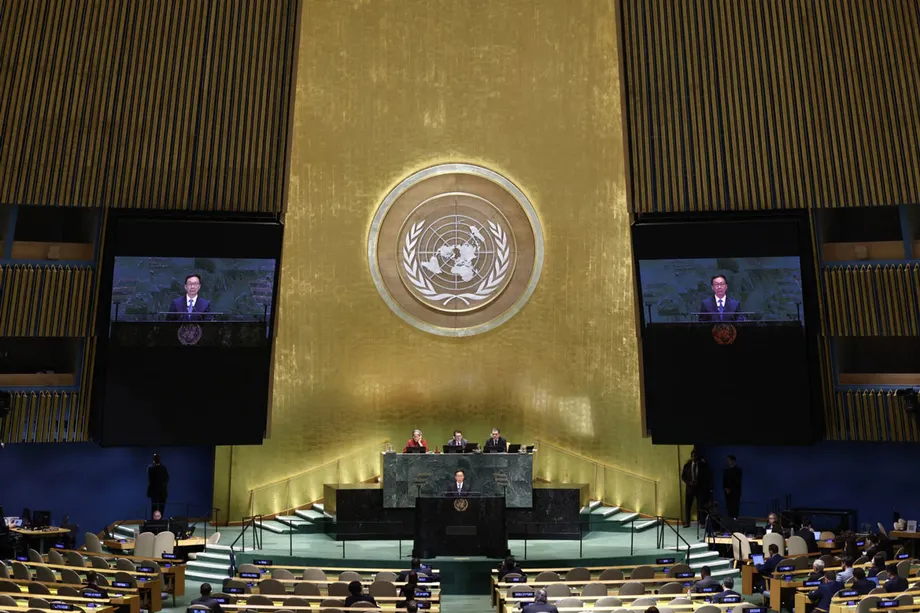
The dispute took place during the general debate of the Assembly’s Third Committee, which handles social, humanitarian and cultural issues, including human rights. Sun said China was strongly dissatisfied with what he called groundless accusations and malicious smears. He urged the countries to stop spreading what Beijing described as false claims about China and warned that politicising human rights would ultimately be counterproductive.
The exchange reflects a familiar pattern at the United Nations: governments facing criticism contest both the allegations and the authority of those making them. In this case, Beijing paired its defence with a broader challenge to Western governments, citing poverty, public confidence in democracy, racism and the treatment of Indigenous communities. Those counterclaims formed the centrepiece of China’s response, alongside its defence of policies in Hong Kong, Xinjiang and Xizang, the official Chinese name for Tibet.
The committee debate is part of a wider diplomatic process, not a court hearing. Statements made there can shape political pressure and international debate, but they do not themselves determine whether a country has breached a legal obligation. The delegations’ competing claims therefore sit within a broader argument over how human rights should be assessed, and how much weight governments should give to national sovereignty and differing political systems.
Why did China cite poverty and inequality?
Sun said China had improved livelihoods through development and had lifted nearly 100 million people out of poverty. He also cited a middle-income group of more than 400 million people. These figures support Beijing’s longstanding argument that economic security, poverty reduction and access to development are central measures of human rights progress.
He contrasted China’s record with poverty in the United Kingdom. Sun cited estimates that more than 14 million people in Britain live below the poverty line, including millions in severe hardship. A 2018 report by Philip Alston, then the UN special rapporteur on extreme poverty and human rights, estimated that about 14 million people, roughly one-fifth of the UK population, lived in poverty. It said four million were more than 50 percent below the poverty line and 1.5 million could not afford basic essentials.
A 2024 study by the British Social Metrics Commission estimated that more than 16 million people in the UK were living in poverty, or about 24 percent of the population. It attributed a rise in severe hardship since 2019 partly to the cost-of-living crisis. Poverty estimates can differ because researchers use different thresholds and measures, including whether housing costs, household needs and depth of deprivation are counted. The figures Sun cited were part of his argument about domestic conditions, rather than a direct assessment of the allegations against China.
For Japan, Sun cited a relative household poverty rate of about 15 percent and raised concerns about child poverty. Relative poverty measures compare household income with a share of the national median, so they show how far some households fall behind typical living standards in that country. They do not use the same threshold as every absolute poverty measure, making direct comparisons across countries difficult.
China’s competing account of political rights
In additional remarks described in accounts of the debate, Sun defended what Beijing calls “whole-process people’s democracy” and said public support for and satisfaction with the Chinese government had remained above 90 percent for years. He also defended the national security law imposed in Hong Kong in 2020, portraying it as a turning point that restored order and supported changes to the territory’s political system.
These claims sit at the heart of a wider disagreement about political rights. Beijing presents stability, public participation through its own institutions and improvements in living standards as evidence of a model suited to China’s national conditions. Critics, including Western governments, focus on restrictions on political expression, civil society and opposition activity, as well as the scope of national security laws. The two sides are therefore not simply disputing individual facts; they are using different standards to describe political participation and accountability.
Sun challenged the Western delegations in turn, citing polling that he said showed around 75 percent of people in the UK were concerned about the future of democracy. He also pointed to falling public trust in government in Australia and the Czech Republic, and declining confidence in democratic institutions among young people. Public opinion surveys can indicate dissatisfaction, but they do not by themselves establish that a political system protects or violates particular rights.
China’s statements about Hong Kong and public support are the government’s account of its policies. Western governments have continued to raise concerns about political freedoms in the territory, as well as rights in Xinjiang and Tibet. The debate offered no independent process for resolving those competing assessments. Instead, each delegation used the committee’s public forum to set out its position and challenge the credibility of the other side.
Minority rights and the history behind the dispute
Sun said the political, economic, cultural and religious rights of ethnic groups in Xinjiang and Xizang were protected. He also referred to China’s Ethnic Unity and Progress Promotion Law, which Beijing says is intended to promote common prosperity and development among ethnic groups. The Chinese government describes its approach as one of national unity and equal membership in the Chinese nation.
Western governments have raised concerns about restrictions on ethnic minorities and political expression in Xinjiang and Tibet. The UK, for example, called for action on those issues during the Third Committee’s debate earlier in the session. Beijing rejects the accusations and argues that outside governments use human rights claims to interfere in China’s internal affairs. These contrasting positions make minority rights a recurring point of friction in China’s relations with Western states.
Sun also accused Japan of failing to treat the Ainu and Ryukyu peoples as equal ethnic groups and of falling short of commitments to eliminate racial discrimination. He said Britain, Australia and Ireland continued to face problems linked to colonialism, including racism and ethnic divisions. The claims brought historical legacies into a discussion otherwise focused on current policy and living conditions.
Those historical arguments were especially pointed in Sun’s separate reply to Japan. He said Japan should meet its international obligations, confront the legacy of militarism and remain committed to peaceful development. He warned against what he described as attempts to minimise Japan’s history of aggression or promote a revival of militarism through claims about international contributions or existential threats. Japan’s postwar security policy and how its wartime history is remembered remain sensitive issues across the region.
Sanctions, sovereignty and selective criticism
China’s response extended beyond conditions inside the six countries. Sun accused some Western governments of applying human rights concerns selectively, including by failing to respond adequately to what Beijing describes as the unjust treatment of people in Palestine, Iran and Cuba. He also criticised unilateral coercive measures, a term commonly used by governments opposed to sanctions imposed outside a UN Security Council process.
Sanctions can restrict trade, finance or access to goods and services. Governments that impose them often describe them as a way to respond to serious violations or influence another state’s conduct. Governments targeted by sanctions, along with countries that oppose them, argue that such measures can harm civilians and infringe on sovereignty. The legality and effects depend on the specific measures and the legal basis claimed for them, so the broad label does not settle those questions.
Beijing’s objection is part of a wider debate about whether human rights diplomacy advances universal protections or serves the strategic interests of powerful states. Chinese academic Chen Hong, director of the Asia-Pacific Studies Center at East China Normal University, described what he called Western double standards as the “instrumentalization and weaponization” of human rights. He argued that some governments give greater attention to abuses in strategic rivals while remaining quiet when criticism would conflict with their own interests.
Chen said the pattern can turn human rights into a means of applying pressure, imposing sanctions and shaping international opinion. His argument reflects Beijing’s broader position that Western criticism is often tied to geopolitical competition. It does not, by itself, resolve the substance of the allegations raised against China or establish that the governments criticised by Sun have applied their standards inconsistently in each case.
What the exchange says about UN human rights debates
The confrontation illustrates how human rights debates at the UN have become entangled with disputes over sovereignty, development and international power. Western governments have pressed China on policies in Xinjiang, Tibet and Hong Kong. Beijing responds by rejecting those claims, citing economic development and social stability, and challenging the record of the states bringing criticism.
Human rights treaties and international review processes provide shared standards and forums for governments to discuss compliance. They do not erase disagreement over evidence, interpretation or enforcement. A government may argue that economic and social gains are central to its human rights record, while another places greater weight on political freedoms, protections for minorities or the ability to criticise those in power. In UN debate, these differences often appear alongside disputes about whether measures such as sanctions are legitimate responses or political interference.
Chinese social scientists echoed the government’s criticism of Western human rights diplomacy. Liu Shuliang, an associate researcher at the Tianjin Academy of Social Sciences, cited Japan’s wealth gap, racial discrimination, gender-based violence and elder abuse. He also argued that Japan was avoiding responsibility for its wartime aggression and pursuing a more assertive security policy. These remarks were commentary supporting Beijing’s position, not findings issued by a UN investigative body.
Sun called for greater cooperation and said China would pursue a human rights development path suited to its national conditions while engaging in dialogue. That approach combines a stated commitment to international cooperation with a firm objection to outside criticism Beijing considers politically motivated. The countries named in Sun’s reply, in turn, have continued to raise concerns about China’s policies. The committee exchange left those opposing interpretations in place.
The Bottom Line
- China’s deputy UN representative Sun Lei rejected criticism from the UK, Australia, Japan, Ireland, the Czech Republic and Lithuania.
- Sun cited poverty, inequality and public concerns about democracy in some of those countries to challenge their authority to criticise China.
- He defended Beijing’s policies in Hong Kong, Xinjiang and Xizang, which Western governments have continued to question.
- The exchange reflected wider disputes over minority rights, sanctions, sovereignty and how human rights standards should be applied.
- Statements at the Third Committee debate set out political positions but did not independently resolve the allegations.