
A factory inheritance is more than a fortune
China's family manufacturers are confronting a difficult transfer of power: the generation that built workshops into factories is preparing to retire, while its children must decide whether those businesses still offer a future. Some heirs refuse the responsibility. Others return, only to discover that inheriting machinery and shares is easier than replacing a founder's relationships, judgment and authority.
Contents
- A factory inheritance is more than a fortune
- Why so many founders are reaching the same turning point
- What the surveys show, and what they cannot establish
- The hardest asset to transfer is trust
- Family expectations can drive heirs away
- Returning home means inheriting a tougher market
- Some heirs are changing how factories work
- A handover needs authority, not just a job title
- Leaving the family business does not always mean failure
- The Bottom Line
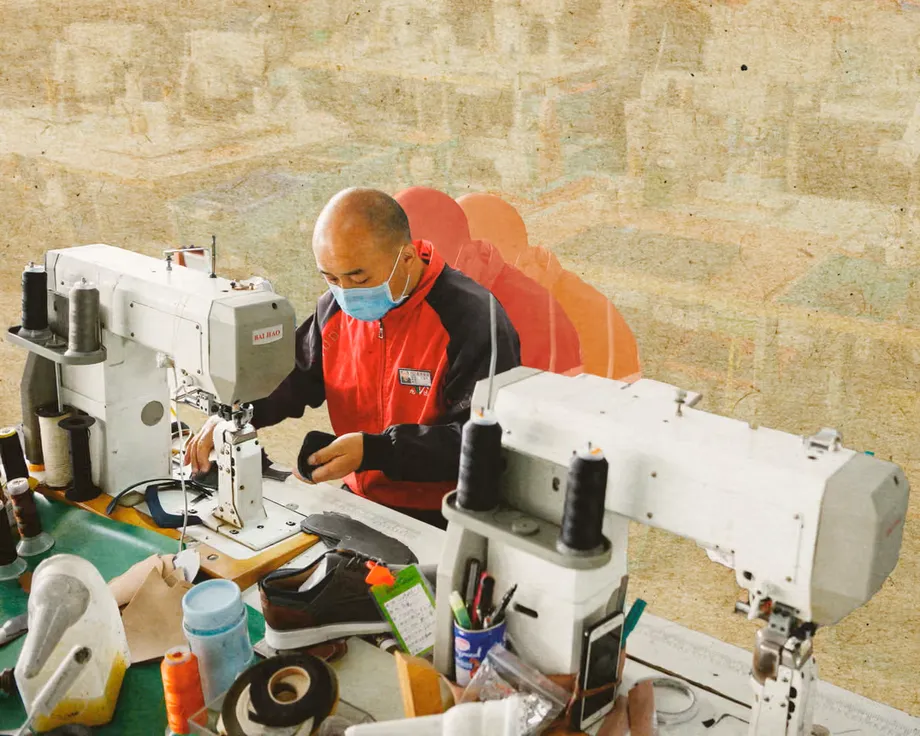
For Ayu, the challenge began in a home in Wenzhou, an eastern Chinese city closely associated with private entrepreneurship. As a child in the 1980s, he watched his parents assemble leather shoes downstairs. Relatives in Europe supplied photographs of Italian designer products that helped guide production. The small workshop eventually became a factory employing 700 people.
Ayu now runs an online commerce platform. His experience has left him skeptical that a successful manufacturing business can simply be handed down. Competition has changed, and the trust accumulated by a founder over decades does not automatically belong to the next owner.
Describing what can disappear during a handover, Ayu said:
We inherited the wealth, but we couldn't inherit the industry.
That distinction sits at the center of China's succession problem. A family may retain valuable assets while losing the practical ability to operate the company behind them. The consequences extend beyond the household to employees, suppliers and customers. Yet the evidence also points to a more varied story than mass rejection: some successors are rebuilding businesses around online sales, professional management and different expectations of working life.
Why so many founders are reaching the same turning point
China's private business expansion gathered pace after economic reforms began in the late 1970s. During the following decades, entrepreneurs built companies in textiles, footwear, machinery, household products, construction materials and trade. Many started with modest equipment, family labor and money borrowed through personal connections.
The Wenzhou model became a name for this growth from small workshops into networks of private producers. Family ties helped entrepreneurs secure financing and navigate a commercial environment in which formal support for private businesses was still developing. The founder often became the company's chief salesperson, production coordinator and trusted contact for everyone from lenders to suppliers.
Because so many firms were established during the 1980s and 1990s, their founders are reaching retirement within a broadly shared period. Unlike businesses that have changed leadership repeatedly, many are attempting their first transfer of control. They have little experience separating the identity of the founder from the operation of the firm.
The economic stakes are substantial. Official estimates commonly describe China's private sector as contributing more than half of tax revenue and about 60% of gross domestic product. Its role in urban employment is also large. These figures cover the private sector, not family businesses alone, but they show why the continuity of private employers matters.
Manufacturing accounted for 26.2% of China's GDP in 2023. A failed transition at one workshop may have limited national impact. Repeated failures across industrial clusters could weaken production networks and reduce employment, especially where local businesses depend on one another for materials, processing and orders.
What the surveys show, and what they cannot establish
Studies have repeatedly found reluctance among potential successors, although their results differ. A 2014 survey reported that 40% of the sampled younger generation were willing to carry on the family business. A 2015 Peking University study cited in succession research put unwillingness at about 80%. Economist Joseph Fan of the Chinese University of Hong Kong has separately estimated that more than six in ten children of founders do not want to inherit their parents' businesses.
These are historical findings and estimates, not a current census of Chinese factory heirs. Their samples and definitions differ. Refusing to manage a company is also different from refusing to own shares, help select a professional executive or participate later.
More recent regional evidence presents a less pessimistic picture. A Zhejiang business research survey in 2025 covering 559 younger private entrepreneurs found that 25.4% explicitly did not want to take over their parents' traditional manufacturing operations. Nearly three quarters expressed willingness to succeed them. That regional sample cannot establish a national trend, but it challenges the idea that rejection is universal.
Preparation is another issue. HSBC Life research cited in the supplied material found that two thirds of wealthy Chinese respondents lacked a legacy plan. A study led by Ningbo University found only 10 of 114 surveyed private companies were managed by the second generation. Neither finding, by itself, measures how many viable businesses will close.
A PwC survey in 2022 reported succession plans at 59% of surveyed family enterprises, compared with about 19% in 2021. That suggests planning gained attention during the pandemic. A written plan, however, does not prove that a successor has the skills, support or decision making authority required to run a factory.
The hardest asset to transfer is trust
A founder's most valuable knowledge may never appear in company records. It can include which supplier will extend payment terms, which customer is likely to pay late, how to settle a production dispute and which experienced employee can rescue a difficult order. Economists call much of this tacit knowledge: understanding gained through experience that is hard to explain fully in a manual.
Hanqing Fang, an associate professor at Missouri University of Science and Technology, describes the gap between legal ownership and practical control:
Shares can be passed to a son or daughter overnight. But the heir is being asked to take over something that looks like a company on paper but, in practice, is closer to the founder's personal belongings.
Personal connections, often discussed in China through the term guanxi, can support trust and cooperation. They become a weakness when essential relationships belong exclusively to one person. An heir may receive the company without receiving the confidence of its customers or senior staff.
Wu, a graduate working in marketing in Hong Kong, faces that concern. His family operates a snack processing factory in Shanwei and dozens of stores in Shenzhen and Hong Kong. He has not ruled out joining, but sees a demanding collection of financial and interpersonal obligations rather than an effortless inheritance.
The business risk is therefore more specific than children lacking enthusiasm. If a founder leaves before knowledge and relationships are shared, the company may lose capabilities even when its buildings, equipment and ownership remain intact. Documenting processes and involving several employees in customer relationships can reduce dependence on a single leader.
Family expectations can drive heirs away
The generation gap reflects the success of the businesses themselves. Many founders grew up with few choices and treated relentless work as the route to security. Their children often received better education, studied abroad and entered careers in finance, technology, design or communications. For them, a factory is one possible career rather than the only route to prosperity.
Earlier interviews illustrate that choice. Xu Jia declined a stake in her father's materials company in Cixi and pursued design studies in London. Zhang Bowei chose finance work in Shanghai rather than returning to his family's home city of Xining. Those decisions involved professional interest and location, not simply an unwillingness to work.
Family relationships can make the choice more painful. Research interviews with successors in Zhejiang described Zhan, an eldest son who felt expected to continue his father's business despite memories of an often absent parent. He instead became a compliance officer at a public institution. He preferred rules and a separate professional identity to a career shaped by family connections.
His account also shows how gender expectations can constrain succession. Treating a son as the automatic heir burdens him with an assigned role and can overlook a daughter's suitability. China's decades of birth restrictions also narrowed the choice of potential successors in many families, concentrating expectations on one child.
Other families reached different outcomes. Hu, whose family makes water cups, integrated his interest in music into online promotion while developing an upgraded product line. His parents supported his creative interests rather than demanding that he abandon them. Fei, another interview participant, became interested in reforming business practices after early exposure to family networking and education abroad. These cases suggest that room for an independent identity can make succession more attractive.
Returning home means inheriting a tougher market
Even willing successors encounter conditions different from those that supported their parents' growth. Rising labor costs, an aging workforce, changes in consumer spending and pressure on traditional retailers complicate factory management. Trade disputes and shifts in international supply chains add uncertainty for exporters.
Mao Lu returned to her family's textile business in Nantong after studying abroad and working in Shanghai advertising. The factory, located in the Dieshiqiao home textiles cluster, can handle the main stages of producing bedding. That production capability did not protect it from falling demand as traditional retail customers closed.
In the account supplied, Mao reported a 15% sales decline during the year being described. She redesigned packaging, updated the online store and began showing factory life on social media. Her advertising background offered useful skills, but it also created friction with a father who did not always recognize the work involved in preparing digital sales campaigns.
Liang Qiang, dean of the Business School at Shantou University, explains why the old formula of inexpensive production is no longer sufficient:
Efficiency alone isn't enough. Uncertainty is the biggest challenge.
Online sales can provide access to consumers without relying entirely on dealers. They also bring advertising costs, customer service demands and new risks. Zhang Yi and her husband Yin lost 200,000 yuan after hiring a fraudulent team to operate an online store for their family's mattress business. They later rebuilt their approach, with Zhang directing marketing, and reported that sales tripled within six months.
International online commerce has its own hazards. Zhao Yifan, who joined Zhejiang Linya Group, encountered logistics problems and losses during trade tensions with the United States. The business later recorded overseas sales of 300 million yuan in 2021 as American demand surged. His experience shows why digital expansion requires an understanding of transport, inventory and market exposure, not merely an online storefront.
Some heirs are changing how factories work
Recent examples from Zhejiang show successors revising both commercial strategy and daily management. Jiang Yuan, general manager of Shaoxing Muli Textile, initially had little interest in the family industry and worked briefly as a management trainee at Starbucks. After joining the business, he developed online sales through Alibaba's 1688 marketplace and began experimenting with artificial intelligence tools.
His changes were not confined to technology. With a small team, Jiang introduced two days off each week, an unusual choice among nearby businesses accustomed to a six day schedule. At Zhejiang Kuangdi Industry and Trade, facilities include an indoor basketball court and a gaming room. Marketing manager Ma Chunqing described growing interest in recruiting younger employees who can use AI tools and produce short videos.
Such measures are attempts to make factory careers attractive to a generation with different expectations. They do not remove production pressures, but they recognize that retaining staff depends on more than pay and discipline.
Shu Kai, general manager of Zhejiang Yifan Daily Necessities, addressed family disagreements by dividing responsibilities. His parents continued using their experience in offline business, while he concentrated on online customization and smaller orders. His wife handled foreign trade and online production for customer brands. A professional manager took responsibility for traditional supermarket business.
This division reflects changing demand. Instead of ordering thousands of identical products immediately, some customers begin with 100 or 200 units and reorder if sales succeed. Serving them requires tighter coordination of sampling, production and delivery. Shu also introduced more specialized supply chain roles and checked customer authorization for products involving licensed intellectual property.
AI and short videos are additional tools in this transition. They may help with routine information work, marketing and customer contact, but the examples supplied do not establish broad productivity gains. Reliable quality, costs and delivery remain essential. The deeper change is that successors are trying to build organizations in which specialist employees and defined processes carry responsibilities once concentrated in the founder.
A handover needs authority, not just a job title
Succession can stall even after an heir joins the company. Founders may retain control over spending, hiring and strategy while expecting their children to deliver results. The successor is then accountable for performance without being able to make the decisions that shape it.
Researchers and succession advisers describe the resulting frustration. Younger leaders may remain subordinate into their forties or beyond, while employees continue seeking approval from the founder. Disagreements about strategy can become arguments about respect and family loyalty.
A practical transition therefore needs separate decisions about ownership, management and oversight. Families can agree on who leads planning, how successors gain experience, which powers transfer and when the founder moves into an advisory role. Emergency arrangements are also needed if illness or an unexpected absence interrupts the timetable.
Outside employment can help potential successors learn to accept feedback and manage without the protection of a family name. Work inside the factory remains valuable too, especially rotations through production, finance and sales. Neither route replaces a clear agreement about the eventual role.
Communication rules and family constitutions can record expectations about employment, dividends, investment and disputes. These documents are useful when they support real discussion rather than postpone difficult choices. China's 2023 policy guidelines supporting the private economy also included attention to younger entrepreneurs and succession, recognizing the connection between leadership continuity and business investment.
Leaving the family business does not always mean failure
A child's refusal to become chief executive need not result in closure. A family can retain ownership while appointing professional managers, sell to another operator or combine with a business that has stronger management. These options can preserve productive activity without requiring a reluctant heir to lead it.
Trust remains an obstacle. Founders accustomed to family control may see outside executives as a risk. Clear reporting, independent oversight and defined responsibilities can make professional management more workable, although arrangements must fit the business rather than simply imitate a large corporation.
Some advisers also describe a shift from preserving one family company to supporting a business family whose members pursue several ventures. Li Xin, whose father built a construction business, chose to develop a fitness venture inspired by his experience abroad. His reasoning was that a changing China needed services addressing health as well as more buildings.
That is the strongest counterargument to treating every departure as an economic loss. Capital and talent can move from industries with excess capacity into activities with growing demand. Former BHP executive Clinton Dines has argued that heirs choosing another path may be making sound decisions about the prospects of the inherited business.
The distinction is between losing a viable operation because nobody prepared for succession and deliberately reallocating resources from a business with poor prospects. Both can involve an heir declining the factory, but their economic effects differ. China faces a substantial transition challenge, not a single outcome shared by every family. Preserving useful knowledge, giving successors genuine authority and allowing credible alternatives will determine how much productive capacity survives.
The Bottom Line
- Many factories founded during China's private business expansion are attempting their first generational handover.
- Ownership can transfer faster than the founder's knowledge, relationships and authority.
- Historical surveys show substantial reluctance among heirs, while a 2025 Zhejiang sample found willingness among nearly three quarters of respondents.
- Some successors are adopting online sales, professional managers, smaller production orders and different workplace practices.
- Clear responsibilities, training and an agreed transfer of control are central to a workable succession plan.
- Professional management or a sale can preserve a business when children choose other careers.