
A growing danger beyond the mountains
Bear encounters in Japan have moved from remote forests into farms, neighborhoods and city streets, changing how residents travel, work and spend time outdoors. The danger was captured in this year’s record toll: preliminary figures for fiscal 2025, which ended in March 2026, counted 238 people killed or injured in bear attacks, including 13 deaths. Authorities also recorded 50,776 sightings, the highest total since national records began in 2009.
Contents
The consequences extend beyond the immediate risk of an attack. Some people are avoiding hikes, removing fruit trees and changing when they go outside. In Osaki, a northeastern city known for its hot springs and autumn scenery, sightings rose to about 400 this year from fewer than 100 in 2024. Tourism businesses reported cancellations, while local officials kept emergency measures in place as sightings continued.
Jeff Kingston, an American academic who lives in Tokyo and keeps a lodge in Gunma Prefecture, has encountered bears more than 100 times over the years. Around a dozen encounters involved bears charging him. In 2014, one knocked him down and slashed his scalp, requiring nine stitches. This year, Kingston stopped taking his dogs on long walks in the hills.
“This year, I have actively refrained from going into the hills precisely because I want to avoid encounters,” Kingston said. “And when I do go, I always carry bear spray and a baseball bat just in case.”
His decision reflects a broader shift: bear country is no longer confined to places where residents and visitors expect to find wildlife. Sightings have been reported near homes, schools, shops and transport hubs, including in cities hundreds of thousands of people call home.
What is driving the encounters?
Food scarcity is a major immediate factor. Asiatic black bears rely on acorns, beechnuts and other seasonal foods to build fat before hibernation. Poor harvests in several northeastern prefectures have left fewer natural food sources. In Aomori, Iwate, Akita, Miyagi and Yamagata, a forestry survey found catastrophic beechnut crop failures. In one Iwate survey, 21 of 24 sites produced no nuts; in Akita, 46 of 48 sites had no yield.
When food is scarce in the mountains, bears may travel into settlements, where fruit trees, crops, garbage and food scraps are easy to find. Gunma officials warned that poor acorn and chestnut crops could bring hungry bears into villages and suburban areas. Persimmons are a particular draw in autumn: once a bear finds fruit in a particular place, it may return repeatedly.
Several longer-term changes are adding to the risk. Rural depopulation and aging mean fewer people are active in fields and forest-edge communities, and abandoned farmland can create routes between wooded habitats and towns. There are also fewer licensed hunters available to respond to dangerous bears. Some researchers say that bears raised near settlements may become less wary of people if they repeatedly encounter humans without being driven away.
Japan is home to Asiatic black bears on Honshu and Shikoku, and larger Ussuri brown bears on Hokkaido. Black bears account for most human casualties because they range across densely populated parts of the country. Brown bears are less often encountered, but their greater size and strength can make attacks particularly severe.
Population estimates vary because researchers have used different methods and collected data separately across prefectures. Estimates cited in recent reporting put the number of Asiatic black bears at about 44,000, while other national estimates place the combined bear population above 54,000. Those figures are not directly comparable, and gaps in monitoring make it difficult to say precisely how populations are changing.
From villages to city centers
In the hardest-hit parts of Tohoku, bears have appeared in places that residents once considered unlikely. A bear entered a shopping mall in Noshiro, Akita Prefecture, and remained inside for roughly two and a half hours before officials tranquilized and killed it. Shoppers and staff evacuated, and no injuries were reported. In Sendai, a bear was found on the grounds of an apartment building about two kilometers from the city’s main railway station.
In Utsunomiya, a city of about half a million people, a bear was spotted near homes, schools and parks. The sightings led to the closure of all 94 public primary and middle schools while officials searched for the animal. A separate bear in Fukushima injured four people in a residential district before escaping into an industrial area.
The trend has reached places used by hikers and tourists, too. A black bear was captured on camera on Mount Takao, a popular hiking destination west of Tokyo. In Okutama, another mountainous area near the capital, hikers have been attacked. Officials have also reported bear sightings in Sapporo and other urban locations, prompting temporary park closures and public alerts.
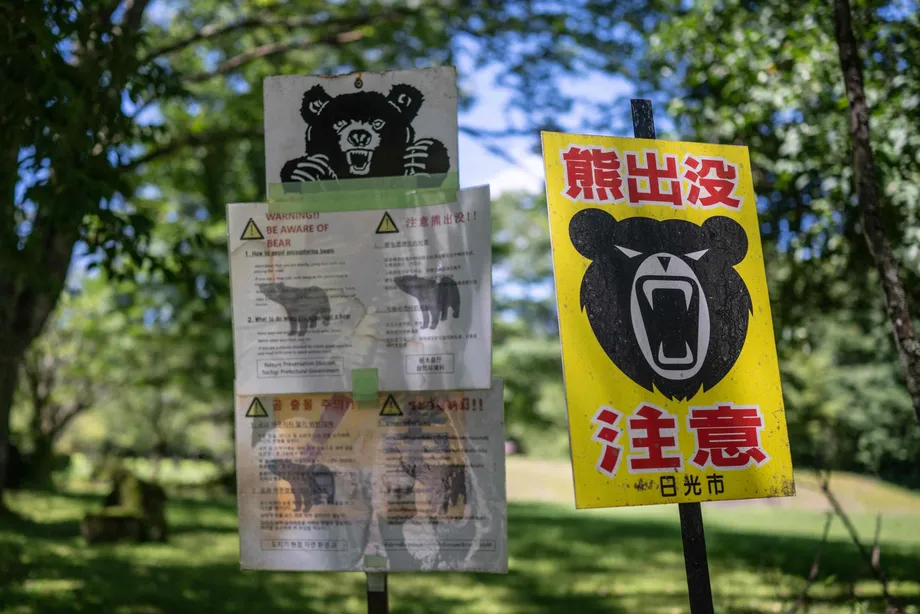
For tourism-dependent communities, the risks can be difficult to manage. In Naruko Onsen, part of Osaki, hikers have carried bells and repellent spray, while tourism offices have posted safety notices in multiple languages. Local inns reported cancelled bookings. Parks and event organizers have used patrols, drones and loud noises to deter bears or check for their presence.
The season may no longer offer a reliable pause. Bears traditionally become less active in winter after feeding heavily in autumn. Poor food supplies can prolong their search for food and delay hibernation. Residents in Tohoku have reported encounters into December and January, including near homes and while people clear snow.
Can Japan get a clearer count?
The Environment Ministry has begun a national survey intended to replace the patchwork of local monitoring systems. More than 800 automatic cameras have been installed in forests and mountain areas in Niigata and the six Tohoku prefectures, with plans to expand the programme to other regions over four years.
Camera traps can help researchers identify individual bears through distinctive markings on their chests and track where they appear. Hair traps provide samples for DNA testing. Researchers can combine those results with statistical models to estimate population size and movement.
Hifumi Tsuruga, a bear expert at the Hokkaido Research Organisation, said the earlier system made it difficult to form a consistent national picture. Prefectures had used different methods, and bears crossing administrative borders could be counted differently or more than once. Hokkaido is not included in the current survey, despite its separate population of brown bears.
Public maps can help people make immediate decisions even when they cannot provide a perfect count. The Kumamap database, created by Danyel Koca, combines reports from local authorities, news coverage and public submissions. It sometimes records the same incident more than once, but can show where bears have recently been active and help hikers reconsider routes.
Officials are also turning to technology for local response. Some communities use drones and thermal cameras to locate bears in dense vegetation, while others are testing AI systems that can scan trail-camera images. Such tools can help direct police, hunters and local staff, but they do not remove the need for trained responders on the ground.
How are authorities responding?
Japan has increased its focus on emergency response, prevention and population management. The government has set aside ¥3.4 billion, about $22 million, for bear countermeasures in a supplementary budget. Proposals include funding for traps and monitoring drones, improving protective fencing and increasing the number of trained local bear-management workers. A government roadmap aims to raise that workforce to about 2,500 by 2030.
Akita has called on the Self-Defense Forces to assist with trapping bears and removing carcasses. Military personnel cannot legally shoot wildlife; licensed hunters, operating under relevant permits and local authorization, carry out culling when officials deem it necessary. Local authorities have also sought support from police and veterinarians in responding to bears in populated areas.
These measures face practical limits. Many municipalities lack enough experienced hunters, and local officials have questioned whether they can recruit suitable staff. In Akita, more than 2,000 bears were culled this year, according to the prefectural governor. Yet culling alone may not quickly eliminate encounters, especially when bears can move across large areas and settlements continue to provide food.
Prevention around homes and farms is another focus. Experts recommend securing garbage and outdoor food, harvesting fruit, clearing fallen fruit and managing abandoned fields. Electric fences can protect farms and other vulnerable areas. Some authorities are creating buffer forest belts, where vegetation is managed to make the boundary between settlements and wooded habitat more visible and less attractive to bears.
Local guidance commonly advises people to check sighting maps, avoid areas where bears have been reported, and not approach or feed wild animals. If someone encounters a bear, officials generally advise backing away slowly while facing it, avoiding sudden movements and keeping an obstacle between the person and the animal if possible. Residents are also urged to follow local instructions, which can vary with the situation.
Living with a changing boundary
The record figures describe a wildlife problem, but they also point to changes in rural Japan: fewer residents maintaining fields and forest edges, fewer hunters, and communities trying to protect both people and agriculture with limited staff. At the same time, bears remain part of the country’s natural environment, and population estimates and local conditions vary widely.
That tension is especially visible in Osaki, where residents want safer neighborhoods and a return of visitors, while officials say long-term measures must preserve bear habitat and keep wildlife from becoming accustomed to human food. A year with a better nut harvest could reduce the immediate pressure on settlements, but it would not by itself resolve the underlying challenges of monitoring, prevention and response.
For residents such as Kingston, the change is already personal: familiar walks now require planning, equipment or a decision to stay away. For local governments, the task is to give people reliable information and trained help while reducing the food and access that draw bears into populated areas.
The Bottom Line
- Japan recorded 50,776 bear sightings and 238 people killed or injured in attacks in fiscal 2025, including 13 deaths.
- Poor acorn and beechnut harvests are pushing bears toward farms and settlements in search of food.
- Sightings have reached cities, schools, shopping areas and popular hiking destinations.
- A national survey using cameras and DNA sampling aims to make population estimates more consistent.
- Authorities are expanding monitoring, fencing, trained response teams and other local prevention measures.