
A banking rescue that could cost Tk 4.8 lakh crore
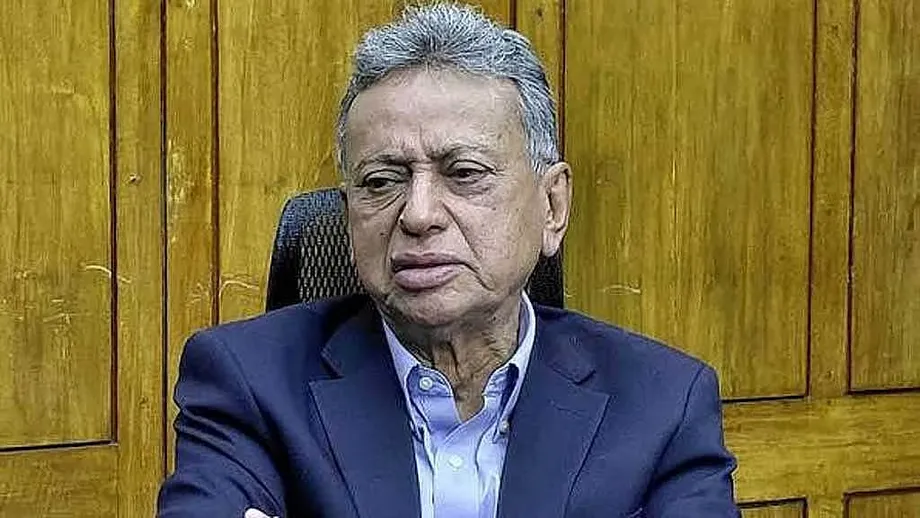
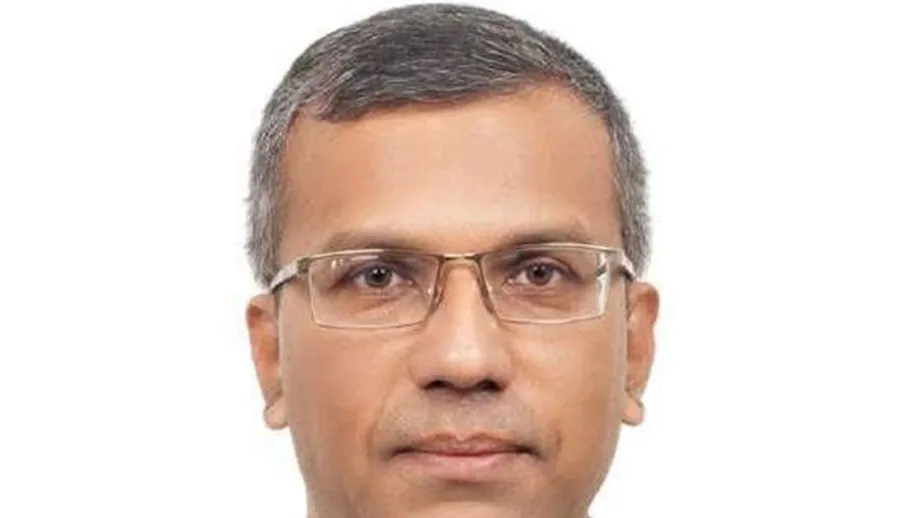
Bangladesh Bank has submitted a draft proposal seeking Tk 60,000 crore from the national budget every year for five to eight years to repair losses in the banking sector and protect deposits, Governor Md Mostaqur Rahman said on 10 October 2026. The request would amount to Tk 3 lakh crore over five years or Tk 4.8 lakh crore over eight years, placing a substantial burden on taxpayers.
Contents
- A banking rescue that could cost Tk 4.8 lakh crore
- Taxpayers would finance repairs while asset recovery continues
- Bank support is already substantial
- Depositors are promised better access to their savings
- Large loans account for a deeper concentration of risk
- Budget support cannot substitute for better lending decisions
- Bangla QR is growing, but remains far below the governor's benchmark
- Cash savings and tax gains are projections, not booked revenue
- Payment reforms also target charges and informal transfers
- Key Points
The proposal comes against a stock of defaulted loans that Bangladesh Bank figures put at Tk 6,06,555 crore at the end of June 2026, equivalent to 32.78 percent of outstanding loans. In plain terms, almost one in every three taka lent by banks was classified as being in default.
Speaking at a Bangla QR event organised by ONE Bank at United International University in Satarkul, Badda, Dhaka, Rahman connected the banking rescue with a wider push to reduce cash use, improve tax collection and make payments cheaper. The event launched student fee payments through Bangla QR, but his remarks set out a much larger financial repair programme.
The Bangladesh Bank governor described the funding request as a draft submitted to the government:
"To address this huge shortfall and protect people's deposits, we have submitted a draft proposal to the government seeking Tk60,000 crore annually from the national budget for the next five to eight years," he said.
The distinction between a proposal and an approved allocation matters. No government approval, starting budget year or detailed schedule for distributing the annual funds was announced in these remarks. The five to eight year period is the governor's estimate of the time required for recovery, rather than a confirmed spending commitment.
Taxpayers would finance repairs while asset recovery continues
Rahman said about a third of the money in the banking system had already been stolen when he took office in February. Reports differ in how they describe the base for that claim: some refer to total banking funds, while another identifies total loans. His statement should therefore not be treated as a precise accounting measure interchangeable with the defaulted loan ratio.
Defaulted loans are debts that borrowers have failed to repay according to the applicable rules. They are not automatically proof that every taka involved was stolen, nor do they establish the final amount that banks will lose after recoveries. The governor's allegations of plunder and the central bank's loan statistics describe related problems, but they measure different things.
Rahman said legal action was underway against those involved in financial irregularities and money laundering, with the aim of recovering assets and holding those responsible accountable. The Bangladesh Bank governor described the conduct in these words:
"Plunderers took the people's money. It is not enough to call it theft; they plundered it. Legal action is also being taken against them," he said.
He also said public money used to repair the banks would come at the expense of national development. To illustrate the lost opportunity, he said the money taken could have supported 20 million families or financed two projects the size of the Padma Bridge. These were his comparisons, not a published allocation plan.
The annual request of Tk 60,000 crore is approximately 9.9 percent of the June defaulted loan stock. Across five years, the proposed contribution would equal about 49.5 percent of that stock; across eight years, about 79.1 percent. Those comparisons show the scale of the request, but do not mean the government intends to repay that proportion of every defaulted loan.
Bank support is already substantial
The proposed annual budget contribution would follow large interventions already made to keep troubled banks operating. Five banks operating under Islamic banking principles have been merged into Sammilito Islami Bank, which received Tk 20,000 crore in government capital. Bangladesh Bank has also provided approximately Tk 85,000 crore in liquidity support to 12 banks.
Capital and liquidity support serve different purposes. Capital helps a bank absorb losses and restore its financial strength. Liquidity provides money to meet immediate obligations, including withdrawals. A bank can need both, but the two figures should not be combined and described as a single final taxpayer loss.
The Tk 60,000 crore annual request is three times the Tk 20,000 crore capital contribution to the merged bank. What remains unspecified is whether the new proposal would supplement earlier assistance, replace parts of it, or include any existing commitments. There is also no announced breakdown by bank or explanation of the conditions banks would need to meet before receiving funds.
That leaves a central question for the budget process: how much support will be needed after recoveries from borrowers and seized assets, and how will the government prevent further losses? Rahman's remarks establish the size and intended duration of the request, but not the rules for carrying it out.
Depositors are promised better access to their savings
The banking crisis has had an immediate consequence for households and businesses: some depositors have struggled to withdraw their own money. Responding to a student's question about difficulties at ATMs and bank branches, Rahman said Bangladesh Bank had provided full support to Sammilito Islami Bank so it could meet withdrawal requests.
He also said National Bank would be able to meet customer withdrawal requests from 15 October. That is a dated commitment, rather than confirmation that all withdrawal difficulties had already ended at the time of his speech.
The key dates show how the deterioration in loans and the proposed response fit together:
- March 2025: Defaulted loans accounted for 24.6 percent of total loans.
- December 2025: The defaulted loan ratio reached 31.2 percent.
- March 2026: The ratio rose to 32.7 percent, with defaults especially high in larger loan categories.
- June 2026: Defaulted loans reached Tk 6,06,555 crore, or 32.78 percent of outstanding loans.
- 10 October 2026: Rahman outlined the annual budget request at the university event.
- 15 October: National Bank was expected to be able to meet withdrawal requests.
- November: Transfers between individuals using QR were due to begin.
The withdrawal commitments address access to deposits. They do not, on their own, establish that the affected banks have recovered their bad loans or restored their capital.
Large loans account for a deeper concentration of risk
Bangladesh Bank statistics for March 2026 show that 42.5 percent of loans above Tk 50 crore were in default, compared with 35.2 percent a year earlier. That is an increase of 7.3 percentage points in one year.
The outstanding amount in this category also grew, from Tk 5,20,400 crore in March 2025 to Tk 5,75,600 crore in March 2026. The increase was Tk 55,200 crore, or about 10.6 percent. Banks therefore had more money exposed to this category while the share in default was rising.
By contrast, loans of up to Tk 1 crore had a default rate of 15 percent, against outstanding lending of Tk 4,09,900 crore. The default rate for loans above Tk 50 crore was about 2.8 times that smaller loan rate. The figures point to a concentration of repayment problems among larger borrowers, rather than equal deterioration across all lending.
The highest default rate was actually in the Tk 10 crore to Tk 20 crore category, at 45.1 percent. Other rates were 26.6 percent for loans of Tk 1 crore to Tk 10 crore, 35.7 percent for Tk 20 crore to Tk 30 crore, 38.9 percent for Tk 30 crore to Tk 40 crore, and 44.7 percent for Tk 40 crore to Tk 50 crore.
The pattern is therefore not a simple rule that each larger loan category has a higher default rate. It does show that several categories above Tk 1 crore had much weaker repayment records than the smallest category.
Budget support cannot substitute for better lending decisions
Mustafa K Mujeri, a former chief economist of Bangladesh Bank, said banks are attracted to large loans partly because they cost less to manage than lending to many small customers. He warned that influential borrowers can obtain concessions and that stronger professional standards and central bank supervision are needed.
Mujeri also argued that too much attention goes to writing off loans and rescheduling repayments instead of collecting debts and holding actual defaulters accountable. A write off changes how a loan is recorded in a bank's accounts; rescheduling changes its repayment timetable. Neither action, by itself, puts the missing cash back in the bank.
Masrur Riaz, chairman and chief executive of Policy Exchange Bangladesh, said future large loans should be assessed against the borrower's cash flow, the prospects of the project and its risks. His point addresses the process before money leaves the bank, rather than relying solely on recovery measures after a loan fails.
Syed Mahbubur Rahman, managing director of Mutual Trust Bank and a former chairman of the Association of Bankers, Bangladesh, said most banks were now becoming stricter about large loans and showing more interest in smaller lending. He also said small and medium entrepreneurs often give repayment greater priority because their businesses depend on continued access to finance.
Together, these assessments identify a separate task from funding the rescue: preventing fresh lending from creating another stock of bad debts. The proposed budget transfers would address existing damage, while borrower assessment, collection and accountability would determine whether it keeps growing.
Bangla QR is growing, but remains far below the governor's benchmark
Rahman said daily Bangla QR transactions reached Tk 180 crore by the end of September, four times the level in June. That comparison implies a June daily level of approximately Tk 45 crore.
He said daily transactions of Tk 3,000 crore would represent a meaningful scale. September's Tk 180 crore was only 6 percent of that benchmark. Reaching it would require daily transaction value to become about 16.7 times as large, despite the recent rapid growth.
QR payments let a customer scan a code to make a digital payment instead of handing over cash. At United International University, ONE Bank launched the facility for campus payments, including student fees. More than 400 students attended the event, alongside Vice Chancellor Md Abul Kashem Mia, ONE Bank Managing Director Muhit Rahman and senior officials.
Transfers between individuals using QR were due from November. That would extend the use of QR beyond paying organisations or merchants, although no detailed operating terms or confirmed launch day were announced in the remarks.
Cash savings and tax gains are projections, not booked revenue
Rahman said printing banknotes and transporting physical cash cost approximately Tk 20,000 crore a year. He estimated wider use of Bangla QR could initially reduce that expense by at least 50 percent, implying savings of at least Tk 10,000 crore if his estimate is achieved.
That implied saving is one sixth of the proposed Tk 60,000 crore annual banking contribution. It is a useful comparison of scale, but the governor did not announce a mechanism to redirect such savings into the bank rescue. The cost estimate and reduction remain his stated projections.
His larger claim concerns tax collection. Digital payments create transaction records, making it harder for businesses to leave sales out of their accounts and evade tax or value added tax, known as VAT. Rahman said nationwide Bangla QR use could help generate up to Tk 2 lakh crore in additional government revenue.
He also said the revenue collection target for fiscal year 2026 to 2027 had been raised by approximately Tk 2 lakh crore from the previous target. A higher target, however, is not the same as money collected, and neither figure establishes how much additional revenue QR payments alone would produce.
Rahman put Bangladesh's tax revenue at below 7 percent of gross domestic product and said full Bangla QR implementation could take it above 10 percent. He also referred to an expected increase of at least two percentage points. These describe different levels of ambition: moving from below 7 percent to above 10 percent would require a gain of more than three percentage points.
He cited Pakistan's tax revenue ratio of 10.3 percent in fiscal year 2025 amid wider digital and enforcement reforms. That comparison does not isolate the effect of QR payments. It underlines that digital records and effective tax enforcement would need to work together.
Payment reforms also target charges and informal transfers
Rahman said consumers ultimately bear the costs and taxes paid by businesses. Charges of around 2.5 percent on other cashless payment methods can therefore reach buyers through prices, while QR payments are intended to reduce that burden.
The remarks did not establish that every QR payment would be free or specify a universal fee. The relevant comparison for consumers will depend on the actual charges applied to payments and whether merchants pass any savings through to prices.
The governor also said regulations had been changed to allow firms such as Google Pay, Stripe and PayPal to operate, although their offices were not fully established. Regulatory permission should not be confused with confirmation that every service is already available to every customer in Bangladesh.
Bangladesh Bank was also making it easier to send money abroad legally and had permitted local providers to do so, he said. His stated aim was to reduce demand for informal transfers outside regulated channels. No detailed provider list, transaction limits or service launch dates were announced in these remarks.
The immediate decisions are more concrete: whether the government approves the annual bank funding request, whether National Bank meets the 15 October withdrawal commitment, and whether QR transfers between individuals begin in November. Beyond those dates, the rescue's final cost will depend on how much money is recovered and whether lending practices improve.
Key Points
- Bangladesh Bank has submitted a draft request for Tk 60,000 crore annually for five to eight years, not an approved budget allocation.
- The total would be Tk 3 lakh crore over five years or Tk 4.8 lakh crore over eight years.
- Defaulted loans reached Tk 6,06,555 crore, or 32.78 percent of outstanding loans, in June 2026.
- Existing support includes Tk 20,000 crore in government capital for Sammilito Islami Bank and approximately Tk 85,000 crore in central bank liquidity for 12 banks.
- Loans above Tk 50 crore had a default rate of 42.5 percent in March 2026, compared with 15 percent for loans up to Tk 1 crore.
- Daily Bangla QR transactions reached Tk 180 crore in September, still only 6 percent of the governor's Tk 3,000 crore benchmark.
- Projected cash savings and tax gains have not yet been established as realised savings or collected revenue.
- National Bank withdrawals were expected to improve from 15 October, with QR transfers between individuals due in November.