
Controlled reaction begins at 3:34 p.m.
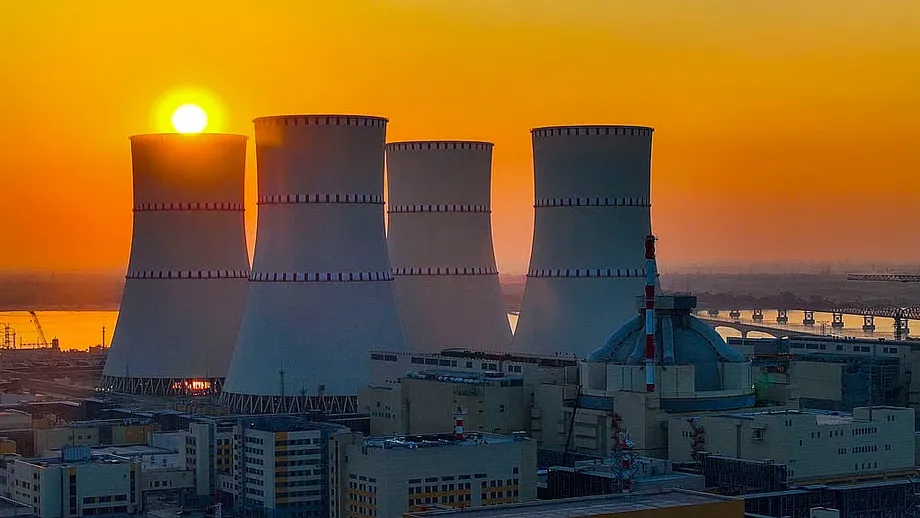
Bangladesh's first nuclear power plant has started a controlled nuclear chain reaction in its first 1,200 megawatt unit, reaching a major commissioning milestone without yet beginning electricity supply to the national grid. The process began at 3:34 p.m. on Sunday at Rooppur in Ishwardi, Pabna, according to plant management and the Ministry of Science and Technology.
Contents
- Controlled reaction begins at 3:34 p.m.
- What first criticality actually means
- Permission advances one stage at a time
- Valve repairs cleared an earlier delay
- From April fuel loading to October criticality
- Power will rise gradually, not all at once
- November and December forecasts are still targets
- Two reactors, Russian finance and a longer project period
- What completion would deliver
- Key Points
Md. Zahedul Hasan, managing director of Nuclear Power Plant Company Bangladesh Limited, confirmed the start and said the reactor's important measurements remained within prescribed limits. Science and Technology Secretary Md. Anwar Hossain, who was at the plant, said the measurements matched the expected design values and the process proceeded under controlled conditions.
The achievement is known as first criticality, the point at which a reactor sustains a controlled nuclear chain reaction. It follows permission from the Bangladesh Atomic Energy Regulatory Authority to move Unit 1 from the B-1 commissioning stage to B-2. Russian specialists, Bangladeshi engineers and scientists, and regulatory experts were present.
Two accounts identify the Sunday milestone as October 11, while the more detailed operational accounts specify the day and exact time without giving the calendar date. No firm date for supplying electricity to the grid has been confirmed. Forecasts range from November 20 through late December, with Bangladesh's officials making further progress conditional on tests, certificates and regulatory approval.
What first criticality actually means
Inside the reactor, nuclear fission splits uranium atoms and releases heat. It also releases neutrons that can cause further atoms to split. At first criticality, this chain reaction becomes self sustaining under the reactor's controls, initially at very low thermal power.
In this setting, criticality is a technical operating condition, not a description of an emergency. The milestone establishes that the reactor can sustain the reaction needed for eventual electricity generation. It does not establish that the entire plant is ready to operate at its intended output.
The next steps connect that nuclear process to the electricity generating equipment. Heat from the reactor will be used to produce steam, which drives a turbine connected to a generator. Each part of that sequence must be checked before electricity can be delivered to the grid.
Grid synchronization is another distinct step: it connects the generator to the national electricity system under the required operating conditions. Starting the nuclear reaction, generating electricity and supplying that electricity to the grid are therefore separate milestones. Rooppur has reached the first of those, while the later stages still require testing and authorization.
Permission advances one stage at a time
The Bangladesh Atomic Energy Regulatory Authority approved the B-2 commissioning licence on Thursday, after reviewing the preceding tests. Approval documents were reportedly handed to the Bangladesh Atomic Energy Commission that evening. Regulatory chairman Md. Mahmudul Hasan said the B-1 stage had been completed following fuel loading and successful tests.
The B-2 permission allowed Unit 1 to begin the controlled fission reaction. It does not authorize every subsequent stage of operation. Hasan said testing would continue during B-2 and that separate C and D licences would be needed before the unit could proceed to grid supply.
Hossain said the remaining work must meet International Atomic Energy Agency safety guidance and the regulator's conditions. Necessary certificates and approvals must be obtained before advancing to electricity generation and connection to the grid.
This sequence makes test results, rather than a target date alone, the deciding factor. Measurements within limits at first criticality are evidence of a successful initial step. They do not replace the later checks on reactor behavior, control equipment, safety systems and the equipment that will generate electricity.
Valve repairs cleared an earlier delay
A technical problem involving safety valves had delayed commissioning by more than two months. Russian specialists came to Rooppur to resolve the fault, and one account dates completion of the repairs to September 30. Successful tests of the automatic pressure relief valve equipment preceded the regulator's permission to advance.
Reports differ on the number of valves involved. One detailed account describes a fault in a safety valve on an important piece of equipment, while another says two safety valves failed to work properly during commissioning. Both describe Russian technical assistance and successful testing before the B-2 licence was issued.
Pressure relief valves help control pressure by releasing it when required. Their proper operation is part of the plant's safety checks. The repair and subsequent testing explain why an earlier expectation of reaching the planned stage by September was not met.
The permission issued after those tests removed the immediate obstacle to first criticality. It did not remove the requirement for further commissioning work. Plant officials continue to monitor reactor measurements, safety systems and control equipment as the reaction is tested.
From April fuel loading to October criticality
The first reaction followed months of preparation rather than a single startup operation. Fuel loading began in April, with the most specific account giving April 28 as the start date. By October 9, plant management said more than 300 tests had been completed and fuel loading was finished.
The reported sequence shows how the valve problem interrupted that preparation and how the regulator's permission followed its resolution:
- April 28: Fuel loading began in Unit 1, according to the detailed licensing account.
- September 30: Russian specialists completed safety valve repairs, according to one operational account.
- October 9: Plant management said fuel loading and more than 300 tests had been completed.
- Thursday before first criticality: The regulator approved progression to B-2 and permission to begin fission.
- Sunday at 3:34 p.m.: Unit 1 began its first controlled nuclear chain reaction. Two accounts give the date as October 11.
Officials said several days would be needed to check the stability of the reaction. Project officials also estimated that the commissioning stage including first criticality could take 30 to 40 days. That estimate concerns the current testing stage, not the completion of every test needed for routine operation.
Power will rise gradually, not all at once
Rooppur's first unit has a rated electrical capacity of 1,200 MW, but the reported startup plans call for much smaller initial output. One account anticipates an initial supply of 300 MW. That would equal 25% of the unit's rated capacity, not its full output.
Another operational account describes electricity generation beginning at approximately 3% of capacity and rising to 20% to 30% before grid supply. Applied to the unit's 1,200 MW rating, those figures correspond to about 36 MW initially and 240 MW to 360 MW at the later stage. The separately reported 300 MW expectation falls within that later range.
Plant management has also described a plan to raise reactor power progressively to 37%. That figure concerns the reactor power progression and should not automatically be read as an electrical output figure. Thermal power, the heat produced by the reactor, and electrical power delivered by the generator are different measurements.
After grid connection, experimental operation at different output levels could continue for seven to eight months. The accounts differ slightly on whether that period begins with experimental generation or with grid connection. Neither describes the first electricity delivery as the immediate start of routine operation at full capacity.
November and December forecasts are still targets
Rosatom chief executive Aleksey Likhachev has put forward a November timetable. One account attributes a target around the end of November to remarks made at an October 9 meeting in Dhaka with Bangladesh's science and technology minister, Fakir Mahbub Anam.
Speaking about the expected timing, Likhachev said:
We are aiming for around the end of November.
A separate account describes a meeting in Moscow with the same minister and attributes a November 20 to end of November generation forecast to Likhachev. Another account says the Moscow meeting took place on Friday and records an assurance of experimental grid supply as soon as possible. Reports therefore differ on the location and context of the remarks, as well as whether the forecast concerns generation or grid connection.
On the Bangladesh side, project officials expressed hope for experimental grid supply in late December after the B-2 approval. Regulatory chairman Hasan said supply could begin by the end of the year if all stages were completed successfully. An unnamed ministry official offered November 20 as a possible generation date.
Hossain, however, did not confirm a date for grid supply. The forecasts should consequently be treated as targets attached to successful commissioning, not as a settled delivery schedule. No specific dates for issuing the C and D licences have been announced in these accounts.
Two reactors, Russian finance and a longer project period
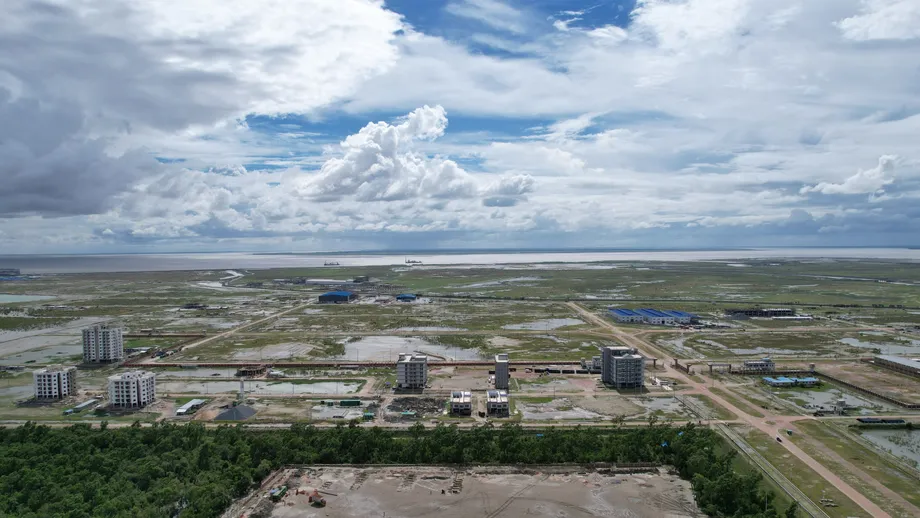
Rooppur is being built beside the Padma River in Ishwardi with Russian technical and financial support. It has two VVER-1200 reactors, each designed for 1,200 MW of electrical capacity. Together, their planned capacity is 2,400 MW. Atomstroyexport, a Rosatom subsidiary, is constructing the reactors.
Russia is supplying equipment, nuclear fuel and engineering assistance. Reported Russian state loans amount to US$11.9 billion, against a project estimate of up to US$12.8 billion in one account. On those figures, the loans represent approximately 93% of the estimated cost. Other accounts round the project cost to about US$13 billion.
The current project estimate in Bangladesh's currency is Tk138,686 crore, or approximately Tk1.387 trillion. The reported increase of about Tk26,000 crore, equivalent to Tk260 billion, is attributed to the rise in the dollar exchange rate. The account detailing that increase says the contractor's agreement does not allow a cost increase simply because the project period is extended.
The original project deadline was December 2025. Two extensions have moved it to June 2028, 30 months later. That administrative deadline is separate from the expected date of the first unit's initial grid connection and should not be treated as a forecast for its first electricity delivery.
What completion would deliver
At its planned 2,400 MW capacity, Rooppur is expected to meet up to 12% of Bangladesh's electricity demand. That is a projection for the completed plant, not the contribution made by first criticality or by an initial 300 MW supply from Unit 1.
The distinction matters because the initial 300 MW expectation would be one quarter of Unit 1's capacity and one eighth of the combined capacity of both units. The second unit's startup schedule is not specified in these accounts, so progress at Unit 1 cannot be treated as a confirmed timetable for the entire station.
Likhachev also said expansion of the project had been discussed, while making clear that a final decision rests with Bangladesh's government and people. No approved expansion plan, additional capacity figure or decision deadline was identified.
For now, the immediate task is narrower: confirm stable reactor behavior, complete the remaining tests, obtain the next licences and prepare the generator for grid connection. First criticality is a concrete advance toward Bangladesh producing nuclear electricity, but the timing and scale of the first supply still depend on those steps.
Key Points
- Rooppur Unit 1 began its first controlled nuclear chain reaction at 3:34 p.m. on Sunday.
- Officials said reactor measurements remained within prescribed limits. Electricity supply has not yet begun.
- The B-2 licence permits the current commissioning stage. Separate C and D approvals are still required.
- Safety valve faults delayed commissioning by more than two months before repairs and successful tests.
- Generation and grid supply forecasts range from November 20 to late December, with no confirmed grid connection date.
- Experimental operation could continue for seven to eight months as output rises through different levels.
- The two planned units total 2,400 MW. The project period now extends to June 2028, with a current estimate of Tk138,686 crore.