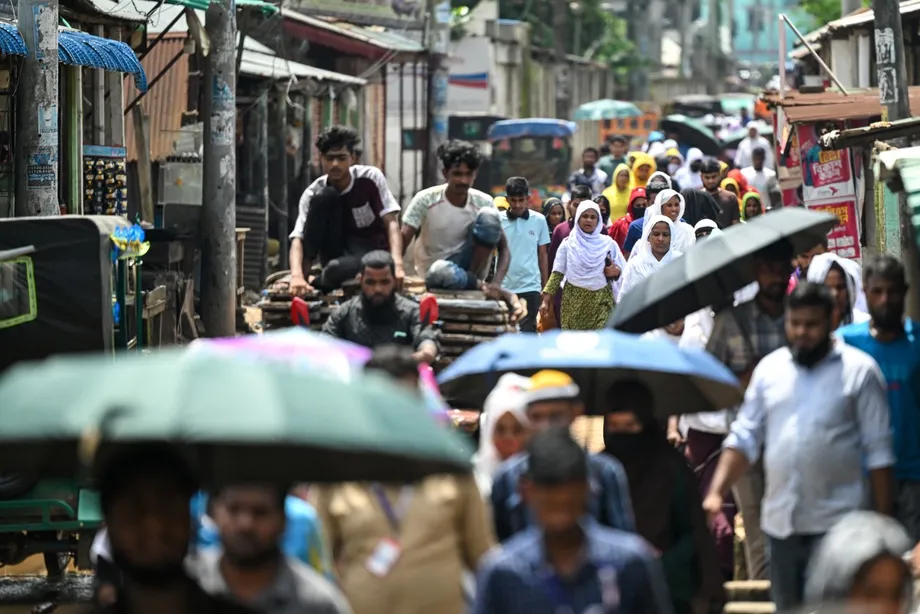
A fragile recovery leaves millions exposed
Bangladesh is facing a widening economic squeeze: growth has slowed, prices remain high, energy shortages are disrupting factories, and weaknesses in the banking system are restricting credit. The World Bank estimates that national poverty rose to 22.5 percent in 2026, up from 18.7 percent in 2022, and could reach 22.8 percent in FY2027. About 6.2 crore people, roughly one-third of the population, remain close enough to the poverty line that a job loss, illness or other shock could push them below it.
Contents
The strain has reversed part of a long period of poverty reduction. Between 2010 and 2022, Bangladesh lifted about 34 million people out of poverty, including 9 million from extreme poverty. Yet progress slowed after 2016, as growth became less effective at raising incomes for poorer households. The latest estimates point to a sharper setback: extreme poverty at the international threshold of $3 a day rose from 5.9 percent in 2022 to an estimated 10.1 percent in FY2026.
That change is being felt through everyday costs and lost earnings. Four years of elevated inflation have reduced what wages can buy, while factory closures, shorter operating hours and weak hiring have cut household income. The World Bank estimates that about 2.1 million more people fell below the $3-a-day poverty line in FY2026 alone. Low-paid workers have continued to see negative real wage growth, meaning their pay has not kept up with prices.
The figures also need to be read with care. The poverty estimates combine survey information and economic modelling, while the absence of a Labour Force Survey after 2025 limits a full assessment of recent job losses and employment conditions. Still, indicators from industry, credit and prices point in the same direction: many households have little savings left to absorb another shock.
Why growth has lost momentum
The World Bank cut its FY2027 growth forecast to 3.4 percent, 1.2 percentage points below its April estimate. It also estimated growth at 3.4 percent in FY2026, marking a third consecutive year of slowing activity. The economy is projected to recover only modestly, to 3.9 percent in FY2028. The forecasts are well below the government’s 6.5 percent target for the current fiscal year.
Energy shortages have become a direct obstacle to production. Domestic gas output has declined, and imported liquefied natural gas now supplies about one-third of gas demand. Disruptions at floating LNG terminals in Maheshkhali further reduced supply, contributing to load-shedding and forcing factories to run below capacity or temporarily stop work. Businesses have also turned to diesel generators, adding to operating costs. Industrial output grew by just 2 percent in FY2026, and industry contracted in the third quarter for the first time since the pandemic.
These constraints affect more than manufacturers. When factories cut shifts or lay off staff, workers spend less at shops and service businesses. Suppliers receive fewer orders, and firms become less willing to invest in new equipment or hire. Energy uncertainty also makes it harder to plan production and meet delivery schedules, a concern for exporters competing on reliability as well as price.
Exports are under pressure from weaker demand and stronger competition. Overall exports contracted by 0.2 percent in FY2026, while ready-made garment exports to the European Union fell 3.3 percent. A survey cited in the World Bank update found that the share of US fashion buyers using Bangladesh as a sourcing base had dropped to around 78 percent from 88 percent a year earlier. Buyers are placing growing weight on supply-chain transparency, compliance and flexibility, alongside production costs.
Remittances have provided a cushion. They rose 17.3 percent to a record $35.6 billion in FY2026, helping limit the current-account deficit and rebuild foreign-exchange reserves to more than $32 billion by August. That support does not resolve the domestic barriers to investment and job creation, but it has helped steady the external position.
Bank distress is restricting business credit
Banking weakness is another major drag on activity. The systemwide non-performing loan ratio, the share of loans that are not being repaid as agreed, rose to 33.2 percent in June 2026 from 20.2 percent in December 2024. The capital adequacy ratio, a measure of a bank’s capacity to absorb losses, fell to negative 2.6 percent in December 2025, well below the regulatory minimum of 10 percent.
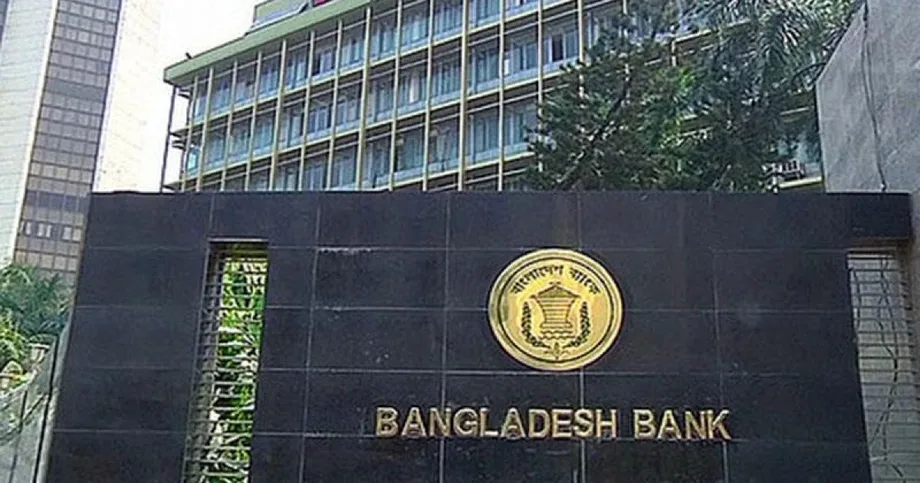
The reported figures may not yet capture the full scale of losses. Relaxed provisioning rules have allowed banks to delay setting aside funds against bad loans. Bangladesh Bank had provided weak lenders Tk 760 billion in uncollateralised liquidity support by June. The World Bank warns that repeated emergency support and regulatory forbearance can delay recognition of losses and the restructuring needed to restore confidence.
Credit to private businesses grew by only 4.5 percent in June, its slowest rate in 33 years. At the same time, government borrowing from banks grew rapidly. When banks have limited funds and choose government lending over riskier business loans, smaller firms can face particular difficulty accessing finance. A cap on the spread between deposit and lending rates may add to that pressure if it makes lending to small businesses less attractive.
Repairing bank balance sheets is therefore closely tied to employment and investment. The World Bank has called for asset-quality reviews, clearer recognition of losses, and restructuring or recapitalisation of viable banks at fair value. Without credible action, weak credit supply can keep productive businesses from expanding even when demand begins to recover.
Inflation and job losses weigh most on households
Average headline inflation eased from 10 percent in FY2025 to 8.7 percent in FY2026, but it remains high. The World Bank expects inflation to average 8.6 percent in FY2027, with domestic energy prices, supply constraints and money-supply growth continuing to put pressure on prices. Food prices matter especially for poorer families: World Bank economists said households in the poorest fifth spend about 60 percent of their income on food, leaving little room to absorb increases in transport, rent, utilities or medicine.
Women have borne a disproportionate share of employment losses. Female labour-force participation fell from 42.8 percent in 2022 to 38.4 percent in 2024. The decline reflects women leaving work, particularly in industry and services, after job opportunities weakened. Earlier poverty research also found high unemployment among educated young people, with particularly difficult conditions for young women in urban areas.
The labour-market shift has broader roots. From 2016 to 2022, agriculture accounted for a large share of new jobs and rural areas drove much of the poverty reduction. Industrial and service employment did not expand as strongly as it had earlier. Now, energy shortages and weak investment are adding pressure to industrial jobs, while the lack of recent labour survey data makes it difficult to measure how widespread the deterioration has become.
Bangladesh’s vulnerability also reflects long-running differences between urban and rural areas. Poverty fell faster in rural areas from 2016 to 2022, helped by agricultural employment, but one in four poor Bangladeshis lived in a city by 2022. Urban households often rely on wages and have less access to land or home-produced food, so inflation and job interruptions can quickly undermine their budgets.
Public support often misses the poorest
Bangladesh spends about 3.5 percent of GDP on energy and fertiliser subsidies and social protection, but high spending has not guaranteed effective help. In FY2026, the government was administering 90 social protection programmes across 25 ministries. Different eligibility rules, overlapping lists and separate delivery systems make it harder to identify households in need and ensure that assistance reaches them reliably.
World Bank estimates show that programmes intended for poorer households exclude 62 percent of households in the poorest fifth, while 18 percent of households in the richest fifth receive benefits. Another comparison found that the poorest fifth received an average of Tk 7,140 in annual social-protection benefits, against Tk 10,472 for the richest fifth. These estimates describe different measures of coverage and average benefit, but both point to targeting problems.
Electricity subsidies illustrate the gap between spending and poverty relief. The richest fifth of households receives 33 percent of electricity support, more than double the 15.4 percent reaching the poorest fifth. The reason is largely how a blanket price subsidy works: households that consume more electricity receive a larger share of the benefit. Yet the assistance is more important relative to income for poorer households. Direct and indirect benefits are estimated at 18.1 percent of pre-tax income for the poorest fifth, compared with 2.3 percent for the richest.
Power and gas subsidies rose from Tk 8,580 crore in FY2014 to Tk 83,600 crore in FY2025. Electricity tariffs have stayed below estimated supply costs, leaving the government to cover part of the difference. Fertiliser subsidies have also expanded sharply. Such support can help contain household and production costs, but broad price subsidies are expensive and may encourage higher consumption rather than directing assistance to families with the greatest need.
Removing electricity subsidies without replacement support would carry a severe cost. World Bank simulations estimate that full removal without compensation could raise the poverty rate by 2.8 percentage points, pushing about 4.7 million people into poverty. Reform therefore presents a distributional challenge: savings can create room for better-targeted support, but abrupt price increases would hit households and businesses before that support arrives.
Family Card offers a test of targeting
The government’s Family Card cash-transfer initiative could provide a common platform for household assistance, according to the World Bank. Its impact depends on whether it corrects existing errors in beneficiary selection or repeats them. A registry that identifies eligible households, uses clear poverty measures and keeps records current would be central to the programme’s success.
In illustrative simulations, adding the Family Card with targeting errors similar to existing cash programmes would reduce poverty by a further 0.95 percentage points, helping about 1.58 million people. Pairing the card with better-targeted old-age and widow allowances and a consolidated food-assistance programme could reduce poverty by 1.72 percentage points, or about 2.85 million people, at an additional cost estimated at 0.21 percent of GDP.
Those are modelled results, not guaranteed outcomes. Delivery depends on accurate household data, accessible application processes and payments reaching eligible people on time. Consolidating food programmes could also help address gaps between where aid is distributed and where need is greatest, including urban low-income communities.
The central policy choice is not simply whether to spend more or less. It is how to use limited public funds so that assistance reaches vulnerable households while reducing waste. Direct transfers can be more precisely targeted than broad energy price cuts, but they must be large and reliable enough to cushion households from higher utility costs. The transition also needs to account for poor farmers and small businesses that rely on subsidised inputs or power.
Three reforms shape the near-term outlook
The World Bank has identified banking stability, energy security and domestic revenue mobilisation as immediate priorities. Stronger bank supervision and credible resolution of bad loans could help restore lending. Better energy governance, fuel supply and transmission and distribution networks could reduce disruptions. More effective tax administration and a broader tax base could give the government greater capacity to fund social support and productive investment.
Revenue remains exceptionally low, estimated at 8.3 percent of GDP in FY2026. Weak tax compliance, policy shortcomings and limited administrative capacity constrain the state’s ability to respond when households or industries face shocks. Meanwhile, the fiscal deficit is projected to widen from 3.9 percent of GDP in FY2026 to 4.8 percent in FY2027, as subsidy costs, interest payments and bank recapitalisation needs compete with public investment.
Energy reform is especially delicate. The World Bank argues that better targeting could let the government compensate the poorest 40 percent for price increases while still retaining fiscal savings. It also points to stronger transmission, transparent pricing, improved governance and greater use of renewable energy. The planned Rooppur Nuclear Power Plant may add electricity to the grid, although new generation alone cannot solve fuel, transmission or governance problems.
Employment will ultimately determine whether growth reaches vulnerable households. The World Bank’s poverty assessment calls for better infrastructure and transport links, vocational and tertiary education, support for women’s participation in paid work, simpler trade and licensing rules, and more investment in agriculture. Climate resilience also matters: the assessment warns that climate impacts could cut agricultural GDP by one-third and displace 13.3 million people by 2050 under even optimistic scenarios.
Bangladesh’s earlier poverty gains show how sustained job creation and access to essential services can raise living standards. The current reversal reflects a mix of immediate shocks and structural constraints. Stabilising prices and energy supply may ease pressure, but a lasting recovery depends on whether financial, fiscal and public-support systems can channel resources towards productive investment and people most at risk.
The Bottom Line
- National poverty is estimated at 22.5 percent in 2026, up from 18.7 percent in 2022; about 6.2 crore people remain vulnerable to falling into poverty.
- The World Bank projects GDP growth of 3.4 percent in FY2027 and 3.9 percent in FY2028.
- Inflation, energy shortages and weak hiring are reducing household purchasing power, with women among those facing disproportionate job losses.
- Banking distress and slow private credit growth are restricting business investment and employment.
- Broad subsidies and fragmented social programmes often miss poorer households; better targeting could lift an estimated 2.85 million people out of poverty.
- The World Bank’s priorities are bank repair, stronger energy supply and governance, and improved revenue collection.