
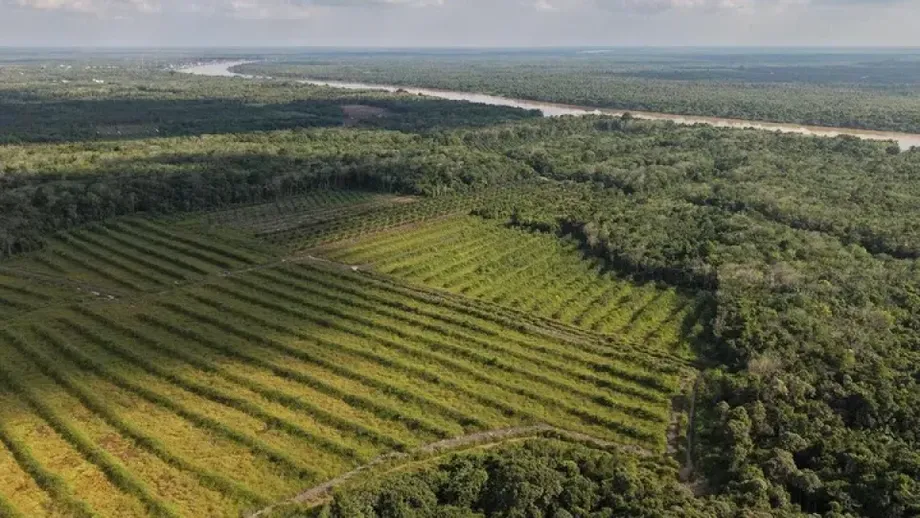
Rice surplus prompts a change in expansion policy
Indonesia says it no longer needs to clear forest for new rice fields after reaching self-sufficiency in the staple three years ahead of its 2029 target. The announcement marks a shift toward boosting yields on land already under cultivation, but officials have not clarified whether it will halt work already under way in South Papua and Kalimantan.
Contents
- Rice surplus prompts a change in expansion policy
- What changes, and what remains undecided?
- Expansion in Papua has already altered land and lives
- Peat soils and forest loss complicate the food security case
- Can higher yields reduce pressure on land?
- Monitoring will test whether the pledge changes practice
- Key Points
Hashim Djojohadikusumo, President Prabowo Subianto’s special envoy for climate and energy, said at the Indonesia International Sustainability Forum in Jakarta that the government had met its rice target without planting the two million hectares planned for food estates. The programme, launched in 2024, was intended to expand production and reduce reliance on imports by opening new agricultural land.
“The government sees no further need to expand rice cultivation in the so-called forest areas,” Hashim said. He said the next priority would be intensification: raising output from existing farmland with improved varieties and better seeds, including for rice and soybeans, most of which Indonesia imports.
Government figures indicate rice production reached 34.71 million tonnes in 2025, above estimated demand of 31.19 million tonnes. Hashim put state rice reserves at about 5.3 million tonnes, saying stocks had grown beyond the capacity of government warehouses and led authorities to rent private storage.
The Forestry Ministry has cautioned that the statement does not yet amount to a clear stop order for every project. It distinguishes between proposed expansion that would require forest clearance, work already in progress and increased production on existing farmland. The ministry said it could not confirm that all activity in South Papua and Central Kalimantan would stop, or when any stoppage might take effect.
What changes, and what remains undecided?
Mari Elka Pangestu, deputy chair of the National Economic Council, said the two million hectares announced for food production were no longer needed. She said Hashim had asked her to make clear that future food and biofuel production would be directed toward degraded land as part of a Forestry Ministry programme covering reforestation and revegetation.
That statement appears to extend the shift beyond rice to crops such as sugarcane, which can be used to make ethanol. Yet the government has not publicly explained how it will apply the new policy to existing concessions, cleared areas that have not been planted, or South Papua’s sugar projects. The announcements have also left open whether infrastructure and land preparation already under way will continue.
The distinction matters because a policy against new forest clearing does not automatically reverse permits or halt machinery operating on land already approved for development. Nor does it settle the fate of land that has already been cleared. Officials have yet to publish a detailed implementation plan identifying affected sites, responsible agencies, deadlines or monitoring arrangements.
The Forestry Ministry says the description “degraded land” cannot by itself make a site available for farming. Each location must be assessed for its current land cover, legal status and forest function, consistency with spatial plans, environmental conditions and the rights of communities, including Indigenous people. Any change in land use must also comply with existing laws.
Researchers have found that the available land may be less suitable for large plantations than headline estimates suggest. WRI Indonesia identified 9.72 million hectares of degraded but still productive land outside peat areas, but found that less than 10 per cent was suitable for large-scale agriculture. About 4.1 million hectares was considered better suited to small farms under 100 hectares.
Expansion in Papua has already altered land and lives
The most contentious food estate development is in Merauke regency, South Papua, where rice and sugar plantations are being built in a landscape of wetlands, savannah, swamp forest and peat. The estates could cover about two million hectares if fully developed. Companies involved include the Jhonlin Group on the rice side and Merauke Sugar Group on the sugar side, with military personnel also supporting parts of the programme.
Satellite data cited by environmental group Mighty Earth indicate that more than 50,000 hectares of rainforest, savannah, peat swamp and wetlands have been cleared for rice and sugarcane since work began in 2024. The government has not provided a full account of how much forest has been cleared or what will happen to land that is now bare but not yet producing crops. Earlier estimates from advocacy groups differ, in part because they cover different areas and use different methods.
In January 2026, the National Land Agency announced cultivation rights covering 328,000 hectares for state-owned company PT Agrinas Pangan Nusantara on land that had been rezoned. The process has drawn criticism from Indigenous rights advocates, who say the approval moved unusually quickly and did not include meaningful free, prior and informed consent, or FPIC. That principle means communities should receive information before a project proceeds and have a genuine opportunity to decide whether it can go ahead on their customary land.
South Papua’s provincial spatial plan, adopted in late 2025, designated large areas for rice cultivation. Activists and Indigenous representatives have argued that consultations were too limited to establish consent. Government officials have said the plan followed required procedures and included attention to customary rights and culturally significant areas. The competing accounts underscore why future land assessments and permitting decisions will be closely scrutinized.
Indonesia’s National Human Rights Commission, Komnas HAM, has separately reported indications of land grabbing, environmental damage, militarization and intimidation linked to the project, following complaints from Indigenous communities. It identified concerns involving customary land, a healthy environment, food security, participation in decisions and personal security. The commission recommended stronger community involvement, legally sound mapping of customary territories and measures to recognize Indigenous land rights.
For local communities, the stakes extend beyond ownership. Forests and wetlands provide food, water, livelihoods and culturally significant places. Replacing diverse landscapes with large monoculture plantations, where one crop is grown across broad areas, can damage those resources and leave communities more dependent on outside food and wage work.
Peat soils and forest loss complicate the food security case
Conditions in Central Kalimantan illustrate the agricultural risks of converting forest and peatland. Some farmers have struggled to grow rice in acidic peat soils, while peat forest has been cleared for cultivation. Peat is made of partially decayed plant material that accumulates in waterlogged ground. When drained or burned, it can release large amounts of stored carbon and become more vulnerable to fires.
Forest loss is also moving in the wrong direction for Indonesia’s climate plans. Forestry think-tank Auriga Nusantara estimated that the country lost 433,751 hectares of forest in 2025, a 66 per cent increase from the previous year and the highest level in eight years. More than 78,000 hectares of that loss was linked to food and energy self-sufficiency programmes, according to the group.
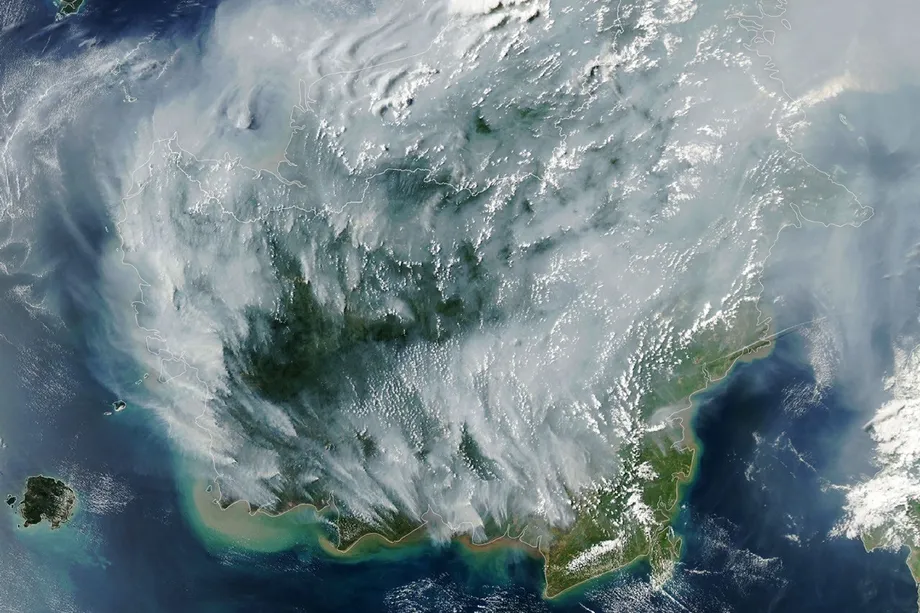
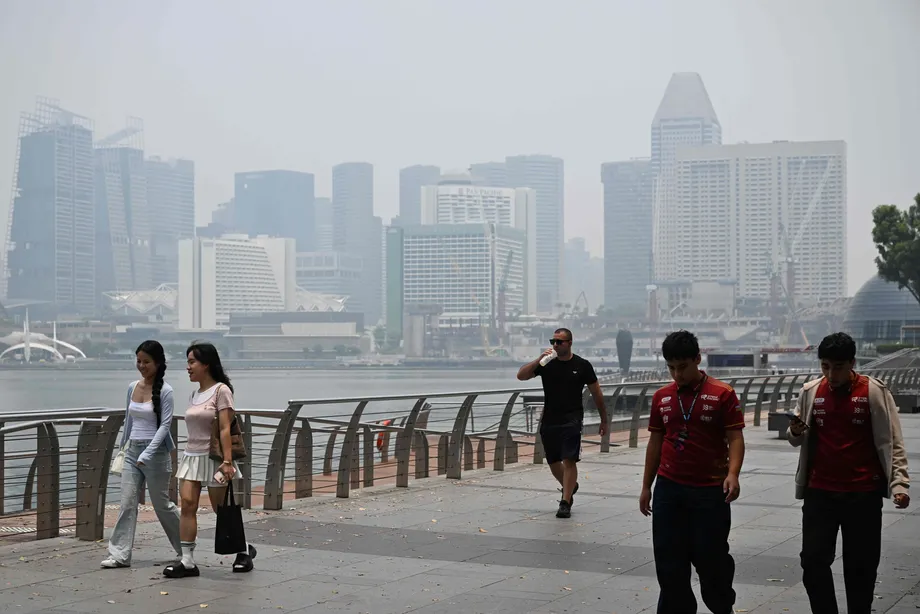
Those trends matter beyond Indonesia. Forests and peatlands store carbon that would otherwise enter the atmosphere, while fires on dried peat can produce heavy smoke and haze. Indonesia has experienced transboundary haze affecting neighbouring Malaysia and Singapore. The country also aims to become a net carbon sink by 2030, meaning its land and forests would absorb more carbon than they emit. Continued clearing and fires could make that goal harder to reach.
Food security remains the government’s stated reason for the estates. Indonesia is a major rice consumer, and climate-related droughts, floods, shifting rainy seasons and pests can disrupt harvests. Farming land is also lost to housing, industry and infrastructure. Yet the new production figures have strengthened the case for improving yields before converting more natural areas.
Hashim credited farmer incentives for the production gains, including a higher state purchase price for unhusked rice, raised from 4,000 rupiah to 6,500 rupiah per kilogram, and a 20 per cent reduction in fertiliser costs. The 2026 figures are less settled: Statistics Indonesia projected 28.71 million tonnes of rice production for January through September, nearly unchanged year on year, while the Agriculture Ministry’s full-year balance forecast a 34.77 million-tonne crop against demand of 31.10 million tonnes. These are estimates, not final harvest results, and can shift with weather, pests and harvest timing.
Can higher yields reduce pressure on land?
The government says it will rely on better seeds and crop varieties to raise production on existing farms, with soybean self-sufficiency targeted within about three years. That goal would address a significant import dependence, but achieving it without expanding into forests will require gains in productivity and careful choices about where crops are grown.
Pangestu has warned that higher yields cannot come at the cost of damaged soil and water. She has called for research into seeds that use less water and tolerate hotter conditions, and for “green rice” methods that produce more grain on the same land with less fertiliser and water. Lower fertiliser use can reduce pollution, while water-efficient methods may also reduce methane emissions from flooded rice paddies. Methane is a powerful greenhouse gas, and rice cultivation is one of its agricultural sources.
Productivity programmes are not automatically environmentally benign. Intensive farming can exhaust soil or increase water pollution if fertiliser and irrigation are poorly managed. Results depend on the crop variety, local conditions and support for farmers. The ministry’s call for site-by-site checks therefore applies not only to new land but also to how existing farms are managed.
Government rice stocks and production totals also do not answer every question about access. National self-sufficiency describes whether domestic production can meet aggregate demand; it does not guarantee that every household can afford food or that supplies can be transported reliably to every island. Storage, distribution, prices and local harvests remain part of food security.
Monitoring will test whether the pledge changes practice
Mighty Earth welcomed the announcement and said it would monitor how the government applies it, while working with local communities in Papua on restoration and sustainable agriculture. The group’s support reflects the potential environmental benefit of ending further forest conversion, but its assessment depends on implementation and independent verification.
Key tests include whether agencies stop issuing or advancing permits for forest conversion, whether work already under way is reviewed, and whether cleared sites are restored or put to other uses. Public maps, clear project boundaries and regular reporting could help establish whether development has genuinely shifted away from forests. Meaningful participation by Indigenous communities would also require more than a single consultation or formal recognition on paper.
The announcement sets a new direction, but it has not yet resolved the status of South Papua’s rice and sugar estates or projects in Kalimantan. Indonesia has reported a rice surplus and says it can raise output on existing farmland. Whether that achievement translates into less deforestation will depend on how the government handles existing projects, selects any degraded land and protects community rights.
Key Points
- Indonesia says it no longer needs to clear forest for new rice fields after reaching self-sufficiency ahead of its 2029 target.
- Officials have not clarified whether existing projects in South Papua and Central Kalimantan will stop or how already-cleared land will be used.
- More than 50,000 hectares of forest, savannah, peat swamp and wetlands have reportedly been cleared for rice and sugarcane in South Papua since 2024.
- Researchers say only a small share of identified degraded land is suitable for large-scale agriculture.
- Indigenous rights advocates have challenged permitting and consultation processes, while Indonesia’s human rights commission has reported serious concerns.
- The government says it will focus on higher yields, improved seeds and land already in agricultural use.